
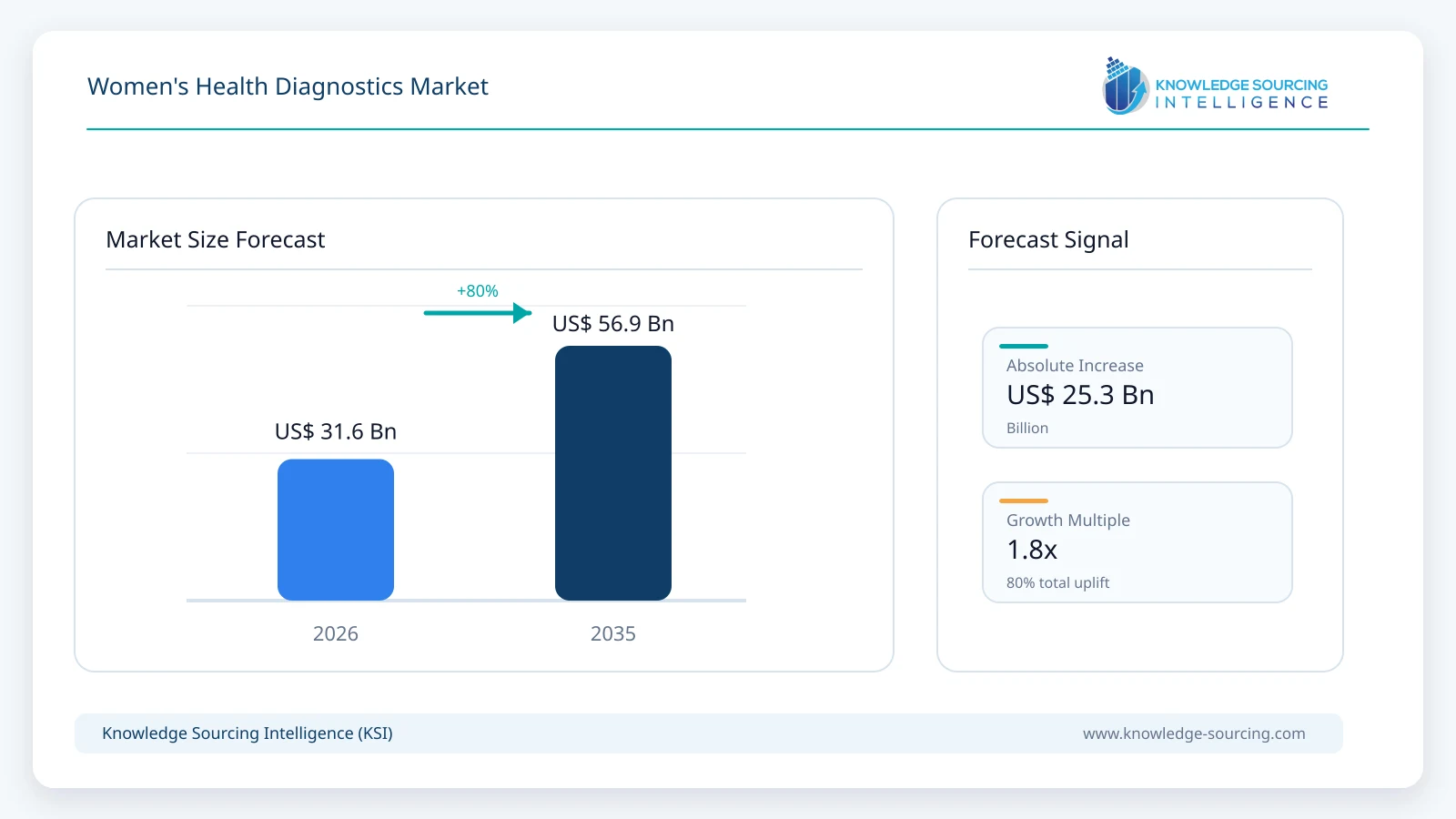
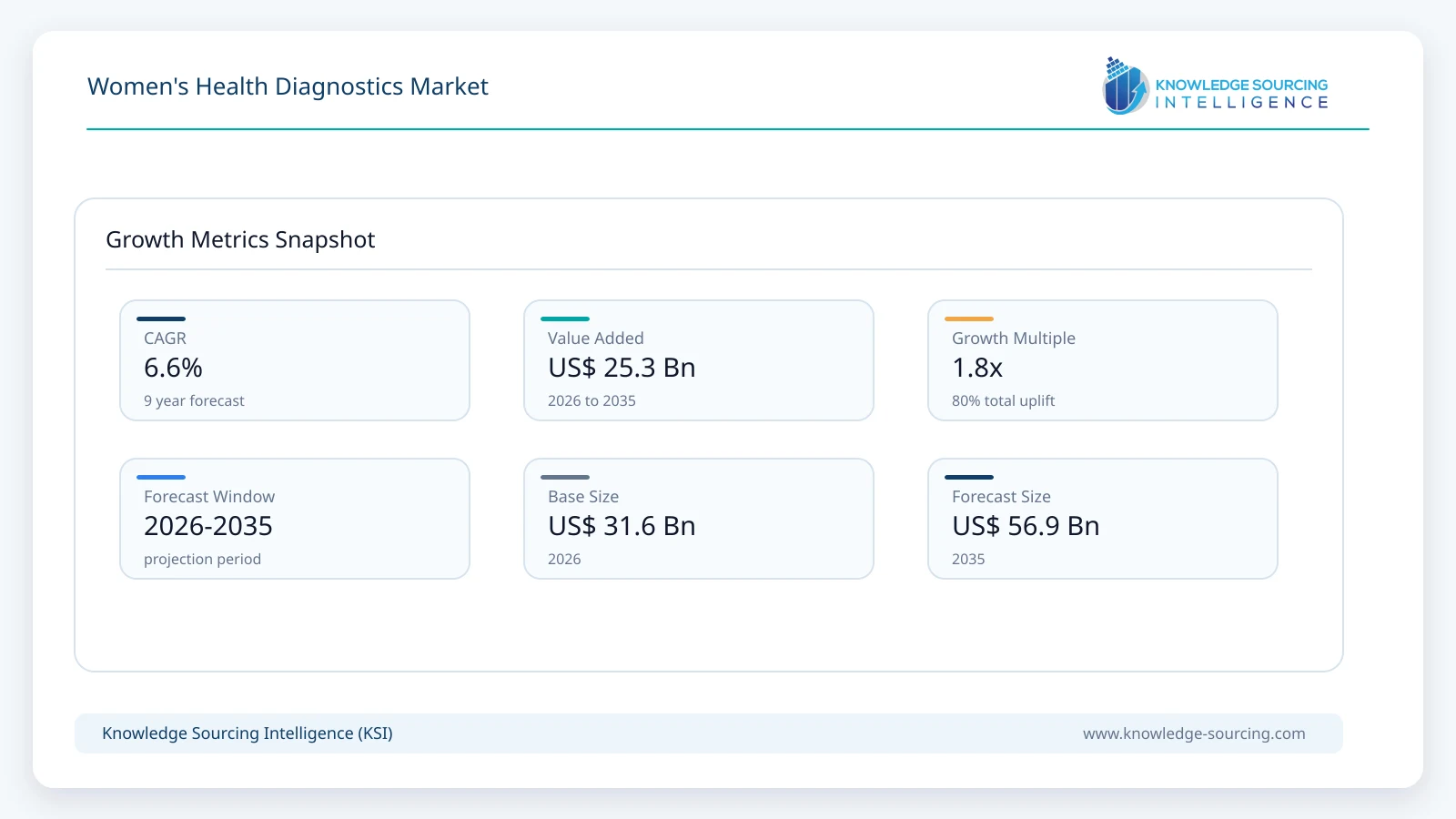
The Women's Health Diagnostics Market is expected to grow at a CAGR of 6.6% from a market value of USD 31.6 billion in 2026 to USD 56.9 billion in 2035.
Highlights:
- 1Expansion of national cervical cancer screening programs is increasing demand for molecular HPV diagnostics because healthcare systems require higher clinical sensitivity than conventional cytology.
- 2Rising infertility rates are driving adoption of hormone testing, ovulation monitoring, and reproductive biomarker diagnostics because clinicians are providing increasingly personalized fertility management.
- 3Prenatal genetic screening is expanding across obstetric practice because non-invasive molecular technologies reduce procedural risks while improving detection of chromosomal abnormalities.
- 4Hospitals are investing in automated diagnostic platforms because increasing testing volumes require standardized workflows that improve operational efficiency and laboratory productivity.
Women's health diagnostics forms an essential component of preventive healthcare because accurate diagnosis directly influences treatment selection, disease prognosis, maternal outcomes, and long-term healthcare costs. The market covers laboratory-based diagnostics, molecular testing, immunodiagnostics, microbiology, cytology, genetic testing, and point-of-care solutions designed specifically for female reproductive and gynecological conditions.
Demand is increasing because governments, healthcare providers, and international organizations are expanding organized screening programs for cervical cancer, breast cancer, sexually transmitted infections, and prenatal disorders. Population aging, delayed pregnancies, increasing infertility prevalence, and growing awareness of hereditary cancer risk are expanding diagnostic requirements beyond conventional laboratory testing. Healthcare providers therefore are adopting high-throughput automated systems capable of processing larger testing volumes while maintaining diagnostic accuracy.
Regulatory frameworks continue supporting validated molecular assays, companion diagnostics, and standardized laboratory quality systems. Agencies including the U.S. Food and Drug Administration (FDA), the European Medicines Agency (EMA), the World Health Organization (WHO), and national public health organizations are promoting evidence-based screening strategies that encourage adoption of advanced diagnostic technologies. These regulatory initiatives strengthen clinical confidence while accelerating commercialization of innovative assays addressing unmet diagnostic needs across women's health.
Market Dynamics
Market Drivers
Expansion of Organized Cervical Cancer Screening Programs: Population-wide screening programs remain a primary demand generator for women's health diagnostics because early identification substantially improves treatment outcomes. Governments are expanding HPV-based screening programs as evidence increasingly supports molecular testing over conventional cytology. Laboratory networks therefore are increasing investments in automated molecular diagnostic systems capable of processing larger screening populations. This transition strengthens long-term demand for high-throughput instruments, assay kits, and laboratory automation solutions.
Growing Adoption of Molecular Diagnostics in Women's Health: Molecular diagnostics provides higher analytical sensitivity for infectious diseases, hereditary cancers, reproductive disorders, and prenatal abnormalities. Clinical laboratories are replacing conventional diagnostic approaches with multiplex PCR, next-generation sequencing, and genomic assays because clinicians require more precise diagnostic information. Manufacturers therefore are expanding assay portfolios that integrate multiple women's health biomarkers on common diagnostic platforms. This evolution supports personalized clinical management while improving laboratory efficiency.
Increasing Maternal Age and Fertility Assessment: Delayed parenthood increases the need for comprehensive reproductive evaluation because fertility declines with advancing maternal age. Healthcare providers are performing broader hormonal profiling, ovarian reserve assessment, genetic carrier screening, and prenatal diagnostics to guide reproductive decision-making. Diagnostic companies consequently are developing integrated fertility testing solutions that improve accessibility across specialty clinics and hospital laboratories. The market therefore benefits from sustained demand throughout the reproductive care continuum.
Laboratory Automation Supporting Diagnostic Capacity: Diagnostic laboratories require greater operational efficiency as testing volumes continue increasing across oncology, infectious diseases, and reproductive medicine. Automation reduces manual variability while improving workflow consistency and turnaround time. Healthcare institutions therefore are investing in integrated laboratory analyzers, digital pathology, and AI-supported software that optimize diagnostic throughput. These investments reinforce long-term replacement demand for advanced diagnostic platforms.
Market Restraints
High capital investment requirements for automated molecular diagnostic systems limit adoption among resource-constrained healthcare facilities.
Reimbursement variability across countries reduces access to advanced genetic and molecular women's health diagnostics.
Limited laboratory infrastructure and trained molecular diagnostic personnel constrain implementation in several low- and middle-income healthcare systems.
Market Opportunities
Expansion of Self-Testing and Home-Based Diagnostics: Home-based diagnostics is becoming an important growth avenue because women are seeking convenient and private testing options for reproductive and preventive healthcare. Demand is increasing for pregnancy tests, ovulation monitoring kits, menopause biomarker tests, and self-collected HPV screening as consumers increasingly participate in proactive health management. Diagnostic manufacturers are developing digitally connected point-of-care solutions that simplify sample collection while maintaining analytical performance. This transition expands access to screening beyond traditional healthcare settings and strengthens long-term demand for consumer-focused diagnostic products.
Increasing Adoption of Precision Oncology Diagnostics: Precision medicine is redefining gynecological cancer management because therapeutic decisions increasingly depend on molecular characterization rather than histopathological findings alone. Clinical laboratories are integrating companion diagnostics, next-generation sequencing, and biomarker profiling into routine oncology workflows as targeted therapies continue expanding across breast and ovarian cancers. Diagnostic companies are broadening oncology assay portfolios that support treatment selection, recurrence monitoring, and prognostic assessment. This evolution positions molecular diagnostics as a central component of personalized women's cancer care.
Integration of Artificial Intelligence into Diagnostic Workflows: Artificial intelligence improves laboratory efficiency because it supports image interpretation, quality control, workflow prioritization, and clinical decision support. Healthcare providers are implementing AI-enabled digital pathology and imaging analysis platforms as diagnostic workloads continue increasing across cytology and oncology screening programs. Technology developers are integrating machine learning algorithms with laboratory information systems to improve consistency while reducing interpretation variability. These innovations strengthen diagnostic confidence and accelerate adoption of digital laboratory infrastructure.
Expansion of Women's Preventive Healthcare Programs in Emerging Economies: Preventive healthcare initiatives increase diagnostic demand because organized screening improves early disease identification and reduces long-term treatment costs. Governments and public health organizations are expanding cervical cancer screening, prenatal care, sexually transmitted infection testing, and maternal health programs across emerging economies. Diagnostic manufacturers are introducing cost-effective molecular assays and portable diagnostic platforms that address infrastructure limitations in decentralized healthcare settings. These investments broaden market penetration while improving healthcare accessibility for underserved populations.
Disease & Epidemiology Analysis
Women's health diagnostics addresses disease areas where early detection significantly influences survival, reproductive outcomes, and healthcare expenditure. Gynecological cancers, reproductive disorders, prenatal abnormalities, and infectious diseases remain the principal clinical indications driving diagnostic utilization. Breast cancer represents the most frequently diagnosed cancer among women globally, while cervical cancer continues to impose a substantial burden in regions with limited screening coverage. Healthcare providers therefore are expanding molecular screening and biomarker testing to support earlier intervention and improve clinical outcomes.
Reproductive disorders are creating sustained diagnostic demand because infertility, polycystic ovary syndrome (PCOS), endometriosis, and hormonal abnormalities require laboratory confirmation before treatment planning. Delayed childbearing and increasing awareness of fertility preservation are encouraging comprehensive endocrine testing, ovarian reserve assessment, and genetic carrier screening. Fertility clinics consequently are incorporating advanced diagnostic technologies that support individualized reproductive management while improving treatment success.
Prenatal diagnostics remains a rapidly evolving clinical segment because non-invasive testing methods reduce procedural risks associated with invasive prenatal diagnosis. Cell-free fetal DNA analysis, chromosomal screening, infectious disease testing, and maternal biomarker assessment are becoming integral components of antenatal care as healthcare providers emphasize early fetal risk identification. Diagnostic laboratories therefore are expanding molecular testing capacity that supports both routine prenatal screening and high-risk pregnancy management.
Treatment Guidelines Landscape
Organization | Disease Area | Current Guideline Focus | Diagnostic Impact |
World Health Organization (WHO) | Cervical Cancer | Recommends HPV DNA testing as the preferred screening method where feasible | Increases demand for molecular HPV diagnostic assays |
U.S. Preventive Services Task Force (USPSTF) | Cervical Cancer | Primary HPV testing or co-testing for eligible women aged 30–65 years | Supports routine implementation of molecular screening |
American College of Obstetricians and Gynecologists (ACOG) | Prenatal Care | Recommends prenatal genetic screening and counseling based on patient preference and clinical assessment | Expands adoption of prenatal molecular diagnostics |
National Comprehensive Cancer Network (NCCN) | Breast & Ovarian Cancer | Recommends biomarker testing and hereditary cancer risk assessment in appropriate patients | Encourages utilization of companion diagnostics and genetic testing |
Market Segmentation
By Product Type
Diagnostic instruments and devices provide the analytical foundation for women's health testing because they support molecular diagnostics, immunoassays, cytology, microbiology, and clinical chemistry workflows. Healthcare systems are increasing investments in automated analyzers, PCR platforms, digital pathology systems, and integrated laboratory solutions as screening volumes continue expanding for cervical cancer, prenatal disorders, and sexually transmitted infections. Capital investment requirements remain a constraint for smaller laboratories, encouraging manufacturers to develop scalable and modular platforms that accommodate varying testing capacities. This transition strengthens replacement demand for high-throughput diagnostic systems while improving laboratory productivity, diagnostic consistency, and turnaround time.
By Diagnostic Application
Gynecological cancer diagnostics represents one of the most strategically important application segments because disease prognosis depends heavily on early detection and accurate molecular characterization. Screening programs are increasingly adopting HPV DNA testing, biomarker analysis, companion diagnostics, and genomic profiling as clinical guidelines continue emphasizing precision medicine for breast, cervical, ovarian, and endometrial cancers. Conventional cytology remains relevant for several clinical pathways, although molecular diagnostics provides higher analytical sensitivity for many screening applications. Diagnostic manufacturers are expanding oncology-focused assay portfolios that integrate risk assessment, disease detection, treatment selection, and recurrence monitoring. This evolution supports personalized oncology management while reinforcing long-term demand for advanced molecular diagnostic technologies.
By End User
Hospitals remain the primary end users because they manage comprehensive women's healthcare services spanning preventive screening, oncology, reproductive medicine, prenatal care, and infectious disease management. Diagnostic laboratories are expanding high-throughput molecular testing capabilities as centralized laboratory networks continue processing increasing screening volumes from hospitals and outpatient facilities. Specialty gynecology and women's health clinics are adopting advanced fertility and reproductive diagnostics because personalized treatment planning depends on accurate hormonal and genetic assessment. Physician office laboratories and home-based testing environments are improving accessibility through point-of-care technologies and self-testing solutions that reduce dependence on centralized laboratory infrastructure. This diversified end-user landscape broadens diagnostic accessibility while supporting continuous adoption across multiple healthcare delivery settings.
Regional Analysis
North America Market Analysis
North America represents the most technologically advanced regional market because established screening guidelines, favorable laboratory infrastructure, and high healthcare expenditure support widespread adoption of innovative diagnostic technologies. Clinical practice increasingly relies on molecular diagnostics for cervical cancer screening, hereditary cancer assessment, sexually transmitted infections, and prenatal testing as evidence-based recommendations continue evolving. Healthcare providers are investing in laboratory automation, digital pathology, and AI-assisted diagnostic workflows because testing demand continues increasing across preventive and precision medicine applications. Regulatory oversight from the U.S. Food and Drug Administration strengthens confidence in newly commercialized diagnostic assays while encouraging manufacturers to expand their women's health portfolios. Major diagnostic companies maintain significant research, manufacturing, and commercialization activities across the region, supporting rapid introduction of advanced testing solutions. This combination of technological innovation, organized screening programs, and strong reimbursement for several diagnostic services positions North America as a leading contributor to global market development.
Europe Market Analysis
Europe maintains a mature women's health diagnostics ecosystem because national healthcare systems prioritize organized screening and preventive healthcare. Population-based cervical cancer programs are increasingly transitioning toward HPV-based molecular testing as European clinical recommendations continue aligning with evidence supporting higher diagnostic sensitivity. Healthcare providers are modernizing laboratory infrastructure through automation and integrated diagnostic platforms because expanding screening initiatives require greater operational efficiency. The In Vitro Diagnostic Regulation (IVDR) is strengthening quality and clinical evidence requirements, encouraging manufacturers to invest in regulatory compliance while improving product reliability. Growing awareness of hereditary cancer risk and personalized oncology is increasing demand for companion diagnostics and genomic testing across breast and ovarian cancer management. These developments reinforce sustained adoption of advanced laboratory technologies while supporting consistent demand for women's health diagnostic products across the region.
Asia Pacific Market Analysis
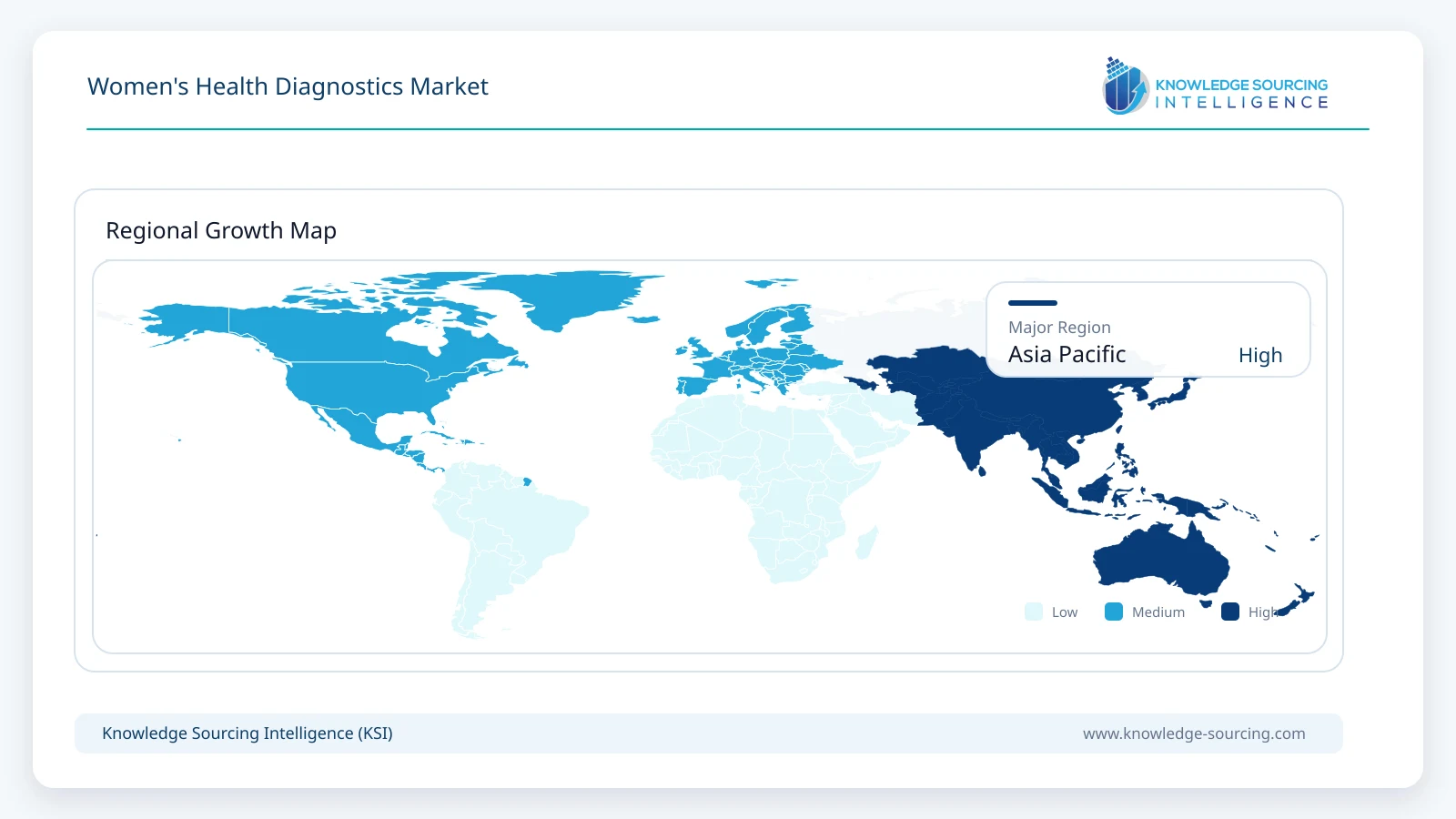
Asia Pacific is experiencing the fastest structural expansion because improving healthcare access and government-led screening initiatives are increasing diagnostic utilization across both developed and emerging economies. Population growth, urbanization, and rising awareness of women's preventive healthcare are encouraging greater participation in cervical cancer screening, prenatal testing, and fertility assessment. Healthcare systems are expanding molecular diagnostic capacity while investing in laboratory modernization to accommodate increasing testing demand. International diagnostic manufacturers are strengthening regional partnerships and distribution networks because healthcare infrastructure continues developing across major economies. Cost sensitivity remains a constraint in several markets, encouraging adoption of scalable and cost-effective diagnostic platforms suitable for decentralized healthcare settings. Continued public health investment and increasing disease awareness position Asia Pacific as a major growth region for women's health diagnostics through the forecast period.
Rest of the World
Healthcare systems across Latin America, the Middle East, and Africa are expanding diagnostic capacity because improving maternal health and cancer prevention remain public health priorities. Governments and international organizations are supporting cervical cancer elimination initiatives through broader HPV vaccination and screening programs that increase demand for laboratory diagnostics. Access to advanced molecular testing varies considerably between countries because laboratory infrastructure and healthcare funding remain uneven. Diagnostic manufacturers are introducing portable and workflow-efficient technologies that improve accessibility within resource-limited environments. International collaborations are strengthening laboratory quality systems while expanding technical training for healthcare professionals responsible for women's health diagnostics. These structural improvements are gradually increasing adoption of molecular and immunodiagnostic technologies despite persistent infrastructure and reimbursement challenges, creating long-term opportunities for market expansion.
Regulatory Landscape
Regulatory frameworks play a central role in shaping the women's health diagnostics market because analytical validity, clinical performance, and patient safety directly influence diagnostic adoption. The U.S. Food and Drug Administration (FDA), the European Commission through the In Vitro Diagnostic Regulation (IVDR), the World Health Organization (WHO), and national regulatory agencies establish requirements for assay validation, quality management, labeling, and post-market surveillance. These standards encourage manufacturers to generate robust clinical evidence before commercialization while strengthening confidence among healthcare providers and laboratory networks. As molecular diagnostics continue expanding across oncology, reproductive health, and infectious disease testing, regulatory agencies are placing greater emphasis on standardized performance evaluation and real-world clinical utility.
The regulatory environment is increasingly supporting molecular and genomic diagnostics because healthcare systems are prioritizing earlier disease detection and personalized treatment strategies. The FDA continues reviewing innovative HPV assays, companion diagnostics, and molecular infectious disease tests through established regulatory pathways, while the European IVDR is requiring stronger clinical evidence and performance documentation for in vitro diagnostic devices. Manufacturers are expanding regulatory investments to ensure global market access as compliance requirements continue becoming more comprehensive. This evolution is improving diagnostic quality while encouraging development of highly sensitive and clinically validated women's health testing platforms.
International public health initiatives are also influencing regulatory priorities because governments are aligning national screening policies with evidence-based recommendations. The World Health Organization's cervical cancer elimination strategy promotes HPV DNA testing as the preferred screening approach where feasible, encouraging healthcare systems to modernize laboratory infrastructure and adopt validated molecular assays. National health authorities are updating screening guidelines to incorporate primary HPV testing, hereditary cancer assessment, and prenatal genetic screening, creating favorable regulatory conditions for innovative diagnostic technologies. These coordinated policy developments reinforce long-term demand for advanced women's health diagnostics.
Pipeline Analysis
Although women's health diagnostics is primarily driven by in vitro diagnostic technologies rather than therapeutic drug pipelines, manufacturers are continuously expanding assay development pipelines that improve disease detection, workflow efficiency, and personalized clinical decision-making. Current innovation is focusing on high-risk human papillomavirus (HPV) detection, multiplex sexually transmitted infection (STI) panels, liquid biopsy applications for gynecological cancers, non-invasive prenatal testing (NIPT), and artificial intelligence-assisted pathology solutions. These diagnostic pipelines are addressing unmet clinical needs by improving analytical sensitivity while reducing laboratory turnaround times.
Several leading companies are advancing molecular diagnostic portfolios through regulatory submissions and clinical validation studies. Roche continues expanding the cobas HPV portfolio and integrated molecular platforms supporting cervical cancer screening. BD is strengthening the BD COR System with additional women's health and STI assays that increase laboratory automation. Danaher subsidiary Cepheid continues broadening the GeneXpert molecular menu for reproductive and infectious disease diagnostics through cartridge-based testing solutions. Siemens Healthineers is integrating artificial intelligence with digital pathology and laboratory informatics to improve interpretation efficiency. These developments indicate that competitive differentiation increasingly depends on comprehensive diagnostic ecosystems rather than individual assays.
Clinical validation efforts are increasingly emphasizing decentralized testing, multiplex biomarker detection, and workflow integration because healthcare providers require faster and more comprehensive diagnostic information. Developers are evaluating self-collected cervical samples for HPV testing, AI-supported cytology interpretation, and expanded genomic panels that identify hereditary cancer susceptibility alongside therapeutic biomarkers. Regulatory approvals for these technologies are expected to broaden diagnostic accessibility while strengthening precision medicine across women's healthcare. The innovation pipeline therefore is shifting toward integrated molecular platforms capable of supporting multiple disease indications through standardized laboratory infrastructure.
Reimbursement Landscape
Reimbursement policies directly influence utilization of women's health diagnostics because laboratory testing adoption depends on both clinical value and healthcare affordability. Public and private payers generally provide reimbursement for established screening procedures such as cervical cancer screening, prenatal laboratory testing, mammography-related diagnostics, and selected sexually transmitted infection tests when supported by national clinical guidelines. Coverage for advanced molecular diagnostics and hereditary cancer testing continues expanding as evidence demonstrates improvements in early diagnosis and treatment selection. This trend is encouraging healthcare providers to incorporate precision diagnostics into routine women's healthcare pathways.
Coverage for emerging technologies remains variable because reimbursement decisions often require robust clinical utility and health economic evidence before widespread adoption. Companion diagnostics, liquid biopsy applications, expanded genomic testing, and artificial intelligence-supported diagnostic tools are undergoing continuous evaluation by reimbursement authorities across major healthcare markets. Diagnostic manufacturers are generating additional real-world evidence to demonstrate long-term cost effectiveness and improved patient outcomes. As personalized medicine continues expanding, reimbursement frameworks are increasingly recognizing the clinical and economic value of advanced molecular diagnostics within comprehensive women's healthcare.
Competitive Landscape
Abbott Laboratories
Abbott Laboratories maintains a strong strategic position in the women's health diagnostics market through its integrated diagnostic ecosystem that combines immunoassay, clinical chemistry, molecular diagnostics, and point-of-care testing under the Alinity platform. The company's broad installed instrument base enables laboratories to consolidate multiple testing workflows, creating long-term customer retention through recurring reagent demand.
Becton, Dickinson and Company (BD)
BD differentiates itself through integrated specimen collection, molecular diagnostics, microbiology, and laboratory automation solutions that support women's health testing across centralized laboratories and decentralized healthcare settings. The company's BD COR™ System and BD MAX™ Molecular Diagnostic System are strengthening molecular testing capabilities for sexually transmitted infections and HPV-associated disease detection as laboratories increasingly transition toward automated workflows.
bioMérieux SA
bioMérieux focuses on infectious disease diagnostics and molecular microbiology, making it strategically important for women's reproductive and maternal health testing. The company integrates molecular diagnostics, syndromic testing, and automated microbiology solutions that enable rapid identification of pathogens associated with sexually transmitted infections and maternal infections.
Siemens Healthineers AG
Siemens Healthineers distinguishes itself through integrated laboratory diagnostics, digital pathology, imaging, and artificial intelligence solutions that support comprehensive women's healthcare. The company combines immunodiagnostics, clinical chemistry, molecular testing, and digital workflow technologies because healthcare systems increasingly require connected diagnostic ecosystems rather than standalone laboratory instruments.
Danaher Corporation
Danaher participates in the women's health diagnostics market through subsidiaries including Cepheid, Beckman Coulter Diagnostics, and Leica Biosystems, providing molecular diagnostics, immunodiagnostics, clinical chemistry, and pathology solutions. The company's diversified diagnostics portfolio enables healthcare providers to perform infectious disease testing, oncology diagnostics, reproductive health assessment, and laboratory automation within integrated workflows.
F. Hoffmann-La Roche Ltd.
F. Hoffmann-La Roche Ltd. holds a leading position in the women's health diagnostics market through its extensive molecular diagnostics portfolio, companion diagnostics expertise, and integrated laboratory solutions. The company's Roche Diagnostics division combines molecular testing, immunodiagnostics, tissue diagnostics, sequencing technologies, and digital pathology to support screening, diagnosis, treatment selection, and disease monitoring across women's healthcare.
Key Developments
June 2026: Xella Health officially launched as an AI-powered precision health platform focused on conditions affecting the XX chromosome. The company says it is designed to improve detection and treatment for more than 130 commonly missed women’s health conditions.
February 2026: SGS announced a partnership with Berlin-based theblood to support the development and validation of women’s health diagnostics based on menstrual blood. The collaboration is aimed at building a scientific and regulatory foundation for non-invasive, female-specific testing.
Strategic Insights and Future Market Outlook
Women's health diagnostics is shifting from disease-specific testing toward integrated diagnostic pathways because clinicians increasingly require comprehensive information across prevention, diagnosis, treatment selection, and long-term monitoring. Molecular diagnostics, artificial intelligence, digital pathology, and laboratory automation are becoming interconnected as healthcare systems continue emphasizing earlier disease detection and precision medicine. Diagnostic manufacturers are expanding assay menus across common analytical platforms because laboratories seek operational efficiency without compromising clinical performance. This structural transition is strengthening recurring demand for reagents, software, and workflow solutions alongside capital equipment.
Precision diagnostics is reshaping clinical decision-making because oncology, reproductive medicine, and prenatal care increasingly depend on biomarker-driven assessments rather than conventional laboratory testing alone. Healthcare providers are incorporating genomic testing, companion diagnostics, liquid biopsy technologies, and multiplex molecular assays into routine clinical practice as evidence supporting personalized healthcare continues expanding. Regulatory agencies are simultaneously strengthening quality requirements while encouraging innovation through evidence-based evaluation pathways. These developments are increasing competitive differentiation based on clinical utility, automation, and integrated digital capabilities rather than individual assay performance.
Emerging healthcare systems are creating long-term growth opportunities because governments continue expanding women's preventive healthcare programs, cervical cancer screening initiatives, and maternal health services. Diagnostic companies are introducing scalable molecular platforms and decentralized testing solutions that address infrastructure limitations while improving accessibility. Artificial intelligence, cloud-enabled laboratory informatics, and self-collection technologies are expected to further enhance diagnostic efficiency and patient participation, supporting broader adoption of advanced women's health diagnostics across both developed and developing healthcare markets.
Women's Health Diagnostics Market Scope:
| Report Metric | Details |
|---|---|
| Total Market Size in 2026 | USD 31.6 billion |
| Total Market Size in 2035 | USD 56.9 billion |
| Forecast Unit | Billion |
| Growth Rate | 6.6% |
| Study Period | 2021 to 2035 |
| Historical Data | 2021 to 2024 |
| Base Year | 2025 |
| Forecast Period | 2026 – 2035 |
| Segmentation | Product Type, Diagnostic Application, Technology, Sample Type, End User, Geography |
| Companies |
|
Market Segmentation
Product Type
Reproductive & Fertility Diagnostics
End User
Geography
- North America
- South America
- Europe
- Middle East and Africa
- Asia Pacific
Table of Contents
1. EXECUTIVE SUMMARY
1.1 Market Snapshot
1.2 Key Findings
1.3 Analyst Insights
1.4 Strategic Recommendations
2. RESEARCH METHODOLOGY
2.1 Research Design
2.2 Data Collection Methodology
2.3 Market Size Estimation
2.4 Forecasting Model
2.5 Assumptions & Limitations
3. GLOBAL WOMEN'S HEALTH DIAGNOSTICS MARKET OVERVIEW, SIZE & FORECAST
3.1 Market Definition & Scope
3.2 Women's Health Disease & Diagnostic Landscape Overview
3.3 Industry Evolution
3.4 Key Market Trends
3.5 Historical Market Size Analysis (2021–2025)
3.6 Market Forecast (2026–2035)
3.7 Disease Burden & Unmet Diagnostic Needs
3.8 Epidemiology and Prevalence Analysis
3.8.1 Breast Cancer Screening Population
3.8.2 Cervical Cancer Screening Population
3.8.3 Ovarian Cancer Burden
3.8.4 Endometriosis Patient Population
3.8.5 Polycystic Ovary Syndrome (PCOS) Population
3.8.6 Sexually Transmitted Infection (STI) Testing Population in Women
3.8.7 Pregnancy & Prenatal Testing Population
3.9 Diagnostic Testing Volume Analysis
3.10 Women's Health Diagnostic Pathway Analysis
4. MARKET DYNAMICS
4.1 Market Drivers
4.2 Market Restraints
4.3 Market Opportunities
4.4 Market Challenges
5. INDUSTRY LANDSCAPE
5.1 Industry Value Chain Analysis
5.2 Pricing Analysis
5.3 Reimbursement Landscape
6. INNOVATION LANDSCAPE
6.1 Emerging Diagnostic Technologies
6.2 Product Innovation Analysis
6.3 Clinical Trial Analysis
6.4 Pipeline Analysis
6.5 AI Integration in Women's Health Diagnostics
6.6 Digital Health Integration in Women's Health Diagnostics
7. REGULATORY LANDSCAPE
7.1 Regulatory Framework
7.2 Approval Pathways
7.3 Compliance Requirements
8. GLOBAL WOMEN'S HEALTH DIAGNOSTICS MARKET LANDSCAPE ANALYSIS
8.1 Analysis by Technology Platform
8.2 Analysis by Clinical Application
8.3 Analysis by Biomarker Type
8.4 Analysis by Sample Type
8.5 Analysis by Testing Methodology
9. GLOBAL WOMEN'S HEALTH DIAGNOSTICS MARKET SEGMENT ANALYSIS (2021–2035)
9.1 By Product Type
9.1.1 Diagnostic Instruments & Devices
9.1.2 Reagents & Consumables
9.2 By Diagnostic Application
9.2.1 Gynecological Cancer Diagnostics
9.2.1.1 Breast Cancer
9.2.1.2 Cervical Cancer
9.2.1.3 Ovarian Cancer
9.2.1.4 Endometrial Cancer
9.2.1.5 Others
9.2.2 Reproductive & Fertility Diagnostics
9.2.2.1 Pregnancy Testing
9.2.2.2 Fertility & Ovulation Testing
9.2.2.3 Endometriosis Diagnostics
9.2.2.4 Menopause Testing
9.2.2.5 Others
9.2.3 Prenatal & Maternal Diagnostics
9.2.4 Infectious Disease Diagnostics
9.2.5 Others
9.3 By Technology
9.3.1 Immunoassays
9.3.2 Molecular Diagnostics
9.3.3 Cytology & Histopathology
9.3.4 Clinical Chemistry
9.3.5 Others
9.4 By Sample Type
9.4.1 Blood
9.4.2 Cervical Samples
9.4.3 Vaginal Swabs
9.4.4 Urine
9.4.5 Tissue Biopsy
9.4.6 Saliva & Other Samples
9.5 By End User
9.5.1 Hospitals
9.5.2 Diagnostic Laboratories
9.5.3 Specialty Gynecology & Women's Health Clinics
9.5.4 Physician Office Laboratories
9.5.5 Home Care & Self-Testing Settings
10. GLOBAL WOMEN'S HEALTH DIAGNOSTICS MARKET GEOGRAPHICAL ANALYSIS (2021–2035)
10.1 North America
10.2 Europe
10.3 Asia-Pacific
10.4 South America
10.5 Middle East & Africa
11. GLOBAL WOMEN'S HEALTH DIAGNOSTICS MARKET COUNTRY ANALYSIS (2021–2035)
11.1 United States
11.2 Canada
11.3 Germany
11.4 United Kingdom
11.5 France
11.6 Italy
11.7 Spain
11.8 Japan
11.9 China
11.10 India
11.11 South Korea
11.12 Australia
11.13 Brazil
11.14 Mexico
11.15 Saudi Arabia
11.16 South Africa
12. COMPETITIVE LANDSCAPE
12.1 Market Share Analysis
12.2 Strategic Developments
12.3 Mergers & Acquisitions, Partnerships & Collaborations
12.4 Product Launches
13. COMPANY PROFILES
13.1 Abbott Laboratories
13.1.1 Company Overview
13.1.2 Financials
13.1.3 Product Portfolio
13.1.4 Recent Developments
13.2 AccuBioTech Co., Ltd.
13.3 Becton, Dickinson and Company (BD)
13.4 Bio-Rad Laboratories, Inc.
13.5 Biomérieux SA
13.6 Siemens Healthineers AG
13.7 Chembio Diagnostic Systems, Inc.
13.8 Danaher Corporation
13.9 DIALAB GmbH
13.10 F. Hoffmann-La Roche Ltd.
14. GLOBAL WOMEN'S HEALTH DIAGNOSTICS MARKET COMMERCIAL FORECAST ANALYSIS
14.1 Commercial Forecast by Diagnostic Application
14.2 Commercial Forecast by Technology Platform
14.3 Commercial Forecast by Product Category
14.4 Commercial Forecast by End User
15. INVESTMENT & FUNDING ANALYSIS
15.1 Venture Capital Trends
15.2 Government Funding
15.3 R&D Investments
16. FUTURE OUTLOOK
16.1 Key Growth Opportunities
16.2 Future Industry Trends
Navigate
Trusted by the world's leading organizations











