
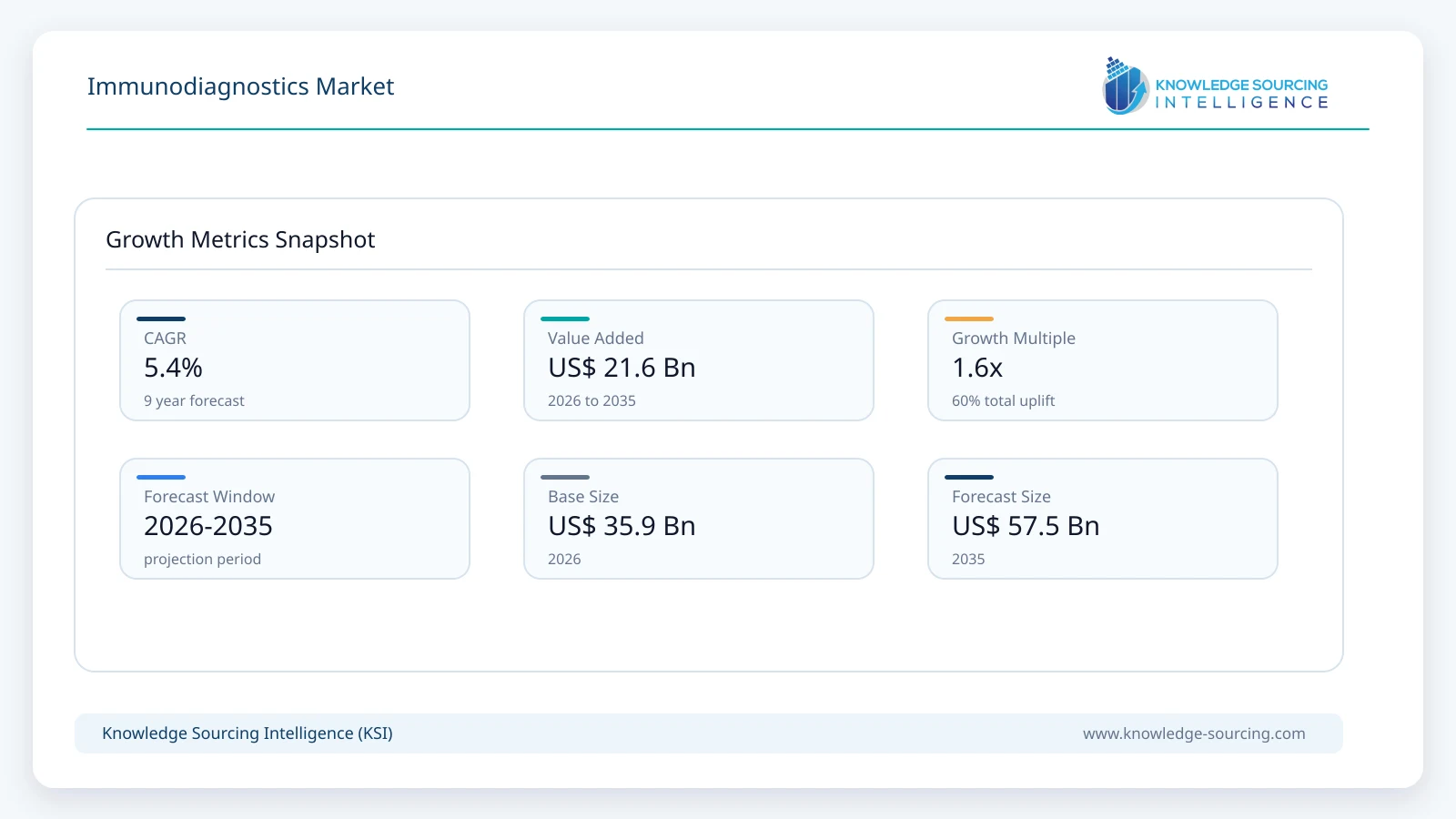
The Immunodiagnostics Market is expected to grow at a CAGR of 5.4% from a market value of USD 35.9 billion in 2026 to USD 57.5 billion in 2035.
Highlights:
- 1Rising chronic disease prevalence is increasing demand for high-sensitivity immunoassays because clinicians require earlier diagnosis and continuous disease monitoring across multiple therapeutic areas.
- 2Healthcare providers are expanding laboratory automation because growing testing volumes require faster turnaround times without compromising analytical accuracy.
- 3Regulatory agencies are strengthening diagnostic performance standards because clinical treatment decisions increasingly depend on validated biomarker measurements.
- 4Pharmaceutical companies are adopting companion diagnostics because targeted therapies require precise patient selection before treatment initiation.
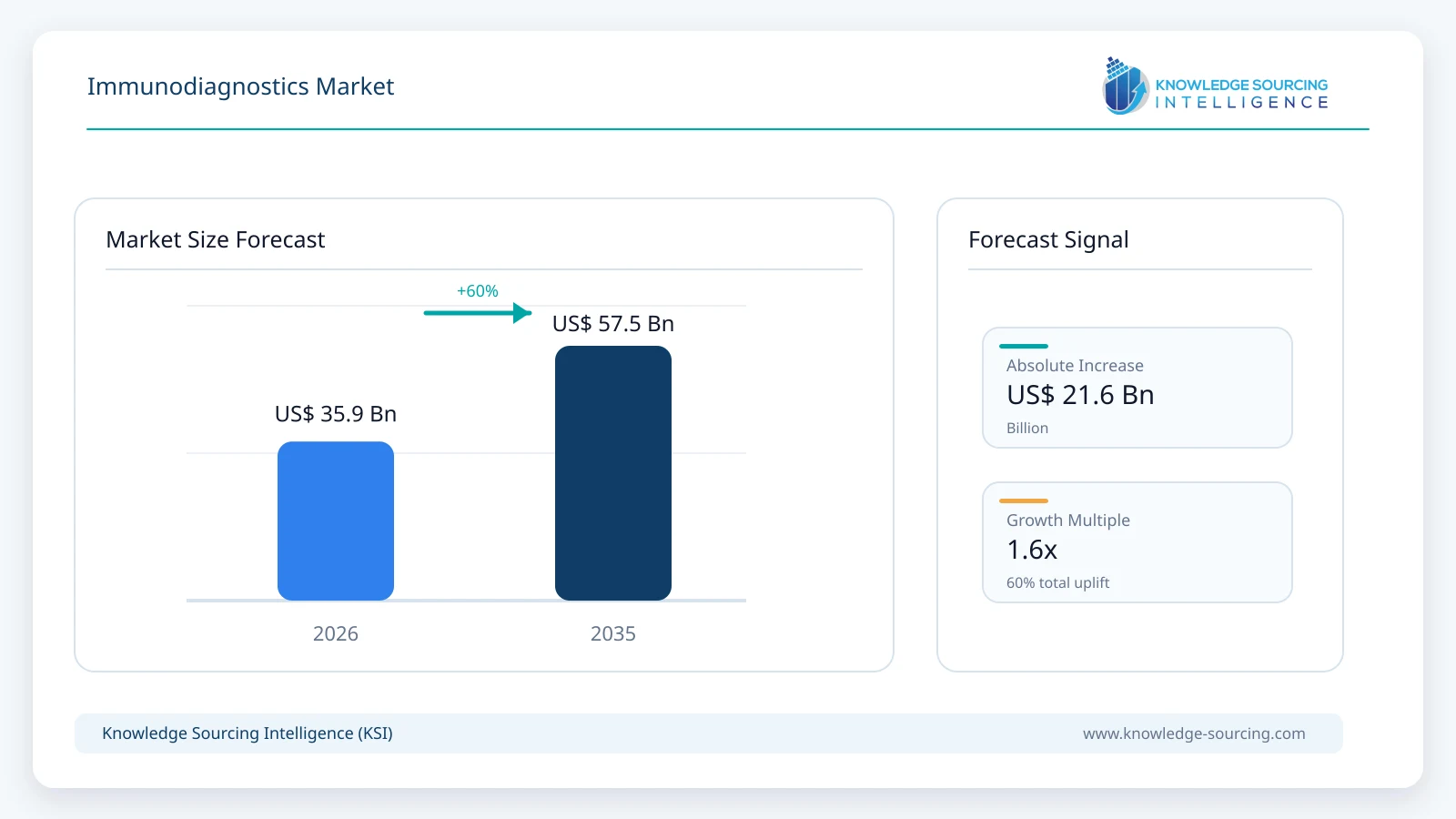
The immunodiagnostics market enables qualitative and quantitative detection of disease-associated biomarkers using antigen-antibody interactions across multiple clinical specialties. Its value originates from supporting diagnosis, prognosis, disease monitoring, therapeutic response evaluation, and population screening within routine healthcare delivery. Growing clinical dependence on biomarker-guided decision-making is increasing laboratory demand for highly sensitive immunoassay technologies that generate reproducible diagnostic outcomes.
Healthcare systems are adopting integrated diagnostic workflows because aging populations and chronic disease prevalence require continuous laboratory monitoring. This transition increases utilization of automated immunodiagnostic platforms that reduce manual intervention while maintaining analytical precision. Clinical laboratories consequently emphasize operational efficiency since workforce shortages and expanding testing volumes create sustained pressure on laboratory productivity.
Government agencies continue strengthening regulatory oversight because diagnostic accuracy directly influences patient management and healthcare expenditures. Manufacturers are expanding investment in assay validation, quality assurance, and regulatory documentation as evolving approval pathways require comprehensive clinical evidence. These regulatory expectations improve confidence in commercially available assays while increasing competitive barriers for new entrants.
Market Dynamics
Market Drivers
Growing Clinical Dependence on Biomarker-Based Disease Management: Biomarker-guided diagnosis defines modern clinical decision-making because physicians increasingly rely on measurable biological indicators to detect disease before clinical symptoms progress. Healthcare providers are expanding immunodiagnostic testing across oncology, cardiology, endocrinology, and infectious diseases as treatment pathways become more personalized. This growing diagnostic dependence increases demand for assays that demonstrate high analytical sensitivity while maintaining reproducibility across laboratory networks.
Laboratory Automation Improves Testing Efficiency: Clinical laboratories require automated workflows because expanding testing volumes create operational pressure that manual processes cannot efficiently accommodate. Hospitals and reference laboratories are replacing standalone analyzers with integrated immunoassay platforms that combine sample handling, quality control, and digital reporting within unified laboratory systems.
Expansion of Chronic Disease Burden Supports Routine Testing: Chronic diseases require repeated biomarker assessment because disease progression and therapeutic response change throughout long-term treatment. Healthcare systems are increasing utilization of immunodiagnostic assays as diabetes, autoimmune disorders, cardiovascular diseases, thyroid disorders, and cancer continue affecting larger patient populations.
Public Health Preparedness Expands Diagnostic Infrastructure: Governments maintain national diagnostic capacity because infectious disease outbreaks require rapid identification and surveillance. Public health laboratories are strengthening immunodiagnostic capabilities while healthcare institutions continue investing in flexible diagnostic infrastructure capable of responding to emerging pathogens. Preparedness initiatives increase procurement of automated immunoassay platforms that accommodate routine testing alongside emergency surge capacity.
Market Restraints
Stringent regulatory approval requirements increase development timelines and validation costs, reducing the speed at which manufacturers introduce new immunodiagnostic assays.
High capital investment for automated immunoassay platforms limits adoption among smaller healthcare facilities despite increasing clinical demand for advanced diagnostics.
Variability in reimbursement policies across healthcare systems constrains the utilization of newly introduced biomarker assays until sufficient clinical and economic evidence becomes available.
Market Opportunities
Multiplex Immunoassays Expand Diagnostic Value: Healthcare providers require comprehensive disease assessment because complex disorders involve multiple biological pathways that cannot be adequately evaluated using single-analyte testing. Clinical laboratories are adopting multiplex immunoassays that measure several biomarkers simultaneously while preserving sample volume and reducing testing time. This capability improves diagnostic efficiency without increasing laboratory workload.
Companion Diagnostics Strengthen Pharmaceutical Collaboration: Targeted therapeutics require precise patient identification because treatment efficacy depends on specific biomarker expression. Pharmaceutical companies are integrating companion diagnostic development into drug development programs as personalized medicine becomes increasingly established.
Digital Laboratory Ecosystems Improve Operational Performance: Healthcare organizations prioritize workflow optimization because laboratory efficiency increasingly influences healthcare quality and operating costs. Diagnostic platforms are incorporating cloud connectivity, laboratory information system integration, and artificial intelligence-assisted quality management to improve operational visibility. Laboratories are adopting digitally connected immunodiagnostic systems that reduce administrative burden while supporting standardized reporting.
Emerging Economies Continue Expanding Diagnostic Capacity: Many healthcare systems continue strengthening laboratory infrastructure because disease surveillance and chronic disease management require broader diagnostic access. Public and private healthcare providers are increasing investment in automated immunodiagnostic technologies while expanding laboratory networks throughout developing regions.
Disease & Epidemiology Analysis
The immunodiagnostics market supports disease management by enabling rapid detection of biomarkers associated with infectious diseases, cancer, autoimmune disorders, endocrine conditions, and cardiovascular diseases. Demand remains closely linked to disease prevalence because earlier diagnosis improves treatment selection and long-term patient outcomes. Healthcare providers are increasing the use of high-sensitivity immunoassays as chronic diseases require continuous monitoring rather than a one-time diagnosis.
Cancer incidence, diabetes, autoimmune disorders, and respiratory infections continue expanding the global testing burden, placing sustained pressure on laboratories to deliver accurate results with shorter turnaround times. Hospitals and diagnostic laboratories are adopting automated immunodiagnostic platforms because increasing patient volumes require standardized testing while reducing manual workflow. This shift strengthens demand for chemiluminescence and multiplex immunoassays that support higher throughput and broader biomarker coverage.
Public health surveillance also influences testing demand because emerging infectious diseases require rapid identification and monitoring. Governments are strengthening laboratory preparedness while manufacturers continue expanding assay menus for both routine diagnostics and outbreak response. This combination of chronic disease growth and infectious disease surveillance reinforces the long-term clinical importance of immunodiagnostics.
Treatment Guidelines Landscape
Disease Area | Guideline Organization | Role of Immunodiagnostics |
Infectious Diseases | World Health Organization | Supports antigen and antibody detection for diagnosis, surveillance, and treatment monitoring. |
Oncology | National Comprehensive Cancer Network | Biomarker testing guides targeted therapy selection and disease monitoring. |
Diabetes | American Diabetes Association | Immunoassays assist in C-peptide, insulin, and autoimmune diabetes evaluation. |
Autoimmune Diseases | European Alliance of Associations for Rheumatology | Autoantibody testing supports diagnosis and treatment assessment. |
Market Segmentation
By Product Type
Reagents & consumables represent the largest recurring revenue component because every diagnostic test requires validated assay materials regardless of analyzer ownership. Laboratories are increasing testing frequency as chronic disease monitoring and infectious disease surveillance expand worldwide. Manufacturers continue introducing disease-specific reagent portfolios that improve assay sensitivity and workflow standardization. The recurring purchase cycle creates stable demand while strengthening long-term customer relationships.
By Technology
CLIA remains widely adopted because it combines high analytical sensitivity with rapid processing and laboratory automation. Healthcare providers are replacing conventional testing methods as centralized laboratories require greater throughput without compromising diagnostic accuracy. Manufacturers continue expanding CLIA assay menus across oncology, endocrinology, infectious diseases, and cardiac diagnostics. This technology supports efficient large-scale testing while improving laboratory productivity.
By End User
Diagnostic and clinical laboratories account for a significant share of immunodiagnostic testing because they process large testing volumes across multiple disease areas. Laboratory networks are investing in automated analyzers to manage increasing patient demand while maintaining standardized quality. Growing dependence on centralized testing encourages the adoption of integrated immunodiagnostic platforms with digital connectivity and expanded assay menus. These investments reinforce laboratories as the primary end users of advanced immunodiagnostic solutions.
Regional Analysis
North America Market Analysis
North America represents a mature immunodiagnostics market because advanced laboratory infrastructure and broad access to healthcare support routine biomarker testing. Hospitals and reference laboratories are increasing investment in automated immunoassay systems as testing volumes continue rising across oncology, infectious diseases, and endocrine disorders. Stringent regulatory standards encourage manufacturers to introduce high-performance assays with strong clinical evidence. Companies are expanding companion diagnostics and specialty testing portfolios to support precision medicine initiatives. This combination of technological adoption and continuous assay innovation sustains regional demand.
Europe Market Analysis
Europe maintains a stable demand because healthcare systems emphasize early disease detection and standardized diagnostic practices. Public laboratories are adopting automated platforms as aging populations increase the prevalence of chronic diseases requiring long-term monitoring. Regulatory harmonization under the In Vitro Diagnostic Regulation (IVDR) is encouraging manufacturers to strengthen clinical validation while rationalizing product portfolios. Investment in specialty diagnostics and laboratory digitalization supports broader adoption of advanced immunodiagnostic technologies across the region.
Asia Pacific Market Analysis
Asia-Pacific is experiencing the fastest expansion because healthcare infrastructure and laboratory capacity continue improving across emerging economies. Governments are increasing investments in disease surveillance and hospital diagnostics as urbanization and chronic disease prevalence raise testing demand. Diagnostic companies are expanding manufacturing facilities, distribution networks, and localized product offerings to improve market access. Rising healthcare expenditure and greater awareness of preventive diagnostics continue strengthening long-term growth opportunities.
Rest of the World
Countries across Latin America, the Middle East, and Africa are improving access to diagnostic services because governments are prioritizing healthcare modernization and infectious disease control. Public health programs are expanding laboratory capabilities while international collaborations support technology adoption and workforce training. Manufacturers are introducing cost-effective automated systems suitable for resource-constrained settings. These developments are gradually improving diagnostic accessibility and supporting sustained market penetration.
Regulatory Landscape
The immunodiagnostics market operates under stringent regulatory oversight because diagnostic accuracy directly influences patient care. Regulatory agencies require manufacturers to demonstrate analytical validity, clinical performance, and manufacturing quality before commercialization. These requirements increase development timelines while improving confidence in approved diagnostic products.
The implementation of the European Union In Vitro Diagnostic Regulation (IVDR) is reshaping product approvals by requiring stronger clinical evidence and post-market surveillance for in vitro diagnostic devices. At the same time, the U.S. Food and Drug Administration continues refining regulatory pathways for innovative diagnostic technologies, particularly those supporting precision medicine and companion diagnostics. These evolving frameworks encourage manufacturers to invest in robust validation programs and global regulatory capabilities.
Pipeline Analysis
The immunodiagnostics pipeline is expanding through the development of highly sensitive biomarker assays, multiplex immunoassays, and companion diagnostics. Manufacturers are focusing on oncology, neurodegenerative diseases, autoimmune disorders, and infectious diseases because these therapeutic areas require earlier diagnosis and more precise disease monitoring. Automation and digital connectivity remain central to product development strategies.
Several companies are advancing immunoassays targeting biomarkers such as phosphorylated tau proteins for neurodegenerative diseases, cardiac biomarkers for acute care, and novel oncology markers for precision medicine. Diagnostic developers are also integrating artificial intelligence into laboratory workflows to improve quality control and result interpretation. These innovations strengthen the clinical value of immunodiagnostics while supporting future expansion into personalized healthcare.
Reimbursement Landscape
Reimbursement policies significantly influence immunodiagnostic adoption because healthcare providers depend on coverage decisions when selecting diagnostic tests. Established immunoassays for infectious diseases, endocrine disorders, cardiac conditions, and oncology generally receive reimbursement in developed healthcare systems due to their demonstrated clinical utility. Emerging biomarker assays are gaining coverage as additional evidence supports their impact on treatment decisions and healthcare outcomes.
Healthcare payers continue emphasizing value-based care, encouraging manufacturers to generate real-world evidence that demonstrates both diagnostic accuracy and economic benefits. This approach is increasing the importance of health economic studies alongside clinical validation, particularly for companion diagnostics and specialty immunoassays that support personalized medicine.
Competitive Landscape
Abbott Laboratories
Abbott Laboratories maintains a strong market position through its Alinity immunoassay platform, which supports high-throughput clinical laboratories with a broad menu covering infectious diseases, cardiology, endocrinology, and oncology. The company is expanding assay availability while improving workflow automation and laboratory connectivity. Its global commercial presence and continuous investment in assay development strengthen customer retention and support long-term growth across both developed and emerging healthcare markets.
F. Hoffmann-La Roche Ltd.
F. Hoffmann-La Roche Ltd. differentiates itself through its integrated diagnostics and pharmaceutical business, enabling strong capabilities in companion diagnostics. Its cobas immunodiagnostic systems support high analytical performance across centralized laboratories. The company continues expanding biomarker portfolios in oncology and neurology while aligning diagnostic development with targeted therapies. This integrated strategy strengthens Roche's leadership in precision medicine.
Siemens AG
Siemens Healthineers, part of Siemens AG, offers automated immunodiagnostic solutions through the Atellica platform, emphasizing laboratory efficiency and digital integration. The company is enhancing workflow automation and expanding assay menus to support routine and specialty diagnostics. Its focus on integrated laboratory ecosystems enables healthcare providers to improve operational efficiency while maintaining standardized diagnostic quality.
Danaher Corporation
Danaher Corporation participates through its diagnostics businesses, including Beckman Coulter Diagnostics, providing automated immunoassay systems for hospitals and reference laboratories. The company focuses on workflow optimization, laboratory automation, and biomarker innovation. Continued investment in research and strategic acquisitions strengthens its competitive position across clinical diagnostics and life sciences.
Thermo Fisher Scientific Inc.
Thermo Fisher Scientific Inc. combines immunodiagnostic technologies with life science research capabilities, supporting both clinical laboratories and biopharmaceutical development. The company continues expanding specialty assay offerings while strengthening laboratory automation and digital solutions. Its broad global distribution network and research expertise enable rapid commercialization of emerging biomarker technologies.
DiaSorin S.p.A.
DiaSorin specializes in immunodiagnostics with a strong presence in infectious diseases, endocrinology, and specialty testing. The company continues broadening its assay portfolio while integrating molecular diagnostics to deliver comprehensive testing solutions. Its focus on specialty biomarkers and innovation supports differentiation in a competitive market where laboratories increasingly seek advanced diagnostic capabilities.
Key Developments
June 2026: Proxim Diagnostics achieved the final system development milestone for its handheld point-of-care immunodiagnostic platform, demonstrating exceptional high-sensitivity troponin I performance. The platform delivers troponin I sensitivity comparable to central laboratory testing, enabling rapid cardiac assessment in emergency and acute care settings without the need for lab infrastructure.
November 2025: QuidelOrtho received FDA 510(k) clearance for the VITROS hs Troponin I Reagent Pack, a high-sensitivity troponin I assay intended for quantitative measurement of cardiac troponin I in human plasma to aid in diagnosing myocardial infarction. The clearance expands the VITROS menu and enables high-sensitivity cardiac troponin testing that fits seamlessly into existing workflows, supporting timely, guideline-aligned decision-making in emergency and acute settings.
May 2025: Revvity's EUROIMMUN unveiled the IDS i20, a new fully automated analytical random access platform enabling full automation of chemiluminescence immunoassays (ChLIA) for specialty testing. The IDS i20 allows laboratories to simultaneously run 20 analytes from six diagnostic specialties, endocrinology, allergy, autoimmune and infectious diseases, Alzheimer's disease, and therapeutic drug monitoring, on a single device.
Strategic Insights and Future Market Outlook
The immunodiagnostics market is evolving beyond routine laboratory testing because healthcare systems increasingly depend on biomarker-driven clinical decisions. Manufacturers are expanding automated platforms, multiplex immunoassays, and digital laboratory solutions as hospitals seek greater efficiency and diagnostic consistency. Precision medicine, companion diagnostics, and specialty biomarker development continue to strengthen the strategic importance of immunodiagnostics across multiple therapeutic areas.
Regulatory expectations and healthcare reimbursement models are encouraging companies to demonstrate both clinical performance and economic value. Diagnostic developers are increasing collaboration with pharmaceutical companies to support targeted therapies and personalized treatment pathways. At the same time, investments in laboratory automation and artificial intelligence are improving workflow efficiency while reducing operational complexity. These trends position immunodiagnostics for sustained adoption as healthcare systems prioritize early diagnosis, disease monitoring, and value-based care.
The market is expected to remain innovation-driven, with competition increasingly centered on assay quality, automation, and integrated diagnostic ecosystems rather than instrument hardware alone. Companies capable of combining broad biomarker portfolios, regulatory expertise, and digital capabilities are likely to strengthen their competitive position during the forecast period.
Immunodiagnostics Market Scope:
| Report Metric | Details |
|---|---|
| Total Market Size in 2026 | USD 35.9 billion |
| Total Market Size in 2035 | USD 57.5 billion |
| Forecast Unit | USD Billion |
| Growth Rate | 5.4% |
| Study Period | 2021 to 2035 |
| Historical Data | 2021 to 2024 |
| Base Year | 2025 |
| Forecast Period | 2026 – 2035 |
| Segmentation | Product, Sample Type, End User, Geography |
| Companies |
|
Market Segmentation
Product
Sample Type
End User
Geography
- North America
- South America
- Europe
- Middle East and Africa
- Asia Pacific
Table of Contents
1. EXECUTIVE SUMMARY
1.1 Market Snapshot
1.2 Key Findings
1.3 Analyst Insights
1.4 Strategic Recommendations
2. RESEARCH METHODOLOGY
2.1 Research Design
2.2 Data Collection Methodology
2.3 Market Size Estimation
2.4 Forecasting Model
2.5 Assumptions & Limitations
3. GLOBAL IMMUNODIAGNOSTICS MARKET OVERVIEW, SIZE & FORECAST
3.1 Market Definition & Scope
3.2 Overview of Immunodiagnostics
3.3 Industry Evolution
3.4 Key Market Trends
3.5 Historical Market Size Analysis (2021–2025)
3.6 Market Forecast Analysis (2026–2035)
3.7 Disease Burden and Diagnostic Demand Analysis
3.8 Testing Volume Analysis
3.9 Installed Base Analysis
3.10 Diagnostic Workflow and Patient Journey Analysis
3.11 Clinical Applications of Immunodiagnostics
4. MARKET DYNAMICS
4.1 Market Drivers
4.2 Market Restraints
4.3 Market Opportunities
4.4 Market Challenges
5. INDUSTRY LANDSCAPE
5.1 Industry Value Chain Analysis
5.2 Pricing Analysis
5.3 Reimbursement Landscape
6. INNOVATION LANDSCAPE
6.1 Emerging Immunodiagnostic Technologies
6.2 Product Innovation Analysis
6.3 Pipeline Analysis
6.4 Technology Roadmap
6.5 AI Integration in Immunodiagnostics
6.6 Digital Health Integration
7. REGULATORY LANDSCAPE
7.1 Regulatory Framework
7.2 Approval Pathways
7.3 Compliance Requirements
8. GLOBAL IMMUNODIAGNOSTICS MARKET LANDSCAPE ANALYSIS
8.1 Analysis by Technology Platform
8.2 Analysis by Product Type
8.3 Analysis by Sample Type
8.4 Analysis by Application
8.5 Analysis by Testing Methodology
8.6 Analysis by Automation Level
9. GLOBAL IMMUNODIAGNOSTICS MARKET SEGMENT ANALYSIS (2021–2035)
9.1 By Product
9.1.1 Reagents & Kits
9.1.2 Instruments
9.1.3 Software & Services
9.2 By Technology
9.2.1 Enzyme-Linked Immunosorbent Assay (ELISA)
9.2.2 Chemiluminescence Immunoassay (CLIA)
9.2.3 Fluorescence Immunoassay (FIA)
9.2.4 Radioimmunoassay (RIA)
9.2.5 Multiplex Immunoassays
9.2.6 Other Immunoassay Technologies
9.3 By Sample Type
9.3.1 Blood & Serum
9.3.2 Plasma
9.3.3 Urine
9.3.4 Saliva
9.3.5 Cerebrospinal Fluid (CSF)
9.3.6 Other Sample Types
9.4 By Application
9.4.1 Infectious Diseases
9.4.2 Oncology
9.4.3 Cardiology
9.4.4 Autoimmune Diseases
9.4.5 Endocrinology
9.4.6 Therapeutic Drug Monitoring
9.4.8 Other Clinical Applications
9.5 By End User
9.5.1 Hospitals & Clinics
9.5.2 Clinical Diagnostic Laboratories
9.5.3 Academic & Research Institutes
9.5.4 Other End Users
10. GLOBAL IMMUNODIAGNOSTICS MARKET GEOGRAPHICAL ANALYSIS (2021–2035)
10.1 North America
10.2 Europe
10.3 Asia-Pacific
10.4 South America
10.5 Middle East & Africa
11. GLOBAL IMMUNODIAGNOSTICS MARKET COUNTRY ANALYSIS (2021–2035)
11.1 United States
11.2 Canada
11.3 Germany
11.4 United Kingdom
11.5 France
11.6 Italy
11.7 Spain
11.8 Japan
11.9 China
11.10 India
11.11 South Korea
11.12 Australia
11.13 Brazil
11.14 Mexico
11.15 Saudi Arabia
11.16 South Africa
12. COMPETITIVE LANDSCAPE
12.1 Market Share Analysis
12.2 Strategic Developments
12.3 Mergers & Acquisitions, Partnerships & Collaborations
12.4 Product Launches
13. COMPANY PROFILES
13.1 Abbott Laboratories
13.1.1 Company Overview
13.1.2 Financials
13.1.3 Product Portfolio
13.1.4 Recent Developments
13.2 F. Hoffmann-La Roche Ltd.
13.3 Siemens Healthineers AG
13.4 Danaher Corporation
13.5 Thermo Fisher Scientific Inc.
13.6 Merck KGaA
13.7 Bio-Rad Laboratories, Inc.
13.8 QuidelOrtho Corporation
13.9 Sysmex Corporation
13.10 Becton, Dickinson and Company (BD)
13.11 DiaSorin S.p.A.
13.12 Fujirebio Holdings, Inc.
13.13 Revvity, Inc.
13.14 Shenzhen Mindray Bio-Medical Electronics Co., Ltd.
13.15 Trinity Biotech plc
14. GLOBAL IMMUNODIAGNOSTICS MARKET COMMERCIAL FORECAST ANALYSIS
14.1 Reagents & Kits Revenue Forecast
14.2 Instruments Revenue Forecast
14.3 Laboratory-Based Immunodiagnostics Forecast
14.4 Point-of-Care Immunodiagnostics Forecast
14.5 High-Throughput Automated Immunoassay Systems Forecast
14.6 Multiplex Immunodiagnostic Platforms Forecast
14.7 Infectious Disease Immunodiagnostics Forecast
14.8 Oncology Immunodiagnostics Forecast
14.9 Cardiac Biomarker Immunodiagnostics Forecast
14.10 Autoimmune Disease Immunodiagnostics Forecast
15. INVESTMENT & FUNDING ANALYSIS
15.1 Venture Capital Trends
15.2 Government Funding
15.3 R&D Investments
16. FUTURE OUTLOOK
16.1 Key Growth Opportunities
16.2 Future Industry Trends
Navigate
Trusted by the world's leading organizations











