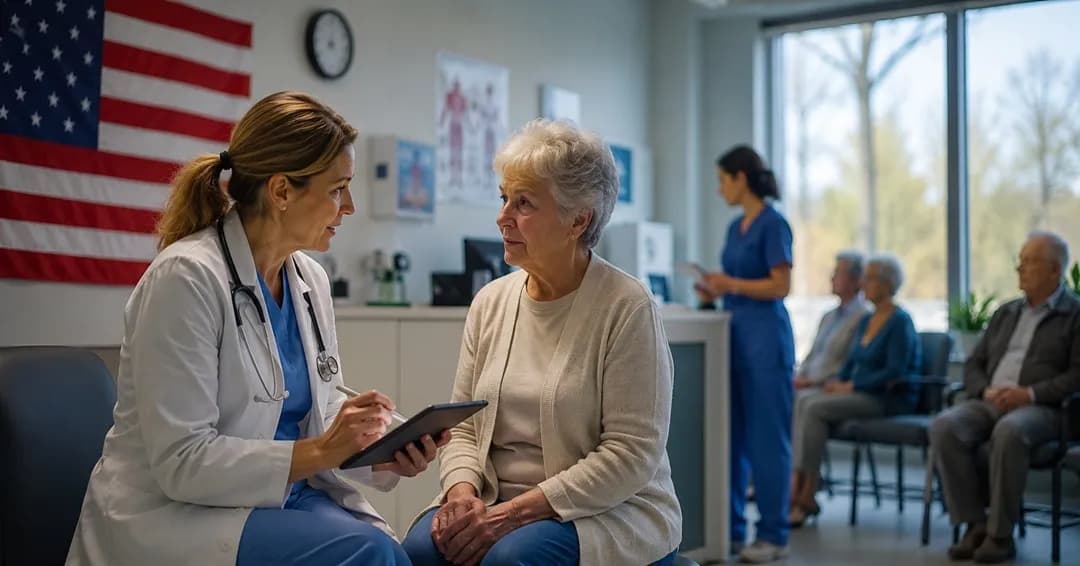
Population aging is transforming U.S. healthcare by increasing demand for chronic disease management, neurological care, home-based services, preventive healthcare, and precision medicine. Healthcare providers, insurers, pharmaceutical companies, and medical technology firms are adopting digital health, workforce innovation, and value-based care to improve outcomes while addressing rising healthcare costs and expanding senior populations.
Population aging is becoming one of the most significant factors reshaping healthcare systems around the world. Increasing life expectancy, reduced birth rates, and better medical care are leading to a higher share of elderly individuals in both wealthy and poor countries. Although this demographic trend will affect the whole world, the U.S. is the focal point of the discussion because of the amount of money it spends on healthcare, the size of its elderly population, and the rapid changes in care delivery models. Indeed, the U.S. situation is quite unique as it serves as a glimpse of how healthcare needs might develop in other parts of the world as populations get older. The consequences are not limited to hospitals and doctors; they also include drug innovation, medical equipment development, insurance changes, workforce planning, and investments in healthcare facilities.
CBO projects that the population 65 and older will be increasing at a faster rate than those 25 to 54. They estimate the ratio of the population between 25 and 64 years old and that aged 65 and above will be 2.8 to 1 in 2025. The ratio is expected to fall to 2.2 to 1 by 2055. The median age of Americans, which is the age that divides the population into two halves, where one half is younger and the other half is older, is going to keep on increasing. It is projected that the median age will go up slightly from 39.2 in 2024 to 39.4 in 2025.
The Demographic Shift Is Rewriting Healthcare Priorities
In the United States, aging is increasingly becoming a key factor in healthcare planning. The huge Baby Boomer generation is gradually reaching retirement age and is steadily increasing the number of Americans who need more frequent and specialized healthcare services.
As opposed to earlier generations, today's elderly people not only live longer but often want to keep leading active lifestyles even in their seventies and eighties. This situation presents a whole new set of healthcare problems. The focus is no longer on just increasing the lifespan of a person; it is also about enabling a person to have a good quality of life at older ages.
Besides, healthcare professionals are realizing that elder people use the health system differently than young ones. For example, a senior patient is more likely to require ongoing monitoring, multiple medications, specialist consultations, rehabilitation services, and preventive interventions.
Thus, the demand for healthcare is changing from being something that happens from time to time to something that is almost constant. This change is pushing hospitals and other healthcare providers to reconsider the ways through which they give care, evaluate it, and are paid for it.
Chronic Disease Management Is Becoming the Largest Growth Driver
One of the most visible consequences of population aging is the rising prevalence of chronic diseases. Conditions such as diabetes, cardiovascular disease, hypertension, arthritis, osteoporosis, and chronic kidney disease become increasingly common with age. These illnesses often require years of monitoring and treatment rather than a single medical intervention.
For healthcare systems, chronic disease management represents both a challenge and an opportunity. Hospitals, physician groups, pharmaceutical companies, and health insurers are all adapting to a reality where long-term patient engagement matters more than short-term treatment episodes. Healthcare spending is increasingly concentrated around managing conditions that may persist for decades.
This trend is also influencing business strategy. Pharmaceutical companies are investing in therapies that improve disease control over extended periods, while healthcare providers are adopting remote monitoring technologies that allow clinicians to track patients outside traditional clinical settings. The economics are straightforward, preventing disease complications is generally less expensive than treating advanced-stage conditions.
The HF Stats 2025 Heart Failure Epidemiology and Outcomes Statistics estimated that nearly 6.7 million Americans aged 20 and above are living with HF, with the number of cases projected to increase to 8.7 million by the year 2030.
Neurological Disorders Are Creating a New Wave of Healthcare Demand
Perhaps no therapeutic area illustrates the consequences of aging more clearly than neurology. Alzheimer's disease, Parkinson's disease, dementia, and other neurodegenerative disorders are becoming major healthcare priorities as the senior population expands.
For decades, neurological diseases were often managed through symptom control because treatment options were limited. Today, advances in neuroscience research are changing expectations. New therapies designed to slow disease progression are creating demand for earlier diagnosis, more sophisticated screening programs, and specialized care centers.
Healthcare systems throughout the United States are responding by expanding memory care services and investing in advanced imaging technologies. Academic medical centers and specialty clinics are building multidisciplinary teams that bring together neurologists, psychiatrists, rehabilitation specialists, and social workers to provide more comprehensive care.
An often-overlooked aspect of neurological disease management is caregiver support. Families frequently shoulder much of the responsibility for caring for patients with dementia-related conditions. This dynamic is fueling growth in home healthcare services, digital caregiving platforms, and remote patient monitoring solutions that can reduce caregiver burden while improving patient outcomes.
Healthcare Is Moving Beyond Traditional Hospital Settings
Historically, hospitals have been the main hubs of healthcare delivery, but the ailing and ageing population will be instrumental in accelerating the movement from this model. Most of the time, old people want to be treated at home if it is possible and familiar whereas healthcare institutions are also coming to the notion that providing care at home can lead to better results jointly with the reduction of costs.
This transformation motivates a considerable amount of funds to be spent on telehealth, remote monitoring devices, and home healthcare services. For example, patients with chronic illnesses can easily send health data to their medical staffs by using connected devices, hence, their need for physical visits is substantially decreased.
This movement is even more critical for rural areas and underserved locations where it is extremely difficult to have access to healthcare services. The home-based health care system can potentially get rid of the geographic obstacles and at the same time allow doctors to have more regular control of their patients. As health care systems keep looking for budget-friendly ways to manage the escalating demand, the resultant decentralization of care delivery is going to be a permanent aspect of the healthcare scene in the US.
According to the U.S. healthcare system, there are around 6, 100 hospitals in the country, with 5, 121 identified as community hospitals. Out of these community hospitals, 2, 984 are nonprofit institutions that do not operate under government control, 1, 224 are for-profit or investor-owned hospitals, and 913 are run by state and local governments. Besides, there are 210 hospitals that belong to the federal government, 656 psychiatric hospitals that are nonfederal, and 113 other specialized hospital facilities.
Together, U.S. hospitals have approximately 907, 216 staffed beds, with community hospitals having 775, 297 beds among them. Hospital usage is still high, as the total number of admissions per year is 35.7 million for all hospitals, and about 33.6 million admissions take place at community hospitals alone. The hospital network also represents a considerable geographic spread, comprising 1, 797 rural community hospitals and 3, 324 urban community hospitals. Besides, hospital consolidation is progressively determining the industry, since 3, 567 community hospitals belong to larger hospital systems.
Medicare's Expanding Influence on Healthcare Economics
The aging of the U.S. population naturally increases enrollment in Medicare, making the program an even more influential force in healthcare decision-making. As millions of Americans transition into Medicare eligibility, providers and healthcare companies are paying closer attention to reimbursement structures and policy developments.
Medicare Advantage plans have become particularly significant because they encourage insurers to focus on preventive care, chronic disease management, and population health outcomes. Rather than emphasizing treatment volume, many plans increasingly reward providers for improving long-term patient health.
This shift is influencing investment across the healthcare industry. Providers are expanding preventive care programs, insurers are offering additional wellness benefits, and healthcare technology companies are developing tools designed to improve patient engagement and care coordination. In many ways, Medicare's growing role is helping accelerate the broader movement toward value-based healthcare.
The Healthcare Workforce Faces Growing Pressure
While demand for healthcare services continues to rise, workforce availability remains a major concern. The United States is already experiencing shortages in several critical healthcare professions, including physicians, nurses, home health aides, and geriatric specialists.
The challenge is especially pronounced in geriatric medicine. Despite growing demand for age-specific expertise, relatively few physicians choose to specialize in geriatrics. Similar shortages exist across nursing and long-term care services.
Healthcare organizations are responding through a combination of workforce redesign and technology adoption. Nurse practitioners and physician assistants are assuming larger roles in patient management, while artificial intelligence tools help automate administrative tasks and support clinical decision-making.
As per the Health Workforce Analysis released by the Health Resources and Services Administration (HRSA), the government officials forecast a lack of 78, 610 full-time RNs or Registered Nurses in 2025 and a lack of 63, 720 full-time RNs in 2030.
Technology alone will not solve workforce shortages, but it can improve efficiency and allow healthcare professionals to focus more of their time on direct patient care. Over the coming decade, workforce innovation may prove just as important as medical innovation in meeting the needs of an aging population.
Digital Health Is Finding Unexpected Momentum Among Seniors
Healthcare developers for a long time thought seniors would be hesitant in using digital tools. However, this idea is becoming obsolete rapidly. A significant number of seniors rely on digital tools such as smartphones, wearable devices, patient portals, and telehealth platforms for their healthcare needs.
The COVID-19 pandemic played a big role in this change by introducing millions of senior citizens to virtual care for the very first time. What was a matter of survival has now turned into a favorite mode of consultation and follow-up for many people.
This increasing willingness to use technology is opening new avenues for digital health companies. Products like remote monitoring devices, medication management apps, fall detection systems, and virtual care platforms are becoming highly significant in the field of senior healthcare. A lot of older people are not only abandoning the idea of resisting technology but are also starting to see it as a vital instrument for keeping their independence and handling chronic illnesses.
Senior Housing and Healthcare Are Becoming More Connected
The relationship between healthcare and housing is also evolving. Senior living communities are increasingly integrating healthcare services directly into residential environments. Assisted living facilities, memory care centers, and independent living communities now offer a broader range of clinical support services than they did a decade ago.
This convergence reflects a growing understanding that health outcomes are influenced by factors extending beyond medical treatment. Nutrition, social engagement, mobility, and living conditions all play important roles in determining quality of life for older adults.
Healthcare providers and senior housing operators are forming partnerships to deliver more coordinated services. These collaborations allow residents to access care more conveniently while helping providers monitor health conditions before they become severe enough to require hospitalization.
Precision Medicine Is Expanding Beyond Oncology
Precision medicine has mostly been linked to therapies for cancer; however, the needs of the aging population are opening potential in other areas of medicine. Older people not only have multiple chronic diseases but also carry several genetic risk factors and have a history of different treatments.
Healthcare provided this way would enable doctors to design medication based on individual patient characteristics and their unique situations instead of following the usual protocols blindly. Technological developments in decoding human DNA, identifying biomarkers, and using predictive models are turning this into a reality.
Here, for instance, in the treatment of heart diseases, brain disorders due to aging, and disorders related to improper metabolism, precision medicine could even lead to saving lives and lessening harm from procedures that were done unnecessarily. Since health systems are always looking for ways to do more with less, tailored care is something that will feature prominently in the future.
Prevention Is Becoming a Strategic Imperative
An aging population is also changing the way healthcare organizations think about the prevention. Traditionally, healthcare spending was mostly about dealing with the symptoms of diseases. Nowadays, a lot of preventive measures are getting recognition for being able to greatly reduce healthcare costs in the future.
Regular check-ups, immunization drives, measures to prevent falls, tests for memory-related health, and checking of heart disease risks are some of the areas where service providers and health insurance companies are paying more attention. Avoiding a hospital admission or slowing down the worsening of a disease can lead to a significant saving of costs and at the same time make the patients' lives better.
This change is very much in line with value-based healthcare models that reward healthcare providers for results rather than the number of services. Healthcare organizations are seeing prevention not only as meeting a clinical goal but also as a business imperative.
U.S. Companies Leading the Response to Aging Healthcare Demand
UnitedHealth Group
UnitedHealth Group has positioned itself at the forefront of senior healthcare transformation through its insurance and healthcare services operations. The company's focus on Medicare Advantage plans, physician-led care models, and home-based healthcare services reflects a long-term strategy centered on population aging. By integrating insurance coverage with care delivery and analytics capabilities, UnitedHealth Group is building a healthcare ecosystem designed to manage the complex needs of older adults more effectively.
CVS Health
One of the major changes CVS Health is making is shifting from being simply a pharmacy chain to a more comprehensive healthcare platform. The company is diversifying its ways of interacting with the elderly by expanding primary care, introducing chronic disease management programs, offering retail healthcare services, and providing Medicare-focused insurance products. The growing focus on community-based care is a clear indication that the company aligns itself with the healthcare industry's trend of making healthcare more accessible and preventive.
CVS Health® has published a new white paper, "Navigating the Digital Health Literacy Gap, " based on research, which shows that older Americans are quite far behind in their current abilities to use digital health tools, whereas their concerns and willingness to acquire more knowledge are quite high.
The research done by CVS Health in 2026 reveals that digital health literacy is still a big problem for the majority of Medicare-eligible Americans, even though they are very enthusiastic about the use of digital healthcare tools. The research also reported that 58% of respondents blamed their health management problems on low digital health literacy, whereas 85% revealed that their greatest difficulty was the navigation of digital health platforms, making it the main obstacle. On the other hand, the readiness to adopt new technologies is definitely there since 86% of seniors are willing to use digital health tools and 71% are eager to actually do so more often.
Eli Lilly and Company
Eli Lilly and Company is playing an increasingly important role in addressing diseases associated with aging. The company has invested heavily in treatments targeting diabetes, obesity, Alzheimer's disease, and other chronic conditions that disproportionately affect older adults. Its neuroscience initiatives highlight the pharmaceutical industry's growing focus on age-related neurological disorders, which are expected to represent one of the largest unmet medical needs over the coming decades.
Medtronic
Medtronic stands to gain substantially from the growth in technologies used for managing chronic diseases and enhancing cardiovascular care. A number of Medtronic's major breakthroughs in cardiac rhythm management, diabetes care and remote patient monitoring are an excellent fit with the healthcare challenges posed by the aging population.
In addition to individual devices, Medtronic is also very much focused on connected healthcare solutions that enable efficient long-term disease management outside the confines of traditional clinical environments.
U.S. Preventive Healthcare Products and Development Activities
Company | Product | Development Focus | U.S. City |
UnitedHealth Group | Optum Home-Based Care Programs | Expansion of home-centered senior healthcare services | Eden Prairie, Minnesota |
CVS Health | Oak Street Health Care Model | Medicare-focused primary care delivery | Woonsocket, Rhode Island |
Eli Lilly and Company | Kisunla (donanemab) | Alzheimer's disease treatment commercialization | Indianapolis, Indiana |
Medtronic | Micra Leadless Pacemaker | Minimally invasive cardiac rhythm management | Minneapolis, Minnesota |
Boston Scientific | WATCHMAN FLX | Stroke prevention in atrial fibrillation patients | Marlborough, Massachusetts |
Conclusion
Older Americans are not only driving an increase in the use of health services but also are changing the very concept of healthcare systems. The changing pattern of needs is more towards chronic disease management, neurological care, home-based services, preventive interventions, and personalized treatment strategies. Different sectors such as healthcare providers, insurers, pharmaceutical developers, and medical technology companies are all adjusting to this new scenario.
The key insight from the U.S. market is that changes in the demographic structure are turning into a major influence for healthcare innovation. Those companies who align their business models to the expectations of the elderly population will probably open new markets and make significant profits in the next 20 years.
Have questions?
More Blogs
Top U.S. Healthcare Industry Trends to Watch in 2026 for the Global Healthcare Market
The global healthcare industry in 2026 is shifting toward AI-driven efficiency, stronger cybersecurity, outpatient care expansion, and domestic pharmaceutical manufacturing. U.S. healthcare leaders are prioritizing workforce support, operational resilience, value-based care, and integrated digital systems to improve patient outcomes while controlling costs.
How AI Is Reshaping the American Healthcare Industry
The U.S. healthcare industry is rapidly integrating artificial intelligence across clinical, administrative, and pharmaceutical operations. AI is improving diagnostics, automating workflows, reducing clinician burden, accelerating drug discovery, and enhancing personalized care. With strong adoption by hospitals and tech companies, AI is transforming healthcare delivery while driving the U.S. AI healthcare market toward significant growth by 2031.
Top Companies Leading the Silicon-Based Capacitor Revolution
Introduction: The Rise of Silicon-Based Capacitors: Electronic circuits use basic capacitors as storage devices to handle three essential tasks including filtering, decoupling, and signal coupling. High-performance silicon capacitors h...