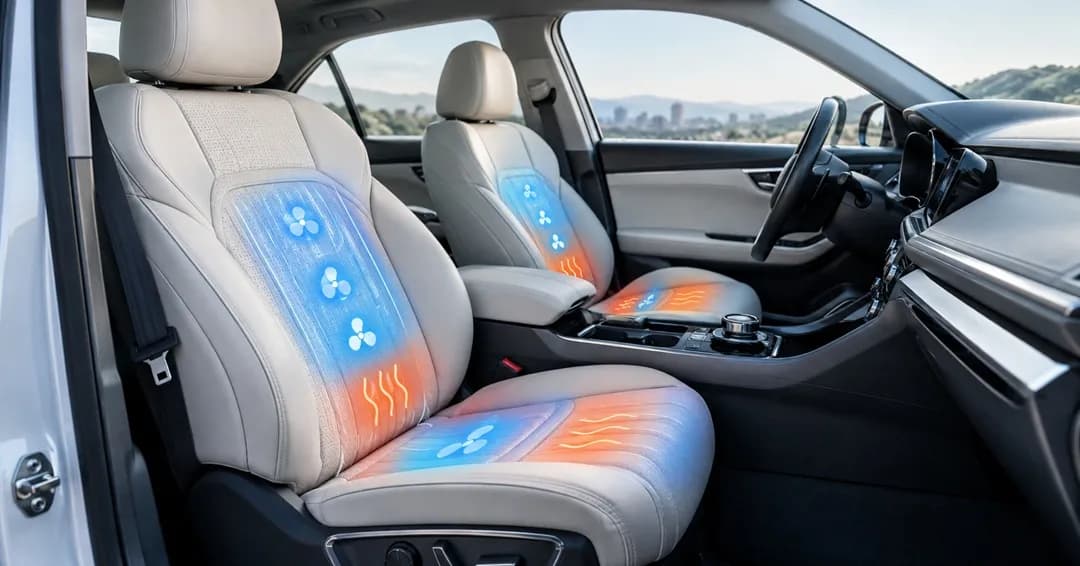
The global automotive smart seating market is expanding as automakers integrate AI-enabled personalization, occupant sensing, connected controls, and intelligent comfort technologies. Rising demand for premium cabin experiences and software-defined vehicles is creating opportunities for advanced seating systems, while affordability, software reliability, data protection, and vehicle safety integration remain key considerations.
The global automotive smart seating market is projected to grow from USD 8.90 billion in 2026 to USD 16.40 billion by 2031, registering a CAGR of 13.0%, according to Knowledge Sourcing Intelligence (KSI). Growth is supported by AI-enabled seat adjustment, occupant sensing, connected controls, and demand for personalized cabin experiences. As automakers advance software-defined vehicle architectures, intelligent seating is becoming an important component of vehicle comfort, occupant safety, and interior differentiation.
Automotive smart seating systems integrate sensors, electronic actuators, and software to deliver adaptive positioning, lumbar support, heating, ventilation, and massage functions. Emerging AI-enabled technologies can personalize seat settings based on occupant preferences and posture, while connected controls enable coordination with climate management, infotainment, and occupant-monitoring systems.
Premium passenger vehicles and electric vehicles present opportunities for smart seating adoption as manufacturers invest in personalized and connected cabin experiences. However, wider deployment will depend on component affordability, software reliability, occupant data protection, and compatibility with vehicle safety systems.
Request a free sample copy or view the report summary: Automotive Smart Seating Market Report
Key Growth Drivers
AI-Enabled Comfort and Personalization
AI-enabled seating is extending conventional memory functions through adaptive positioning, temperature management, and personalized support. Sensors and software can adjust configurations according to occupant preferences, creating opportunities for suppliers of intelligent actuators, seating electronics, and integrated cabin-control platforms.
Integration with Software-Defined Vehicles
Centralized vehicle electronics allow seating functions to interact with climate control, infotainment, and occupant-monitoring systems. Connected seating supports coordinated cabin settings, personalized profiles, and automated adjustments. However, cybersecurity, software validation, and integration costs remain important considerations for manufacturers deploying these technologies across vehicle platforms.
Growing Demand for Occupant Sensing and Wellness
Seat-integrated pressure and position sensors support occupant detection, posture monitoring, and adaptive comfort. Manufacturers are combining these capabilities with lumbar adjustment, massage, and thermal functions to improve passenger experiences. According to KSI, smart comfort and wellness applications account for approximately 36% of global market value in 2026.
Electric Vehicle Cabin Differentiation
Electric vehicle manufacturers are incorporating intelligent seating to enhance passenger comfort and distinguish interior designs. Personalized thermal controls and adaptive seating configurations create opportunities for suppliers, although system costs, energy consumption, and long-term reliability will influence adoption across mass-market vehicle platforms.
Latest Industry Developments
October 2026: FORVIA and ANAND Group: The companies signed a joint venture agreement to expand Indian seating operations, combining seating technology, manufacturing capabilities, and local automotive customer relationships.
July 2026: Lear Corporation reported new Audi seating awards covering complete seats, ComfortFlex, and FlexAir technologies across Europe and North America, supporting the expansion of modular seating and advanced thermal comfort systems.
June 2026: Yanfeng unveiled XiM27, a production-ready smart-cabin concept featuring AI-adaptive seating that adjusts seat position, firmness, and temperature according to learned occupant preferences.
Market Segmentation and Regional Outlook
The market is segmented by smart function, seat position, vehicle type, propulsion, sales channel, and geography. Smart functions include comfort and wellness, occupant sensing and personalization, safety and haptic interaction, and connectivity and reconfiguration. Other categories cover front- and rear-row seating, passenger and commercial vehicles, internal combustion and electrified powertrains, and OEM and aftermarket channels.
According to KSI, Asia Pacific accounts for approximately 46% of global market value in 2026. China supports regional demand through electric vehicle production, smart-cabin development, and integration of intelligent interior technologies. Japan and South Korea contribute established automotive seating and electronics manufacturing capabilities.
Europe offers opportunities through premium vehicle manufacturing, occupant safety engineering, and intelligent comfort technologies. North America benefits from connected vehicle development and demand for advanced seating in premium vehicles. Across regions, commercial adoption will depend on affordability, functional reliability, and integration with vehicle electronics. Manufacturers must also balance advanced comfort features with production costs and vehicle-specific safety requirements.
Competitive Landscape
Key companies include Yanfeng, FORVIA, Lear Corporation, Magna International, and Hyundai Transys. Yanfeng is advancing AI-adaptive seating and centralized cabin controls, while FORVIA integrates occupant sensing and software-driven comfort adjustment. Lear's seating portfolio includes its INTU platform and modular thermal comfort technologies. Magna International and Hyundai Transys also participate in seating system development, with capabilities spanning comfort technologies, electronic controls, and vehicle interior integration.
Supplier differentiation increasingly depends on sensor accuracy, intelligent actuation, software compatibility, occupant safety, and cost-effective manufacturing at automotive production volumes. Collaboration with vehicle manufacturers will remain important as smart seating systems become more closely integrated with centralized electronic architectures and connected cabin functions.
Analyst Perspective
“The automotive smart seating market's projected expansion reflects the growing integration of intelligent comfort, occupant sensing, and software-controlled vehicle interiors. AI-enabled personalization creates opportunities for seating suppliers, although wider adoption will depend on system affordability, reliable performance, and integration with vehicle electronics and safety architectures.”
What The Study Covers
The report provides market estimates and forecasts through 2031, growth drivers and restraints, segmentation analysis, regional outlooks, competitive intelligence, company profiles, and relevant technology developments.
Have questions?
More Press Releases
Semiconductor Test Socket Market Projected to Reach USD 3.55 Billion by 2032, Driven by AI and HPC Demand
The semiconductor test socket market is expanding as AI processors, high-performance computing, advanced packaging, and high-speed memory increase testing requirements. Growing semiconductor complexity is driving demand for reliable electrical contacts, improved signal integrity, and thermal management. Automotive electronics and power semiconductors are further creating opportunities for specialized test socket technologies.
Hydrogen Energy Storage Market to Reach USD 25.40 Billion by 2032 as Demand for Long-Duration Storage Grows
The hydrogen energy storage market is expanding as renewable energy integration, industrial hydrogen demand, and infrastructure investment drive adoption. Advancements in compressed gas, liquid hydrogen, underground geological, and solid-state storage technologies are creating opportunities across utilities, industrial applications, and grid-scale energy systems, while cost efficiency and infrastructure readiness remain critical challenges.
Thermal Energy Storage Market to Reach USD 10.20 Billion by 2032, Driven by Renewable Energy Integration and Industrial Heat Electrification
The thermal energy storage market is advancing as renewable energy integration, industrial electrification, and energy cost management drive demand. Innovations in sensible heat, latent heat, and thermochemical storage are expanding applications across industrial heating, cooling, concentrated solar power, and commercial buildings, creating opportunities for technology providers across major regional markets worldwide.