
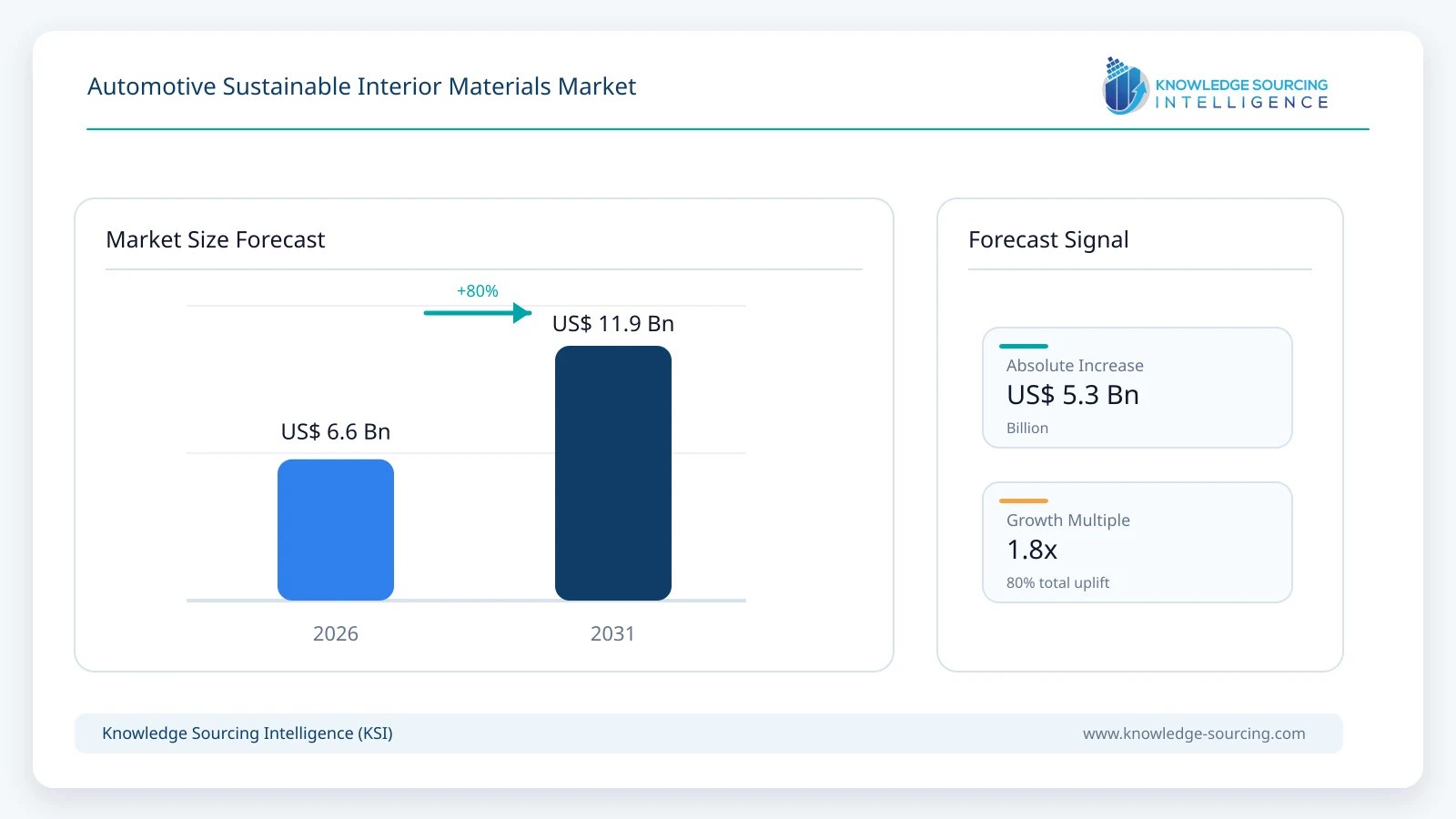
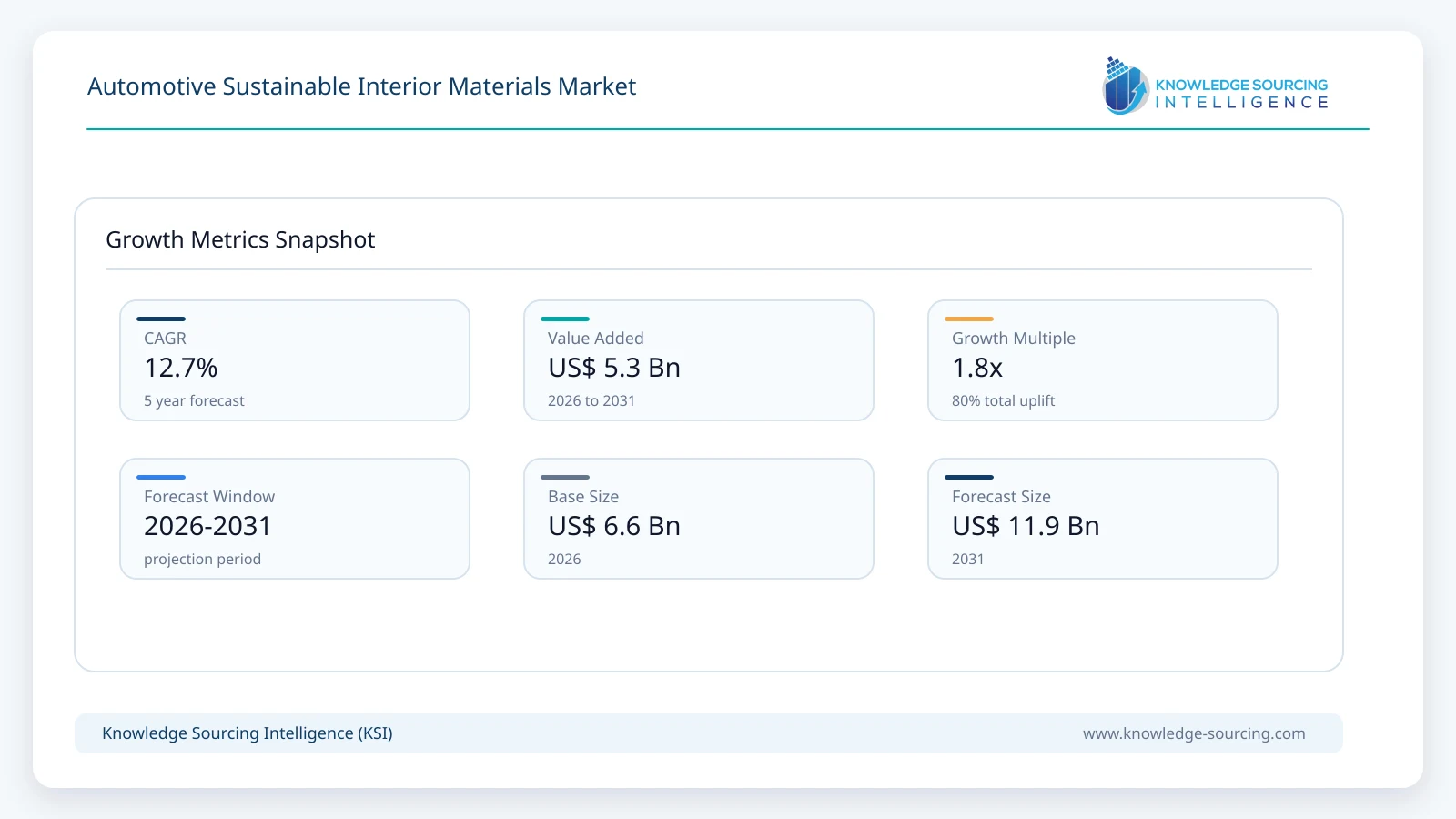
The Automotive Sustainable Interior Materials Market is forecast to grow at a CAGR of 12.7%, reaching USD 11.9 billion in 2031 from USD 6.6 billion in 2026.
Highlights:
- 1Processed recycled polymers and foams represent an estimated 36% of 2026 market value, with recycled textiles and nonwovens contributing another 29%.
- 2Qualified seating upholstery, cushions and seat substrates account for approximately 33% of the 2026 market.
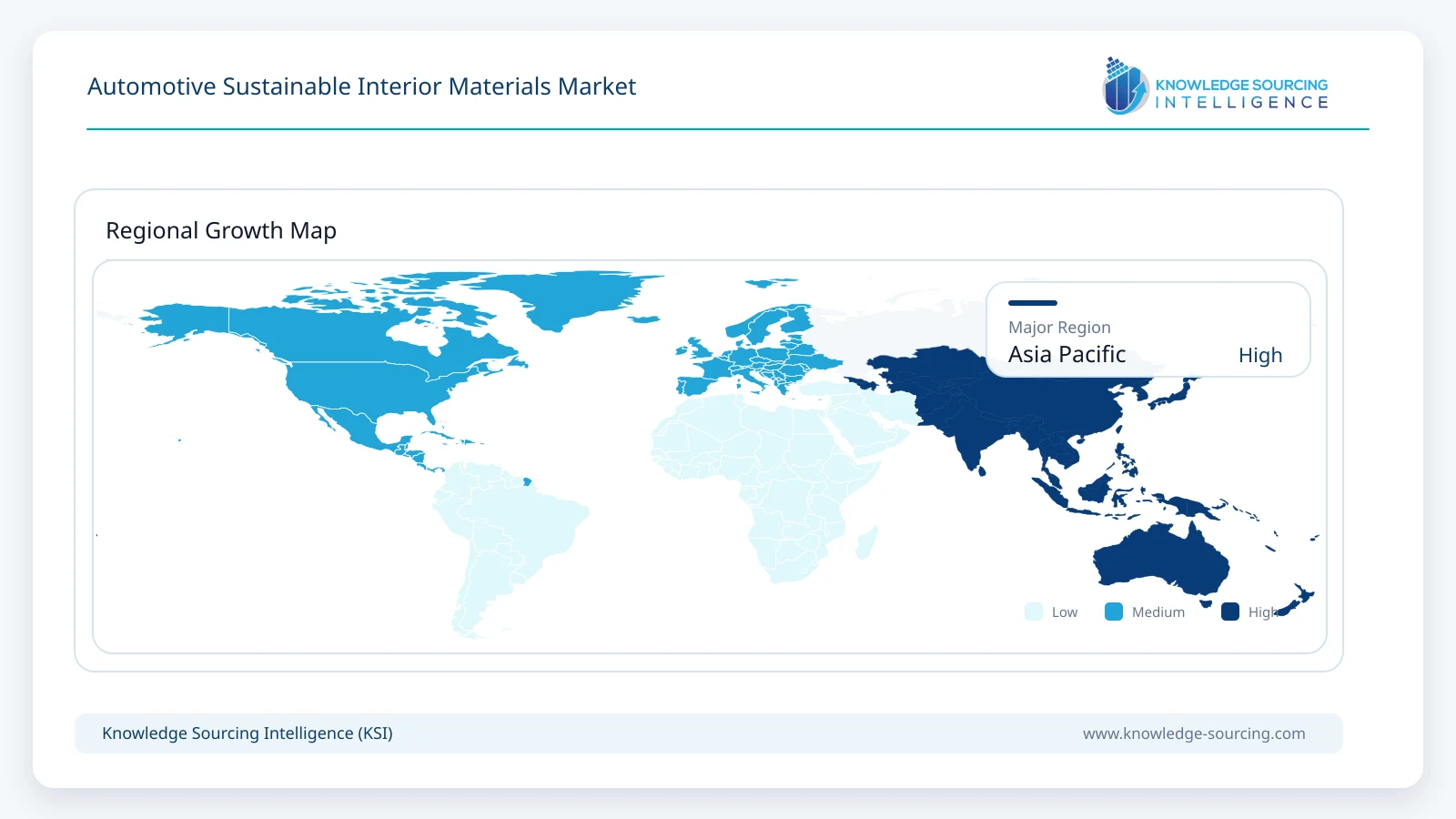
- 3Asia Pacific represents about 42% of modeled 2026 revenue, reflecting vehicle production scale and growing recycled-material content.
- 4Europe contributes an estimated 32% of 2026 revenue, supported by advanced sourcing programs and circular-design requirements.
- 5Bio-derived foams, finishes and leather alternatives are projected to increase from 15% of the market in 2026 to 17% by 2031.
- 6EU vehicle-circularity regulation establishes recycled plastic targets from 2032 and 2036, encouraging earlier qualification without imposing a 2026 interior-specific quota.
The market comprises qualified recycled, bio-derived and demonstrably lower-impact materials supplied for vehicle cabins, including processed thermoplastic compounds, polyester-based textile structures, natural-fiber interior substrates, selected circular foams and specialty surface materials. Revenue is measured at the qualified material or first-converted-substrate supply stage, excluding the additional selling value of assembled seats, trim modules and vehicle electronics.
Recycled polypropylene and polyester account for the broadest established use because automotive suppliers can process qualified secondary feedstock through familiar molding, nonwoven and fabric production lines. Natural-fiber substrates, renewable-content seating surfaces and circular polyurethane systems widen the material portfolio, although high-volume adoption depends on odor, fogging, durability and traceable material composition. BMW, FORVIA, Autoneum, Covestro and Borouge International provide documented applications that connect circular material technology with finished vehicle programs.
Market Overview
The interior material transition is most advanced in applications where qualification can be managed within existing automotive supply chains. Recycled polypropylene compounds can replace part of the virgin polymer content in instrument-panel and console carriers, while recycled PET fibers are used in seat-cover yarn, carpeting, headliners and sound-absorbing felt. These grades still require traceability and validation against vehicle-specific requirements for appearance, smell, fire behavior and production consistency. Documented series applications are expanding the evidence base available to vehicle manufacturers.
FORVIA supplies the instrument panel and center console for the sixth-generation Renault Clio with components incorporating 40% recycled plastics. In premium vehicles, Covestro’s Bayblend T85X R35 CQ, containing 35% post-consumer recycled content, has been adopted for selected Lexus ES interior components. The developments illustrate two different positions in the material value chain: qualified recycled resin compounds and finished molded interior constructions. Measuring the two transactions together as separate material sales would overstate the market.
Autoneum offers several polyester-based interior technologies, including Flexi-Light PET, which uses up to 90% recycled PET content and is available for carpet insulation applications. Autoneum’s recyclable polyester solutions for Polestar 5 further demonstrate how material selection, layered construction and vehicle acoustic requirements are being addressed together. FORVIA’s Ecorium and Auraloop illustrate alternative pathways for leather-like surfaces and seat cushioning, while Toyota Boshoku maintains established kenaf-based door-trim technologies.
Material origin alone does not establish sustainable performance. Recycled feedstock can require additional sorting and stabilization, while renewable-content materials can still use petroleum-derived binders. Certification, life-cycle assessment and component-specific test results help purchasing teams assess the actual benefit. Suppliers with reliable feedstock contracts and consistent material documentation are better positioned to convert pilot qualifications into recurring production programs.
Market Trends
Recycled Compounds Move into Higher-Duty Cabin Structures
Recycled plastics are increasingly specified for carriers that must retain dimensional stability, stiffness, and low cabin emissions after years of use. Borouge International’s Borcycle GE2331SY combines 40% post-consumer recycled polypropylene with 20% glass fiber and is used by several automakers in instrument-panel and console carriers. Covestro’s recycled PC/ABS grade offers an additional example of secondary feedstock moving into premium interior applications. Material formulation, rather than recycled percentage alone, determines whether a grade can replace conventional engineering polymers.
Mono-Material Textiles and Recoverable Acoustic Substrates
Polyester-based acoustic and carpet architectures allow automotive suppliers to replace conventional combinations of incompatible backings, foam, and adhesives with more readily recoverable constructions. Autoneum’s collaboration with Polestar uses polyester solutions with high recycled content and simplified end-of-life treatment, while BMW’s Econeer seat-cover design combines compatible PET-based layers. Such architectures reduce separation complexity, although the operational recovery system and actual collection of end-of-life vehicle textiles remain critical to realizing recycling benefits.
Bio-Based Fibers and Alternative Interior Surfaces
Natural-fiber composites remain attractive in door and cockpit substrates because plant-fiber reinforcement can reduce part mass without requiring an entirely new molding architecture. FORVIA’s NAFILean-R uses recycled polypropylene reinforced with hemp, while Toyota Boshoku continues to expand kenaf-based interior technology. Bio-derived soft surfaces and cushioning widen application coverage in premium cabins, but automotive programs still require control of moisture sensitivity, uniform appearance, abrasion resistance and long-term adhesion.
Material-Origin Documentation Gains Procurement Importance
Regulatory scrutiny is moving beyond the recyclability of finished vehicles toward the origin and recovery of plastic inputs. Regulation (EU) 2026/1738 sets recycled-plastic requirements of 15% from 2032 and 25% from 2036 for relevant new vehicle approvals, including minimum sourcing from vehicle waste within the applicable recycled portion. The requirements are not an immediate 2026 quota and do not mandate a fixed recycled percentage exclusively for interior materials. Nevertheless, multi-year vehicle development cycles make documentation and material qualification important well before the compliance dates.
Segment Analysis
By Material Platform: Recycled Polymer Compounds and Foams
Recycled polymer compounds and reprocessed foams represent an estimated 36% of global sustainable interior material value in 2026. Recycled PP is widely used in non-visible carriers and selected decorative moldings, while recycled PC/ABS and other high-specification grades address tighter appearance and mechanical requirements. Foam recycling remains earlier in commercialization than conventional thermoplastic reprocessing. The segment is forecast to approach USD 4.28 billion by 2031 as recycled polymer content rises and applications broaden to structurally demanding cabin parts.
By Application: Seating Upholstery and Cushioning
Seating upholstery, cushioning and related substrates account for approximately 33% of 2026 market value, reflecting the broad material inventory required for each vehicle’s seating system. Recycled yarns and backing textiles are commercially established; recycled-content and bio-derived cushioning need more extensive process qualification. Adient documents research into circular foam chemistry and recycled trim constituents, while FORVIA markets bio-derived and recycled-content seating solutions. Higher material traceability and consistent tactile performance are likely to support the segment’s revenue contribution through 2031.
By Sustainability Pathway: Post-Consumer Mechanical Recycling
Post-consumer mechanical recycling provides the largest qualifying sourcing route, representing approximately 49% of 2026 revenue. Automotive suppliers use secondary PET from bottles or textile waste and recycled polypropylene from sorted consumer waste where polymer quality can meet application demands. Volatile feedstock composition, color variation, and contamination remain constraints, especially in visible surfaces. The route retains the largest share by 2031 because mechanically processed materials can integrate with existing polymer and textile supply networks at commercial scale.
By Vehicle Type: Passenger Vehicles
Passenger vehicles account for about 90% of sustainable interior material value in 2026 because passenger-car platforms combine high production volumes with a broad range of trim, seating and acoustic constructions. Premium specifications often introduce materials first, but mass-market programs create larger recurring procurement demand once formulations have passed qualification. Light commercial vehicles and heavy-duty cabins represent smaller but commercially relevant outlets for recycled flooring, seat materials and trim carriers.
Market Drivers
OEM Procurement Targets for Secondary and Renewable Material Inputs
Automakers are translating corporate circularity strategies into part-specific purchasing specifications. BMW’s use of recycled PET in seat textiles and headliners shows how sourcing requirements can influence both visible and hidden cabin layers. FORVIA’s Renault Clio interior demonstrates recycled materials in higher-volume cockpit components rather than limited-edition decorative applications. Long platform lifetimes make a confirmed sourcing specification commercially valuable to compounders and textile producers.
European Vehicle Circularity and Recycled-Content Regulation
EU Regulation 2026/1738 creates a dated pathway for recycled plastic content in new vehicles, requiring 15% from 2032 and 25% from 2036 for the relevant vehicle approvals. Interior plastics represent one of several potential routes toward future whole-vehicle compliance because many cabin parts can accommodate engineered recyclates. Automakers must still validate post-consumer origin, processing location and recycled-content accounting. Compliance preparation is expected to increase supplier qualification activity during 2026–2031 without implying that the future quota is already binding.
Commercial Scale of Recycled PET and Polypropylene Conversion
PET fiber production, nonwoven conversion and polypropylene compounding already operate at substantial industrial scale. Autoneum’s carpet and acoustic materials and Borouge International’s recycled PP compounds demonstrate how existing production equipment can be adapted to recycled feedstock rather than requiring entirely new interior technologies. Standardized grades and larger scrap-processing volumes can reduce procurement complexity, giving recycled textiles and molded carriers an advantage over less mature chemistries.
Lower Embedded Material Emissions and Interior Lightweighting
Reducing the environmental footprint of a vehicle increasingly requires scrutiny of materials manufactured before the first kilometer is driven. Recycled polymers, natural-fiber reinforcement and material-efficient cushion designs can reduce selected upstream emissions when compared with appropriate conventional alternatives. Autoneum’s polyester technologies and FORVIA’s natural-fiber systems combine lightweight design with changes in feedstock sourcing. Material selection remains application-specific, as low mass or recycled content does not automatically guarantee a lower total life-cycle impact.
Premium Surface Differentiation and Durable Circular Design
Cabin appearance and tactile quality influence adoption of sustainable textiles, recycled decorative polymers and lower-impact leather alternatives. Volvo Cars offers recycled-content upholstery and interior décor using secondary materials, while Mercedes-Benz documents recycled seat layers and floor coverings in the electric GLC. Premium vehicles establish technical reference points for surface quality and material traceability. Wider market growth depends on extending those specifications into cost-sensitive platforms without eroding durability or cleaning performance.
Market Restraints
High-Purity Secondary Feedstock Availability
Interior-grade plastic and textile recyclates require controlled composition, color, odor and contamination, which cannot be assumed from generic waste streams. Post-consumer feedstock is particularly difficult to standardize when material provenance or additive composition is incomplete. Sorting, washing, compounding and certification add cost and restrict the supply of grades suitable for visible and low-emission vehicle components. Inconsistent input quality can delay OEM approval even where technically viable formulations exist.
Long Automotive Qualification and Design Freeze Cycles
Automotive cabin materials undergo testing for flammability, abrasion, ultraviolet exposure, heat aging, fogging, odor and long-term dimensional behavior. Changing a qualified grade can trigger new validation of adhesives, coatings and multilayer trim constructions, making mid-cycle substitution unattractive. A material launched in one year may therefore require several vehicle programs before meaningful global volumes appear. Suppliers that can maintain stable specifications across factories have a commercial advantage.
Price Premiums and Recycling-Process Economics
Automotive-grade recyclates can cost more than virgin polymers when demand for certified secondary feedstock exceeds the supply of consistent material. Chemical recycling and specialized bio-derived resins also require additional processing, energy or traceability investments. Procurement savings from lower virgin-material use may not offset those costs in price-sensitive vehicles. Purchasing teams therefore evaluate long-term contracted pricing and production yield alongside environmental performance.
Complex Multi-Layer Interior Constructions
Seat covers, dashboard skins and floor systems commonly combine polymers, textile layers, foams, adhesives and functional finishes. Disassembling those materials can be expensive or technically impractical with existing recovery facilities. Mono-material concepts can simplify the material stack but may require compromises in haptics, acoustic control or surface appearance. Progress in design for recycling is therefore dependent on product engineering and collection economics, not solely on the selection of secondary feedstock.
Uncertain Environmental Claims and Certification Burden
Bio-attributed feedstocks, mass-balance polymers, recycled-content compounds and physically recovered materials follow different chain-of-custody conventions. Purchasing teams cannot treat those claims as interchangeable, particularly where future rules specify post-consumer content or end-of-life vehicle origin. Supplier documentation and life-cycle data must identify material boundaries and allocation methods. Inadequate substantiation creates commercial and reputational risk for automakers marketing lower-impact interiors.
Regional Outlook
Asia Pacific
Asia Pacific is estimated to account for 42% of sustainable interior material revenue in 2026 and is projected to approach 45% by 2031. China supplies the largest regional manufacturing base, while India and Southeast Asia increase demand for cost-effective recycled polymer carriers and textile conversion. Regional growth is supported by passenger-vehicle manufacturing, expanding supplier capacity and adoption of circular materials in locally produced models. The broad supplier network favors polymer and textile solutions that can be compounded or processed near assembly operations.
Japanese suppliers are important in durable natural-fiber technologies and recycled-content engineering materials, while South Korea has established automotive polymer and fiber production capabilities. Toyota Boshoku’s kenaf interior applications provide an example of long-standing commercial use rather than a new laboratory concept. Asia Pacific’s higher growth rate does not necessarily imply the highest sustainable-content intensity per vehicle, because adoption and material-value profiles differ across country and model segments.
Europe
Europe represents approximately 32% of modeled global value in 2026 and is expected to remain an important center for material specification and circular design. German automakers and their Tier-1 suppliers have introduced recycled PET textiles, recycled-content carriers and bio-derived interior surfaces in named vehicle programs. EU recycled-plastic content requirements starting in 2032 provide a further incentive for suppliers to validate eligible post-consumer feedstock during the current forecast period.
European material producers also face meaningful sourcing and pricing constraints. Recovered feedstock must satisfy both polymer performance requirements and applicable documentation, while complex interior constructions remain difficult to recycle after disassembly. The strongest opportunity is likely to favor suppliers that combine automotive-qualified recyclate production with part design, lifecycle measurement and reliable regional logistics rather than suppliers offering recycled resin without application-specific validation.
Competitive Landscape
The supplier base spans resin and compound producers, recycled-textile converters, natural-fiber substrate manufacturers and specialized seating-material companies. Borouge International, Covestro, SABIC and BASF offer polymer and circular-chemistry capabilities, while Autoneum and Freudenberg participate through nonwoven, carpet and acoustic materials. FORVIA, Adient, Lear, Toyota Boshoku and Antolin develop and qualify materials through automotive interior programs. Comparing total corporate revenue across those groups would not provide a meaningful market-share ranking for sustainable interior material supply.
Competition increasingly depends on documented feedstock origin, material consistency, carbon-accounting quality and the ability to meet OEM cabin requirements across plants. Companies offering both qualified material grades and close engineering support can capture additional programs as automakers increase circular-content specifications. Natural-fiber, recycled-polymer and recycled-textile solutions retain distinct commercial applications.
Recent Developments
August 2026: The European Commission detailed the new automotive circularity rules, including vehicle recycled-plastic targets from 2032 and 2036. The policy strengthens the case for automotive-grade recycled feedstock and traceability without imposing an immediate 2026 cabin-material quota.
June 2026: Covestro confirmed adoption of its Bayblend T85X R35 CQ compound, with 35% post-consumer recycled content, in selected Lexus ES interior components. The program extends verified recycled engineering polymer use into premium interior applications.
May 2026: Borouge International launched Borcycle GE2331SY, a polypropylene compound containing 40% post-consumer recycled material and 20% glass fiber, already used by several OEMs for cockpit and console carriers.
December 2025: Autoneum documented recyclable, high-recycled-content polyester components developed with Polestar for the Polestar 5. The program demonstrates production-level mono-material acoustic and cabin engineering.
November 2025: FORVIA reported that the Renault Clio 6 instrument panel and center console incorporate 40% recycled plastics. The project expands established recycled-material applications within a volume automotive cabin.
September 2025: BASF, Porsche and BEST completed a pilot converting automotive waste and biomass through gasification into raw materials for new plastic applications, including steering-wheel foam. The result demonstrates technical feasibility rather than confirmed mass-market availability.
June 2025: FORVIA introduced NAFILean Vision for visible automotive parts, combining recycled polymer feedstock with renewable biomass. The development expands the design potential of natural-fiber hybrid materials beyond concealed carriers.
Market Outlook
The automotive sustainable interior materials market is expected to expand through a combination of broader vehicle-platform penetration and greater certified material value per vehicle. Recycled polymers and PET-based textiles will retain substantial revenue positions because conversion technologies and end-use qualification already exist. Bio-based upholstery, circular cushioning and natural-fiber substrates should widen the range of compliant material options, with adoption dependent on consistent cost and performance rather than sustainability claims alone.
Asia Pacific is expected to generate the largest incremental regional demand through 2031, while Europe remains influential in circularity rules and OEM documentation practices. More rigorous post-consumer sourcing requirements and vehicle-material traceability should help distinguish established supplier capabilities from prototypes. Competition will shift toward integrated feedstock, material engineering and validation capability as automakers balance interior quality, circular design and manufacturing economics.
Automotive Sustainable Interior Materials Market Scope:
| Report Metric | Details |
|---|---|
| Total Market Size in 2026 | USD 6.6 billion |
| Total Market Size in 2031 | USD 11.9 billion |
| Forecast Unit | USD Billion |
| Growth Rate | 12.7% |
| Study Period | 2021 to 2031 |
| Historical Data | 2021 to 2024 |
| Base Year | 2025 |
| Forecast Period | 2026 – 2031 |
| Segmentation | Material Platform, Application, Sustainability Pathway, Vehicle Type |
| Companies |
|
Market Segmentation
By Material Platform
Recycled Polymer Compounds and Reprocessed Foams
Recycled Textiles, PET and Nonwoven Systems
Natural-Fiber and Bio-Based Composite Substrates
Bio-Derived Foams, Coatings and Leather Alternatives
Reclaimed Trim and Verified Low-Carbon Interior Metals
By Application
Seating Upholstery, Cushioning and Seat Substrates
Door, Side and Pillar Trim
Headliners, Flooring and Interior Acoustic Media
Instrument Panels and Console Carriers
Luggage, Parcel Shelves and Other Interior Surfaces
By Sustainability Pathway
Post-Consumer Mechanical Recycling
Pre-Consumer Recycling and Recovered Process Waste
Renewable and Natural Fiber Feedstocks
Certified Circular / Chemical Recycling Inputs
Verified Reclaimed and Low-Carbon Material Inputs
By Vehicle Type
Passenger Vehicles
Light Commercial Vehicles
Medium/Heavy Commercial Vehicles and Buses
By Geography
North America
United States
Canada
Mexico
South America
Brazil
Argentina
Others
Europe
Germany
United Kingdom
France
Italy
Spain
Others
Middle East and Africa
Saudi Arabia
UAE
South Africa
Others
Asia Pacific
China
India
Japan
South Korea
Indonesia
Thailand
Others
Table of Contents
1. EXECUTIVE SUMMARY
2. MARKET SNAPSHOT
2.1. Market Overview
2.2. Market Definition
2.3. Scope of the Study
2.4. Market Segmentation
3. BUSINESS LANDSCAPE
3.1. Market Drivers
3.1.1. OEM Procurement Targets for Secondary and Renewable Material Inputs
3.1.2. European Vehicle Circularity and Recycled-Content Regulation
3.1.3. Commercial Scale of Recycled PET and Polypropylene Conversion
3.1.4. Lower Embedded Material Emissions and Interior Lightweighting
3.1.5. Premium Surface Differentiation and Durable Circular Design
3.2. Market Restraints
3.2.1. High-Purity Secondary Feedstock Availability
3.2.2. Long Automotive Qualification and Design Freeze Cycles
3.2.3. Price Premiums and Recycling-Process Economics
3.2.4. Complex Multi-Layer Interior Constructions
3.2.5. Uncertain Environmental Claims and Certification Burden
3.3. Market Opportunities
3.4. Porter’s Five Forces Analysis
3.5. Industry Value Chain Analysis
3.6. Policies and Regulations
3.7. Strategic Recommendations
4. TECHNOLOGICAL OUTLOOK
4.1. Post-Consumer Recycled Polypropylene and Engineering Plastics
4.2. Recycled PET Textile, Carpet and Acoustic Technology
4.3. Natural-Fiber and Bio-Based Composite Substrates
4.4. Bio-Derived and Circular Cushioning Materials
4.5. Mono-Material Construction and Design for Disassembly
4.6. Traceability, LCA and Recycled-Content Verification
5. AUTOMOTIVE SUSTAINABLE INTERIOR MATERIALS MARKET BY MATERIAL PLATFORM
5.1. Introduction
5.2. Recycled Polymer Compounds and Reprocessed Foams
5.3. Recycled Textiles, PET and Nonwoven Systems
5.4. Natural-Fiber and Bio-Based Composite Substrates
5.5. Bio-Derived Foams, Coatings and Leather Alternatives
5.6. Reclaimed Trim and Verified Low-Carbon Interior Metals
6. AUTOMOTIVE SUSTAINABLE INTERIOR MATERIALS MARKET BY APPLICATION
6.1. Introduction
6.2. Seating Upholstery, Cushioning and Seat Substrates
6.3. Door, Side and Pillar Trim
6.4. Headliners, Flooring and Interior Acoustic Media
6.5. Instrument Panels and Console Carriers
6.6. Luggage, Parcel Shelves and Other Interior Surfaces
7. AUTOMOTIVE SUSTAINABLE INTERIOR MATERIALS MARKET BY SUSTAINABILITY PATHWAY
7.1. Introduction
7.2. Post-Consumer Mechanical Recycling
7.3. Pre-Consumer Recycling and Recovered Process Waste
7.4. Renewable and Natural Fiber Feedstocks
7.5. Certified Circular / Chemical Recycling Inputs
7.6. Verified Reclaimed and Low-Carbon Material Inputs
8. AUTOMOTIVE SUSTAINABLE INTERIOR MATERIALS MARKET BY VEHICLE TYPE
8.1. Introduction
8.2. Passenger Vehicles
8.3. Light Commercial Vehicles
8.4. Medium/Heavy Commercial Vehicles and Buses
9. AUTOMOTIVE SUSTAINABLE INTERIOR MATERIALS MARKET BY GEOGRAPHY
9.1. Introduction
9.2. North America
9.2.1. By Material Platform
9.2.2. By Application
9.2.3. By Sustainability Pathway
9.2.4. By Vehicle Type
9.2.5. By Country
9.2.5.1. United States
9.2.5.2. Canada
9.2.5.3. Mexico
9.3. South America
9.3.1. By Material Platform
9.3.2. By Application
9.3.3. By Sustainability Pathway
9.3.4. By Vehicle Type
9.3.5. By Country
9.3.5.1. Brazil
9.3.5.2. Argentina
9.3.5.3. Others
9.4. Europe
9.4.1. By Material Platform
9.4.2. By Application
9.4.3. By Sustainability Pathway
9.4.4. By Vehicle Type
9.4.5. By Country
9.4.5.1. Germany
9.4.5.2. United Kingdom
9.4.5.3. France
9.4.5.4. Italy
9.4.5.5. Spain
9.4.5.6. Others
9.5. Middle East and Africa
9.5.1. By Material Platform
9.5.2. By Application
9.5.3. By Sustainability Pathway
9.5.4. By Vehicle Type
9.5.5. By Country
9.5.5.1. Saudi Arabia
9.5.5.2. UAE
9.5.5.3. South Africa
9.5.5.4. Others
9.6. Asia Pacific
9.6.1. By Material Platform
9.6.2. By Application
9.6.3. By Sustainability Pathway
9.6.4. By Vehicle Type
9.6.5. By Country
9.6.5.1. China
9.6.5.2. India
9.6.5.3. Japan
9.6.5.4. South Korea
9.6.5.5. Indonesia
9.6.5.6. Thailand
9.6.5.7. Others
10. COMPETITIVE ENVIRONMENT AND ANALYSIS
10.1. Major Players and Strategy Analysis
10.2. Market Share Analysis
10.3. Mergers, Acquisitions, Agreements and Collaborations
10.4. Competitive Dashboard
11. COMPANY PROFILES
11.1. Autoneum Holding AG
11.2. FORVIA SE
11.3. Borouge Group International AG
11.4. Covestro AG
11.5. BASF SE
11.6. Adient plc
11.7. Toyota Boshoku Corporation
11.8. Freudenberg Performance Materials
11.9. SABIC
11.10. Lear Corporation
11.11. Antolin
11.12. Suminoe Textile Co., Ltd.
12. APPENDIX
12.1. Currency
12.2. Assumptions
12.3. Base and Forecast Years Timeline
12.4. Key Benefits for Stakeholders
12.5. Research Methodology
12.6. Abbreviations
Navigate
Trusted by the world's leading organizations











