
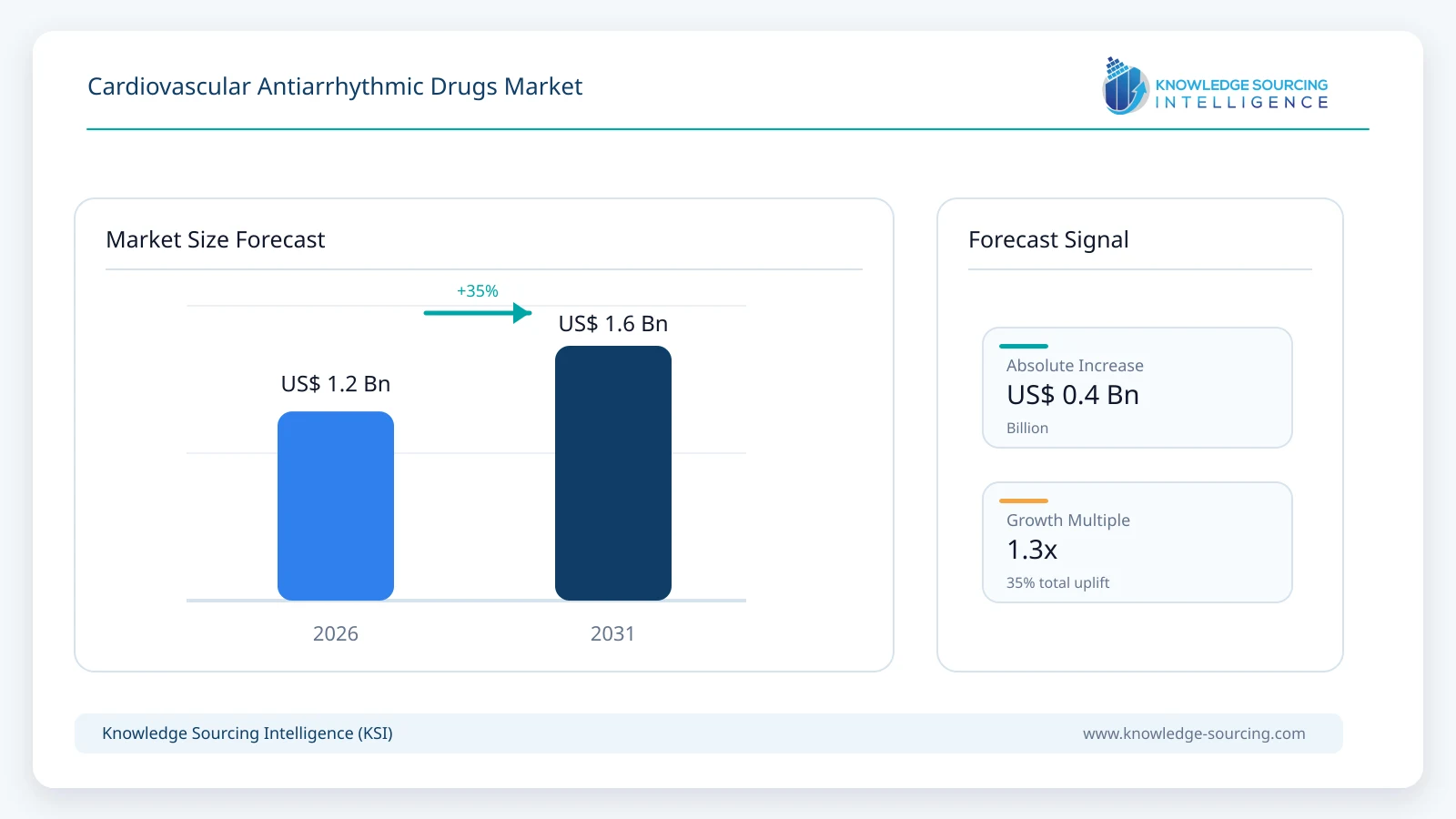
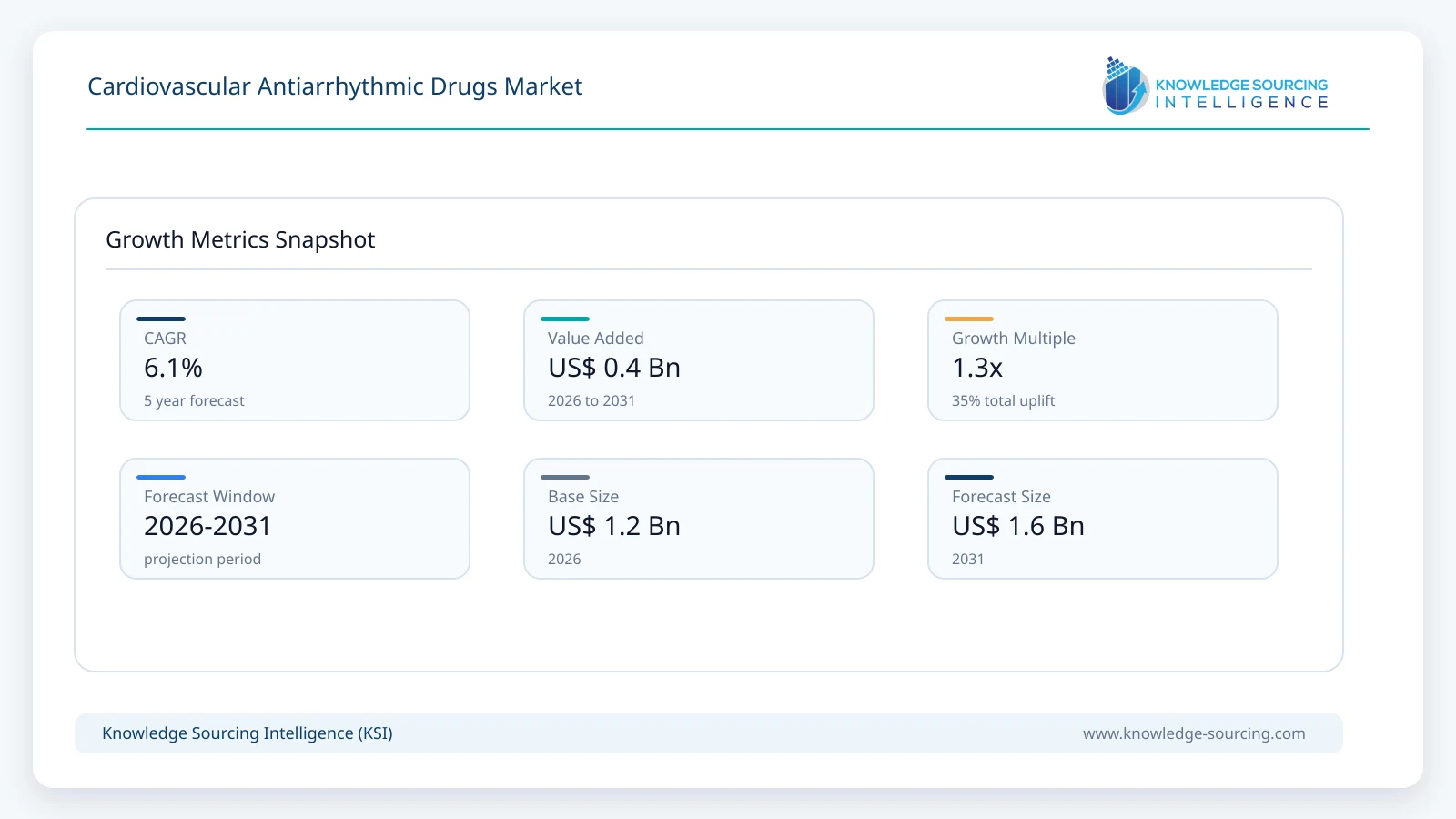
The Cardiovascular Antiarrhythmic Drugs Market is set to reach USD 1.63 billion in 2031, growing at a CAGR of 6.1% from USD 1.21 billion in 2026.
Highlights:
- 1Antiarrhythmic drugs remain essential for management of cardiac rhythm disorders.
- 2Amiodarone continues to dominate global prescription volumes due to broad clinical efficacy.
- 3Increasing prevalence of Atrial Fibrillation is driving long-term market demand.
- 4Class III potassium channel blockers maintain strong clinical importance in rhythm control strategies.
- 5Hospital-based emergency arrhythmia management continues supporting injectable antiarrhythmic demand.
- 6Expanding cardiac diagnostics and monitoring technologies are improving arrhythmia detection rates
Antiarrhythmic drugs are essential cardiovascular therapies used to manage abnormal heart rhythms and maintain stable cardiac electrical activity. These medications are widely prescribed for conditions including atrial fibrillation, ventricular arrhythmias, supraventricular tachycardia, and post-myocardial infarction arrhythmias. Antiarrhythmic therapies function through modulation of sodium, potassium, calcium channels, and adrenergic pathways to restore normal cardiac conduction and reduce the risk of stroke, sudden cardiac death, and other cardiovascular complications.
Major antiarrhythmic molecules including Amiodarone, Sotalol, Flecainide, Dronedarone, Lidocaine, and Propafenone remain widely utilized across hospital and outpatient cardiovascular treatment settings. Rising prevalence of cardiovascular disease, increasing aging populations, higher incidence of atrial fibrillation, and expanding cardiac monitoring capabilities continue supporting global market growth. Technological advancements in electrophysiology, catheter ablation, and precision cardiology are also influencing treatment strategies within the antiarrhythmic drugs market.
Market Dynamics
Market Drivers
Rising Prevalence of Cardiac Arrhythmias
Increasing incidence of atrial fibrillation, ventricular arrhythmias, and other rhythm disorders driven by aging populations and cardiovascular disease continues fueling demand for antiarrhythmic therapies globally.
Growth in Cardiovascular Disease Burden
Hypertension, coronary artery disease, obesity, diabetes, and heart failure contribute significantly to arrhythmia development, increasing the need for long-term rhythm management therapies.
Expansion of Cardiac Monitoring Technologies
Advancements in wearable cardiac devices, implantable monitors, and digital electrocardiography systems are improving arrhythmia diagnosis and increasing treatment rates.
Increasing Awareness Regarding Stroke Prevention
Effective rhythm management in atrial fibrillation patients is increasingly recognized as important for reducing stroke risk and cardiovascular complications.
Market Restraints
Long-term safety concerns associated with certain antiarrhythmic drugs may limit utilization.
Proarrhythmic risk and adverse cardiac effects remain major clinical challenges.
Increasing adoption of catheter ablation procedures may reduce drug dependency in selected patients.
Strict monitoring requirements can complicate chronic therapy management.
Generic competition continues creating pricing pressure within mature markets.
Market Opportunities
Expansion of Precision Cardiology
Improved cardiac diagnostics and electrophysiology technologies are supporting personalized arrhythmia management strategies and optimized therapy selection.
Growth in Emerging Healthcare Markets
Developing healthcare infrastructure and increasing cardiovascular disease awareness in emerging economies are creating significant market expansion opportunities.
Combination Rhythm Management Approaches
Integration of antiarrhythmic drugs with catheter ablation, implantable devices, and digital monitoring systems may improve long-term treatment outcomes.
Disease & Epidemiology Analysis
Cardiac arrhythmias represent a major global healthcare burden, with Atrial Fibrillation being one of the most common sustained rhythm disorders worldwide. Aging populations, hypertension, obesity, diabetes, heart failure, and ischemic heart disease continue increasing arrhythmia prevalence globally. Untreated arrhythmias can lead to stroke, sudden cardiac death, heart failure progression, and substantial healthcare costs.
Post-myocardial infarction arrhythmias and ventricular tachyarrhythmias remain important causes of cardiovascular mortality. Increasing use of electrocardiography, ambulatory monitoring systems, and implantable cardiac devices is improving diagnosis rates and supporting earlier therapeutic intervention. Expanding access to cardiology and electrophysiology services globally continues to drive antiarrhythmic treatment utilization.
Treatment Landscape
Drug Class | Representative Molecules | Primary Applications | Market Importance |
Class I Sodium Channel Blockers | Flecainide, Propafenone, Lidocaine | Supraventricular and ventricular arrhythmias | Established rhythm control segment |
Class II Beta Blockers | Sotalol | Rate and rhythm control | Broad cardiovascular utilization |
Class III Potassium Channel Blockers | Amiodarone, Dronedarone | Atrial fibrillation and ventricular arrhythmias | Dominant antiarrhythmic segment |
Class IV Calcium Channel Blockers | Verapamil-based therapies | Supraventricular tachycardia | Specialized clinical use |
Miscellaneous Agents | Various combination therapies | Complex arrhythmia management | Emerging supportive segment |
Market Segmentation
By Drug Class
Class III potassium channel blockers dominate the antiarrhythmic drugs market because of broad efficacy across atrial and ventricular arrhythmias. Amiodarone remains one of the most widely prescribed antiarrhythmic agents globally due to strong rhythm control efficacy in complex arrhythmias. Class I sodium channel blockers, including Flecainide and Propafenone, maintain important roles in supraventricular arrhythmia management. Beta blocker-based antiarrhythmics also maintain significant clinical importance because of combined rate control and antiarrhythmic benefits. Increasing integration of pharmacologic therapy with electrophysiology procedures continues shaping future treatment strategies.
By Molecule
Amiodarone represents the leading molecule within the antiarrhythmic drugs market because of extensive utilization in atrial fibrillation, ventricular tachycardia, and life-threatening arrhythmias. Sotalol also maintains broad clinical use due to combined beta-blocking and antiarrhythmic properties. Dronedarone continues expanding utilization in selected atrial fibrillation patients because of improved safety considerations compared with older agents. Injectable therapies including Lidocaine remain essential in acute hospital and emergency cardiac care settings. Growing focus on safer long-term rhythm control continues influencing prescribing patterns globally.
By Indication
Atrial Fibrillation represents the largest indication segment within the antiarrhythmic drugs market because of increasing global prevalence among aging populations and patients with cardiovascular disease. Effective rhythm management remains important for symptom control, stroke prevention, and quality-of-life improvement. Ventricular arrhythmias and post-myocardial infarction arrhythmias also contribute to significant clinical demand because of associated mortality risk. Supraventricular tachycardia management continues supporting utilization of specialized antiarrhythmic agents in outpatient and hospital settings. Increasing cardiovascular disease burden and wider arrhythmia screening programs continue supporting long-term market growth across both developed and emerging healthcare systems.
REGIONAL ANALYSIS
North America
North America dominates the antiarrhythmic drugs market because of advanced cardiology infrastructure, widespread arrhythmia screening, high healthcare expenditure, and increasing prevalence of atrial fibrillation among aging populations. The United States accounts for the majority of regional revenues supported by strong electrophysiology and hospital care networks.
Europe
Europe represents a significant antiarrhythmic therapy market driven by strong cardiovascular disease management programs, expanding elderly populations, and increasing investment in cardiac electrophysiology services. Major countries including Germany, France, and the United Kingdom maintain substantial utilization of rhythm management therapies.
Asia Pacific
Asia Pacific is expected to witness the fastest market growth due to increasing cardiovascular disease burden, improving access to cardiology services, expanding healthcare expenditure, and growing awareness regarding arrhythmia management.
Rest of the World
Latin America, the Middle East, and Africa are gradually expanding arrhythmia treatment capabilities through improving healthcare systems and broader access to cardiovascular medicines.
Regulatory Landscape
The antiarrhythmic drugs market is regulated by agencies including the U.S. Food and Drug Administration and European Medicines Agency, which oversee cardiovascular drug approvals, cardiac safety monitoring, pharmacovigilance, and manufacturing quality standards. Regulatory agencies maintain strict oversight because of potential proarrhythmic and cardiovascular safety risks associated with antiarrhythmic therapies.
Pipeline Analysis
The antiarrhythmic pipeline focuses on the development of safer rhythm control therapies with reduced proarrhythmic risk and improved long-term tolerability. Companies are also exploring precision electrophysiology approaches, combination therapy strategies, and integration of digital cardiac monitoring technologies to optimize arrhythmia management outcomes.
Reimbursement Landscape
Antiarrhythmic therapies generally receive reimbursement support across developed healthcare systems because of their importance in cardiovascular disease management and stroke prevention. Generic availability of many established therapies improves affordability, although advanced electrophysiology procedures and specialized rhythm management programs may increase total treatment costs.
Strategic Competitive Landscape
Company Profiles
Sanofi S.A.
Sanofi S.A. is a multinational healthcare company with diversified operations across cardiovascular medicine, specialty therapeutics, vaccines, and consumer healthcare products. The company maintains strong participation in cardiovascular treatment markets including antiarrhythmic and chronic cardiac care therapies. Sanofi generated revenue exceeding EUR 45 billion in 2025 and continues expanding specialty cardiovascular programs globally. Recent developments include increased investment in chronic disease management, strengthening of hospital partnerships, and expansion of international pharmaceutical distribution capabilities. The company’s broad global commercial infrastructure and strong regulatory expertise support continued participation in arrhythmia management and cardiovascular therapeutic markets worldwide.
Pfizer Inc.
Pfizer Inc. is one of the world’s largest pharmaceutical companies with extensive operations spanning cardiovascular medicine, oncology, vaccines, inflammation, and hospital therapeutics. The company maintains a strong presence in hospital cardiovascular care and injectable medicine markets, supporting antiarrhythmic therapy utilization. Pfizer generated revenue exceeding USD 60 billion in 2025 and continues investing in advanced cardiovascular care and specialty therapeutics. Recent developments include expansion of hospital pharmaceutical manufacturing, strengthening of global supply chains, and increased investment in chronic disease management programs. Pfizer’s strong commercial infrastructure and international healthcare presence support its leadership position within cardiovascular pharmaceutical markets.
Baxter International Inc.
Baxter International Inc. is a global healthcare company specializing in hospital products, injectable medicines, critical care technologies, and acute care solutions. The company supports antiarrhythmic treatment environments through hospital-focused pharmaceutical and infusion therapy product portfolios. Baxter continues strengthening critical care infrastructure and expanding international hospital partnerships supporting cardiovascular treatment delivery. Recent developments include investment in sterile injectable manufacturing, expansion of acute care therapeutic distribution, and enhancement of healthcare logistics capabilities. The company’s strong hospital care network and expertise in critical care technologies support ongoing participation in emergency cardiac and arrhythmia treatment markets globally.
Viatris Inc.
Viatris Inc. is a global pharmaceutical company formed through the merger of Mylan and Upjohn with strong expertise in generics, complex injectables, and cardiovascular therapeutics. The company maintains extensive antiarrhythmic medicine portfolios supporting both hospital and outpatient cardiovascular treatment markets. Viatris generated revenue exceeding USD 15 billion in 2025 and continues strengthening global pharmaceutical supply infrastructure. Recent developments include expansion of generic cardiovascular medicine manufacturing, broader commercialization of injectable therapies, and increased focus on improving medicine accessibility worldwide. The company’s diversified product portfolio and large-scale distribution capabilities support strong participation in global antiarrhythmic drug markets.
Teva Pharmaceutical Industries Ltd.
Teva Pharmaceutical Industries Ltd. is one of the world’s leading generic pharmaceutical manufacturers with strong operations in cardiovascular medicine, neurology, respiratory care, and specialty therapeutics. The company maintains broad antiarrhythmic and cardiovascular generic medicine portfolios across international healthcare markets. Teva continues strengthening manufacturing efficiency and expanding cost-effective cardiovascular treatment accessibility globally. Recent developments include optimization of global supply chain operations, expansion of complex generic capabilities, and increased focus on specialty pharmaceutical development. The company’s strong generic manufacturing expertise and broad international market presence position it competitively within the antiarrhythmic drugs market.
Sun Pharmaceutical Industries Ltd.
Sun Pharmaceutical Industries Ltd. is one of India’s largest pharmaceutical companies with diversified operations spanning generics, specialty therapeutics, injectables, and hospital medicines. The company maintains strong cardiovascular medicine portfolios including antiarrhythmic and chronic cardiac care therapies. Sun Pharma continues expanding international commercialization capabilities and strengthening specialty cardiology operations globally. Recent developments include increased investment in sterile injectable manufacturing, expansion of hospital-focused product lines, and strategic growth initiatives across emerging healthcare markets. The company’s large manufacturing infrastructure and extensive geographic presence support long-term growth within cardiovascular pharmaceutical segments worldwide.
Dr. Reddy's Laboratories Ltd.
Dr. Reddy’s Laboratories Ltd. is a multinational pharmaceutical company specializing in generics, biosimilars, injectables, and specialty medicines. The company maintains strong expertise in cardiovascular pharmaceuticals and hospital-based injectable therapies supporting arrhythmia treatment markets. Dr. Reddy’s continues strengthening regulatory compliance infrastructure and expanding sterile injectable manufacturing operations globally. Recent developments include increased investment in complex generics, expansion of cardiovascular product commercialization, and strengthening of international pharmaceutical partnerships. The company’s cost-efficient manufacturing capabilities and broad geographic distribution network position it strongly within the Cardiovascular Antiarrhythmic Drugs Market .
Lupin Limited
Lupin Limited is a global pharmaceutical company with diversified operations across cardiovascular medicine, respiratory therapies, generics, and specialty formulations. The company maintains significant participation in arrhythmia management and chronic cardiovascular treatment markets through broad generic medicine portfolios. Lupin continues investing in advanced manufacturing infrastructure and expanding hospital injectable capabilities globally. Recent developments include regulatory approvals for cardiovascular products, enhancement of international distribution operations, and increased focus on specialty pharmaceutical development. The company’s strong manufacturing efficiency and international commercial presence support ongoing growth within global antiarrhythmic therapeutic markets.
Aurobindo Pharma Limited
Aurobindo Pharma Limited is a multinational pharmaceutical manufacturer with strong operations in generics, active pharmaceutical ingredients, injectables, and cardiovascular therapeutics. The company supplies a broad range of antiarrhythmic and cardiac care medicines across regulated and emerging healthcare markets. Aurobindo continues expanding global manufacturing capabilities and strengthening vertically integrated pharmaceutical operations. Recent developments include increased investment in sterile injectable production, expansion of cardiovascular generic portfolios, and broader international market penetration strategies. The company’s large-scale manufacturing infrastructure and cost-efficient production capabilities support strong participation within the Cardiovascular Antiarrhythmic Drugs Market .
Zydus Lifesciences Limited
Zydus Lifesciences Limited is an Indian pharmaceutical company engaged in generics, specialty medicines, biologics, and cardiovascular therapeutics. The company maintains broad cardiovascular medicine portfolios supporting arrhythmia management and chronic cardiac care applications globally. Zydus continues strengthening research and development capabilities while expanding international pharmaceutical commercialization infrastructure. Recent developments include increased investment in complex generics, expansion of hospital medicine portfolios, and advancement of specialty therapeutic programs. The company’s diversified pharmaceutical operations, strong domestic presence, and growing international market reach support continued participation in antiarrhythmic and cardiovascular treatment markets worldwide.
Key Developments
March 2026 – Sanofi S.A. Expanded Cardiovascular Portfolio Initiatives
Sanofi strengthened global cardiovascular therapeutic strategies and expanded specialty cardiac care collaborations across international healthcare markets.
February 2026 – Pfizer Inc. Advanced Hospital Care Operations
Pfizer expanded injectable cardiovascular medicine manufacturing and strengthened hospital-focused therapeutic distribution capabilities.
January 2026 – Sun Pharmaceutical Industries Ltd. Strengthened Cardiology Portfolio
Sun Pharmaceutical expanded cardiovascular medicine commercialization and increased investment in specialty cardiology products.
December 2025 – Dr. Reddy's Laboratories Ltd. Expanded Generic Cardiovascular Operations
Dr. Reddy’s strengthened global cardiovascular generics distribution and expanded injectable medicine manufacturing infrastructure.
Strategic Insights and Future Market Outlook
The Cardiovascular Antiarrhythmic Drugs Market is expected to witness stable long-term growth through 2032 driven by increasing prevalence of cardiac arrhythmias, rising cardiovascular disease burden, expanding elderly populations, and improvements in cardiac diagnostics worldwide. Growing incidence of Atrial Fibrillation, heart failure, ischemic heart disease, and hypertension continues generating substantial demand for rhythm management therapies across both hospital and outpatient settings. Increasing awareness regarding stroke prevention and sudden cardiac death reduction is also strengthening long-term utilization of antiarrhythmic drugs globally.
Amiodarone is expected to maintain significant market dominance because of its broad clinical efficacy in complex atrial and ventricular arrhythmias. Meanwhile, newer therapies including Dronedarone are projected to expand adoption in selected patient populations due to improved long-term safety considerations compared with older antiarrhythmic agents. Injectable antiarrhythmics such as Lidocaine will continue playing an important role in emergency cardiac care and acute arrhythmia management within hospital environments.
Technological advancements in cardiac electrophysiology, digital electrocardiography, wearable cardiac monitoring systems, and implantable diagnostic devices are expected to significantly improve arrhythmia detection rates globally. Earlier diagnosis and continuous rhythm monitoring are likely to increase treatment initiation rates and support broader use of long-term rhythm management strategies. Integration of antiarrhythmic drugs with catheter ablation procedures, implantable cardiac devices, and precision cardiology approaches will increasingly shape future treatment protocols.
Despite continued clinical importance, the market faces several structural challenges including long-term safety concerns, proarrhythmic risks, and increasing competition from catheter ablation procedures and advanced electrophysiology interventions. In developed healthcare systems, minimally invasive ablation therapies are increasingly becoming preferred options for selected atrial fibrillation patients, potentially reducing long-term dependency on pharmacologic rhythm control in some patient groups. However, antiarrhythmic drugs are expected to remain essential because of broad accessibility, affordability, and critical importance in acute arrhythmia stabilization and chronic symptom management.
North America and Europe are expected to remain dominant revenue-generating regions due to advanced cardiology infrastructure, high healthcare expenditure, and increasing prevalence of age-related arrhythmias. However, Asia Pacific is projected to witness the fastest future growth driven by expanding healthcare access, rising cardiovascular disease burden, improving electrophysiology capabilities, and growing healthcare investment in countries such as India and China.
Generic competition is expected to remain intense because many established antiarrhythmic molecules have long-standing generic availability. Companies with strong manufacturing efficiency, regulatory compliance, hospital distribution networks, and integrated cardiovascular portfolios are expected to maintain competitive advantages. Future market growth will increasingly depend on the development of safer antiarrhythmic therapies, precision rhythm management strategies, and integration with advanced digital cardiovascular care technologies.
Cardiovascular Antiarrhythmic Drugs Market Scope:
| Report Metric | Details |
|---|---|
| Total Market Size in 2026 | USD 1.21 billion |
| Total Market Size in 2031 | USD 1.63 billion |
| Forecast Unit | USD Billion |
| Growth Rate | 6.1% |
| Study Period | 2021 to 2031 |
| Historical Data | 2021 to 2024 |
| Base Year | 2025 |
| Forecast Period | 2026 – 2031 |
| Segmentation | Drug Class, Molecule, Indication , Geography |
| Companies |
|
Market Segmentation
By Drug Class
- Class I Sodium Channel Blockers
- Class II Beta Blockers
- Class III Potassium Channel Blockers
- Class IV Calcium Channel Blockers
- Miscellaneous Antiarrhythmic Agents
By Molecule
- Amiodarone
- Sotalol
- Flecainide
- Dronedarone
- Lidocaine
- Propafenone
- Others
By Indication
- Atrial Fibrillation
- Ventricular Arrhythmias
- Supraventricular Tachycardia
- Bradyarrhythmias
- Post-Myocardial Infarction Arrhythmias
By Route of Administration
- Oral
- Intravenous
By Distribution Channel
- Hospital Pharmacies
- Retail Pharmacies
- Online Pharmacies
By Geography
- North America
- Europe
- Asia-Pacific
- Latin America
Table of Contents
1. EXECUTIVE SUMMARY
1.1 Cardiovascular Antiarrhythmic Drugs Market Scope and Objectives
1.2 Key Market Insights and Strategic Highlights
1.3 Therapeutic Utilization Snapshot Across Cardiovascular Indications
1.4 Market Growth Outlook and Revenue Forecast
1.5 Strategic Conclusions
2. CARDIOVASCULAR ANTIARRHYTHMIC DRUGS MARKET OVERVIEW
2.1 Definition and Scope of Cardiovascular Antiarrhythmic Drugs Market – Cardiovascular Applications
2.2 Cardiovascular Antiarrhythmic Drugs Market Size Analysis 2018–2024
2.3 Cardiovascular Antiarrhythmic Drugs Market Size Forecast 2025–2035
2.4 Market Drivers
2.4.1 Rising Prevalence of Cardiac Arrhythmias and Atrial Fibrillation
2.4.2 Increasing Aging Population with Cardiovascular Disorders
2.4.3 Expanding Diagnosis and Monitoring of Rhythm Disorders
2.4.4 Growing Utilization of Combination Rhythm Management Strategies
2.5 Market Restraints
2.5.1 Proarrhythmic Risk and Cardiac Safety Concerns
2.5.2 Competition from Catheter Ablation and Device-Based Therapies
2.5.3 Long-Term Toxicity Associated with Certain Antiarrhythmic Agents
2.6 Market Opportunities
2.6.1 Development of Safer and More Selective Antiarrhythmic Therapies
2.6.2 Expansion in Emerging Markets
2.6.3 Increasing Use of Personalized Cardiac Rhythm Management
2.7 Cardiovascular Antiarrhythmic Drugs Market Segmentation
2.7.1 By Drug Class
2.7.1.1 Class I Sodium Channel Blockers
2.7.1.2 Class II Beta Blockers
2.7.1.3 Class III Potassium Channel Blockers
2.7.1.4 Class IV Calcium Channel Blockers
2.7.1.5 Miscellaneous Antiarrhythmic Agents
2.7.2 By Molecule
2.7.2.1 Amiodarone
2.7.2.2 Sotalol
2.7.2.3 Flecainide
2.7.2.4 Dronedarone
2.7.2.5 Lidocaine
2.7.2.6 Propafenone
2.7.2.7 Others
2.7.3 By Indication
2.7.3.1 Atrial Fibrillation
2.7.3.2 Ventricular Arrhythmias
2.7.3.3 Supraventricular Tachycardia
2.7.3.4 Bradyarrhythmias
2.7.3.5 Post-Myocardial Infarction Arrhythmias
2.7.4 By Route of Administration
2.7.4.1 Oral
2.7.4.2 Intravenous
2.7.5 By Distribution Channel
2.7.5.1 Hospital Pharmacies
2.7.5.2 Retail Pharmacies
2.7.5.3 Online Pharmacies
3. CARDIOVASCULAR DISEASE EPIDEMIOLOGY AND ARRHYTHMIA BURDEN
3.1 Global Prevalence of Cardiovascular Diseases
3.2 Atrial Fibrillation Epidemiology
3.3 Ventricular Arrhythmia Burden
3.4 Sudden Cardiac Death Incidence Trends
3.5 Post-Myocardial Infarction Arrhythmia Burden
3.6 Forecast of Treatable Patient Population
4. DISEASE AND UNMET NEED ANALYSIS
4.1 Need for Effective Long-Term Rhythm Control
4.2 Residual Risk of Stroke and Sudden Cardiac Death
4.3 Treatment Adherence and Monitoring Challenges
4.4 Need for Better Cardiac Safety Profiles
4.5 Unmet Need in Elderly and High-Risk Patient Populations
5. MECHANISM OF ACTION AND PHARMACOLOGY LANDSCAPE
5.1 Cardiac Electrophysiology and Ion Channel Biology
5.2 Mechanism of Sodium Channel Blockers
5.3 Mechanism of Potassium Channel Blockers
5.4 Mechanism of Calcium Channel and Beta Blocker Antiarrhythmics
5.5 Pharmacokinetic and Pharmacodynamic Considerations
5.6 Comparative Safety and Tolerability Profiles
6. CLINICAL AND COMMERCIAL INTELLIGENCE
6.1 Clinical Guideline Positioning
6.2 Utilization by Cardiovascular Indication
6.3 Prescription and Hospital Utilization Trends
6.4 Comparative Effectiveness Benchmarking
6.5 Generic Competition Analysis
6.6 Pricing Trends and Reimbursement Dynamics
6.7 Market Share Analysis by Molecule
6.8 Lifecycle Management Strategies
7. PRODUCT BENCHMARKING
7.1 Established Standard-of-Care Antiarrhythmic Agents
7.2 Rhythm Control vs Rate Control Therapy Benchmarking
7.3 Intravenous Emergency Antiarrhythmic Therapies
7.4 Long-Term Maintenance Therapy Benchmarking
7.5 Emerging Differentiated Therapies
7.6 Competitive Differentiation Analysis
8. MARKET FORECAST AND RISK ANALYSIS
8.1 Revenue Forecast Modeling
8.2 Demand Forecast by Indication
8.3 Generic Erosion Assessment
8.4 Pricing Pressure Analysis
8.5 Key Risk Factors
8.5.1 Cardiac Safety and Proarrhythmic Risks
8.5.2 Competition from Ablation and Device-Based Therapies
8.5.3 Supply Chain and Manufacturing Risks
8.5.4 Reimbursement and Access Challenges
8.6 Sensitivity and Scenario Analysis
9. COMPETITIVE LANDSCAPE
9.1 Branded vs Generic Market Structure
9.2 Market Share by Manufacturer
9.3 Regional Competitive Positioning
9.4 Portfolio Breadth Analysis
9.5 Strategic Positioning of Leading Suppliers
9.6 Mergers, Acquisitions, and Licensing Activity
10. GEOGRAPHIC ANALYSIS
10.1 North America
10.2 Europe
10.3 Asia-Pacific
10.4 Latin America
10.5 Middle East and Africa
11. KEY COUNTRIES ANALYSIS
11.1 United States
11.2 Canada
11.3 Germany
11.4 United Kingdom
11.5 France
11.6 Italy
11.7 Spain
11.8 China
11.9 Japan
11.10 India
11.11 South Korea
11.12 Australia
11.13 Brazil
11.14 Mexico
11.15 Saudi Arabia
11.16 South Africa
12. COMPANY PROFILES
12.1 Sanofi S.A.
12.1.1 Overview
12.1.2 Financials
12.1.3 Product Portfolio
12.1.4 Recent Developments
12.2 Pfizer Inc.
12.2.1 Overview
12.2.2 Financials
12.2.3 Product Portfolio
12.2.4 Recent Developments
12.3 Baxter International Inc.
12.3.1 Overview
12.3.2 Financials
12.3.3 Product Portfolio
12.3.4 Recent Developments
12.4 Viatris Inc.
12.4.1 Overview
12.4.2 Financials
12.4.3 Product Portfolio
12.4.4 Recent Developments
12.5 Teva Pharmaceutical Industries Ltd.
12.5.1 Overview
12.5.2 Financials
12.5.3 Product Portfolio
12.5.4 Recent Developments
12.6 Sun Pharmaceutical Industries Ltd.
12.6.1 Overview
12.6.2 Financials
12.6.3 Product Portfolio
12.6.4 Recent Developments
12.7 Dr. Reddy's Laboratories Ltd.
12.7.1 Overview
12.7.2 Financials
12.7.3 Product Portfolio
12.7.4 Recent Developments
12.8 Lupin Limited
12.8.1 Overview
12.8.2 Financials
12.8.3 Product Portfolio
12.8.4 Recent Developments
12.9 Aurobindo Pharma Limited
12.9.1 Overview
12.9.2 Financials
12.9.3 Product Portfolio
12.9.4 Recent Developments
12.10 Zydus Lifesciences Limited
12.10.1 Overview
12.10.2 Financials
12.10.3 Product Portfolio
12.10.4 Recent Developments
13. FUTURE OUTLOOK AND STRATEGIC INSIGHTS
13.1 Expansion of Atrial Fibrillation and Rhythm Management Programs
13.2 Growth of Personalized and Combination Rhythm Therapies
13.3 Increasing Integration with Device-Based Cardiac Care
13.4 Opportunities in Emerging Markets and Aging Populations
13.5 Strategic Recommendations
14. METHODOLOGY AND DATA FRAMEWORK
14.1 Data Sources
14.2 Epidemiology Modeling Approach
14.3 Market Sizing and Forecasting Methodology
14.4 Competitive Benchmarking Framework
14.5 Assumptions and Limitations
Navigate
Trusted by the world's leading organizations











