
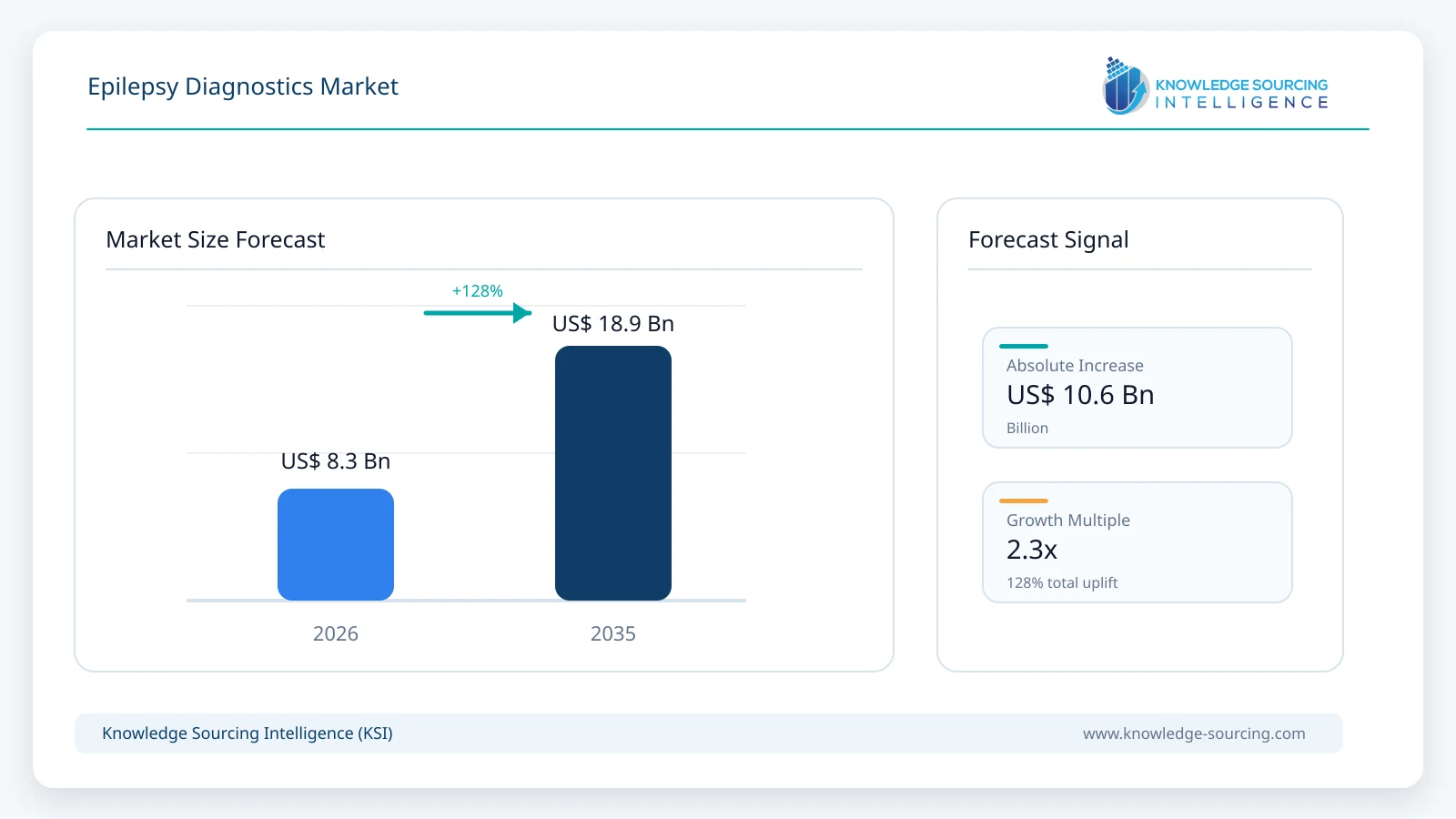
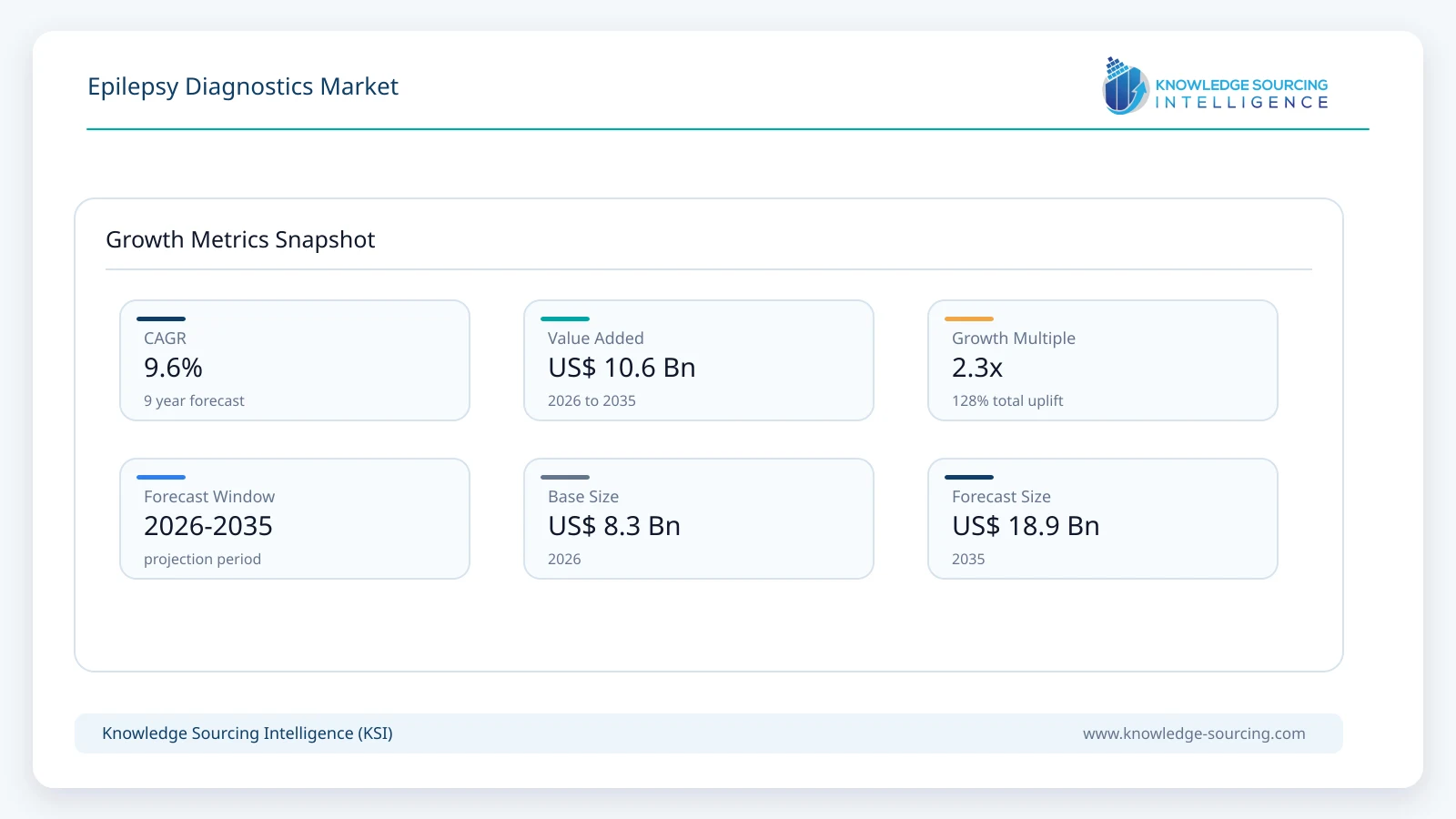
The Epilepsy Diagnostics Market is anticipated to grow at a CAGR of 9.6% from USD 8.29 billion in 2026 to USD 18.88 billion in 2035.
Highlights:
- 1Growing epilepsy awareness is increasing referrals for neurological evaluation, strengthening demand for advanced diagnostic technologies.
- 2Rising adoption of continuous EEG monitoring is improving identification of non-convulsive seizures in acute care settings.
- 3Artificial intelligence integration is reducing interpretation time while supporting neurologists with automated seizure detection.
- 4Expansion of outpatient neurology services is increasing demand for portable and ambulatory EEG systems.
The epilepsy diagnostics market consists of medical devices, imaging systems, molecular diagnostic tests, wearable monitoring technologies, and clinical software that support the diagnosis and long-term management of epilepsy. The market serves hospitals, neurology centers, diagnostic laboratories, ambulatory facilities, and research institutions that require objective neurological assessment to differentiate epileptic seizures from other neurological disorders.
Demand is increasing because healthcare providers are emphasizing earlier diagnosis to reduce disease progression, avoid inappropriate therapy, and improve long-term neurological outcomes. The growing adoption of continuous EEG monitoring reflects this clinical priority, particularly within intensive care units where non-convulsive seizures frequently remain clinically undetected.
Diagnostic workflows increasingly integrate multiple technologies rather than relying on a single modality. EEG remains the diagnostic cornerstone because it directly evaluates electrical brain activity, while MRI identifies structural abnormalities, PET and SPECT characterize functional brain activity, and genetic diagnostics support precision medicine for inherited epileptic syndromes. This multimodal approach improves diagnostic confidence across pediatric and adult patient populations.
Artificial intelligence is reshaping diagnostic practice by automating EEG interpretation, prioritizing abnormal recordings, and assisting clinicians during emergency neurological evaluations. Healthcare providers are adopting AI-enabled software because neurological specialists remain limited in many regions, creating demand for workflow automation that improves diagnostic consistency without replacing clinical expertise.
National neurological strategies, increasing awareness of epilepsy, and expanding reimbursement for advanced neurodiagnostic procedures continue to strengthen market adoption. These structural changes support sustained investment in portable EEG systems, cloud-based diagnostic platforms, and digital neurology solutions designed to improve access to specialized epilepsy care.
Market Dynamics
Market Drivers
Rising Global Burden of Epilepsy Is Expanding Diagnostic Demand: Epilepsy remains one of the world's most common neurological disorders, creating sustained demand for accurate diagnostic evaluation. Healthcare providers are expanding diagnostic capacity because earlier identification reduces treatment delays and improves long-term seizure management. Clinical pathways increasingly depend on objective neurophysiological evidence before initiating long-term antiseizure therapy. Hospitals are investing in modern EEG infrastructure to support growing neurological workloads. These developments reinforce sustained demand for comprehensive epilepsy diagnostics. Around 50 million people worldwide live with epilepsy, making it one of the most prevalent neurological diseases globally.
AI-Assisted EEG Interpretation Is Transforming Clinical Workflow: Electroencephalography remains the foundation of epilepsy diagnosis because it directly records abnormal cerebral electrical activity. Growing patient volumes are increasing pressure on neurologists responsible for interpreting prolonged EEG recordings. Manufacturers are integrating machine-learning algorithms that automatically identify seizure patterns and prioritize clinically significant recordings. Healthcare institutions are adopting these platforms to improve workflow efficiency and accelerate treatment decisions. Automated EEG interpretation strengthens diagnostic consistency while supporting specialist shortages in high-demand neurological settings. Recent FDA clearances for AI-enabled seizure detection software illustrate this technological progression.
Expansion of Precision Medicine Is Increasing Molecular Diagnostic Adoption: Genetic understanding of epilepsy continues to influence diagnostic practice because inherited epileptic syndromes require targeted clinical management. Neurologists increasingly incorporate molecular testing into comprehensive diagnostic pathways for pediatric and complex epilepsy cases. Diagnostic laboratories are expanding genomic testing capabilities to identify pathogenic variants associated with treatment response and disease prognosis. Earlier molecular diagnosis supports personalized therapeutic decisions and family counseling. Precision diagnostics therefore represent an increasingly important component of modern epilepsy care.
Growth of Critical Care Neurology Is Supporting Continuous EEG Monitoring: Intensive care units frequently manage patients with altered consciousness where seizures remain clinically silent. Continuous EEG monitoring is becoming standard practice for many high-risk neurological patients because bedside observation alone often fails to detect non-convulsive seizure activity. Hospitals are deploying portable monitoring systems that enable rapid neurological assessment within emergency and critical care environments. Earlier seizure identification improves treatment timing while reducing neurological complications. This clinical evolution continues to expand demand for portable EEG platforms and automated monitoring solutions.
Market Restraints
High acquisition and maintenance costs of advanced neurodiagnostic equipment limit adoption among smaller hospitals and resource-constrained healthcare systems.
Limited availability of trained epileptologists and EEG technologists restricts efficient utilization of sophisticated diagnostic technologies.
Variability in reimbursement policies for advanced neuroimaging, prolonged EEG monitoring, and genetic testing slows widespread clinical adoption.
Market Opportunities
Expansion of Ambulatory and Home-Based EEG Monitoring: Healthcare delivery increasingly emphasizes outpatient neurological care because continuous hospital monitoring raises healthcare costs. Portable EEG technologies are enabling extended monitoring beyond traditional epilepsy centers. Device manufacturers are developing lightweight wireless systems that improve patient comfort while expanding diagnostic accessibility. This transition supports broader adoption of ambulatory diagnostic solutions across community healthcare settings.
Integration of Digital Neurology Platforms: Hospitals increasingly require centralized neurological data management across multiple facilities. Digital health platforms are connecting EEG devices, imaging systems, and cloud-based interpretation services into unified clinical workflows. Vendors are investing in interoperable software ecosystems that improve reporting efficiency and remote specialist consultation. Integrated digital neurology platforms therefore represent an expanding commercial opportunity.
Growth of Emerging Healthcare Markets: Neurological healthcare infrastructure continues to expand across Asia-Pacific, Latin America, and parts of the Middle East. Governments are investing in specialized neurological services to improve diagnosis of chronic neurological diseases. Manufacturers are introducing cost-effective portable diagnostic systems designed for emerging healthcare environments. Increasing healthcare access therefore creates long-term growth opportunities for epilepsy diagnostic technologies.
Supply Chain Analysis
The epilepsy diagnostics supply chain begins with component manufacturers producing EEG electrodes, amplifiers, sensors, semiconductors, imaging hardware, cloud computing infrastructure, and specialized neurological software. These components support manufacturers that assemble EEG systems, MRI scanners, PET systems, MEG platforms, wearable monitoring devices, and molecular diagnostic solutions.
Technology developers increasingly collaborate with artificial intelligence software providers because automated interpretation has become a competitive differentiator. Device manufacturers are integrating cloud connectivity, cybersecurity capabilities, and remote monitoring features before distributing systems through direct sales organizations and specialized medical device distributors.
Hospitals, diagnostic imaging centers, neurology clinics, and academic medical centers represent the primary end users. Clinical adoption increasingly depends on software integration, technical support, physician training, and long-term maintenance agreements rather than hardware procurement alone. Service-based business models are therefore becoming increasingly important throughout the neurological diagnostics ecosystem.
Government Regulations
Region | Regulatory Authority | Regulation / Framework | Market Impact |
United States | U.S. Food and Drug Administration (FDA) | 510(k) Premarket Notification | Regulates commercialization of EEG systems, AI-based seizure detection software, neuroimaging devices, and associated diagnostic technologies. |
European Union | European Commission | Medical Device Regulation (EU MDR 2017/745) | Strengthens clinical evidence, post-market surveillance, and device safety requirements for neurological diagnostic devices. |
European Union | European Commission | In Vitro Diagnostic Regulation (IVDR 2017/746) | Governs molecular and genetic diagnostic assays used in epilepsy diagnosis. |
Japan | Pharmaceuticals and Medical Devices Agency (PMDA) | Medical Device Approval Framework | Evaluates safety and effectiveness of neurological diagnostic technologies before commercialization. |
Market Segmentation
By Product
Electroencephalography (EEG) systems form the foundation of epilepsy diagnosis because they directly measure abnormal electrical activity associated with epileptic seizures. Demand is increasing as hospitals and neurology centers are expanding continuous EEG monitoring to improve detection of focal and non-convulsive seizures that are difficult to identify through clinical observation alone. Interpretation complexity continues to create pressure on healthcare providers, prompting manufacturers to integrate artificial intelligence and automated waveform analysis into modern EEG platforms. Portable and wireless EEG systems are supporting broader adoption across emergency departments, intensive care units, and outpatient neurology clinics where rapid diagnosis is becoming a clinical priority. The segment maintains its leading position because EEG remains the first-line diagnostic tool throughout the patient care pathway and provides essential information for diagnosis, treatment planning, and long-term disease monitoring.
By Diagnostic Technology
Neuroimaging plays a fundamental role in epilepsy diagnosis because it identifies structural and functional brain abnormalities that contribute to seizure disorders. Demand is increasing as clinicians are relying on high-resolution imaging to localize epileptogenic lesions, particularly in patients who do not respond adequately to anti-seizure medications. Hospitals are expanding access to advanced MRI, PET, and SPECT technologies to support comprehensive presurgical evaluations and improve diagnostic confidence. The higher cost and infrastructure requirements of these imaging modalities continue to concentrate adoption within specialized neurological centers, encouraging healthcare providers to establish multidisciplinary epilepsy programs. Neuroimaging remains an essential component of diagnostic pathways because anatomical and functional brain assessment directly influences treatment selection and surgical planning.
By Epilepsy Type
Focal epilepsy represents the largest diagnostic segment because seizures originate within a specific region of the brain and often require detailed localization before treatment decisions are made. Demand is increasing as neurologists are utilizing multimodal diagnostic approaches to accurately identify seizure onset zones, particularly in patients with drug-resistant epilepsy who may benefit from surgical intervention. Healthcare providers are combining prolonged EEG monitoring with high-resolution MRI, PET, and MEG to improve localization accuracy while reducing diagnostic uncertainty. Complex seizure presentations continue to create pressure for comprehensive diagnostic evaluation, encouraging wider adoption of advanced neurophysiological and neuroimaging technologies. Focal epilepsy remains the dominant segment because precise localization directly influences therapeutic planning, surgical eligibility, and long-term seizure management.
Regional Analysis
North America
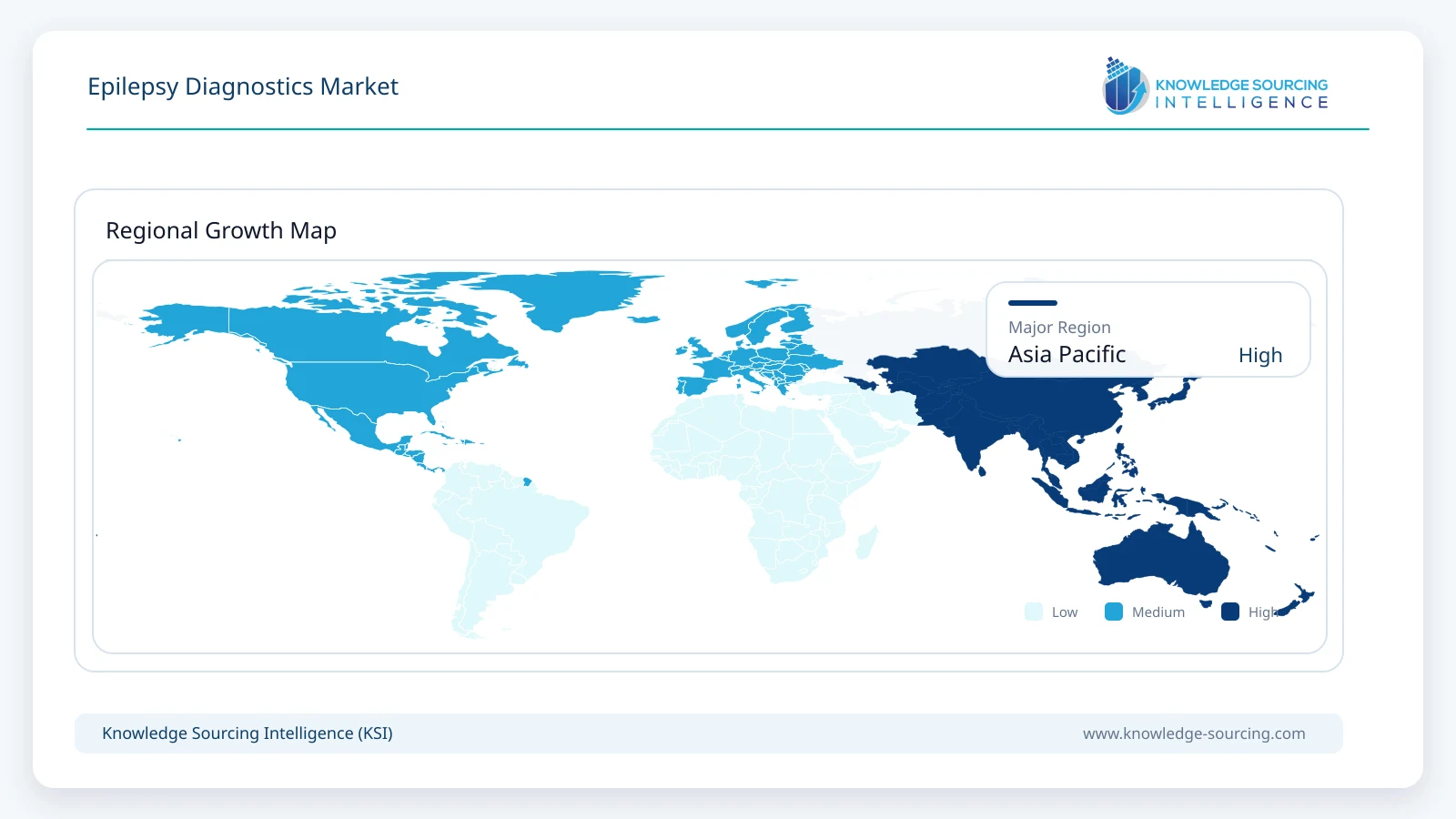
North America represents the largest regional market for epilepsy diagnostics because the region combines advanced neurological infrastructure, widespread availability of specialized epilepsy centers, and high adoption of innovative diagnostic technologies. Demand is increasing as healthcare providers are expanding continuous EEG monitoring, advanced neuroimaging, and molecular diagnostic services to improve early diagnosis and clinical management. The growing prevalence of drug-resistant epilepsy continues to increase the need for comprehensive presurgical evaluation, encouraging hospitals to invest in multimodal diagnostic platforms that integrate EEG, MRI, PET, and AI-assisted analytical software. Shortages of trained neurophysiologists are creating operational challenges, prompting healthcare institutions to implement automated EEG interpretation and cloud-based neurology platforms that improve workflow efficiency. The region maintains market leadership because favorable regulatory pathways, strong research activity, and continuous investments in digital neurology support rapid commercialization and adoption of next-generation epilepsy diagnostic technologies.
Europe
Europe maintains a significant position in the epilepsy diagnostics market because established public healthcare systems support broad access to neurological evaluation and advanced diagnostic services. Demand is increasing as healthcare providers are strengthening specialized epilepsy networks and expanding multidisciplinary care models to improve diagnostic accuracy across both pediatric and adult patient populations. Growing implementation of the European Medical Device Regulation (MDR) and In Vitro Diagnostic Regulation (IVDR) continues to raise clinical evidence requirements, encouraging manufacturers to develop more reliable and technologically advanced diagnostic solutions. Healthcare organizations are integrating artificial intelligence into EEG interpretation and neuroimaging workflows to address increasing patient volumes while optimizing specialist resources. Europe continues to demonstrate stable market growth because collaborative clinical research, standardized diagnostic guidelines, and sustained investments in neurological healthcare infrastructure are improving the quality and accessibility of epilepsy diagnosis.
Asia-Pacific
Asia-Pacific is emerging as the fastest-growing regional market for epilepsy diagnostics because expanding healthcare infrastructure, rising neurological disease awareness, and increasing healthcare expenditure are improving access to specialized diagnostic services. Demand is increasing as governments and healthcare providers are strengthening neurology departments, establishing epilepsy centers, and expanding access to advanced imaging and electrophysiological technologies. Large patient populations and improving diagnostic capabilities continue to expose previously underdiagnosed epilepsy cases, creating sustained demand for EEG systems, neuroimaging equipment, molecular diagnostics, and ambulatory monitoring devices. Differences in healthcare access between urban and rural regions remain a challenge, encouraging manufacturers to introduce portable, cost-effective, and AI-enabled diagnostic solutions that improve accessibility in resource-limited settings. Asia-Pacific continues to attract significant industry investment because healthcare modernization, digital health adoption, and expanding medical device manufacturing capabilities are supporting long-term growth in epilepsy diagnostics.
Rest of the World
The Rest of the World, comprising Latin America, the Middle East, and Africa, represents a developing market where improvements in neurological healthcare services are gradually expanding the adoption of epilepsy diagnostic technologies. Demand is increasing as governments are investing in healthcare infrastructure, strengthening referral networks, and improving access to specialized neurological care within tertiary hospitals. Limited availability of advanced diagnostic equipment and trained epilepsy specialists continues to constrain comprehensive evaluation in many countries, prompting healthcare providers to prioritize portable EEG systems, tele-neurology platforms, and scalable diagnostic solutions that require lower infrastructure investment. International health initiatives and collaborations are supporting capacity building through clinician training, technology transfer, and improved awareness of epilepsy diagnosis and treatment. The region continues to offer long-term commercial opportunities because expanding healthcare coverage, increasing public health investment, and gradual adoption of digital diagnostic technologies are improving the accessibility and quality of epilepsy diagnosis across emerging healthcare markets.
Regulatory Landscape
The regulatory framework for epilepsy diagnostics is evolving as neurological diagnostic devices become increasingly software-driven, AI-enabled, and integrated with digital health platforms. Regulatory agencies continue to require robust clinical evidence demonstrating device safety, diagnostic accuracy, cybersecurity, and clinical performance before commercialization. Manufacturers are expanding investments in quality management systems, post-market surveillance, and clinical validation because compliance requirements are becoming more comprehensive for both hardware and software-based diagnostic solutions. The growing integration of artificial intelligence into EEG interpretation and seizure detection is creating additional regulatory scrutiny regarding algorithm transparency, real-world performance, and lifecycle monitoring. These regulatory developments support greater confidence in advanced epilepsy diagnostic technologies while encouraging continuous innovation that aligns with patient safety standards.
The United States Food and Drug Administration (FDA), the European Medicines Agency (EMA) in coordination with the Medical Device Regulation (EU MDR 2017/745), Japan's Pharmaceuticals and Medical Devices Agency (PMDA), China's National Medical Products Administration (NMPA), and other national regulatory authorities oversee the approval of epilepsy diagnostic devices according to risk classification and intended clinical use. Manufacturers are increasingly pursuing regulatory approvals across multiple jurisdictions to accelerate global commercialization and expand market access. Clinical studies continue to play a critical role in demonstrating diagnostic effectiveness for AI-assisted EEG software, neuroimaging systems, wearable monitoring devices, and molecular diagnostic assays. Harmonization initiatives are supporting greater consistency in regulatory expectations while allowing manufacturers to streamline product development and international registration strategies.
Pipeline Analysis
The development pipeline for epilepsy diagnostics is shifting from standalone diagnostic hardware toward integrated platforms that combine neurophysiological monitoring, advanced imaging, molecular diagnostics, and artificial intelligence. Manufacturers are focusing on technologies that shorten diagnostic timelines, improve seizure localization, and reduce dependence on manual interpretation because healthcare systems continue to experience increasing neurological workloads. Continuous EEG systems remain the primary area of innovation, while wearable monitoring devices, cloud-based diagnostic software, and AI-assisted clinical decision support are expanding the scope of epilepsy evaluation beyond traditional hospital settings. This transition is strengthening demand for comprehensive diagnostic ecosystems that provide real-time data analysis and support personalized patient management.
Artificial intelligence is becoming a major focus of product development as companies are training algorithms to detect epileptiform activity, classify seizure patterns, and prioritize clinically significant EEG recordings. Several developers are integrating machine learning into portable EEG devices and hospital-based monitoring systems to improve diagnostic efficiency and address shortages of trained neurophysiologists. Parallel development is occurring in advanced neuroimaging, where high-resolution MRI protocols, multimodal image fusion, and automated lesion detection software are improving identification of subtle structural abnormalities associated with epilepsy. Molecular diagnostic developers are also expanding next-generation sequencing panels to improve diagnosis of genetic epilepsies and support precision medicine initiatives, particularly for pediatric and treatment-resistant patient populations.
Competitive Landscape
GE HealthCare
GE HealthCare is strategically distinct because it combines advanced diagnostic imaging, artificial intelligence, and digital healthcare solutions within an integrated neurological imaging ecosystem. The company's broad portfolio enables healthcare providers to perform comprehensive epilepsy evaluations by combining high-resolution magnetic resonance imaging (MRI), computed tomography (CT), positron emission tomography (PET), and advanced visualization software. Demand is increasing as clinicians are seeking greater anatomical precision for identifying epileptogenic lesions, particularly in patients with drug-resistant epilepsy who require surgical assessment. GE HealthCare is expanding AI-enabled image reconstruction and workflow optimization technologies to improve diagnostic efficiency while reducing scan time and enhancing image quality. Its global service network, strong research collaborations, and continuous investment in digital imaging platforms strengthen its competitive position in epilepsy diagnostics. The company continues to support neurological centers through integrated imaging solutions that improve diagnostic confidence and facilitate multidisciplinary clinical decision-making.
Siemens Healthineers AG
Siemens Healthineers differentiates itself through its leadership in advanced neuroimaging technologies, digital diagnostics, and artificial intelligence-enabled clinical workflows. The company offers MRI, PET/CT, and molecular imaging platforms that support comprehensive neurological evaluation for epilepsy diagnosis and presurgical planning. Demand is increasing as hospitals are investing in high-performance imaging systems capable of detecting subtle structural and functional brain abnormalities. Siemens Healthineers is integrating AI-powered image acquisition, automated post-processing, and advanced visualization software to improve workflow efficiency while supporting diagnostic consistency. Continuous innovation in imaging precision, digital connectivity, and clinical decision support enables the company to address growing neurological imaging requirements. Its extensive international presence and strong investment in research and development continue to reinforce its position as a leading provider of epilepsy diagnostic technologies.
Koninklijke Philips N.V.
Koninklijke Philips N.V. maintains a strong position in epilepsy diagnostics through its comprehensive portfolio of diagnostic imaging systems, patient monitoring technologies, and connected healthcare solutions. The company focuses on integrating MRI, advanced visualization software, and digital health platforms to support accurate neurological assessment across diverse clinical environments. Demand is increasing as healthcare providers are adopting connected diagnostic ecosystems that improve collaboration between radiologists, neurologists, and epilepsy specialists. Philips is expanding cloud-enabled workflow solutions and AI-assisted imaging applications to enhance diagnostic efficiency while improving patient management. Its emphasis on interoperability and enterprise-wide healthcare integration supports seamless exchange of clinical information across hospital networks. The company's continued investment in precision imaging and digital transformation strengthens its role within the evolving epilepsy diagnostics market.
Nihon Kohden Corporation
Nihon Kohden Corporation is recognized for its specialized expertise in neurophysiological monitoring and diagnostic technologies, particularly electroencephalography (EEG) systems used in epilepsy diagnosis. The company develops routine, long-term, and continuous EEG solutions that support neurological assessment across hospitals, epilepsy monitoring units, and intensive care settings. Demand is increasing as clinicians are expanding continuous EEG monitoring to improve detection of non-convulsive seizures and other complex neurological conditions. Nihon Kohden is enhancing its diagnostic platforms through advanced signal processing, integrated patient monitoring, and network connectivity that improve clinical workflow and data accessibility. Its long-standing focus on neurological diagnostics enables the company to provide highly specialized solutions tailored to epilepsy care. Continued product development and global distribution capabilities reinforce its competitive position in the neurodiagnostic device market.
Natus Medical Incorporated
Natus Medical Incorporated is strategically positioned in the epilepsy diagnostics market through its dedicated focus on neurodiagnostic and neurological monitoring solutions. The company's portfolio includes routine EEG, long-term video EEG, ambulatory EEG, and neurodiagnostic software that support the diagnosis and management of epilepsy across hospitals, epilepsy monitoring units, and outpatient neurology clinics. Demand is increasing as healthcare providers are expanding continuous neurological monitoring to improve seizure detection and reduce diagnostic delays. Natus is enhancing its platforms with integrated data management, remote review capabilities, and workflow optimization tools that improve clinical efficiency while supporting multidisciplinary neurological care. Its specialized expertise in neurodiagnostics, extensive installed base, and long-standing presence in neurological healthcare continue to strengthen its competitive position within the epilepsy diagnostics market.
Compumedics Limited
Compumedics Limited differentiates itself through its specialized portfolio of EEG, long-term monitoring, sleep diagnostics, and brain monitoring technologies designed for neurological applications. The company provides advanced EEG systems, video EEG monitoring platforms, and software solutions that assist clinicians in identifying epileptic activity with greater precision. Demand is increasing as epilepsy centers are adopting prolonged monitoring technologies to evaluate complex seizure disorders and guide treatment planning. Compumedics is integrating artificial intelligence, cloud connectivity, and advanced analytics into its neurodiagnostic platforms to improve interpretation efficiency and facilitate remote neurological assessment. Its continued investment in innovation, combined with strong relationships across academic hospitals and specialized neuroscience centers, reinforces its position as a leading provider of epilepsy diagnostic solutions.
Cadwell Industries, Inc.
Cadwell Industries, Inc. maintains a strong presence in the neurodiagnostic market through its focus on electrophysiological diagnostic systems used in neurology, epilepsy, and neurophysiology laboratories. The company's EEG platforms support routine examinations, long-term monitoring, and advanced neurological investigations required for comprehensive epilepsy diagnosis. Demand is increasing as clinicians require flexible diagnostic systems capable of delivering high-quality recordings while integrating with hospital information systems and electronic medical records. Cadwell continues to expand software functionality, data visualization capabilities, and workflow automation to improve clinical productivity and diagnostic consistency. Its emphasis on user-friendly neurodiagnostic technologies and continuous product enhancement enables the company to address the evolving needs of neurologists and epilepsy specialists worldwide.
Masimo Corporation
Masimo Corporation is strengthening its position in epilepsy diagnostics by leveraging its expertise in non-invasive patient monitoring, advanced signal processing, and connected healthcare technologies. While the company is widely recognized for physiological monitoring solutions, it is expanding digital health capabilities that support neurological assessment and continuous patient monitoring in acute care environments. Demand is increasing as hospitals seek integrated monitoring platforms capable of combining multiple physiological parameters with neurological evaluation to improve patient management. Masimo continues to invest in cloud-based connectivity, artificial intelligence, and hospital interoperability that enhance real-time clinical decision-making and workflow efficiency. Its innovation-driven strategy and expanding digital health ecosystem position the company to support future developments in comprehensive neurological monitoring and epilepsy care.
Future Market Outlook
The epilepsy diagnostics market is shifting toward integrated diagnostic ecosystems that combine electrophysiological monitoring, advanced neuroimaging, molecular diagnostics, and artificial intelligence within a unified clinical workflow. Healthcare providers are prioritizing earlier and more accurate diagnosis because timely seizure classification directly influences therapeutic selection, surgical eligibility, and long-term neurological outcomes. This transition is increasing demand for multimodal diagnostic platforms capable of consolidating clinical data from EEG, MRI, PET, genetic testing, and wearable monitoring devices into a single decision-support environment. Manufacturers are responding by expanding software-enabled solutions, cloud connectivity, and AI-assisted analytics that improve diagnostic efficiency while reducing dependence on limited neurological specialists. The market continues to evolve from hardware-centric procurement toward value-based diagnostic ecosystems that emphasize interoperability, workflow optimization, and continuous clinical support.
Artificial intelligence is expected to remain the primary innovation driver as healthcare systems seek to manage growing neurological workloads without compromising diagnostic quality. Companies are developing increasingly sophisticated algorithms that automate seizure detection, identify subtle epileptiform activity, and prioritize clinically significant EEG recordings for specialist review. Simultaneously, wearable monitoring technologies and remote diagnostic platforms are enabling decentralized epilepsy care by supporting continuous patient observation outside traditional hospital environments. Precision medicine is also strengthening its influence as molecular diagnostics become more accessible and clinicians increasingly integrate genetic information into individualized treatment strategies. These technological advances are expanding the role of epilepsy diagnostics beyond disease identification toward comprehensive clinical decision support throughout the patient journey.
The competitive environment is expected to favor companies capable of combining diagnostic hardware, intelligent software, and digital health services into scalable, interoperable platforms. Healthcare institutions are increasingly evaluating long-term operational efficiency, cybersecurity, regulatory compliance, and seamless integration with electronic health record systems when selecting diagnostic solutions. Manufacturers that continue investing in artificial intelligence, cloud-based neurology platforms, advanced imaging technologies, and precision diagnostics are likely to strengthen their market position as demand shifts toward connected neurological care. Continuous regulatory support for software-enabled medical devices and ongoing investments in neurological infrastructure across emerging economies are expected to further accelerate innovation and market adoption during the forecast period.
Epilepsy Diagnostics Market Scope:
| Report Metric | Details |
|---|---|
| Total Market Size in 2026 | USD 8.29 billion |
| Total Market Size in 2035 | USD 18.88 billion |
| Forecast Unit | Billion |
| Growth Rate | 9.6% |
| Study Period | 2021 to 2035 |
| Historical Data | 2021 to 2024 |
| Base Year | 2025 |
| Forecast Period | 2026 – 2035 |
| Segmentation | Product, Diagnostic Technology, Epilepsy Type, Age Group, End User, Geography |
| Companies |
|
Market Segmentation
Product
Diagnostic Technology
End User
Geography
- North America
- South America
- Europe
- Middle East and Africa
- Asia Pacific
Table of Contents
1. EXECUTIVE SUMMARY
1.1 Market Snapshot
1.2 Key Findings
1.3 Analyst Insights
1.4 Strategic Recommendations
2. RESEARCH METHODOLOGY
2.1 Research Design
2.2 Data Collection Methodology
2.3 Market Size Estimation
2.4 Forecasting Model
2.5 Assumptions & Limitations
3. GLOBAL EPILEPSY DIAGNOSTICS MARKET OVERVIEW, SIZE & FORECAST
3.1 Market Definition & Scope
3.2 Epilepsy Disease Overview
3.3 Evolution of Epilepsy Diagnostics
3.4 Key Market Trends
3.5 Historical Market Size Analysis (2021–2025)
3.6 Market Forecast (2026–2035)
3.7 Disease Classification
3.8 Epidemiology and Prevalence Analysis
3.9 Diagnosed Patient Population Analysis
3.10 Diagnostic Pathway and Clinical Workflow
3.11 Current Diagnostic Landscape and Unmet Clinical Needs
4. MARKET DYNAMICS
4.1 Market Drivers
4.2 Market Restraints
4.3 Market Opportunities
4.4 Market Challenges
5. INDUSTRY LANDSCAPE
5.1 Industry Value Chain Analysis
5.2 Pricing Analysis
5.3 Reimbursement Landscape
6. INNOVATION LANDSCAPE
6.1 Emerging Diagnostic Technologies
6.2 Product Innovation
6.3 Clinical Trial Analysis
6.4 Pipeline Analysis
6.5 Artificial Intelligence Integration in Epilepsy Diagnostics
6.6 Digital Health Integration
6.7 Technology Roadmap
7. REGULATORY LANDSCAPE
7.1 Regulatory Framework
7.2 Approval Pathways
7.3 Compliance Requirements
8. GLOBAL EPILEPSY DIAGNOSTICS MARKET LANDSCAPE ANALYSIS
8.1 Analysis by Technology Platform
8.2 Analysis by Diagnostic Modality
8.3 Analysis by Biomarker Type
8.4 Analysis by Sample Type
8.5 Analysis by Clinical Application
8.6 Analysis by Testing Methodology
9. GLOBAL EPILEPSY DIAGNOSTICS MARKET SEGMENT ANALYSIS (2021–2035)
9.1 By Product
9.1.1 Electroencephalography (EEG) Systems
9.1.2 Magnetic Resonance Imaging (MRI)
9.1.3 Computed Tomography (CT)
9.1.4 Positron Emission Tomography (PET)
9.1.5 Single-Photon Emission Computed Tomography (SPECT)
9.1.6 Magnetoencephalography (MEG)
9.1.7 Molecular & Genetic Diagnostic Tests
9.1.8 Wearable and Ambulatory Monitoring Devices
9.2 By Diagnostic Technology
9.2.1 Neuroimaging
9.2.2 Electrophysiological Diagnostics
9.2.3 Molecular Diagnostics
9.2.4 Digital & AI-Based Diagnostics
9.3 By Epilepsy Type
9.3.1 Focal Epilepsy
9.3.2 Generalized Epilepsy
9.3.3 Combined Generalized and Focal Epilepsy
9.3.4 Unknown Epilepsy
9.4 By Age Group
9.4.1 Pediatric
9.4.2 Adult
9.4.3 Geriatric
9.5 By End User
9.5.1 Hospitals
9.5.2 Neurology Clinics
9.5.3 Diagnostic Imaging Centers
9.5.4 Academic & Research Institutes
9.5.5 Ambulatory Surgical Centers
10. GLOBAL EPILEPSY DIAGNOSTICS MARKET GEOGRAPHICAL ANALYSIS (2021–2035)
10.1 North America
10.2 Europe
10.3 Asia-Pacific
10.4 South America
10.5 Middle East & Africa
11. GLOBAL EPILEPSY DIAGNOSTICS MARKET COUNTRY ANALYSIS (2021–2035)
11.1 United States
11.2 Canada
11.3 Germany
11.4 United Kingdom
11.5 France
11.6 Italy
11.7 Spain
11.8 Japan
11.9 China
11.10 India
11.11 South Korea
11.12 Australia
11.13 Brazil
11.14 Saudi Arabia
11.15 South Africa
12. COMPETITIVE LANDSCAPE
12.1 Market Share Analysis
12.2 Strategic Developments
12.3 Mergers & Acquisitions, Partnerships & Collaborations
12.4 Product Launches
13. COMPANY PROFILES
13.1 GE HealthCare
13.2 Siemens Healthineers AG
13.3 Koninklijke Philips N.V.
13.4 Nihon Kohden Corporation
13.5 Natus Medical Incorporated
13.6 Compumedics Limited
13.7 Cadwell Industries, Inc.
13.8 Masimo Corporation
13.9 EGI (Electrical Geodesics, Inc.)
13.10 Neurosoft
13.11 Micromed S.p.A.
13.12 CERIBELL, Inc.
13.13 Medtronic plc
13.14 Canon Medical Systems Corporation
13.15 Fujifilm Healthcare Corporation
14. GLOBAL EPILEPSY DIAGNOSTICS MARKET COMMERCIAL FORECAST ANALYSIS
14.1 Electroencephalography (EEG) Systems
14.2 Magnetic Resonance Imaging (MRI)
14.3 Computed Tomography (CT)
14.4 Positron Emission Tomography (PET)
14.5 Single-Photon Emission Computed Tomography (SPECT)
14.6 Magnetoencephalography (MEG)
14.7 Molecular & Genetic Diagnostic Tests
14.8 Wearable and AI-Enabled Epilepsy Monitoring Solutions
15. INVESTMENT & FUNDING ANALYSIS
15.1 Venture Capital Trends
15.2 Government Funding
15.3 R&D Investments
16. FUTURE OUTLOOK
16.1 Key Growth Opportunities
16.2 Future Industry Trends
Navigate
Trusted by the world's leading organizations











