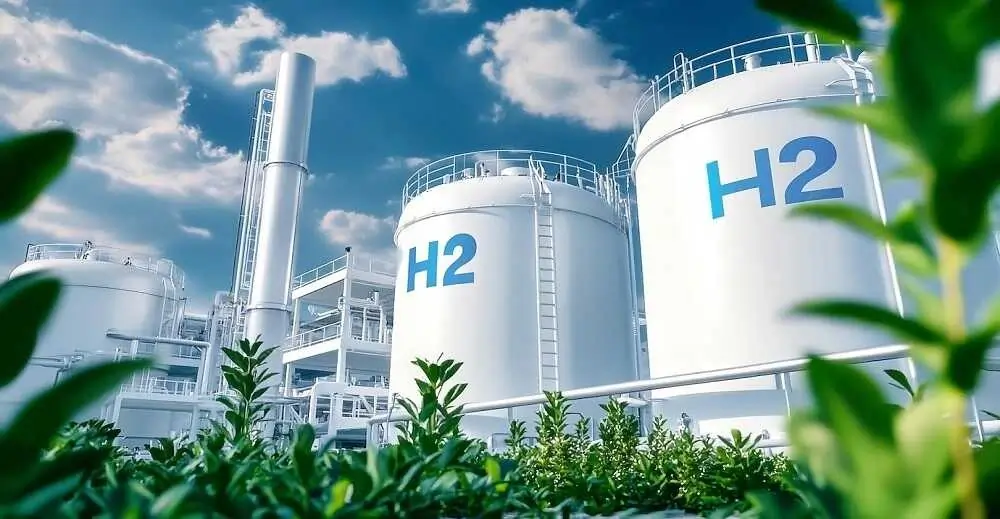
Green hydrogen generated from renewable energy is regarded as one of the most promising pathways to help industries decarbonize, promote the growth of renewable energy, enhance system flexibility, and ensure national energy security. On the environment’s side, green hydrogen has more potential compa...
 Source: International Energy Agency
Nevertheless, several obstacles must be tackled to progress towards creating this envisaged global hydrogen market. Among these challenges are the comparatively high cost of producing green hydrogen, fluctuation in prices for green hydrogen, changes in land use, and availability of water resources through such projects. In addition, there is also a need for acceptance by society on these initiatives as well as the absence of international standardization and regulation. To address these problems, multi-stakeholders such as businesses, policymakers, and research and development communities are collaborating to overcome these hurdles that deter investors. Additionally, nations have developed national hydrogen policies that would facilitate it.
Economic benefits:
Source: International Energy Agency
Nevertheless, several obstacles must be tackled to progress towards creating this envisaged global hydrogen market. Among these challenges are the comparatively high cost of producing green hydrogen, fluctuation in prices for green hydrogen, changes in land use, and availability of water resources through such projects. In addition, there is also a need for acceptance by society on these initiatives as well as the absence of international standardization and regulation. To address these problems, multi-stakeholders such as businesses, policymakers, and research and development communities are collaborating to overcome these hurdles that deter investors. Additionally, nations have developed national hydrogen policies that would facilitate it.
Economic benefits:
- Job Creation and Industrial Growth
- Energy Security and Diversification
- Economic Competitiveness
- Decarbonizing High-Emission Sectors
- Rural Development and Infrastructure
1. Job Creation and Industrial Growth
The green hydrogen sector across different sectors could generate many employment positions. The job roles available within this field are vast, including those in setting up and maintaining structures for producing renewable forms of energy and those in the factories where fuel cells and electrolyzers are made. In addition, a positive spill-over effect into other industries may occur with the development of green hydrogen, such as in advanced components and material production.2. Energy Security and Diversification
Another advantage is that green hydrogen enhances energy security due to a reduction in dependence on foreign fossil fuels while at the same time presenting opportunities for diversified energy sources. Thus, by developing green hydrogen infrastructure, governments can generate their clean power and, therefore, enhance their stability and self-determination over it. In this manner, even price fluctuations depending on traditional oil or gas markets can be mitigated by lowering them.3. Economic Competitiveness
Conventional energy generation is expected to become less cost-effective than green hydrogen manufacturing and using its technologies. Green hydrogen technology can be developed by early adopters into an industry leader in the transition towards sustainable supply chains of power, thus giving them a competitive edge over their counterparts globally. Investment opportunities, as well as overall economic development, could also be attracted through this initiative in areas that are at the forefront of the energy shift.4. Decarbonizing High-Emission Sectors
Green hydrogen has incredible potential to aid the decarbonization of hard-to-electrify sectors such as heavy industry, shipping, and aviation, among others. These industries can benefit significantly from it as a clean alternative to fossil fuels, thereby reducing their overall greenhouse gas emissions and contributing to climate objectives. It is, therefore, possible for this measure to foster growth that is more resilient and sustainable in terms of the economy.5. Rural Development and Infrastructure
Renewable energy projects such as solar power plants and wind farms, which are usually located in rural areas, are usually part of the process of producing green hydrogen. This can enhance the development of such regions via job creation, infrastructure investments, and increased local taxes. In addition to this, hydrogen production facilities can trigger growth in supplementary sectors like logistics and transport. Challenges and Considerations Although the green hydrogen industry has potential, several challenges need to be addressed to realize its financial gains completely. These challenges include:- High Production Costs
- Infrastructure Development
- Regulatory Framework
1. High Production Cost
Currently, green hydrogen is more costly to manufacture than traditional hydrogen or fossil fuels. For instance, green hydrogen currently costs between $4 and $5 per kilogram to produce, which is about twice as much as grey hydrogen. 30 to 50% of the money spent goes toward electrolyzer costs, with the remaining 50% going toward round-the-clock (RTC) renewable electricity. However, if more research and development are focused on reducing the production costs of green hydrogen, then it would be price-competitive for everyone.2. Infrastructure Development
Establishing infrastructure for green hydrogen production, storage, and distribution will involve huge financial resources. Supportive government policies and public-private partnerships could greatly facilitate this infrastructure development.3. Regulatory Framework
Clear and supportive regulations are necessary for the prospering of the green hydrogen industry. For hydrogen production and consumption, benchmarks that provide an enduring trading environment and strategies that encourage investment and invention must be established. However, according to NITI Aayog (the government’s think tank), India presently spends more than 160 billion US dollars annually on energy imports alone. This figure could double in the next 15 years. Adopting green hydrogen can help India reduce CO2 emissions by 3.6 gigatonnes cumulatively between now and 2050, in addition to significantly lowering these costs. In conclusion, green hydrogen has astonishing potential to decarbonize difficult-to-electrify sectors like heavy industry, shipping, and aviation, among others. These sectors would heavily profit from this clean alternative to fossil fuels, thereby decreasing their total greenhouse gas emissions and assisting in achieving climate goals. This means that such a measure can promote more resilient and sustainable economic growth.Need specialized data cuts or competitive intelligence?
Our analyst team provides bespoke market sizing, supplier audits, and country-level feasibility reports tailored to your enterprise roadmap.
Speak With an Industry Analyst →Ask an Industry Analyst
Have questions regarding this briefing or market projections? Inquire with our sector lead.
Related Thought Articles
View All →
The Rise of Locally Manufactured Battery Separators in India’s EV Ecosystem
Aug 26, 2026
Why Hub Motors Are Becoming a Game Changer for India’s Electric Two-Wheeler Manufacturers
Aug 25, 2026
How Advanced Battery Thermal Management Is Transforming Cold-Weather EV Performance in India
Aug 24, 2026
From Highways to Cities: How Top Companies Are Expanding EV Charging Across India
Aug 20, 2026
How AI Is Revolutionizing EV Range Prediction in India
Aug 19, 2026More Thought Articles
Make in India and the Rise of Local EV Motor Controller Manufacturing
India’s EV industry is entering a deeper localisation phase, with motor controllers emerging as a strategic opportunity for domestic engineering and manufacturing. Rising electric two- and three-wheeler volumes, government incentives, semiconductor initiatives, and local supplier capabilities are supporting controller development. The next priority is shifting from assembly toward hardware, software, integration, and power-electronics localisation.
Why EV Conversion Kits Are Becoming a New Manufacturing Opportunity in India
India’s EV conversion kit market could create a new manufacturing opportunity by electrifying existing vehicles, particularly high-mileage three-wheelers, delivery fleets, and light commercial vehicles. The article examines market economics, standardization, battery systems, power electronics, certification, and lifecycle services, highlighting how India’s expanding EV ecosystem can support selective, scalable retrofit manufacturing.
How Advanced Power Electronics Are Reshaping India’s EV Powertrain Market
India’s EV industry is shifting toward power electronics as a key source of vehicle differentiation. Traction inverters, SiC semiconductors, integrated drive units, software and thermal management can improve efficiency, charging, range and reliability. Cost-sensitive two-wheelers will favour affordable solutions, while premium and commercial EVs accelerate adoption of advanced power electronics.