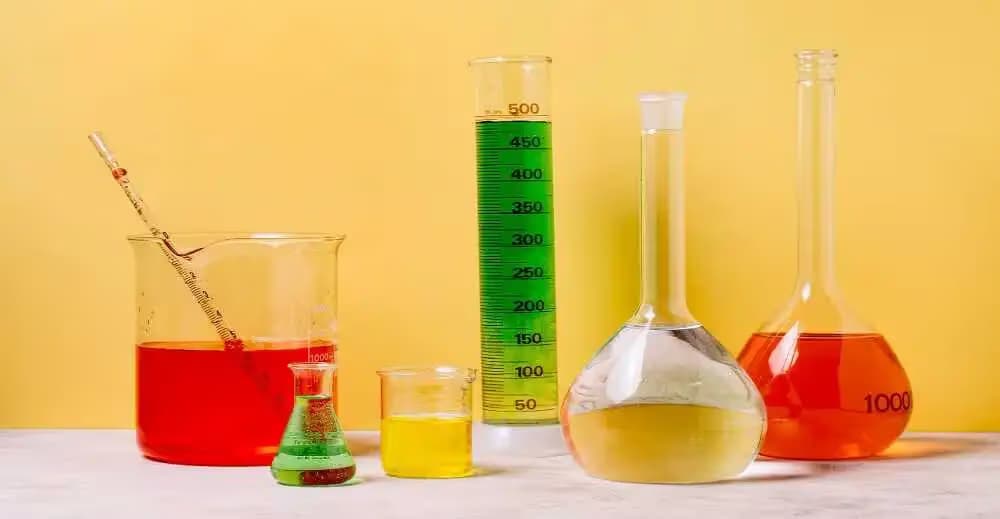
Industrial chemicals are fundamental to modern manufacturing and technological advancement. They enable efficient production processes and support innovations across industries, from advanced semiconductors and protective coatings to agricultural fertilizers. These are embedded in countless everyday products, including pharmaceuticals, electronics, vehicles, paints, and textiles. By enhancing product performance, durability, and quality, industrial chemicals serve as a critical foundation for industrial growth and modern living.
How Industrial Chemicals Power Modern Manufacturing and Daily Life
Industrial chemicals are a driving force behind the modern industrial world. They serve as essential components in a wide range of manufacturing processes and play a crucial role in enabling innovation. These chemicals ensure efficient production workflows and support the development of advanced manufacturing technologies. From cutting-edge semiconductor chips with 3nm architecture to anti-corrosion coatings and high-efficiency fertilizers used in agriculture, industrial chemicals are at the core of these advancements.
These chemicals are integrated into nearly every aspect of modern life. They are found in pharmaceuticals, household paints, smartphones, vehicles, and even the fabrics of the clothes we wear. Industrial chemicals help products last longer, perform better, and meet the high-performance standards expected today. Simply put, they are the foundation of durable, high-quality, and efficient products across every major industry.
Get In-Depth Analysis of the Chemicals Market
This article covers the fundamentals. Our full market reports provide the granular data and strategic insights you need to make informed business decisions.
Detailed Market Size & Growth Forecasts
Competitive Landscape & Key Player Analysis
Regional Breakdowns & Emerging Trends
Browse Our Chemical Reports
The list below highlights ten of the most widely produced and industrially significant chemicals. It should not be interpreted as a strict global production-volume ranking because reporting methods and units differ across gases, liquids, acids, and chemical intermediates.
Top 10 Industrial Chemicals:
1) Sulfuric Acid (H2SO4)
2) Nitrogen (N2)
3) Ethylene (C2H4)
4) Oxygen (O2)
5) Propylene (C3H6)
6) Chlorine (Cl2)
7) Ethylene Dichloride (C2H4Cl2)
8) Phosphoric Acid (H3PO4)
9) Ammonia (NH3)
10) Sodium Hydroxide (NaOH)
1. Sulfuric Acid (H2SO4)
Sulfuric acid is the most consumed industrial chemical in the world. The agriculture sector consumes the most sulfuric acid to produce fertilizers. It is also used to produce detergents, lead-acid automotive batteries, dyes, pigments, explosives, and other chemicals like hydrochloric acid (HCL).
Sulfuric acid is used in other important industrial processes, such as etching and cleaning semiconductor chips and printed circuit boards. It is also used in petroleum refining and acts as a reactant in rayon and nitroglycerin.
The demand for sulfuric acid is expected to grow in industries such as the automotive, electrical and electronics, and fertilizer industries.
The above-mentioned applications make sulfuric acid one of the most consumed industrial chemicals.
The U.S. Geological Survey estimated U.S. elemental sulfur production at 7.6 million metric tons in 2025. About 90% of the sulfur consumed in the country was used in the form of sulfuric acid, while an estimated 2.5 million to 5 million tons of spent sulfuric acid is typically reclaimed each year from petroleum refining and chemical processes.
2. Nitrogen (N2)
Nitrogen is a colorless, odorless inert gas and constitutes 78% (by volume) of the air we breathe. Due to its inert properties, it is commonly used as a blanketing gas that protects oxygen-sensitive products from oxidizing by covering the product.
In industrial scenarios, liquid nitrogen is highly used in various applications, such as the production of steel and other metals, as a coolant for scientific experiments, reactor cooling, and flour and dough cooling in the food industry.
The food industry is one of the largest nitrogen consumers in gas and liquid form. Nitrogen gas is used in food packaging to increase the shelf life of packaged food, and liquid nitrogen is used in refrigerated trucks to keep food fresh and avoid food contact with the air.
In the healthcare industry, liquid nitrogen is used to freeze and preserve blood, cells, biological samples, and tissues. It is also used in cryosurgery and dermatology to freeze and remove selected abnormal or damaged tissue.
3. Ethylene (C2H4)
Ethylene is a petrochemical produced in large volumes globally. Nearly 95% of the annual commercial ethylene is produced by steam cracking of petroleum hydrocarbons. Various feedstocks, such as propane, ethane, butane, gas oils, and naphtha, are used to produce ethylene. The feedstock mix differs by region: ethane is especially important in the United States, while naphtha remains the primary petrochemical feedstock across much of Asia and Europe. Cracking ethane can yield more than 80% ethylene, compared with as little as 30% from naphtha. There has also been growing interest in bio-ethylene and lower-emission production routes.
India produced approximately 6.39 million metric tons of ethylene in FY 2024-25, compared with 6.06 million metric tons in FY 2023-24, according to the Department of Chemicals and Petrochemicals. Most ethylene is consumed in the production of high-density polyethylene (HDPE), linear low-density polyethylene (LLDPE), low-density polyethylene (LDPE), ethylene glycol, and other downstream chemicals.
While most commercially produced ethylene is used to produce polymers and industrial chemicals, a small amount is utilized in the controlled ripening of citrus fruits, tomatoes, bananas, and many other fruits and vegetables.
Ethylene is also used to produce ethylene glycol, polystyrene for packaging and insulation, ethanol for industrial use, polyester, and synthetic rubber, among other things.
4. Oxygen (O2)
Oxygen in industries is mainly utilized in the combustion process. Commercially produced oxygen is used in oxyacetylene and oxyhydrogen welding torches.
Oxygen is also used in chemical industries to break down hydrocarbons into smaller hydrocarbons like ethylene, propylene, and acetylene, which are later utilized in the production of paints, plastics, and other products.
Rockets are fueled by liquid hydrogen and liquid oxygen cryogenic propellants. The oxygen tank used to launch a space shuttle contains around 550,000 liters of liquid oxygen.
Other industries that use oxygen gas or liquid oxygen include medical, paper and pulp, water treatment, metal production, glass, and the chemical industry.
Large-volume industrial oxygen is generally produced through cryogenic air separation, while pressure- or vacuum-swing adsorption is widely used for smaller on-site requirements. Because oxygen is commonly produced close to major users, national production rankings are less consistently reported than for traded bulk chemicals.
5. Propylene (C3H6)
Propylene, also known as propene, is a highly versatile hydrocarbon with the chemical formula C3H6. This colorless gas has a faint petroleum-like odor and is highly flammable. It is primarily produced through catalytic or thermal cracking of hydrocarbons and often emerges as a byproduct during petroleum refining and natural gas processing. Propylene serves as a crucial intermediate in the synthesis of numerous industrial chemicals and materials. India produced approximately 6.37 million metric tons of propylene in FY 2024-25, up from 5.83 million metric tons in FY 2023-24.
One of the primary uses of propylene is in the production of polypropylene, a widely utilized thermoplastic polymer. Known for its durability, chemical resistance, and flexibility, polypropylene is essential in manufacturing packaging materials, automotive parts, textiles, and everyday consumer products. Approximately two-thirds of the global supply of propylene is dedicated to making polypropylene.
Beyond polypropylene, propylene is a vital raw material for creating several other key chemicals, including propylene oxide, acrylonitrile, cumene, and acrylic acid. Propylene oxide is used to produce polyurethanes, which are found in furniture, car components, and insulation. Acrylonitrile is essential for manufacturing acrylic fibers for textiles, plastic components in electronics and vehicles, and synthetic rubber. Cumene is processed into phenol and acetone, both used in producing adhesives, polymers, and resins.
Propylene also plays a major role in the production of isopropyl alcohol, a common solvent used in pharmaceuticals, personal care products, and household cleaners. Additionally, propylene is used to manufacture plasticizer alcohols, which are found in coatings, flexible plastics, and adhesives. Its application extends to surface coatings, sealants, and superabsorbent polymers used in hygiene products like diapers and sanitary pads—highlighting its widespread industrial significance.
6. Chlorine (Cl2)
Chlorine (Cl2) is one of the top-consumed chemicals in the world. It is mainly produced through the electrolysis of sodium chloride brine. A yellow-green gas known for its pungent smell, chlorine is a key ingredient in various industrial applications due to its high reactivity and oxidizing potential.
Its density is approximately 2.5 times greater than air, and owing to this reason, it remains close to the ground. Even though it's not flammable, chlorine can produce explosive compounds with acetylene and ammonia, requiring careful handling and storage.
Chlorine is extensively used in water treatment and disinfection processes. It is necessary for treating sewage and industrial waste and cleaning drinking water to protect public health and the environment. Its function in sanitation also includes swimming pools, which use chlorine and its derivatives to keep the water clean.
Chlorine is widely used in the chemical industry to produce various goods. Because of its strong oxidizing ability, chlorine is a vital component used in producing industrial bleaches and disinfectants. It is also essential for synthesizing insecticides, chlorides, and chlorinated solvents. It is also used in the synthesis of polymers, synthetic rubbers, and refrigerants.
Chlorine is used in industrial processes to whiten and purify paper and textiles, thereby improving their appearance and quality. It is also dissolved in water in household cleaning solutions, which makes it an important chemical for daily sanitation and hygiene. It is an important chemical that is used in both industrial and household applications. India’s liquid chlorine production reached approximately 2.73 million metric tons in FY 2024-25, compared with 2.64 million metric tons in FY 2023-24. Production recorded a 5.9% CAGR between FY 2020-21 and FY 2024-25.
7. Ethylene Dichloride (C2H4Cl2)
Ethylene dichloride (EDC), or 1,2-dichloroethane, is an oily, colorless liquid with a sweet smell that is mainly produced through the chlorination or oxychlorination of ethylene. Its correct molecular formula is C2H4Cl2. EDC is primarily cracked to produce vinyl chloride monomer (VCM), which is then polymerized into polyvinyl chloride (PVC).
More than 90% of the 30 billion to 40 billion pounds of 1,2-dichloroethane produced or imported annually in the United States goes into PVC production. Its remaining uses are comparatively limited and include use as a chemical intermediate and in certain controlled solvent, cleaning, adhesive, and sealant applications.
Considering its wide range of industrial uses, it is categorized as a human carcinogen. Prolonged exposure to elevated levels can cause major health problems, such as damage to the kidneys and liver. Thus, to reduce potential risks and guarantee the safety of both employees and the environment, stringent safety procedures and legal requirements are necessary during its manufacturing, storage, and usage. In May 2026, the U.S. Environmental Protection Agency announced that it would regulate 15 uses of 1,2-dichloroethane after completing its risk evaluation, with particular attention to worker exposure.
8. Phosphoric Acid (H3PO4)
Phosphoric acid is made from phosphate rock by wet or thermal processes. Nearly 80% of the global phosphoric acid is produced by wet processes.
Phosphoric acid (H3PO4) is used for many consumer, industrial, and agricultural purposes. One of its major applications is the production of phosphate salts used in fertilizers. Wet-process phosphoric acid is principally an intermediate for producing fertilizers such as diammonium phosphate (DAP) and monoammonium phosphate (MAP), as well as selected animal-feed supplements.
In the Pharmaceutical industry, phosphoric acid is used as an intermediate for various medicines like antinausea medicines, mouthwash products, and teeth whitening. Dentists use phosphoric acid as a dental procedure to clean teeth.
Phosphoric acid use in the food industry is quite popular. It is used in various products like cheese, processed meat, jams, cereal bars, and cold drinks, among others.
Phosphoric acid is widely used in the rust-removal process of steel, iron, and other metals. The rust that covers metal is transformed into a black compound once it comes in contact with phosphoric acid, and can be wiped easily.
Owing to its versatility, phosphoric acid demand is growing globally. As an upstream indicator, global phosphate rock production was estimated at 250 million metric tons in 2025. World fertilizer consumption of phosphorus pentoxide (P2O5) was estimated at 47.8 million metric tons in 2025 and is projected to reach 51.5 million metric tons by 2029, with Asia and South America expected to lead growth.
9. Ammonia (NH3)
Ammonia is one of the most commonly produced industrial chemicals globally. It is an essential biological nitrogen compound and contributes to amino acid and nucleotide synthesis. Ammonia is part of the nitrogen cycle and is produced in soil through bacterial processes. In its pure form, it is known as anhydrous ammonia and readily absorbs moisture from the environment.
About 70% of global ammonia production is used to manufacture fertilizers. Ammonia is also used as an industrial refrigerant, in water treatment, and in the manufacture of explosives, plastics, synthetic fibres, dyes, pesticides, and other chemicals.
It is used in the production of nitric acid, certain dyes, sulfa drugs, cosmetics, vitamins, and synthetic textiles like rayon and nylon, among other things.
The U.S. Geological Survey estimated world ammonia plant production at 160 million metric tons on a nitrogen-content basis in 2025. China accounted for approximately 49 million metric tons, or about 31% of the total, followed by India and Russia at around 15 million metric tons each and the United States at 14 million metric tons.
Low-emissions ammonia is becoming an important development area, although it remains at an early stage. The International Energy Agency reported that operational and announced low-emissions ammonia projects for fertilizers represented about 19 million metric tons, or less than 10% of total production.
The companies with the largest production capacities are BASF SE, CF Industries Holdings Inc., CSBP Limited, EuroChem, Group DF, Gujarat State Fertilizer & Chemicals Limited, IFFCO, Koch Industries Inc., Nutrien, OCI Nitrogen, PJSC Togliattiazot, PT Pupuk Srivijaya Palembang (Pusri), Qatar Fertiliser Company, Rashtriya Chemicals and Fertilizers Limited, SABIC, and Yara.
10. Sodium Hydroxide (NaOH)
Sodium Hydroxide, commonly known as caustic soda, is a strong base that finds applications across various industries due to its highly reactive and versatile nature. It is used in the petroleum industry to increase the pH of drilling mud and in selected refining and cleaning processes. It is also used in the paper-making industry in the digestion and bleaching of wood fibres. Other established uses include soap and rayon manufacturing, textile processing, metal cleaning, water treatment, and chemical neutralization.
Sodium hydroxide is used in soaps and in the controlled processing of selected food products, including hominy, certain noodles, and pretzels. It is commonly found in oven and drain cleaners. Commercial sodium hydroxide is generally co-produced with chlorine through the electrolysis of brine.
It is used as an industrial cleaning agent, especially in degreasing equipment. It is also used in fuel cell production and many other applications. India produced approximately 3.93 million metric tons of caustic soda in FY 2024-25, up from 3.62 million metric tons in FY 2023-24, while installed capacity increased to about 4.67 million metric tons.
Have questions?
More Thought Articles
From Data Centers to EV Charging: Where Low-Voltage DC Distribution Is Making an Impact
Low-voltage DC distribution is gaining relevance as AI data centers, EV charging hubs, solar systems, and battery storage increase demand for efficient power architectures. The article examines 800 VDC standardization, conversion losses, protection challenges, and greenfield opportunities, highlighting why hybrid AC/DC systems could become increasingly important across high-power infrastructure applications.
How EV Charger Manufacturers Can Capitalize on India’s Home Charging Revolution
India’s residential EV charging opportunity is expanding as policy support, EV adoption, and private parking infrastructure develop. Manufacturers can capture value beyond AC chargers through installation, smart charging, load management, solar integration, software, and after-sales services. Housing societies, automakers, and property developers offer scalable routes to residential charging customers.
Second-Life EV Battery Market in India: What Is Driving Demand from Manufacturers?
India’s second-life EV battery market is gaining relevance as electric vehicle adoption expands and batteries retain useful capacity after automotive service. Growing stationary-storage demand, battery data, refurbishment capabilities, EPR obligations, and critical-mineral policies are encouraging manufacturers to extend battery value through reuse before eventual recycling within India’s emerging circular battery ecosystem.