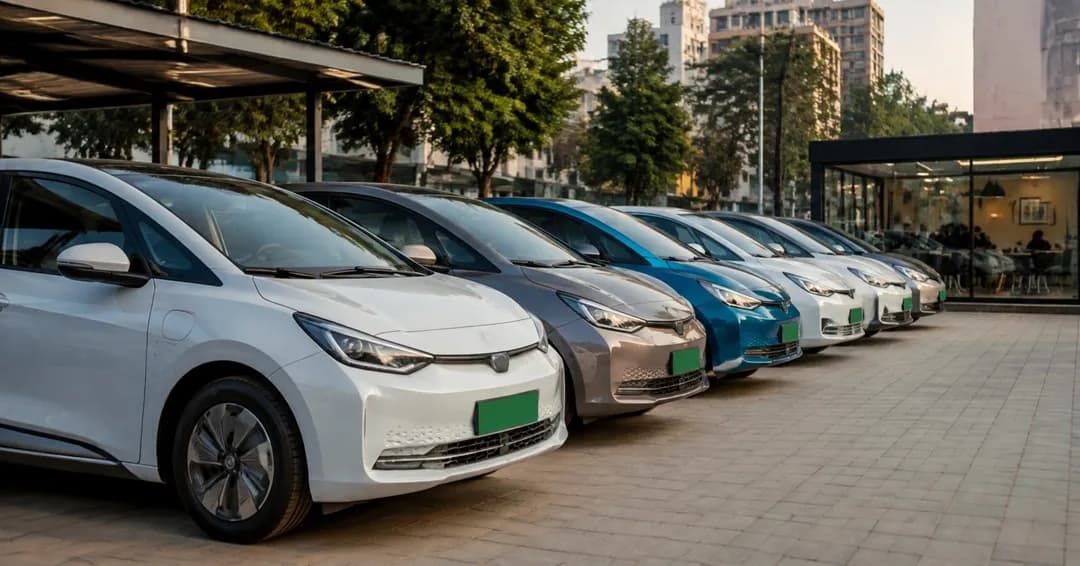
India’s used EV market is entering a critical growth phase as first-generation electric vehicles reach resale age. Certified Pre-Owned programmes can reduce battery-health uncertainty, strengthen residual values, improve financing access and build buyer confidence. By combining diagnostics, inspections, warranties and verified histories, CPO models can support a more mature secondary EV ecosystem.
Building Trust in an Emerging Secondary EV Economy
India's electric vehicle (EV) market has reached a stage where attention is gradually shifting beyond new vehicle sales. For several years, discussions centred on production capacity, charging infrastructure, government incentives and battery technology. Those factors remain important, but another segment is beginning to influence purchasing behaviour and long-term market sustainability: the used EV market.
Unlike conventional used vehicles, electric vehicles present buyers with a different set of questions. The mechanical condition of an internal combustion engine (ICE) vehicle can often be judged through service records, mileage and a physical inspection. An EV, however, places the battery at the centre of the ownership equation. Buyers are not simply evaluating the condition of tyres or suspension; they are attempting to understand the health of the most expensive component in the vehicle. Without credible information, uncertainty quickly translates into hesitation.
That uncertainty has slowed the development of India's used EV ecosystem despite healthy growth in new electric vehicle registrations over the past few years. A larger number of first-generation EVs are now completing three to five years of ownership, creating the first meaningful wave of resale activity. This transition is significant because every mature automotive market depends on a healthy secondary market. New vehicle sales rarely accelerate in isolation. They are supported by predictable resale values, financing availability, and consumer confidence that extends well beyond the initial purchase. The Ministry of Heavy Industries reported more than one million EV sales in FY2024-25 across vehicle categories, reinforcing the growth in the new-EV base that will feed future used-vehicle supply. Ministry of Heavy Industries
Certified Pre-Owned (CPO) EV programmes are beginning to address these issues precisely. Rather than treating used EVs as ordinary second-hand vehicles, manufacturers and organised dealerships are introducing structured inspection, refurbishment and certification processes that reduce uncertainty for buyers. In doing so, they are gradually reshaping how consumers perceive electric mobility itself.
The implications extend far beyond resale transactions. Stronger used EV markets can improve residual values, encourage first-time EV purchases, expand financing opportunities and ultimately increase the affordability of electric mobility across income groups. In many respects, certified pre-owned programmes represent an important bridge between India's early EV adoption phase and a broader mass-market transition.
Why India's Used EV Market Has Lagged Behind New EV Adoption
India's new EV market has benefited from government incentives, expanding model availability and growing consumer awareness. Yet the secondary market has developed at a noticeably slower pace. This imbalance is not unusual. Most automotive markets experience a delay before used EV inventories become sufficiently large to establish pricing benchmarks and buyer confidence. Policy support also remains relevant: the PM E-DRIVE scheme was extended in August 2025 through 31 March 2028, within its existing Rs. 10,900 crore outlay. PM E-DRIVE extension
Several structural factors have contributed to this slower evolution.
The first is the limited historical supply of used electric vehicles. Until recently, annual EV sales remained relatively modest compared with conventional passenger vehicles. With fewer vehicles entering the market five or six years ago, resale inventory naturally remained constrained.
The second challenge concerns battery transparency. While manufacturers design batteries to operate reliably for many years, prospective buyers rarely possess the technical expertise required to evaluate battery degradation. Two vehicles with similar mileage may exhibit very different battery performance depending on charging habits, climatic conditions and driving patterns. Without standardised health reports, price discovery becomes difficult.
Another obstacle lies in financing. Banks and non-banking financial companies have traditionally relied on established depreciation models for petrol and diesel vehicles. Electric vehicles require different risk assessments because battery condition directly affects asset value. Inconsistent valuation methods have therefore limited financing options for used EV buyers.
Infrastructure perception has also played a role. Although charging networks continue expanding across metropolitan areas and major highways, some second-hand buyers remain concerned about charging accessibility, particularly in Tier II and Tier III cities. These concerns may not always reflect actual infrastructure availability, but consumer perception often influences purchasing decisions as much as objective market conditions.
Finally, organised after-sales support for used EVs has remained relatively limited. Independent workshops are steadily improving their technical capabilities, yet many consumers still associate EV servicing with authorised dealerships. That dependence makes certification programmes particularly valuable because they package technical assurance together with recognised service networks.
Taken together, these factors created an environment where demand existed, but confidence remained uneven.
The Emergence of Certified Pre-Owned EV Programmes
Certified pre-owned programmes are not new to the automotive industry. Premium manufacturers have relied on them for years to strengthen customer trust and protect brand value in the used vehicle market. Electric vehicles, however, elevate certification from a marketing initiative to a commercial necessity.
Unlike a conventional used vehicle inspection that focuses largely on engine, transmission and body condition, EV certification introduces several additional technical assessments.
Battery State of Health (SoH) testing has become an important part of EV certification. Diagnostic systems can estimate remaining battery capacity and other performance indicators, but there is no single standardised vehicle-level method for measuring SoH across manufacturers.Recent research in npj Clean Energy
Certification programmes also include comprehensive inspections covering electric drivetrains, regenerative braking systems, power electronics, charging equipment, software functionality and safety systems. Any identified issues are repaired using approved components before the vehicle receives certification.
Perhaps equally important is the inclusion of warranty coverage. Limited warranties on batteries or major electrical components reduce perceived ownership risk, particularly for buyers entering the EV market for the first time. The psychological value of warranty protection often exceeds its direct financial benefit because it signals confidence from the manufacturer or dealership itself.
Some programmes further incorporate roadside assistance, service packages and digital vehicle history records. These additional services help transform a used EV purchase into an ownership experience that more closely resembles buying a new vehicle.
This shift reflects a broader strategic change. Manufacturers are no longer viewing used vehicles as transactions that occur outside their commercial ecosystem. Instead, they increasingly recognise that residual value management influences future new vehicle demand.
Conventional Used EV Purchase Versus Certified Pre-Owned EV Purchase
Evaluation Parameter | Conventional Used EV | Certified Pre-Owned EV |
Battery health information | Often limited or unavailable | Independently tested and documented |
Multi-point inspection | Varies by seller | Standardised technical inspection |
Warranty coverage | Usually absent | Limited manufacturer/dealer warranty |
Vehicle refurbishment | Inconsistent | Conducted before certification |
Service history | May be incomplete | Verified wherever available |
Financing accessibility | More restrictive | Can improve lender confidence |
Buyer confidence | Moderate to low | Potentially higher |
Expected resale stability | Less predictable | Improved residual value potential |
Confidence Is Becoming a Market Asset
One of the more interesting developments in India's used EV landscape is that confidence itself is emerging as an economic asset. Traditionally, vehicle value depended on age, mileage, brand reputation and physical condition. Electric vehicles introduce another variable: verified battery performance.
This changes how value is created.
A well-maintained electric vehicle with documented battery diagnostics can be easier for dealers and buyers to value and compare. The difference is not merely technical. Buyers are increasingly willing to pay for certainty.
This trend mirrors developments seen in other technology-intensive industries, where verified performance data often carries greater weight than simple product age. Smartphones, industrial equipment and renewable energy assets have all experienced similar shifts towards condition-based valuation. Electric vehicles appear to be following the same trajectory.
The implications extend beyond individual transactions. As certification standards become more widely adopted, the used EV market is likely to transition from a largely negotiated marketplace towards one supported by measurable technical benchmarks. That evolution has the potential to improve pricing transparency, reduce transaction friction and attract institutional financing, laying the foundation for a more mature secondary EV ecosystem.
Now, the next question is how that trust changes market behaviour. The answer lies in a chain reaction that extends well beyond individual resale transactions. Certified Pre-Owned (CPO) EV programmes influence pricing, financing, ownership costs, manufacturer strategy and even the pace at which new electric vehicles enter the market.
This interconnected effect explains why several automakers, organised dealership groups and digital used-vehicle platforms are investing in structured certification instead of treating used EVs as a peripheral business. The objective is not merely to sell more second-hand vehicles. It is to strengthen the entire ownership ecosystem.
Residual Value Is Becoming a Strategic Metric
Residual value has always been one of the strongest indicators of automotive market maturity. Consumers purchasing a new vehicle rarely think only about today's price; they also consider what the vehicle may be worth after four or five years. The stronger the expected resale value, the lower the perceived cost of ownership.
Electric vehicles have historically struggled in this area because reliable resale benchmarks were scarce. Buyers often assumed battery degradation would sharply reduce vehicle value. Recent research indicates that battery condition varies with usage and measurement method, making vehicle age or mileage alone an incomplete proxy for battery health. Nature Communications research
Certified programmes help replace assumptions with measurable evidence.
A vehicle accompanied by a documented battery health report, verified service history and manufacturer-backed inspection naturally becomes easier to value. Dealers gain greater confidence while accepting trade-ins, lenders obtain more reliable collateral, and buyers encounter less uncertainty during negotiations.
This has important implications for new vehicle sales as well.
When consumers believe their vehicle will retain a larger proportion of its value over time, they become more comfortable purchasing a new EV. In effect, a stronger used market improves demand in the primary market.
The relationship works in both directions. Higher new EV adoption increases future used vehicle supply, while a healthier secondary market supports continued growth in new vehicle purchases.
Battery Transparency Is Changing Purchase Decisions
Among all certification components, battery diagnostics arguably deliver the greatest commercial impact.
For conventional used cars, mileage often serves as a reasonable indicator of mechanical wear. Electric vehicles require a more sophisticated approach because battery ageing depends on numerous variables, including charging behaviour, ambient temperatures, driving conditions and software management systems.
As battery diagnostic tools become more advanced, buyers are beginning to evaluate vehicles using battery State of Health (SoH) rather than relying solely on odometer readings.
This subtle shift changes pricing behaviour.
Consider two electric hatchbacks of identical age and mileage. A vehicle with documented battery diagnostics gives buyers more evidence about remaining battery condition than a comparable vehicle without such records. Even if both vehicles appear similar externally, the certified vehicle may be easier to assess and price.
Information itself becomes a source of value.
The automotive industry has experienced similar transitions before. Comprehensive service histories gradually became expected for premium used vehicles. Vehicle history reports later became standard in many developed markets. Battery health certification appears poised to become the next important benchmark for electric mobility.
Financing Institutions Are Reassessing Risk
Banks and non-banking financial companies (NBFCs) have traditionally approached used EV financing cautiously. Their hesitation has been understandable.
Vehicle valuation models built over decades for petrol and diesel vehicles cannot simply be applied to battery-electric models. The largest component influencing long-term value-the battery-requires specialised technical assessment.
Certification helps narrow this information gap.
Verified inspection reports, battery diagnostics and manufacturer-supported refurbishment provide lenders with greater confidence regarding asset quality. As uncertainty declines, financing decisions become easier to standardise.
This evolution could significantly expand the addressable customer base.
Many Indian consumers depend on vehicle financing, particularly in the used vehicle segment. If lenders become increasingly comfortable financing certified used EVs with competitive loan tenures and interest rates, affordability improves without requiring additional government subsidies.
The impact may be especially noticeable among urban middle-income households seeking lower operating costs but remaining price-sensitive during the initial purchase.
Rather than stretching budgets for a new electric vehicle, many buyers may choose a certified used alternative that offers similar ownership confidence at a considerably lower acquisition cost.
Organised Retail Is Gaining an Advantage
India's traditional used vehicle market has long been highly fragmented, with individual dealers and informal transactions accounting for a substantial share of sales. Electric vehicles, however, favour a more organised retail model.
Certification requires specialised diagnostic equipment, trained technicians, software updates, battery evaluation capabilities and standardised quality control processes. These requirements naturally favour organised dealership networks and professionally managed used-vehicle platforms.
This does not necessarily eliminate independent dealers from the market, but it does raise expectations regarding technical competence.
Consumers purchasing certified EVs increasingly expect:
Transparent inspection reports
Digital service records
Warranty support
Professional refurbishment
Standardised documentation
Post-purchase customer assistance
Meeting these expectations demands investments that many organised retailers are better positioned to make.
Over time, certification may encourage consolidation within India's used EV market, particularly in metropolitan regions where transaction volumes justify dedicated refurbishment centres.
Digital Platforms Are Becoming Verification Platforms
Online used vehicle marketplaces initially focused on connecting buyers and sellers. Increasingly, they are evolving into verification platforms. A concrete example emerged in July 2026, when JSW MG Motor India and Spinny entered a commercial partnership for pre-owned MG EVs, with specialised EV evaluation protocols and battery-health certification. Autocar Professional report
The distinction is important.
Rather than functioning merely as listing aggregators, digital platforms are investing in inspection capabilities, quality grading, vehicle history verification and warranty partnerships. For electric vehicles, these services become considerably more valuable because technical information influences purchasing decisions more directly than in conventional automobiles. Spinny currently lists certified used EVs and says its vehicles undergo a 200-point quality evaluation; the July 2026 MG partnership adds EV-specific evaluation inputs to that broader used-car process. Spinny's current used-EV listing
Artificial intelligence and predictive analytics are also beginning to support valuation models.
Historical resale transactions, battery diagnostic data, regional demand, charging infrastructure density and maintenance records can collectively improve price forecasting. While these analytical models remain under development, they represent an important step towards establishing more transparent pricing benchmarks for India's growing used EV ecosystem.
As data availability improves, pricing variability between comparable certified vehicles is likely to narrow, making the market more predictable for buyers, sellers and financiers alike.
OEMs Are Extending Their Relationship with Customers
Certified programmes also reflect a broader shift in manufacturer strategy.
Historically, automakers had limited involvement once a vehicle entered the secondary market. Revenue opportunities largely ended after the initial sale and warranty period.
Electric mobility is changing that dynamic.
Battery diagnostics, software updates, connected vehicle services and specialised maintenance create ongoing touchpoints throughout a vehicle's lifecycle. Manufacturers increasingly recognise that supporting second and even third owners strengthens long-term brand reputation.
A positive experience in the used market often influences future purchasing behaviour.
A family purchasing a certified pre-owned EV today may become a new vehicle customer several years later. Conversely, dissatisfaction resulting from an uncertified vehicle with unknown battery condition could discourage future adoption altogether.
Viewed from this perspective, certification becomes less of a resale initiative and more of a customer lifecycle strategy.
Market Impact of Certified Pre-Owned EV Programmes Across Stakeholders
Stakeholder | Immediate Benefit | Long-Term Market Impact |
Buyers | Greater transparency, lower ownership risk and warranty support | Increased confidence in adopting EVs |
Sellers | Improved resale prospects and stronger trade-in values | Better residual value retention |
OEMs | Enhanced brand trust and customer retention | Higher repeat purchases and stronger lifecycle engagement |
Dealers | Premium pricing opportunities and structured refurbishment revenue | Growth of organised used EV retail networks |
Financial Institutions | Reduced valuation uncertainty and lower lending risk | Expansion of used EV financing products |
Insurance Providers | Better vehicle condition assessment and documented maintenance | More refined risk modelling and customised EV insurance offerings |
One broader trend is becoming increasingly difficult to ignore. Certified programmes are shifting competition away from simple vehicle pricing towards ownership assurance. In the coming years, the strongest differentiator may not be which used EV is the cheapest, but which offers the highest degree of verified reliability, transparent documentation and long-term support.
That represents a meaningful evolution for India's used EV market. As certification becomes more widely adopted, buyers are likely to evaluate second-hand electric vehicles with the same confidence once reserved almost exclusively for new vehicles. In turn, this growing confidence can reinforce healthier resale values, encourage greater participation from lenders and organised retailers, and create the conditions for a more resilient electric mobility ecosystem.
Challenges, Strategic Outlook and the Road Ahead
Despite the momentum behind Certified Pre-Owned (CPO) EV programmes, India's used electric vehicle market is still in the early stages of institutional development. Certification has undoubtedly addressed several long-standing concerns around transparency and buyer confidence, but it has not removed every obstacle. The next phase of market growth will depend on how effectively industry participants standardise practices, improve data availability and build confidence beyond the country's largest urban centres.
Standardisation Remains the Missing Piece
One of the biggest challenges today is the lack of a single, industry-wide certification standard for used-EV battery health reporting.
Certification and diagnostic practices can differ across manufacturers, including the way battery health is measured, reported and used to determine eligibility. These differences make direct comparison harder for buyers, lenders and insurers.
For buyers comparing vehicles from different manufacturers, this inconsistency creates confusion.
Over time, the market may benefit from independent certification frameworks that establish common reporting metrics for battery health, charging performance and remaining usable capacity. A 2025 study in npj Clean Energy specifically noted the lack of a standardised vehicle-level method for measuring battery State of Health. Such frameworks would not replace manufacturer programmes but could provide a neutral benchmark that lenders, insurers and buyers recognise across the industry.npj Clean Energy study
India's automotive sector has repeatedly demonstrated that standardisation encourages market maturity. Vehicle emission norms, safety ratings and service protocols all evolved through a combination of regulation and industry collaboration. A similar trajectory appears likely for used EV certification.
Battery Analytics Will Become Increasingly Sophisticated
Battery assessment today often includes State of Health (SoH), but SoH alone does not capture every aspect of battery condition or future degradation. Future evaluations are expected to become more comprehensive.
Advances in battery management systems, cloud-connected diagnostics and predictive analytics are enabling deeper insights into battery performance. Rather than presenting a single health percentage, future reports could estimate remaining useful life under different driving conditions, predict charging efficiency trends and identify potential degradation patterns before they become operational issues.
This evolution has significant commercial implications.
Instead of viewing a battery as either "good" or "bad," the market will increasingly evaluate it as a measurable asset with quantifiable performance characteristics. Such data will improve pricing accuracy while reducing disagreements between buyers and sellers.
Insurance providers may also incorporate battery analytics into premium calculations, rewarding vehicles with stronger documented performance histories. Similarly, financial institutions could refine residual value models using long-term battery performance data rather than relying primarily on vehicle age.
Software Will Influence Resale Value More Than Before
Electric vehicles differ fundamentally from conventional vehicles because many performance improvements occur through software rather than hardware replacement.
Manufacturers regularly introduce software updates that optimise energy efficiency, charging algorithms, thermal management and vehicle functionality. Consequently, software maintenance is becoming an increasingly important component of resale value.
Certified programmes are well positioned to ensure that vehicles receive the latest approved software before resale.
This creates another layer of differentiation between certified and uncertified vehicles. Buyers are not simply purchasing a mechanically inspected car; they are acquiring a vehicle whose digital systems have also been validated and updated.
As connected vehicle technologies continue expanding, software history may eventually become as important as mechanical service records.
Tier II and Tier III Cities Represent the Next Growth Opportunity
India's used vehicle market has traditionally expanded beyond metropolitan regions once affordability improves. The same pattern is likely to emerge for electric vehicles.
Certified pre-owned programmes could play an especially important role in Tier II and Tier III cities, where buyers tend to be highly value-conscious yet equally concerned about long-term reliability.
Many consumers in these markets may not be early adopters of new EVs due to higher upfront costs. However, certified used vehicles priced significantly below new models could make electric mobility financially accessible without substantially increasing ownership risk.
Success in these regions will depend on more than pricing.
Manufacturers and dealer networks will need to strengthen service infrastructure, technician training and spare parts availability outside major urban centres. Charging infrastructure must also continue expanding in parallel, although home charging remains sufficient for many private vehicle owners.
If these supporting ecosystems develop together, certified used EVs could become an important driver of regional EV adoption over the next decade.
Competition Will Shift Towards Ownership Ecosystems
Perhaps the most significant long-term implication of certified programmes is that they change the basis of competition.
Until recently, many EV manufacturers competed primarily on vehicle price, driving range and charging speed. Those attributes will remain important, but they are unlikely to be sufficient as market penetration increases.
Consumers are beginning to evaluate the complete ownership journey.
Questions such as What will this vehicle be worth after five years?, Will financing remain accessible?, Can the battery condition be independently verified? and Will the manufacturer continue supporting subsequent owners? are becoming increasingly relevant.
Manufacturers capable of answering these questions convincingly will likely enjoy stronger customer retention.
This represents a subtle but meaningful transition. The automotive industry is moving away from a transaction-focused business model towards one centred on lifecycle value. Certified pre-owned programmes fit naturally within that evolution because they extend the manufacturer's relationship with both the product and the customer well beyond the initial sale.
Looking Ahead
India's used EV market is unlikely to mirror the development path of conventional used vehicle markets. The technology itself is fundamentally different, and that difference creates both challenges and opportunities.
Battery diagnostics, connected vehicle platforms, predictive maintenance, and digital service histories introduce a level of transparency that was previously difficult to achieve in automotive resale markets. While these capabilities require investment, they also reduce many of the uncertainties that have historically discouraged used EV purchases.
The next five years may bring greater collaboration among manufacturers, financial institutions, insurers, technology providers and organised retailers. Their shared objective will be to establish more consistent standards that improve valuation accuracy and strengthen consumer confidence.
Not every used EV will become part of a certified programme, nor should that be expected. Independent dealers and private sales will continue to play an important role in the market. However, certification is likely to establish a benchmark against which all used EV transactions are measured.
Conclusion
Certified Pre-Owned EV programmes are emerging as a practical mechanism for improving India's secondary electric vehicle market by replacing some of the uncertainty around used-EV condition with documented information. What initially appeared to be a dealership initiative is becoming part of a broader approach to resale, inspection and customer support.
Their influence extends beyond individual vehicle sales. Certification strengthens financing confidence, enables more accurate insurance assessment, improves pricing transparency and reinforces long-term brand credibility. In doing so, it addresses one of the most persistent barriers to used EV adoption: the inability of buyers to evaluate battery condition with confidence.
The broader significance lies in the way these programmes support the entire electric mobility ecosystem. A healthy secondary market encourages consumers to purchase new EVs by improving resale expectations, while affordable certified vehicles introduce electric mobility to households that may not yet consider buying new models.
As battery diagnostics become more sophisticated, software management gains greater importance, and battery-health reporting becomes more consistent, certified pre-owned programmes are likely to become a more established feature of India's used EV landscape. Their long-term value will not be measured solely by the number of certified vehicles sold, but by the confidence they create across the ownership cycle.
Explore More Reports:
Have questions?
More Thought Articles
How EV Charger Manufacturers Can Capitalize on India’s Home Charging Revolution
India’s residential EV charging opportunity is expanding as policy support, EV adoption, and private parking infrastructure develop. Manufacturers can capture value beyond AC chargers through installation, smart charging, load management, solar integration, software, and after-sales services. Housing societies, automakers, and property developers offer scalable routes to residential charging customers.
Second-Life EV Battery Market in India: What Is Driving Demand from Manufacturers?
India’s second-life EV battery market is gaining relevance as electric vehicle adoption expands and batteries retain useful capacity after automotive service. Growing stationary-storage demand, battery data, refurbishment capabilities, EPR obligations, and critical-mineral policies are encouraging manufacturers to extend battery value through reuse before eventual recycling within India’s emerging circular battery ecosystem.
The Rise of Locally Manufactured Battery Separators in India’s EV Ecosystem
India’s battery industry is progressing from pack assembly toward domestic cell and material manufacturing, creating opportunities for lithium-ion battery separators. Policy support, ACC capacity expansion and R&D initiatives are strengthening the ecosystem. However, technical complexity, manufacturing yields, qualification requirements and economics mean localisation will likely advance gradually through coatings, testing and finishing.