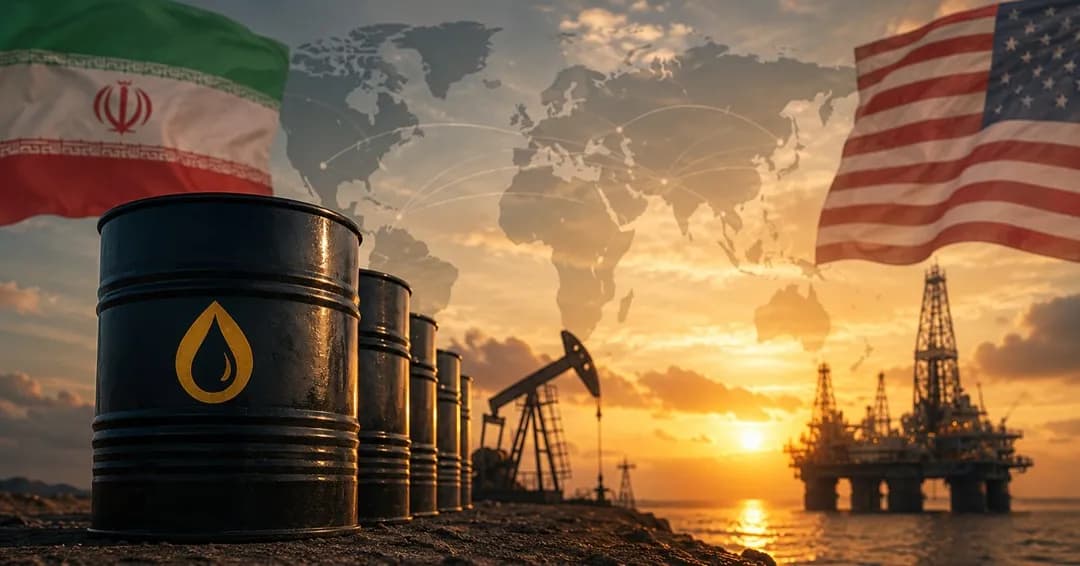
The world's largest crude oil reserve holders and the strategic importance of Iran in global energy markets. It explores how Iran–U.S. tensions, potential disruptions in the Strait of Hormuz, and evolving energy security policies are reshaping oil prices, supply chains, strategic reserves, and renewable energy investments worldwide.
Introduction
Crude oil remains one of the most critical commodities in the global economy. Despite accelerating investments in renewable energy and decarbonization initiatives, it continues to serve as the primary fuel source for transportation, industrial operations, petrochemical manufacturing, aviation, shipping, and numerous consumer products. As the world shifts to renewables and decarbonization, oil still fuels transportation networks and industrial manufacturing, petrochemical production, aviation, shipping, and a host of consumer goods. This makes countries that have large crude oil reserves have a lot of geopolitical influence and economic power.
As per Worldometer, there are approx 1.77 trillion barrels of proven oil reserves in the world, with more than 85% of them held by the 10 oil-reserves-holding countries. This is dominated by the Middle East, which includes some of the world's largest oil producers and exporters. Among these countries, Iran occupies a unique position due to both its vast hydrocarbon resources and its strategic location along one of the world's most important energy transit routes, the Strait of Hormuz.
Yearly Oil Consumption as Share of Total Proven Reserves, 2025

Geopolitical tensions between Iran and the United States have remained a persistent source of uncertainty in global energy markets over the past few years, raising concerns about potential supply disruptions and market volatility. Oil prices, trade flows, and investment decisions have been repeatedly impacted by sanctions, military confrontations, shipping security concerns, and disagreements over Iran's nuclear program. The Strait of Hormuz handles approximately 20% of global oil trade, making it one of the world's most critical energy chokepoints. Consequently, any disruption involving Iran has the potential to trigger far-reaching economic and energy market repercussions worldwide.
Global Crude Oil Reserves: Key Statistics
Key Statistics
Metric | Value |
Global Proven Oil Reserves | ~1.75 Trillion Barrels |
Share Held by Top 10 Countries | ~85% |
Iran Proven Reserves | ~209 Billion Barrels |
Global Oil Demand | ~104 Million Barrels/Day |
Oil Passing Through the Strait of Hormuz | ~20% of Global Consumption |
Moreover, the concentration of reserves among a relatively small group of nations gives these countries significant influence over global energy supply and pricing dynamics.
Top 10 Countries with the Largest Proven Crude Oil Reserves
Top 10 Countries in Descending Order of Proven Crude Oil Reserves, 2025
Country | Proven Reserves (Billion Barrels) |
Venezuela | 303 |
Saudi Arabia | 267 |
Iran | 209 |
Canada | 163 |
Iraq | 145 |
UAE | 113 |
Kuwait | 102 |
United States | 83 |
Russia | 80 |
Libya | 48 |
Source: Worldometer
Venezuela
Venezuela has the world's largest proven oil reserves, mostly in the Orinoco Heavy Oil Belt. As of 2025, Venezuela has 303,008,000,000 barrels of proven oil reserves, 17.17% of the world's total proven oil reserves of 1,765,151,568,000, as per Worldometer.
Furthermore, the same source states that Venezuela's proven reserves are worth 3,540.5 years of annual production. Years of political turmoil, lack of investment, sanctions, and degradation of infrastructure have hindered the country from maximising its resource potential. However, the country's vast reserve base continues to present significant long-term growth opportunities if investment and operational challenges can be addressed.
With over US$ 180 billion invested in the oil and gas sector in the country, it would be technically feasible for Venezuela to reach 3 mbd in 2040, as stated by Rystad Energy. To recover the peak of 3.5 mbd, the oil sector would need some US$110 billion in investment in exploration and production alone, in addition to regaining the thousands of engineers and geologists who have left the country.
Saudi Arabia
Saudi Arabia continues to be one of the major players in global oil markets. As per the IEA, Saudi Arabia's upstream oil and gas investment is the largest in the region and increased to USD 40 billion in 2025, nearly 15% more than in 2015.
Its large conventional reserves, relatively low production costs, and position as a leader of OPEC allow it to have a strong influence on the price of oil and the stability of the oil market.
Iran
Iran has 200 billion barrels of proven reserves and is the third largest in the world, as per Worldometer. Iran holds 208,600,000,000 barrels of proven oil reserves as of 2025, ranking 3rd in the world and accounting for about 11.82% of the world's total oil reserves.
Despite export sanctions, Iran remains one of the world's most strategically significant energy producers because of its vast hydrocarbon reserves and its location near the Strait of Hormuz.
Canada
Alberta is home to the majority of Canada's reserves, which are found in the oil sands. The cost of extraction is higher than traditional, but Canada is a dependable supplier to international markets. In 2025, crude oil production increased by 4.0% on an annual basis and increased to 310.9 million cubic metres, as stated by Statistique Canada.
Iraq
Some of the world's most productive oil fields are found in Iraq. Production capacity may grow substantially in the future due to continued investment and infrastructure development in the region over the next few decades. In line with this, Iraq held 145,019,000,000 barrels of proven oil reserves in 2025, ranking 5th in the world and accounting for about 8.22% of the world's total oil reserves.
UAE
The UAE is blessed with significant hydrocarbon reserves but also has bold economic diversification plans. Abu Dhabi continues to be the nation's main source of oil.
Kuwait
The economy of the country of Kuwait is oil-based. The robust cash reserves still ensure medium to long-term production and revenue generation.
United States
The U.S. shale revolution transformed the country into one of the world's largest oil producers, significantly enhancing domestic energy security and reducing import dependence. As stated by Worldometer, the United States holds 83,729,430,000 barrels of proven oil reserves as of 2025, ranking 8th in the world.
Russia
Russia is one of the biggest exporters of oil and the biggest producer of oil. It has become increasingly important due to changes in international trade routes since the introduction of international sanctions. As mentioned, Russia has a proven reserve of 80 billion barrels in 2025.
As of June, 2025, the total amount of crude oil and gas condensate in Russia's oil reserves is 31.5 billion tons and 3.7 billion tons, respectively. A significant share of these reserves is hard-to-recover. The share of hard-to-recover reserves was estimated at 52% as of 2024, and crude oil produced from hard-to-recover reserves was 32%.
Libya
Political upheavals have not hindered Libya's continued status as the continent's largest proven oil reserves, and the country continues to be an important supplier to European markets. Libya's National Oil Corporation (NOC) is revising the terms of its agreements with TotalEnergies and ConocoPhillips. The revised agreements are expected to span 25 years and involve investments exceeding US$20 billion.
The Strait of Hormuz: The World's Most Important Energy Chokepoint
The Strait of Hormuz is often described as the most critical oil transit route on the planet.
Key facts include:
Roughly one-fifth of global oil consumption passes through the strait.
Nearly one-third of the seaborne oil trade depends on uninterrupted transit.
Major Asian economies rely heavily on Gulf crude shipments.
Even temporary disruptions can trigger immediate market reactions.
Owing to its strategic position, Iran is the hub of the world energy security debate. In 2025, some 14.94 million bpd of crude oil, or about 34% of the world's seaborne crude oil trade, and 4.92 million bpd of refined products, mostly destined for the Asian markets, passed through the strait.
Exports of Crude Oil via the Strait of Hormuz in 2025, Million Barrels Per Day
 Source: IEA
There are other ways around Hormuz, such as the pipeline, but none of them has a capacity that can match that of Hormuz. The East-West Pipeline (EWP) in Saudi Arabia, with a capacity of 5,000,000 to 7,000,000 bpd, the Abu Dhabi Crude Oil Pipeline (ADCOP) from Habshan to Fujairah in the UAE, which has a capacity of 1,800,000 bpd, and the Goreh-Jask pipeline in Iran, completed in 2021 with a capacity of 300,000 bpd.
How Iran–U.S. Tensions Are Reshaping Global Energy Markets
Rising Oil Price Volatility
Rising tension between Iran and the United States has led to greater volatility in global oil markets. The geopolitical risk premiums are gaining significance in oil prices as investors and traders take into account the risk of supply interruption as a result of sanctions, military tensions, and threats to crucial oil shipping lanes, such as the Strait of Hormuz. Around 20% of the world's traded crude oil flows through the Strait of Hormuz, which is one of the world's most important energy choke points.
The risk perception may cause considerable price volatility if physical oil supplies are not impacted. This has triggered geopolitical uncertainty and, therefore, fuel prices and inflationary pressures, in addition to general market uncertainty on a global basis, as a common trigger for crude oil price volatility. If it's a long disruption, inflation in the area could climb further, and the prospects for economic growth would be affected in key importing economies.
Supply Chain Diversification
The frequent changes in the geopolitical situation in the Middle East are leading many oil-importing countries to diversify their sources of crude oil supply. To lessen its reliance on any one region, more countries are buying oil from other sources like the United States, Canada, Brazil, Norway, Guyana, and several West African countries.
The United States is also a key supplier with domestic production of 13-14 million barrels per day, the largest oil producer in the world. Meanwhile, fast-growing producers such as Guyana and Brazil are adding to supplies to the world markets. This diversification measure has the benefit of making energy security more robust, the supply chain more resilient, and mitigating the risk of disruptions coming from politically sensitive areas.
Growth of Strategic Petroleum Reserves
In order to minimize risks to future supply, some countries have expanded their Strategic Petroleum Reserves (SPRs). Different countries, including the United States, Japan, South Korea, China, and India, have made significant investments in emergency oil storage facilities.
As per the Department of Energy, as of March 2025, the four SPR storage sites were connected by SPR-owned pipelines and commercially owned pipelines and terminals to 24 Gulf Coast area refineries and six refineries located in Michigan, Ohio, and Kentucky. These reserves provide governments with a buffer if there is a sudden disruption in the fuel supply chain, helping to reduce price volatility, fill in fuel gaps when needed, and soften the impact of a fuel shock.
Shift Toward Alternative Energy Sources
Concern about the oil supply is also spurring investments in alternative energy technologies. Governments and companies around the world are increasingly investing in solar, wind, and battery power, hydrogen, and electric vehicles. In addition to climate targets, these investments are considered strategic actions to decrease reliance on imported fossil fuels and to ensure long-term energy security.
There are several governments with dedicated initiatives for transition. The Indian Government is promoting the National Green Hydrogen Mission, aiming to foster a green hydrogen ecosystem in India and accelerate the growth of renewable energy and electric mobility. The REPowerEU Plan in the European Union seeks to pursue a faster pace of renewables deployment, increase energy efficiency, and decrease reliance on imported fossil fuels.
Similarly, China's government is encouraging energy security by investing in renewables, batteries, EVs, and by upgrading its grid system. This is making geopolitical risks the impetus for global transitions towards cleaner and more diversified energy systems, further bridging energy security with decarbonisation.
Government Initiatives Strengthening Energy Security
United States
The United States has significantly strengthened its energy security over the past two decades through increased domestic production, strategic reserves, and infrastructure investments. The largest emergency oil reserve in the world, the Strategic Petroleum Reserve, is one of its greatest assets. For the policymakers, the reserve is a useful instrument if there is a shortage of supply or a geopolitical crisis, as it can help to stabilise the domestic market.
The United States has strategic reserves and a huge domestic oil boom due to the shale revolution. The country is currently one of the world's greatest producers of oil owing to new technologies, such as fracking and horizontal drilling. This has also helped to reduce the country's dependence on oil imports and increase its tolerance to external shocks to the oil market.
In addition, the United States remains in the midst of investments in energy infrastructure, pipeline expansion, LNG export facilities, and renewable energy initiatives to bolster long-term energy security.
India
India is among the largest consumers of energy, which is a significant challenge to energy security. A large proportion of crude oil must be imported, leaving the nation highly vulnerable to international crude oil prices.
In order to address these risks, India has introduced a Strategic Petroleum Reserve Programme that consists of underground storage facilities at three locations, Vizag, Mangaluru, and Padur.
At the same time, the government is working towards meeting long-term energy transition goals through various initiatives, including the National Green Hydrogen Mission, ethanol blending, EV adoption policies, and the installation of large-scale renewable energy. These include efforts to increase energy security and promote sustainable economic growth.
China
China has become the world's largest crude oil importer due to its fast economic development. Moreover, the country has greatly increased its strategic petroleum reserves and also made investments in foreign energy infrastructure projects. Under the Belt and Road Initiative, China is investing in pipelines, ports, refineries, and production facilities in Asia, Africa, the Middle East, and South America.
These investments help ensure a steady supply of energy resources and lessen reliance on particular modes of transport. China is also continuing to invest heavily in renewables, battery production, EVs, and nuclear power as part of its overall goal of lessening its dependence on external energy sources.
European Union
The EU has stepped up its measures to build energy independence and resilience. The REPowerEU plan is centred on speeding up the roll-out of renewables, increasing energy efficiency, diversifying energy supplies, and cutting imports of energy resources from third countries.
Recent geopolitical events have brought to the fore the hazards of being too reliant on imported fossil fuels. In order to achieve this, European policymakers are investing heavily in the development of solar and wind energy projects, hydrogen infrastructure, energy storage systems, and cross-border electricity interconnections.
They are designed to make the energy system more secure, flexible, and sustainable to withstand future geopolitical shocks.
Government Initiatives Strengthening Energy Security
Country/Region | Key Government Initiatives |
United States | Strategic Petroleum Reserve (SPR); Inflation Reduction Act (IRA); Energy Security and Independence Act |
India | Strategic Petroleum Reserve Programme (SPRP); National Green Hydrogen Mission; National Biofuel Policy; PM E-DRIVE Scheme; National Solar Mission |
China | Belt and Road Initiative (BRI); 14th Five-Year Plan for Modern Energy System; National Strategic Petroleum Reserve Program; New Energy Vehicle (NEV) Industry Development Plan |
European Union | REPowerEU Plan; European Green Deal; Fit for 55 Package; Hydrogen Strategy for a Climate-Neutral Europe |
Japan | Strategic Petroleum Reserve Program; Green Transformation (GX) Policy; Basic Energy Plan |
South Korea | Korean Strategic Petroleum Reserve Program; Carbon Neutral Strategy 2050; Hydrogen Economy Roadmap |
Saudi Arabia | Vision 2030 Energy Strategy; Saudi Green Initiative; National Renewable Energy Program (NREP) |
United Arab Emirates | UAE Energy Strategy 2050; National Hydrogen Strategy; Net Zero by 2050 Strategic Initiative |
Source: U.S. Department of Energy (DOE), Indian Strategic Petroleum Reserves Limited (ISPRL), and China's National Development and Reform Commission (NDRC).
Potential Conflict Scenarios and Their Market Impact
Scenario 1: Limited Military Escalation
An Iran vs. U.S. showdown would likely cause some medium-sized disruptions in energy markets. The investors would expect some risks to the oil supplies and transportation lines in the area, which would result in a hike in the prices of oil and more oil market volatility.
Insurance for shipping would increase, which would drive up the price of shipping crude oil and refined products. If key energy facilities are not impacted, the overall economic repercussions would likely be manageable, although there might be short-term uncertainty in financial markets.
Scenario 2: Strait of Hormuz Disruption
One of the world's most important waterways is the Strait of Hormuz. This narrow waterway between the Persian Gulf and the oceans is a major shipping route for oil throughout the world.
A disruption of the shipping traffic through the Strait would have immediate and significant implications. Global markets will respond to less export capacity, and oil prices may increase significantly. Countries that are importing energy would bear higher expenses, and industries globally would incur greater transport and production costs.
The inflationary pressures may lead to higher interest rates by the central banks and slow down the economic growth in several areas.
Scenario 3: Broader Regional Conflict
One of the greatest threats to the global energy markets would be a broader war involving other Gulf producers. Manufacturing plants, ports of export, pipelines, and shipping lines in the area may all be impacted at the same time.
Saudi Arabia, Iraq, Kuwait, the United Arab Emirates, and Iran are among the countries that produce a significant amount of oil for the world. Even significant production or transportation problems in these countries could take millions of barrels per day out of the market.
This may lead to a new type of energy crisis, with the world seeing unprecedented oil prices, high inflation, slow economic growth, and increased risk of a new recession.
Economic Impact on Major Regions
India
India is especially vulnerable to oil market volatility because it relies on importing crude oil. As oil prices climb, the costs of fuel, transportation, inflation, trade deficits, and government finances all increase. Increased energy prices can also impact the competitiveness of industries, consumer spending, and overall economic growth.
China
China is the biggest importer of oil in the world and is therefore very vulnerable to oil price volatility. Higher oil prices lead to higher production costs, impact the competitiveness of exports, and impact overall economic performance. Energy-intensive industries may also face operational problems due to supply disruptions.
Europe
The continued periods of energy market volatility are a significant threat to the European economies. Increased oil prices lead to inflation, cost of production, and a decrease in buying power. Sustained rises in energy costs would be especially harmful in the transportation, manufacturing, and chemicals industries.
United States
Although higher oil prices can support domestic energy producers and stimulate investment in the oil sector, they also raise fuel costs for consumers and businesses. Consequently, prolonged periods of elevated prices can contribute to inflation and impact economic growth despite the country's strong domestic production capabilities.
Emerging Producers Transforming Global Supply
The global oil industry is witnessing the rise of several emerging producers that are gradually reshaping supply dynamics. Guyana has become one of the fastest-growing oil-producing nations following major offshore discoveries that have attracted significant international investment. Brazil continues expanding production from its offshore pre-salt fields, strengthening its role in global energy markets.
Meanwhile, Namibia has emerged as a promising frontier for offshore exploration after a series of significant discoveries generated interest from major energy companies. Together, these emerging producers are helping diversify global oil supply and reducing concentration among traditional exporting regions.
Long-Term Outlook
Over the next decade, the influence of geopolitics on energy markets is expected to remain substantial despite ongoing progress in renewable energy adoption. Governments worldwide will continue prioritizing energy security through strategic petroleum reserves, domestic production initiatives, supply diversification strategies, and long-term energy partnerships.
At the same time, recurring oil price volatility is likely to strengthen the economic and political case for renewable energy deployment, electrification, battery storage, hydrogen development, and energy efficiency improvements. The result will be a more diversified and multipolar energy landscape in which traditional oil producers continue to play an important role, but emerging suppliers and alternative energy technologies gain increasing significance.
While the global energy transition is advancing, geopolitical developments involving major producers such as Iran, Saudi Arabia, Russia, and the United States will continue to shape investment decisions, supply chains, pricing trends, and energy security policies for years to come.
About the Author
Anjali Mishra is a Research Analyst with expertise in energy, industrial, and technology markets. She specializes in market research, competitive intelligence, and geopolitical analysis, helping organizations understand evolving industry trends and strategic opportunities.
Have questions?
More Thought Articles
How EV Charger Manufacturers Can Capitalize on India’s Home Charging Revolution
India’s residential EV charging opportunity is expanding as policy support, EV adoption, and private parking infrastructure develop. Manufacturers can capture value beyond AC chargers through installation, smart charging, load management, solar integration, software, and after-sales services. Housing societies, automakers, and property developers offer scalable routes to residential charging customers.
Second-Life EV Battery Market in India: What Is Driving Demand from Manufacturers?
India’s second-life EV battery market is gaining relevance as electric vehicle adoption expands and batteries retain useful capacity after automotive service. Growing stationary-storage demand, battery data, refurbishment capabilities, EPR obligations, and critical-mineral policies are encouraging manufacturers to extend battery value through reuse before eventual recycling within India’s emerging circular battery ecosystem.
The Rise of Locally Manufactured Battery Separators in India’s EV Ecosystem
India’s battery industry is progressing from pack assembly toward domestic cell and material manufacturing, creating opportunities for lithium-ion battery separators. Policy support, ACC capacity expansion and R&D initiatives are strengthening the ecosystem. However, technical complexity, manufacturing yields, qualification requirements and economics mean localisation will likely advance gradually through coatings, testing and finishing.