AI and smart sensors are transforming EV battery cooling in India by enabling predictive thermal management instead of reactive cooling. Advanced Battery Management Systems analyze real-time battery data to improve efficiency, extend battery life, support faster charging, enhance safety, and reduce ownership costs, making intelligent thermal management essential for India's growing electric vehicle ecosystem.
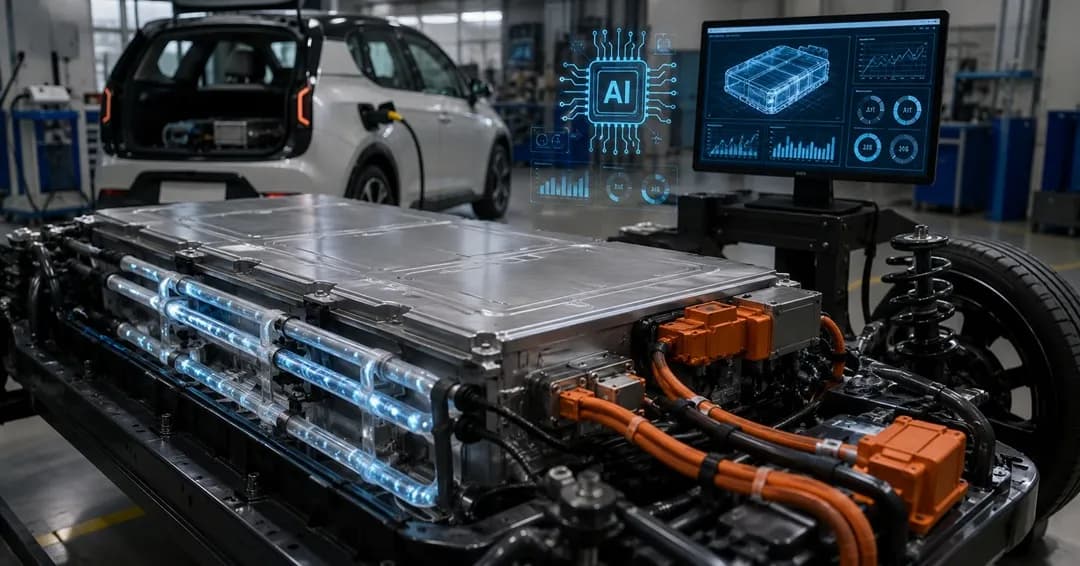
India's electric vehicle market has reached a stage where battery performance is beginning to matter more than battery capacity alone. For several years, conversations revolved around driving range, charging infrastructure, and purchase incentives. Those factors continue to influence buying decisions, but manufacturers are now confronting a more technical challenge: maintaining battery health under India's demanding operating conditions.
Unlike many mature EV markets, India combines high ambient temperatures, congested urban traffic, inconsistent road conditions, frequent stop-and-go driving, and increasingly widespread fast charging. These variables create complex thermal environments that directly affect battery efficiency, charging speed, degradation, and safety. Conventional cooling systems, which typically respond only after battery temperatures rise, are gradually giving way to advanced thermal management systems that combine intelligent control algorithms, real-time sensing, and predictive analytics to anticipate heat generation and optimize battery temperatures before critical thresholds are reached.
Artificial intelligence (AI) and smart sensing technologies are emerging as critical components of this transformation. Rather than functioning as isolated hardware additions, these technologies are reshaping how battery cooling systems collect data, interpret operating conditions, and optimize thermal control in real time. The result is not simply better cooling. It is a more adaptive battery management approach that helps extend battery service life, improves energy efficiency, supports faster charging where vehicle architecture permits, and enhances operational safety.
As India's EV ecosystem expands across passenger vehicles, commercial fleets, electric buses, and two-wheelers, intelligent thermal management is likely to become an increasingly important competitive differentiator as manufacturers focus on improving battery durability, charging performance, and total cost of ownership.
Why Battery Cooling Has Become a Strategic Priority
Every lithium-ion battery generates heat during charging and discharging. Under moderate conditions, this heat can be managed relatively easily. The challenge becomes considerably more complex when batteries are exposed to prolonged ambient temperatures exceeding 40°C, repeated rapid acceleration, regenerative braking, and high-power DC fast charging.
These conditions are increasingly common across Indian cities, particularly during extended summer months and in densely populated urban areas where vehicles experience prolonged stop-and-go traffic.
Excessive battery temperatures influence several aspects of vehicle performance simultaneously:
Reduced charging efficiency
Accelerated cell degradation
Uneven ageing across battery modules
Lower available driving range
Higher probability of thermal runaway under extreme failure conditions
Historically, battery cooling systems were designed using fixed operating thresholds. Pumps, cooling fans, or refrigerant circuits activated once temperature limits were reached. Although effective to a degree, such reactive systems consume additional energy while allowing localized heat accumulation before corrective action begins.
The emergence of predictive thermal management represents a significant shift. Instead of responding to temperature increases, modern systems estimate future thermal behavior using continuous data streams collected from multiple sensors distributed across the battery pack and associated thermal management components.
This predictive capability becomes especially valuable in India's driving environment, where thermal loads change rapidly between highway travel, dense traffic, steep gradients, and fast-charging stations.
AI is Turning Battery Cooling into a Predictive System
Artificial intelligence has moved well beyond autonomous driving applications. One of its most commercially valuable roles in electric vehicles is the optimization of battery temperature.
Modern AI-enabled Battery Management Systems (BMS) continuously analyze variables including:
Individual cell temperatures
Voltage variations
Current flow
Charging rates
Ambient weather
Vehicle speed
Driver acceleration patterns
Historical battery behaviour
Rather than relying on predetermined cooling rules, machine learning algorithms establish operating patterns based on real-world operating conditions and battery usage history, allowing thermal management strategies to adapt over time.
For example, if the system identifies that aggressive acceleration combined with high outside temperatures consistently causes a particular battery module to heat rapidly, cooling can begin before the critical temperature threshold is reached.
This seemingly small adjustment offers multiple benefits.
Battery temperature fluctuations become smaller, energy consumed by cooling equipment decreases, and cell degradation slows over time. Maintaining a narrower operating temperature range can also improve charging consistency and help preserve long-term battery performance.
Predictive cooling is particularly valuable during fast charging sessions. AI can estimate heat generation based on charging current and battery state of charge, allowing thermal management systems to distribute coolant more efficiently throughout the charging cycle.
Instead of treating every charging event identically, the cooling strategy adapts to actual battery conditions, helping balance charging speed, energy consumption, and battery health under varying operating environments.
Smart Sensors Are Expanding the Battery's Awareness
Artificial intelligence depends entirely on data quality. Without accurate sensing, even sophisticated algorithms deliver poor decisions.
Battery packs today incorporate far more sensing capability than earlier EV generations. Advances in sensor miniaturization, onboard processing, and battery management software have enabled manufacturers to monitor battery conditions with greater precision and frequency than in previous generations of electric vehicles.
Traditional Battery Management Systems monitored a limited number of temperature points across battery modules. This approach assumed relatively uniform heat distribution.
Real-world operation tells a different story.
Certain cells may experience significantly higher thermal loads because of manufacturing tolerances, electrical resistance, cooling channel geometry, or localized charging behaviour.
Consequently, modern battery packs increasingly employ distributed sensing architectures, providing more granular visibility into temperature distribution and overall battery health.
Table: Evolution of Battery Thermal Monitoring
Parameter | Conventional Systems | AI-Enabled Smart Systems |
Temperature Monitoring | Limited sensor locations | High-density distributed sensors |
Cooling Strategy | Threshold-based | Predictive and adaptive |
Data Frequency | Periodic | Continuous real-time monitoring |
Fault Detection | Reactive | Predictive diagnostics |
Energy Consumption | Relatively higher | Optimized through AI-driven control |
Battery Health Analysis | Periodic assessment | Continuous estimation |
In addition to temperature sensors, advanced battery packs increasingly integrate:
Pressure sensors
Current sensors
Voltage monitoring circuits
Humidity sensors
Flow sensors within coolant circuits
Gas detection sensors capable of identifying early electrolyte decomposition
Some advanced battery systems also integrate cell-balancing and insulation monitoring functions, enabling earlier identification of abnormal operating conditions before they develop into critical faults.
Collectively, these devices create a far richer understanding of battery conditions than temperature monitoring alone.
Instead of identifying overheating after it occurs, smart sensing enables the system to detect subtle warning signs that often precede thermal events, allowing corrective action to be initiated earlier and improving overall battery reliability.
Data Is Becoming the New Cooling Medium
One of the more interesting developments in EV thermal management is the growing importance of software alongside hardware.
Cooling systems once competed primarily on pump efficiency, radiator size, or coolant chemistry.
Those elements remain important, but competitive advantage increasingly comes from the ability to collect, process, and interpret operational data in real time.
Every journey generates thousands of operational data points.
AI platforms analyze questions such as:
Which driving style produces the highest localized heating?
How does battery ageing alter heat generation?
Which charging stations consistently expose batteries to higher temperatures?
How does seasonal weather affect cooling requirements?
Which battery modules exhibit early signs of accelerated degradation?
These insights allow manufacturers to continuously refine thermal control algorithms through over-the-air (OTA) software updates where supported by the vehicle architecture, reducing the need for hardware modifications.
As connected vehicles become more common, fleet-wide learning also becomes possible.
Instead of each vehicle learning independently, anonymized and aggregated fleet data can be used to improve predictive thermal models, subject to manufacturer data governance policies and applicable privacy regulations.
This creates a feedback loop where thermal management improves throughout a vehicle's life rather than remaining fixed from the day it leaves the factory.
India's Climate Makes Intelligent Cooling More Valuable Than Many Global Markets
Thermal management challenges differ considerably across global EV markets.
Northern European countries spend significant engineering effort maintaining battery temperatures during winter.
India faces the opposite problem.
Extended summer temperatures, high solar radiation, humid coastal environments, mountainous terrain, and prolonged urban congestion combine to create unusually demanding thermal conditions.
Traffic congestion deserves particular attention.
While average vehicle speeds remain low, batteries continue supplying power to auxiliary systems including air conditioning, infotainment, lighting, and vehicle electronics. Limited airflow reduces passive cooling effectiveness, increasing reliance on active thermal management.
Fast charging further intensifies thermal loads.
As charging infrastructure expands, consumers increasingly expect charging times comparable to conventional refueling. Higher charging power inevitably produces greater heat generation, making intelligent cooling increasingly important for maintaining battery performance and longevity.
Without sophisticated thermal management, frequent high-power charging can accelerate battery degradation and affect long-term performance.
The challenge is therefore balancing charging convenience against battery durability.
AI provides a practical mechanism for managing this trade-off dynamically, by continuously adjusting cooling strategies according to charging conditions, battery state of charge, ambient temperature, and vehicle operating history.
Cooling Technologies Are Becoming More Sophisticated
Battery cooling itself is also evolving alongside intelligent control systems.
Air cooling remains common in cost-sensitive electric two-wheelers due to its simplicity and lower manufacturing cost. However, liquid cooling is becoming more prevalent in premium electric two-wheelers and high-performance models that require improved thermal stability during fast charging and sustained operation.
Larger passenger vehicles, SUVs, commercial vehicles, and buses predominantly employ liquid cooling systems because they offer more effective temperature control for larger battery packs and higher energy densities.
Several emerging technologies are attracting industry attention:
Liquid immersion cooling
Micro-channel cooling plates
Phase-change materials
Refrigerant-direct cooling
Hybrid thermal management systems
While several of these technologies are currently used in pilot projects or specific vehicle platforms, liquid cooling remains the dominant solution for most modern passenger EVs requiring high-performance thermal management.
Each technology offers distinct advantages depending on battery size, charging requirements, vehicle architecture, and intended application.
Rather than replacing existing cooling hardware, AI enhances these systems by determining precisely when and where cooling resources should be deployed.
The result is improved thermal efficiency through optimized coolant circulation, compressor operation, and fan control without necessarily increasing hardware complexity or energy consumption.
The Commercial Impact Extends Beyond Battery Protection
Battery cooling influences far more than engineering performance.
It increasingly affects total vehicle economics.
Battery replacement remains one of the largest lifetime ownership costs for electric vehicles, particularly for commercial fleets, electric buses, and high-utilization vehicles where batteries experience frequent charging cycles.
Even modest improvements in battery longevity can lower lifecycle operating costs, reduce downtime, and improve return on investment for fleet operators and commercial transport businesses.
For fleet operators managing hundreds of vehicles, extending battery life by even a small percentage can significantly improve asset utilization and reduce replacement expenditure.
Improved thermal management also contributes to:
More consistent driving range
Higher residual vehicle value
Lower warranty claims
Reduced maintenance costs
Greater consumer confidence
Effective thermal management can also support more predictable charging performance and help manufacturers optimize battery warranty strategies by reducing exposure to heat-related degradation.
Manufacturers therefore view intelligent cooling not merely as an engineering upgrade but as an important factor influencing product differentiation, customer satisfaction, and long-term ownership economics.
Challenges Still Need to Be Addressed
Despite encouraging progress, widespread adoption is not without obstacles.
High-density sensing increases component costs.
Additional sensors require more sophisticated wiring architectures, signal processing, calibration, and cybersecurity measures.
Machine learning algorithms must also be trained using large, diverse datasets representing different climates, driving patterns, charging behaviours, and battery chemistries.
India presents enormous variability in driving behaviour, climate, road quality, and charging infrastructure.
Models developed using limited regional data may perform poorly elsewhere.
Data quality becomes another concern.
Sensors exposed to vibration, humidity, dust, and prolonged heat gradually lose accuracy. Maintaining sensor reliability throughout the vehicle's operational life requires rigorous validation, periodic calibration where applicable, and robust diagnostic capabilities.
Software validation introduces another layer of complexity.
Predictive cooling algorithms influence safety-critical battery operation. Manufacturers must therefore validate AI-assisted battery management functions against functional safety and cybersecurity requirements while ensuring consistent performance under diverse operating conditions.
Manufacturers therefore need extensive validation under thousands of operating scenarios before deployment.
As software-defined vehicles become more common, maintaining secure over-the-air software updates and protecting vehicle data from cyber threats will become increasingly important for intelligent battery thermal management systems.
Collaboration Is Accelerating Innovation
The growing sophistication of battery thermal management has encouraged closer collaboration across industries.
Automotive manufacturers increasingly work alongside semiconductor companies, battery cell producers, sensor manufacturers, software developers, and thermal engineering specialists. This collaboration has accelerated the integration of advanced Battery Management Systems (BMS), edge computing, AI algorithms, and high-precision sensors into next-generation EV platforms.
This multidisciplinary approach reflects the reality that modern battery cooling is no longer a purely mechanical engineering problem.
It combines:
Electrochemistry
Embedded electronics
Artificial intelligence
Cloud analytics
Advanced materials
Vehicle software engineering
Functional safety engineering
Cybersecurity for connected vehicles
India's expanding electronics manufacturing ecosystem also creates opportunities for localized development of sensors, battery management hardware, and thermal control software. Government initiatives supporting advanced chemistry cell (ACC) battery manufacturing and domestic electronics production are expected to strengthen the local supply chain for battery technologies over the coming years.
As domestic battery manufacturing capacity grows under national industrial initiatives, intelligent thermal management is expected to become an increasingly important area of product differentiation. Indian OEMs are also increasing investments in software-defined vehicle platforms, creating additional opportunities for AI-driven battery optimization throughout the vehicle lifecycle.
Table: How AI-Driven Battery Cooling Works
Stage | Function | Expected Outcome |
Smart Sensors | Collect temperature, voltage, current, pressure, coolant flow, and environmental data | Real-time battery visibility |
AI Analytics | Predict future heat generation using operating history and live conditions | Early thermal risk identification |
Intelligent Controller | Adjust pumps, valves, compressors, and cooling flow dynamically | Stable battery temperature |
Continuous Learning | Refine predictive models through operational data and software updates where supported | Improved thermal efficiency, battery longevity, and charging performance over the vehicle lifecycle |
Looking Ahead
Battery cooling rarely attracts the same attention as battery chemistry or charging infrastructure, yet it may prove equally influential in determining the long-term success of electric mobility in India.
The next generation of EVs is unlikely to rely solely on larger batteries to improve performance. Instead, manufacturers will seek greater efficiency from existing battery technologies through smarter thermal management, predictive software, and increasingly sophisticated sensing systems.
Artificial intelligence is changing the role of thermal management from a passive support function into an active decision-making system. Smart sensors, meanwhile, are providing the detailed operational visibility necessary for those decisions to be both accurate and timely.
Over the coming decade, the distinction between battery management and battery cooling is likely to become increasingly blurred. Battery management, thermal control, and vehicle software are expected to operate as tightly integrated systems that continuously optimize battery performance based on driving conditions, charging patterns, environmental factors, and battery health.
For India, where high temperatures and demanding driving conditions place exceptional stress on EV batteries, this evolution carries particular significance. Vehicles capable of maintaining tighter thermal control will not only deliver better performance but also improve battery longevity, charging consistency, and overall ownership economics.
Recent advances in AI-enabled Battery Management Systems, digital twins for battery development, and increasingly sophisticated sensor technologies indicate that thermal management will become more predictive rather than purely reactive. As charging infrastructure expands and battery energy densities continue to increase, intelligent cooling solutions are expected to play a greater role in supporting safety, fast-charging capability, and long-term battery durability.
In many respects, the future of electric mobility in India will depend less on building bigger batteries and more on managing existing ones with greater precision. AI and smart sensors are making that precision possible, transforming battery cooling from a background engineering function into a core technology supporting the next phase of India's electric mobility ecosystem through improved efficiency, reliability, and battery lifecycle management.
Need specialized data cuts or competitive intelligence?
Our analyst team provides bespoke market sizing, supplier audits, and country-level feasibility reports tailored to your enterprise roadmap.
Speak With an Industry Analyst →Ask an Industry Analyst
Have questions regarding this briefing or market projections? Inquire with our sector lead.
Related Thought Articles
View All →
How Indian Automakers Are Leveraging Compact EV Platforms to Reduce Vehicle Costs
Sep 4, 2026
Why EV Inverters Could Become the New Battleground for India’s Automotive Electronics Industry
Sep 3, 2026
From Data Centers to EV Charging: Where Low-Voltage DC Distribution Is Making an Impact
Sep 2, 2026
How EV Charger Manufacturers Can Capitalize on India’s Home Charging Revolution
Sep 1, 2026
Second-Life EV Battery Market in India: What Is Driving Demand from Manufacturers?
Aug 27, 2026More Thought Articles
The Rise of Locally Manufactured Battery Separators in India’s EV Ecosystem
India’s battery industry is progressing from pack assembly toward domestic cell and material manufacturing, creating opportunities for lithium-ion battery separators. Policy support, ACC capacity expansion and R&D initiatives are strengthening the ecosystem. However, technical complexity, manufacturing yields, qualification requirements and economics mean localisation will likely advance gradually through coatings, testing and finishing.
Why Hub Motors Are Becoming a Game Changer for India’s Electric Two-Wheeler Manufacturers
India’s electric two-wheeler market is increasingly prioritizing cost, efficiency, localization, and reliability. Hub motors are gaining relevance for commuter, fleet, and urban scooters because their simpler drivetrain architecture can reduce mechanical complexity and maintenance exposure. However, mid-drive systems will remain important for premium and performance-focused electric two-wheelers, supporting differentiated applications.
How Advanced Battery Thermal Management Is Transforming Cold-Weather EV Performance in India
Advanced battery thermal management is becoming increasingly important for India's EV market as vehicles operate across diverse temperature conditions. Adaptive heating, cooling, preconditioning, liquid thermal systems and intelligent software can improve range consistency, charging performance and battery durability, helping automakers deliver reliable, cost-effective EV performance across regions and vehicle segments.