Magnetic Refrigeration Market Size & Growth According to a research study published by Knowledge Sourcing Intelligence (KSI), the magnetic refrigeration market will...
Magnetic Refrigeration Market Size & Growth
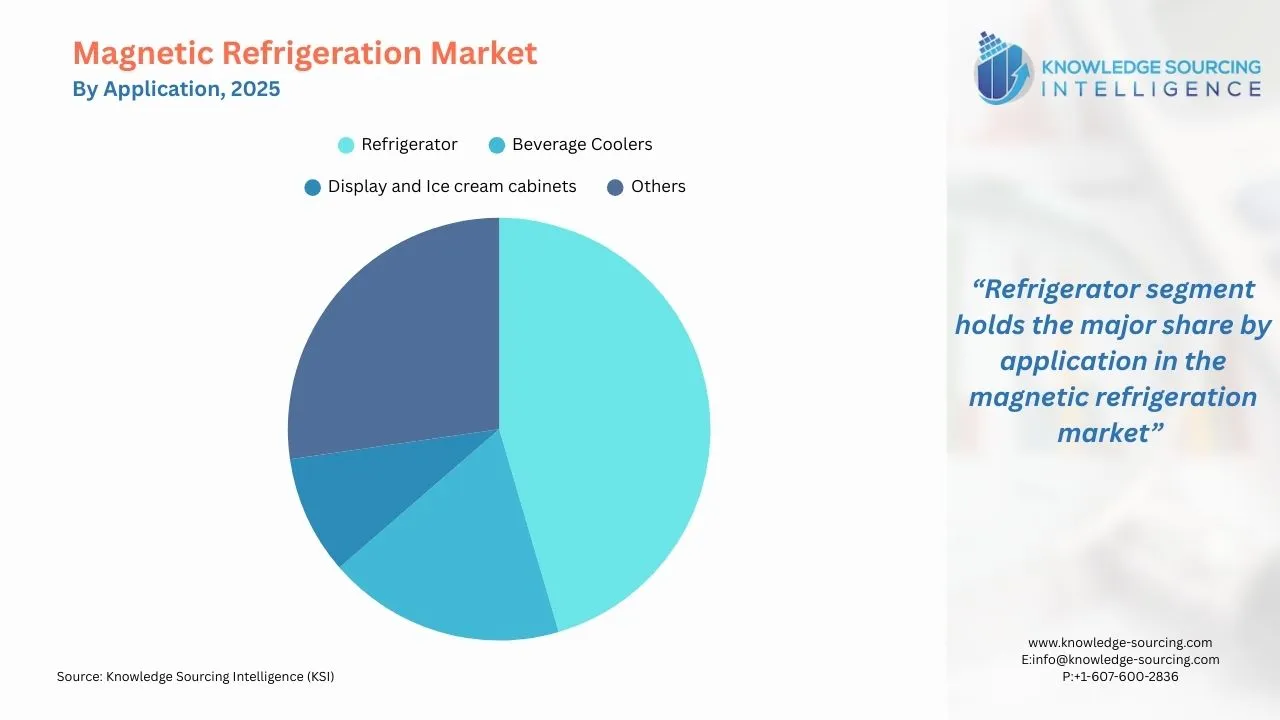
According to a research study published by Knowledge Sourcing Intelligence (KSI), the magnetic refrigeration market will expand from USD 215.742 million in 2025 to USD 1,100.662 million in 2030 at a CAGR of 38.53% during the forecast period.Magnetic refrigeration is a cooling technique that uses magnetic fields to transfer heat. This process can maintain a safe temperature for medical supplies or regulate the temperature of food and drink. Magnetic refrigeration is used in industry to cool electronic components or chemical processes. In many countries, environmentally harmful refrigerants like CFCs and HCFCs are being phased out. The majority of magnetic refrigeration alternatives that are now in use are harmful to the environment since they release harmful chemicals that damage the ozone layer and contribute to global warming. Safety issues including flammability, toxicity, and pressure concerns limit the benefits of these new options, even if they have less potential to contribute to global warming. However, enhanced safety, environmental compatibility, and energy economy are the most important features of magnetic refrigeration technology. Even while this technology is still in its infancy, it has the potential to fundamentally change how things are cooled. Applications for magnetic refrigeration are similar to those for traditional refrigeration, however this technology is safer, quieter, smaller, more environmentally friendly, and more effective at chilling. Magnetic refrigeration avoids the use of potentially hazardous or destructive cooling gases. They are used in a variety of business settings, such as bakeries, restaurants, hotels, and retail stores. They are also used in refrigerators and coolers, among other home appliances. By application, the market is segmented into Refrigerator, Beverage, Coolers, Display and Ice cream cabinets and others. The market is further segmented based on region which include Americas, Europe, the Middle East, and Africa, Asia Pacific. ? View a sample of the report or purchase the complete study at: Magnetic Refrigeration Market Report
Magnetic Refrigeration Market Report Highlights
- The cost of magnetic refrigeration equipment is greatly influenced by magnets and magnetocaloric materials. A device with a high coefficient of performance (COP) would employ more magnets and magnetocaloric materials. A device with high efficiency requires more materials, which drives up the item's price.
- Due to limited permanent magnet field strength and high upfront investment expenditures, the magnetic refrigeration business is expected to remain constrained.
- Asia-Pacific The market for magnetic refrigeration is anticipated to increase significantly in the Asia Pacific area. India's HVAC industry is expanding significantly due to a number of causes. Urbanization, rising disposable income, and shifting lifestyles are all taken into consideration. The expansion of the energy-efficient HVAC market is mostly due to government programs such as Atmanirbhar Bharat, Production Linked Incentive (PLI) schemes, financial incentives, etc.
Report Coverage:
| Report Metric | Details |
| Magnetic Refrigeration Market Size in 2025 | US$215.742 million |
| Magnetic Refrigeration Market Size in 2030 | US$1,100.662 million |
| Growth Rate | CAGR of 38.53% |
| Drivers |
|
| Restraints |
|
| Segmentation |
|
| List of Major Companies in the Magnetic Refrigeration Market |
|
Magnetic Refrigeration Market Growth Drivers vs. Challenges
Drivers:- Increasing Need for Energy-Saving Cooling Technologies: Conventional vapor-compression refrigeration systems use a lot of electricity that adds to high operational costs and environmental damage. Magnetic refrigeration uses the magnetocaloric effect to eliminate energy-intensive gas compression and offer much higher energy efficiency. Global demand for electricity is rapidly increasing due to cooling and energy efficiency demand is significantly high given the growing demand for cooling (particularly in residential, commercial, and industrial sectors), so technologies like magnetic refrigeration are seeing significant and notable uptake.
- Growing Green Technology Incentives and Government Regulations: Governments throughout Europe, North America, and Asia-Pacific have started mandating energy efficiency standards as well as incentives for cooling technologies that don’t negatively impact the environment. The policies supporting sustainable refrigeration technologies are driving research and development (R&D) and the uptake of magnetic refrigeration across the food & beverage, medical, and commercial retail sectors. Financial support in via subsidies, grant funding, or tax incentives for green technologies makes magnetic refrigeration systems more appealing in the commercial environment.
- Reliance on Rare-Earth Resources: Numerous magnetocaloric materials (like gadolinium and its alloys) and strong permanent magnets use rare-earth elements as a core element. The price of rare-earth elements is high and with a limited global supply, there are risks of volatility in the supply chain that drives up production costs and minimizes market stability. The risk of disruptions could limit market dynamism and certainty necessary for large-scale deployment in the long-term.
- Competition from Enhanced Traditional Refrigeration Systems: Traditional vapor-compression refrigeration systems have developed steadily over the years, and these systems have included energy-efficient compressors, low-GWP refrigerants, and smart cooling systems for decades. The consequence has been to narrow the relative advantage of magnetic refrigeration. Each improvement makes it more difficult for new technology to compete in more cost-sensitive markets.
Magnetic Refrigeration Market Developments
- New Product Launch: In June 2025, The Ice Point Magnetic Cooling Clip is one of the new accessories that the one plus has released. It has a sleek design, a multi-stage cooling system, and dual-color lighting.
- New Product Launch: In June 2025, Panasonic created a data center cooling water circulation pump. Panasonic has improved pump performance by 75% (from 40 to 70 L/min) while keeping the same size as traditional pumps by making full use of cutting-edge simulation technologies, including magnetic field analysis, fluid dynamics analysis, and flow analysis.
Magnetic Refrigeration Market Segmentation
Knowledge Sourcing Intelligence has segmented the magnetic refrigeration market based on application and region: Magnetic Refrigeration Market, By Application- Refrigerator
- Beverage Coolers
- Display and Ice cream cabinets
- Others
- Americas
- Europe, the Middle East, and Africa
- Asia Pacific
Magnetic Refrigeration Market Key Players
- Camfridge
- BASF SE
- VACUUMSCHMELZE GmbH & Co. KG
- MagnoTherm Solution
- Astronautics Corporation of America
- kiutra GmbH
- Stirling Cryogenics
- Magnoric
About Knowledge Sourcing Intelligence (KSI)
Knowledge Sourcing Intelligence (KSI) is a market research and consulting firm headquartered in India. Backed by seasoned industry experts, we offer syndicated reports, customized research, and strategic consulting services. Our proprietary data analytics framework, combined with rigorous primary and secondary research, enables us to deliver high-quality insights that support informed decision-making. Our solutions empower businesses to gain a competitive edge in their markets. With deep expertise across ten key sectors, including ICT, Chemicals, Semiconductors, and Healthcare, we effectively address the diverse needs of our global clientele.Have questions?
More Press Releases
Lifestyle-Associated Cancer Epidemiology Market is expected to reach USD 13.12 billion by 2031
The worldwide market for lifestyle-associated cancer epidemiology is expected to expand rapidly, owing to the rising global awareness of modifiable risk factors such as tobacco use, obesity, poor diet, alcohol consumption, and physical inactivity, which together contribute significantly to cancer incidence. Health organizations, along with research institutions, are investing in enhanced surveillance, behavioral risk monitoring, cancer registries, and prevention strategies to address the growing burden of preventable cancers. In recent years, the World Health Organization and several national bodies have emphasized data-driven epidemiology. These initiatives support targeted interventions, policy measures, and screening programs. Additionally, the widespread adoption of digital epidemiology tools, precision prevention approaches, and AI-powered analytics is fueling the demand for robust epidemiology infrastructure worldwide.
Psycho-Oncology Digital Health Market is anticipated to surpass USD 290.01 million in 2031 at a CAGR of 8.5%
The psycho-oncology digital health market is expanding as healthcare providers increasingly integrate digital mental health solutions into cancer care. Growing demand for AI-driven platforms, digital cognitive behavioral therapy, telehealth, and mobile applications is improving access to psychological support. North America leads the market, while Asia Pacific is expected to witness the fastest growth.
Intratumoral Injection Therapy Market is expected to reach USD 630.39 million by 2031
The worldwide market for Intratumoral Injection Therapy is expected to experience substantial growth in the market due to the increasing demand for localized cancer treatments that are essential in enhancing therapeutic efficacy while also minimizing systemic toxicity. Intramural injection therapy is often involved with direct administration of therapeutic agents into tumors, which enables high local drug concentrations and targets immune activation. Growing interest in gene therapies, cancer immunotherapy, and on-politic viruses, including cytokine-based therapies are also accelerating market expansion.