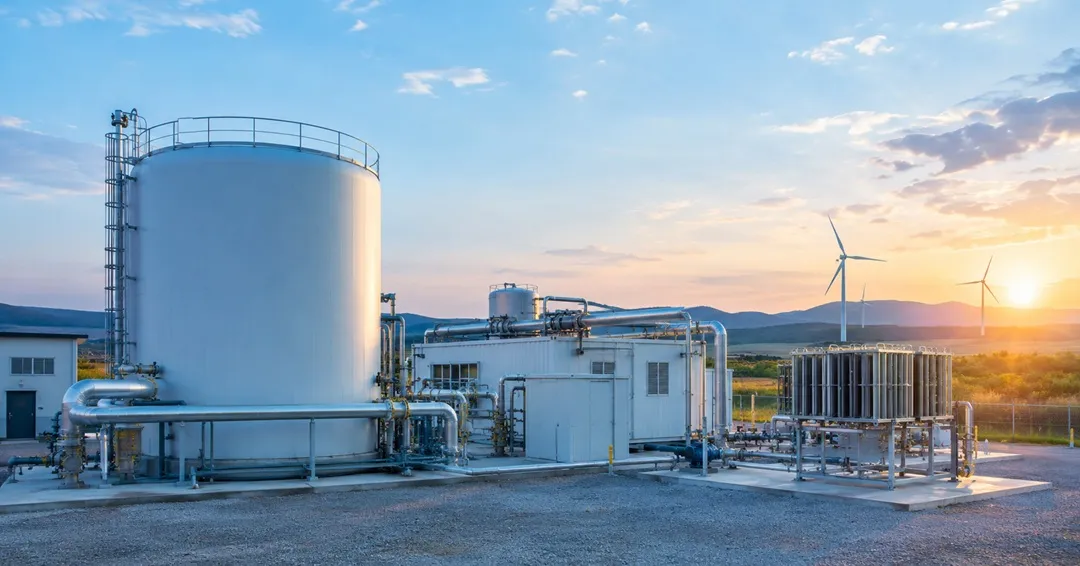
The global liquid air energy storage market is gaining momentum as renewable energy integration and long-duration electricity storage requirements drive investment. Commercial-scale project development, cryogenic technology advancements, thermal integration, and grid-stability applications are creating new opportunities, while project financing, capital costs, and operational efficiency remain important considerations for market expansion.
Knowledge Sourcing Intelligence has published its latest analysis of the Global Liquid Air Energy Storage Market, projecting growth from USD 0.24 billion in 2026 to USD 2.25 billion by 2032, registering a compound annual growth rate (CAGR) of 45.2%. Increasing investment in commercial-scale energy storage projects, rising renewable energy integration, and growing demand for long-duration electricity storage are expected to support market expansion. As power systems incorporate higher proportions of variable renewable generation, liquid air energy storage (LAES) is gaining attention as a potential solution for improving grid flexibility, supporting energy security, and balancing electricity supply and demand.
The market is progressing from demonstration initiatives toward larger commercial installations, supported by technology development and investment in grid-scale infrastructure. LAES operates by compressing, purifying, and cooling ambient air until it reaches a liquid state. The liquid air is stored in insulated cryogenic tanks and subsequently pressurised, heated, and expanded through turbines to generate electricity. Storage duration can be increased through system design and additional cryogenic storage capacity. However, commercial adoption will depend on capital expenditure, round-trip efficiency, project financing, thermal integration, and demonstrated operational reliability.
Request a free sample copy or view the report summary: Liquid Air Energy Storage Market Report
Key Growth Drivers
Commercial-Scale Project Development
Investment in utility-scale facilities is strengthening the commercial outlook for LAES technology. Highview Power's Carrington project at Trafford Energy Park in Greater Manchester represents a significant step toward commercial deployment. Designed to provide 50 MW of power capacity and 300 MWh of storage, the facility is being developed to combine long-duration energy storage with critical grid-stability services. Its construction and phased development are expected to provide an important reference point for future commercial LAES installations. Successful commissioning, operational performance, and cost management will be essential for demonstrating the technology's commercial viability and encouraging further investment.
Renewable Energy Integration and Long-Duration Storage
The expansion of wind and solar power generation is increasing demand for energy storage technologies capable of shifting electricity between periods of surplus generation and higher demand. LAES can utilise excess electricity to liquefy ambient air, which is stored for subsequent electricity generation when renewable output declines or grid demand increases. Unlike some geographically constrained storage technologies, LAES does not require specific underground geological formations or elevated water reservoirs. This creates potential deployment opportunities in industrial locations and areas where pumped hydroelectric storage or underground compressed-air energy storage may be impractical. Its ability to support extended storage periods could further strengthen its role in renewable-heavy electricity systems.
Grid Stability and Energy Security
The growing share of variable renewable generation is increasing the importance of grid flexibility, frequency management, and reliable electricity supply. Depending on system configuration, LAES installations can contribute to grid-stability services, including synchronous inertia, dynamic voltage support, and frequency response. These capabilities can help electricity networks manage fluctuations in renewable generation and maintain reliable power delivery. Multiple revenue streams from energy shifting and ancillary services could improve project economics where suitable technical capabilities, grid connections, and electricity market mechanisms are available. Consequently, grid operators and energy infrastructure developers are increasingly considering long-duration storage as part of broader electricity system planning.
Cryogenic Technology and Thermal Integration
Developments in cryogenic equipment, air liquefaction systems, heat exchangers, and thermal recovery technologies are supporting the advancement of LAES installations. Thermal management is particularly important because recovering and reusing heat generated during the charging process can improve overall system performance. Integration with industrial waste heat and liquefied natural gas (LNG) cold energy may also improve efficiency under suitable operating conditions. These applications can create opportunities for collaboration between energy storage developers, industrial facilities, and specialist equipment manufacturers. However, the achievable efficiency improvements depend on thermal resource availability, equipment compatibility, integration costs, and long-term operating conditions.
Latest Industry Developments
February 2026 – Alfa Laval's South Korean LAES Partnership: Alfa Laval partnered with South Korea's Institute for Advanced Engineering to supply cryogenic heat exchangers and high-pressure pumps for the country's first large-scale liquid air energy storage facility, supporting technology development and renewable energy integration.
May 2026 – Highview Power Leadership Appointment: Highview Power appointed Peter Jones as Chief Executive Officer, strengthening its executive leadership team as the company advances commercial-scale liquid air energy storage and grid infrastructure projects.
July–August 2026 – NRStor's St. Clair Township LAES Project: NRStor advanced public engagement for its proposed Ontario liquid-air storage facility. Subsequent project discussions outlined a potential capacity of up to 200 MW and 2,000 MWh, alongside municipal support for further development.
Market Segmentation and Regional Outlook
The liquid air energy storage market is segmented by system component, storage duration, plant configuration, application, project scale, and geography. Major components include air compression and purification equipment, liquefaction systems, cryogenic storage tanks, pumps, heat exchangers, thermal storage systems, expansion turbines, and generators. Plant configurations include standalone installations, systems integrated with industrial waste heat or LNG cold energy, and hybrid arrangements combining LAES with lithium-ion battery storage. Applications include renewable energy integration, grid balancing, peak-load management, energy shifting, and grid-stability services.
Europe remains a key region for commercial LAES development, supported by the United Kingdom's project pipeline and increasing requirements for long-duration grid flexibility. Highview Power's Carrington development highlights the region's progress toward larger commercial installations. Government-backed energy storage initiatives and investment in renewable electricity infrastructure are also creating opportunities for technology developers and engineering suppliers.
Asia Pacific offers growth opportunities through its cryogenic engineering capabilities, industrial infrastructure, and expanding renewable energy investments. Japan and South Korea are notable markets for technology development and project integration. In South Korea, Alfa Laval's partnership with the Institute for Advanced Engineering demonstrates the involvement of specialist equipment suppliers in developing large-scale LAES infrastructure. Japan is also progressing LAES applications through projects integrating cryogenic energy storage with LNG infrastructure.
North America is advancing through proposed utility-scale developments and increasing interest in long-duration electricity storage. Canada's NRStor St. Clair Township proposal illustrates the potential for LAES deployment within industrial locations and electricity procurement programmes. The region's future market development will depend on project approvals, financing arrangements, electricity market structures, and the ability of storage technologies to compete with alternative grid-scale solutions.
Competitive Landscape
The liquid air energy storage market includes technology developers, engineering companies, project developers, and specialist equipment suppliers. Highview Power is a prominent technology developer and project company, advancing commercial-scale LAES installations and grid-stability solutions. Sumitomo SHI FW participates in the market through engineering and project solutions based on licensed LAES technology. NRStor contributes through project development activities in Canada, while Alfa Laval supplies cryogenic equipment for emerging LAES installations, including its partnership in South Korea.
Other participants in the wider technology and engineering ecosystem include Siemens Energy, which has collaborated with Sumitomo SHI FW on LAES solutions. Competitive differentiation will depend on system efficiency, capital requirements, thermal integration capabilities, financing access, engineering expertise, project execution, and long-term operational reliability. As the technology advances, successful delivery of commercial-scale facilities and the establishment of repeatable project economics are expected to become increasingly important competitive factors.
Analyst Perspective
"The liquid air energy storage market is entering an important phase as developers move beyond demonstration initiatives and advance larger commercial installations. Increasing renewable energy penetration and the need for long-duration grid flexibility are creating opportunities for LAES technology. However, sustained market expansion will depend on successful project commissioning, competitive lifecycle costs, efficient thermal management, and reliable operational performance. These factors will influence investor confidence and the pace of commercial deployment across major electricity markets."
What the Study Covers
The Knowledge Sourcing Intelligence report provides a comprehensive assessment of the global liquid air energy storage market, including historical analysis, market estimates, and forecasts through 2032. It examines the principal market drivers, restraints, opportunities, technology developments, and competitive dynamics influencing industry growth. The study also evaluates market segmentation by system component, storage duration, plant configuration, application, and project scale, alongside regional assessments and country-level opportunities. Furthermore, it provides competitive intelligence, company profiles, and an assessment of the strategic developments shaping the adoption of liquid air energy storage technologies worldwide.
Garuav Singh
ContributorHave questions?
More Press Releases
Semiconductor Wafer Dry Cleaning Equipment Market to Reach USD 2.55 Billion by 2032, Driven by Advanced Node Production
The global semiconductor wafer dry cleaning equipment market is growing as advanced chip architectures demand precise contamination control and selective material removal. Increasing production of advanced memory, leading-edge logic, and hybrid bonding is driving demand for plasma-based and gas-phase cleaning technologies that improve surface preparation while protecting sensitive semiconductor structures.
Zinc-Ion Battery Energy Storage Market to Reach USD 700 Million by 2032, Driven by Renewable Energy Integration
The zinc-ion battery energy storage market is gaining momentum as renewable energy deployment increases demand for safer, scalable stationary storage solutions. Advances in aqueous electrolytes, electrode materials, and manufacturing technologies are creating opportunities across residential, commercial, industrial, and utility-scale applications, while durability, efficiency, and cost remain key commercialization challenges.
EV Traction Motor Market to Reach USD 20.6 Billion by 2031 as Integrated E-Axles Gain Momentum
The global EV traction motor market is expanding as automakers adopt integrated e-axles, compact drivetrain architectures, and advanced propulsion technologies. Rising electric vehicle production, improved motor efficiency, power electronics innovation, and manufacturing optimization are creating opportunities for suppliers developing scalable, reliable, and space-efficient electric drive systems across passenger and commercial vehicle segments.