The rising adoption of digital health technologies, growing demand for point-of-care testing, and growing use of smartphones in healthcare monitoring and diagnostics are driving the strong growth of the smartphone-enabled diagnostic platforms market. The development of portable, real-time and user-friendly diagnostic solutions is being made possible by the development of biosensors, microfluidics, artificial intelligence (AI) and imaging technologies. Furthermore, rising incidence of chronic diseases, a growing emphasis on remote patient monitoring, and a growing healthcare accessibility in emerging economies are driving market growth.
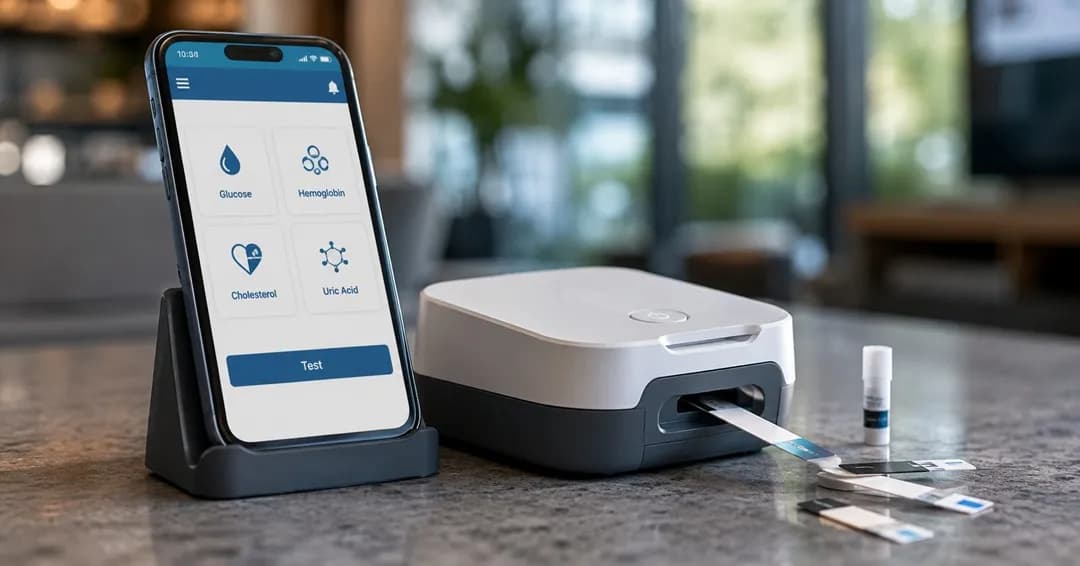
Smartphone-enabled Diagnostic Platforms market Trends & Forecast
According to a research study published by Knowledge Sourcing Intelligence (KSI), the smartphone-enabled diagnostic platforms market will expand from USD 11.8 billion in 2026 to USD 27.9 billion in 2031 at a CAGR of 18.8% during the forecast period.
Smartphones are being infiltrated with cutting-edge diagnostic technology for disease detection, monitoring, and healthcare management, which is driving rapid transformation in the market.The market is transforming rapidly because of the growing integration of advanced diagnostic technology for disease detection, monitoring, and healthcare management in smartphones. Portable, cost-effective, and connected healthcare solutions with a smartphone connection are enhancing access to rapid diagnostics. Innovations in biosensors, AI-powered analytics, microfluidics, and imaging-based diagnostics are enhancing diagnostic accuracy and real-time data interpretation. In addition, the increasing need for a decentralised healthcare model, the uptake of telemedicine and digital health ecosystems are driving the broad roll-out of smartphone-based diagnostic devices in clinical and homecare settings.
Request a free sample copy or view the report summary: Smartphone-enabled Diagnostic Platforms market Report
Smartphone-enabled Diagnostic Platforms market Report Highlights
By Product Type, smartphone-connected diagnostic devices account for a significant market share owing to their increasing use in rapid testing, disease monitoring, and portable healthcare diagnostics. The mobile health market is experiencing significant growth as the number of smartphones and digital health monitoring tools continues to grow. With the emphasis on real-time patient data collection and continuous health monitoring, wearable-integrated platforms are also becoming more and more popular.
By Technology, biosensors are the most popular due to their wide spread application in the speedy and accurate diagnosis of diseases. Overall, the micro fluidics technology is gaining momentum as a result of its ability to allow miniaturized and low-cost diagnostic testing. AI & machine learning is being rapidly adopted in the field of predictive analytics, automated interpretation, and personalized healthcare insights. Imaging-based diagnostics are also expanding as more and more advanced imaging software and smartphone cameras are being used for diagnostic purposes.
By application, infectious diseases are expected to account for a significant market share as there is a growing demand for speedy and e-enabled diagnostic solutions for detecting and monitoring infectious diseases remotely. There has been a marked expansion in chronic disease monitoring as a result of the growing number of chronic diseases and the requirement for ongoing monitoring of patients. Cardiology applications are also growing, as smartphones are being increasingly used with ECG and heart monitoring devices, and the diabetes management market is a major application as the number of smart phone connected glucose monitoring systems and digital diabetes care platforms have grown.
The diagnostic platforms market is led by North America, which is characterized by a robust digital health startup ecosystem, advanced healthcare system, growing adoption of remote diagnostic technologies, and high smartphone penetration. This is especially true for Europe, where regulatory frameworks support healthcare and investments in digital healthcare transformation are increasing, and where demand for connected diagnostic solutions is growing. The Asia-Pacific region is projected to experience the highest growth rates due to the digital healthcare initiatives by the government, prevalence of chronic diseases, and improved healthcare accessibility in the region in countries like China, India, Japan and South Korea, and the growing use of smartphones.
Smartphone-enabled Diagnostic Platforms market Growth Drivers and Restraints
Growth Drivers:
Increasing Adoption of Digital Health and Remote Monitoring: Smartphone-powered diagnostic platforms are gaining traction due to growing demand for digital health and remote monitoring solutions, such as telemedicine and home-based care, and real-time patient monitoring.
Advancements in AI, Biosensors, and Mobile Diagnostics: Technological progress in fields such as AI, Biosensors, and Mobile Diagnostics are enhancing diagnostic precision, portability, and accessibility, promoting more efficient and timely health care delivery.
Restraints:
Data Privacy and Cybersecurity Concerns: As more and more connected devices and mobile apps are used in healthcare, there are growing concerns about data privacy and security compliance.
Regulatory and Technical Challenges: Differences in regulatory clearance, interoperability problems, and clinical validation requirements could limit the adoption of the diagnostic technologies of the smartphones.
Smartphone-enabled Diagnostic Platforms market Key Development
Product Launch: In July 2025, Predictmedix AI Inc., a leader in artificial intelligence-driven health screening solutions, is expanding into the direct-to-consumer market with a mobile solution designed to deliver rapid, non-invasive diabetic screening with India identified as the initial launchpad for this transformative initiative.
Smartphone-enabled Diagnostic Platforms market Segmentation
Knowledge Sourcing Intelligence has segmented the Smartphone-enabled Diagnostic Platforms by product type, by technology, by application, and geography:
Smartphone-enabled Diagnostic Platforms market, By Product Type
Mobile Health Applications
Smartphone-Connected Diagnostic Devices
Wearable-Integrated Platforms
Smartphone-enabled Diagnostic Platforms market, By Technology
Biosensors
Microfluidics
Artificial Intelligence & Machine Learning
Imaging-Based Diagnostics
Smartphone-enabled Diagnostic Platforms market, By Application
Infectious Diseases
Chronic Disease Monitoring
Cardiology
Diabetes Management
Smartphone-enabled Diagnostic Platforms market, By Region
North America
USA
Canada
Mexico
South America
Brazil
Argentina
Others
Europe
United Kingdom
Germany
France
Spain
Others
Middle East and Africa
Saudi Arabia
UAE
Others
Asia Pacific
China
India
Japan
South Korea
Indonesia
Thailand
Others
Smartphone-enabled Diagnostic Platforms market Key Players
Abbott Laboratories
Roche Diagnostics
Siemens Healthineers
Thermo Fisher Scientific
BD (Becton, Dickinson and Company)
Philips Healthcare
Cue Health
AliveCor
Scanadu
iHealth Labs
Need specialized data cuts or competitive intelligence?
Our analyst team provides bespoke market sizing, supplier audits, and country-level feasibility reports tailored to your enterprise roadmap.
Speak With an Industry Analyst →Ask an Industry Analyst
Have questions regarding this briefing or market projections? Inquire with our sector lead.
Related Press Releases
View All →
ADC Manufacturing & CDMO Market is expected to reach USD 10.49 billion by 2031
Aug 7, 2026
Lifestyle-Associated Cancer Epidemiology Market is expected to reach USD 13.12 billion by 2031
Aug 5, 2026
Psycho-Oncology Digital Health Market is anticipated to surpass USD 290.01 million in 2031 at a CAGR of 8.5%
Jul 30, 2026
Intratumoral Injection Therapy Market is expected to reach USD 630.39 million by 2031
Jul 24, 2026
Palliative Care in Oncology Market is expected to reach USD 244.1 billion by 2031
Jul 22, 2026More Press Releases
Oncology Drug Resistance Testing Market is projected to reach USD 3.41 billion in 2031 at a CAGR of 6.6 %
The oncology drug resistance testing market is expanding due to rising cancer prevalence, increasing drug resistance, and growing adoption of precision oncology. Advances in NGS-based testing, companion diagnostics, and targeted therapies, alongside FDA approvals and investments in personalized medicine, are accelerating demand for effective resistance monitoring across hospitals and clinical diagnostics worldwide.
TROP-2 Targeted Therapy Market is anticipated to surpass USD 3.29 billion in 2031 at a CAGR of 8.6 %
The TROP-2 Targeted Therapy market is expanding rapidly due to increasing precision oncology adoption, rising cancer prevalence, and growing use of antibody-drug conjugates. North America leads the market, while Asia Pacific shows the fastest growth. Continuous clinical trials, regulatory approvals, and strategic collaborations are accelerating innovation and commercial adoption worldwide.
Second Primary Cancer Prevention Market is expected to reach USD 24.7 billion by 2031
The Second primary cancer prevention refers to strategies aimed at reducing the risk of developing a new, unrelated cancer in individuals with a prior cancer diagnosis. Growing cancer survivorship, advances in treatment, and increasing awareness of long-term health outcomes have heightened the importance of prevention and surveillance programs. Key approaches include routine screening, genetic risk assessment, lifestyle modification, and long-term follow-up care. Government agencies and healthcare organisations increasingly emphasise survivorship care plans and evidence-based screening protocols to detect new malignancies at earlier stages. Continued investments in early detection technologies and personalised risk assessment are expected to support advancements in second primary cancer prevention.