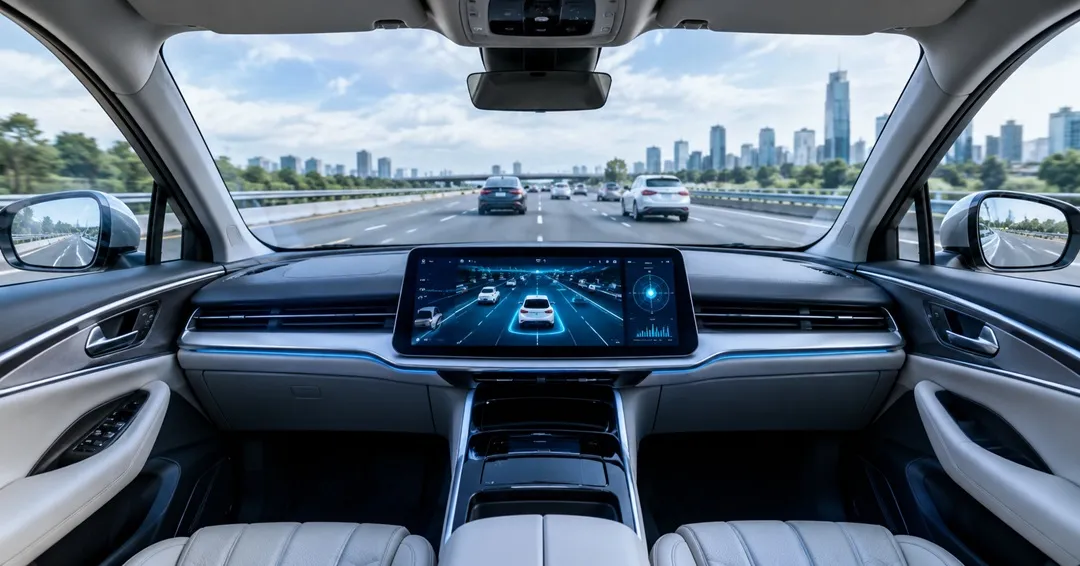
The global autonomous vehicle interior market is expanding as AI-powered smart cockpits, advanced human-machine interfaces, and occupant monitoring technologies transform in-vehicle experiences. Growing adoption of software-defined vehicle architectures, connected infotainment, and personalized cabin systems is creating opportunities for automotive suppliers as higher-level vehicle automation advances across global markets.
Knowledge Sourcing Intelligence (KSI) forecasts the Global Autonomous Vehicle Interior Market to grow from USD 9.50 billion in 2026 to USD 26.53 billion by 2031, registering a CAGR of 22.8%. Growth is supported by advances in AI-powered smart cockpits, human-machine interfaces (HMIs), occupant monitoring technologies, and software-defined vehicle architectures.
As vehicle automation progresses, intelligent displays, voice controls, occupant monitoring, and connected infotainment are transforming the in-vehicle experience. These technologies improve cabin personalization and help occupants understand automated driving status, system limitations, and intervention requirements. Increasing integration of digital technologies into vehicle interiors is creating opportunities for automotive component manufacturers, electronics suppliers, and software developers.
While many smart cockpit technologies are already available in conventional vehicles, their integration with higher-level automated driving systems introduces additional requirements for safety, communication, and system coordination. Commercial adoption will depend on functional safety validation, cybersecurity, system reliability, regulatory compliance, and integration costs.
Request a free sample copy or view the report summary: Autonomous Vehicle Interior Market Report
Key Growth Drivers
AI-Powered Smart Cockpits and Personalized Cabin Experiences
AI-powered cockpits enable natural voice interactions, contextual assistance, intelligent displays, and personalized infotainment. These capabilities support intuitive control of navigation, climate, and entertainment while reducing dependence on conventional physical controls. Embedded AI processing can also support selected functions without continuous cloud connectivity, improving responsiveness and enabling more localized cabin interactions. As manufacturers integrate these technologies across vehicle platforms, demand for cockpit processors, sensors, displays, and compatible software is expected to increase.
Growing Importance of Human-Machine Interfaces in Automated Driving
SAE Level 3 vehicles require interfaces that communicate automation status, operating limitations, and requests for driver intervention. Displays, audible alerts, and driver monitoring systems help drivers understand when manual control is required. Effective interface design becomes particularly important during transitions between automated and human driving. These requirements create opportunities for suppliers developing reliable HMI technologies, occupant sensing systems, and integrated cockpit controls that meet automotive safety standards. In Level 4 applications, interfaces increasingly focus on communicating system status, passenger information, and available services within defined operational conditions.
Expansion of Software-Defined Vehicle Architectures
Centralized computing architectures coordinate infotainment, digital displays, cabin controls, and selected driver-assistance functions. Software-defined platforms support remote updates, feature customization, and scalable development across vehicle models. They can also simplify the integration of new cockpit applications through shared computing resources. However, manufacturers must address cybersecurity, computing reliability, system compatibility, and the separation of safety-critical workloads from entertainment and convenience functions. Continued development of zonal architectures and high-performance automotive computing platforms is expected to strengthen the integration of intelligent interior technologies.
Demand for Occupant Monitoring and Adaptive Cabin Controls
Interior cameras and sensors support occupant detection, driver attention monitoring, and personalized climate, lighting, and infotainment settings. These capabilities become increasingly relevant as manufacturers develop vehicles with different automation modes and explore more flexible cabin configurations. Occupant monitoring can also support safety functions by identifying driver attention levels, passenger presence, and potential risks associated with unattended occupants. Adoption will depend on sensor accuracy, privacy safeguards, durability, and compliance with automotive safety requirements.
Latest Industry Developments
July 2026 – Waymo Gemini Integration: Waymo introduced Gemini conversational assistance in its Ojai autonomous vehicles, allowing riders to adjust cabin temperature through voice commands and access journey-related information, strengthening the integration of conversational AI into autonomous mobility experiences.
July 2026 – Goer Dynamics and IMAX Partnership: Goer Dynamics and IMAX partnered to develop an immersive in-vehicle entertainment system featuring multidimensional audio and calibrated high-definition displays, with commercial production expected by the end of 2026.
June 2026 – Yanfeng XiM27 Smart-Cabin Concept: Yanfeng unveiled its production-ready XiM27 smart-cabin concept, integrating generative AI, centralized electronics, flexible seating, intelligent displays, and adaptable spaces for work, relaxation, and entertainment.
These developments highlight increasing investment in embedded AI, advanced cockpit computing, and personalized cabin technologies. However, commercialization timelines and their applicability to different autonomous driving levels vary across manufacturers and mobility platforms.
Market Segmentation and Regional Outlook
The market is segmented by interior system, primary function, automation level, vehicle application, propulsion, and geography. Interior systems include seating and reconfiguration systems, cockpit displays and HMI, instrument panels, door panels and trim, consoles, lighting, audio and acoustic systems, climate management, and cabin monitoring. Primary functions cover comfort and wellness, safety and monitoring, entertainment and digital interaction, productivity and communication, and storage and convenience. The automation categories include SAE Level 3 and SAE Level 4 and above, while vehicle applications encompass personally owned autonomous vehicles, robotaxis, shared autonomous mobility, and autonomous shuttles. Propulsion categories include battery electric, hybrid electric, internal combustion engine, and fuel cell electric vehicles.
Asia Pacific
Asia Pacific offers significant opportunities through its automotive electronics manufacturing base, electric vehicle development, and increasing integration of intelligent cockpit technologies. China, Japan, and South Korea contribute established automotive supply chains, display manufacturing capabilities, vehicle electronics, and advanced mobility research. China's automotive manufacturers continue investing in connected cabins, digital interfaces, and intelligent vehicle platforms, while Japanese and South Korean suppliers contribute expertise in automotive interiors, displays, and electronic systems.
India is also developing its advanced vehicle-interior ecosystem through electric vehicle launches and connected mobility technologies. Mahindra's BE 6 and XEV 9e demonstrate the adoption of digital cockpits, connected infotainment, and advanced driver-assistance features in electric vehicles. Although these models feature Level 2+ driver assistance rather than SAE Level 3 or Level 4 automation, their interior technologies illustrate developments relevant to future automated vehicle platforms.
North America
North America benefits from automotive software development, autonomous mobility research, premium vehicle manufacturing, and investment in artificial intelligence. The United States is particularly important for autonomous ride-hailing and software-enabled vehicle platforms. Waymo's integration of Gemini conversational assistance into its Ojai autonomous vehicles demonstrates how AI can enhance passenger interaction, cabin personalization, and access to journey information. Such developments create opportunities for suppliers of cockpit electronics, voice interfaces, sensors, displays, and integrated cabin computing systems. Commercial growth will depend on autonomous vehicle deployment, regulatory approvals, consumer acceptance, and the economics of operating automated mobility services.
Europe
Europe maintains a strong automotive manufacturing base and established capabilities in premium vehicle interiors, automotive electronics, and vehicle software engineering. Manufacturers and suppliers are investing in connected cockpits, digital interfaces, occupant monitoring, and integrated cabin technologies to support increasingly automated vehicle platforms. The region's automotive safety requirements and emphasis on vehicle cybersecurity also influence interior-system development. Growth opportunities are expected to emerge from premium vehicle upgrades, electric mobility, and the gradual introduction of higher-level automated driving applications.
Competitive Landscape
Companies active in autonomous vehicle interiors and related cockpit technologies include Yanfeng, FORVIA, Toyota Boshoku Corporation, Grupo Antolin, Magna International Inc., LG Electronics Vehicle Solution Company, and HARMAN International.
Yanfeng, FORVIA, Toyota Boshoku, Grupo Antolin, and Magna contribute automotive interior components, seating systems, cockpit modules, and integrated cabin solutions. LG Electronics Vehicle Solution Company and HARMAN International focus on connected cockpit electronics, infotainment, displays, and software-enabled automotive technologies. These companies participate in different parts of the automotive interior value chain, with competition increasingly influenced by hardware-software compatibility, functional safety, processing capabilities, personalization, and cost-efficient integration.
Analyst Perspective
"The projected growth of the autonomous vehicle interior market reflects the increasing importance of intelligent cabin systems as vehicle automation progresses. AI-powered cockpits, advanced HMIs, and occupant monitoring technologies are creating new opportunities for automotive suppliers. However, commercial adoption will depend on safety validation, reliable software integration, competitive manufacturing costs, and the broader deployment of higher-level automated driving technologies."
What the Study Covers
The Global Autonomous Vehicle Interior Market report examines market forecasts through 2031, key growth drivers and restraints, market segmentation by interior system, primary function, automation level, vehicle application and propulsion, regional trends, competitive dynamics, company profiles, and relevant technology developments. The study provides insights into the evolving role of intelligent cabin systems and the opportunities emerging from the integration of AI, connected technologies, and automated driving platforms.
Have questions?
More Press Releases
Semiconductor Process Cooling Market to Reach USD 5.65 Billion by 2032, Driven by Demand for Precision Temperature Control in Advanced Chip Manufacturing
The semiconductor process cooling market is expanding as advanced chip manufacturing increases demand for precision temperature control, energy efficiency, and specialized cooling systems. Growth in advanced logic, high-bandwidth memory, and semiconductor fabrication capacity is creating opportunities for ultra-low-temperature chillers, multi-channel systems, and sustainable cooling technologies across major manufacturing regions.
AI Data Center Microgrids Market Projected to Reach USD 3.38 Billion by 2032 Amid Grid Constraints and Rising On-Site Power Demand
The AI data center microgrids market is expanding as grid constraints, interconnection delays, and rising AI computing power requirements increase demand for reliable on-site electricity. Hybrid generation, battery storage, advanced energy management, and islandable power systems are creating opportunities for suppliers supporting resilient, flexible, and efficient data center energy infrastructure.
Automotive Smart Seating Market to Reach USD 16.40 Billion by 2031 as AI-Enabled Comfort and Personalization Gain Traction
The global automotive smart seating market is expanding as automakers integrate AI-enabled personalization, occupant sensing, connected controls, and intelligent comfort technologies. Rising demand for premium cabin experiences and software-defined vehicles is creating opportunities for advanced seating systems, while affordability, software reliability, data protection, and vehicle safety integration remain key considerations.