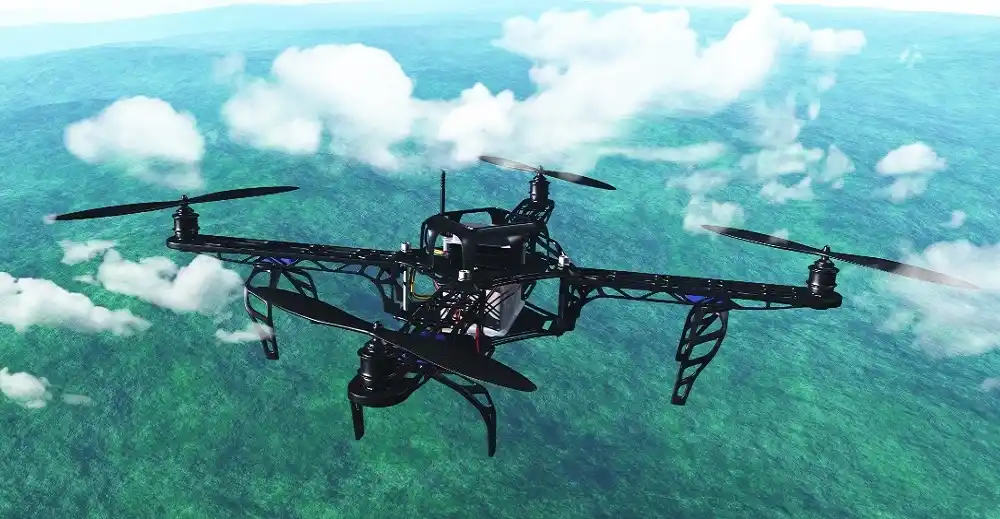
The aerial imaging market is expected to grow at a CAGR of 12.54%, reaching a market size of US$8.019 billion in 2030 from US$4.442 billion in 2025. Aerial imaging refers to photography that is done on a flying object. Numerous platforms can be used for taking photographs, includ...
Aerial Imaging Market Segmentation:
The aerial imaging market is segmented by application into five major categories: Disaster management, geospatial mapping, energy and resource management, surveillance and monitoring, and others. By application, the disaster management application of aerial imaging solutions is expected to witness promising growth for the next five years, primarily because these solutions are being increasingly adopted for assessing the magnitude caused by any disaster. Furthermore, the overall climatic conditions worldwide are deteriorating due to global warming. This, in turn, has further accelerated the occurrence of natural disasters in many parts of the world. Thus, the burgeoning requirements for effective and efficient disaster management and technology penetration are increasing, which is further expected to impact this segment’s growth during the forecast period positively. The aerial imaging market by platform is segmented into Drones/UAVs, fixed-wing aircraft, helicopters, and others. Rapid advancements in drone technology and rising demand for drone-generated data in commercial applications are the main drivers of the unmanned aerial vehicle (UAV) drone market's expansion. A rise in venture capital funding is also contributing to the growth of the unmanned aerial vehicle (UAV) drone market. The aerial imaging market by end-user is segmented into government, military and defence, energy, construction, agriculture, and others. The wide applications of these solutions across the government sectors for numerous applications, including homeland security, geospatial surveys, and urban planning, among others, are some of the key factors bolstering this segment’s share significantly during the next five years. The increased focus on efficient disaster management is further expected to bolster market growth until the end of the forecast period. The aerial imaging market by camera axis is segmented into vertical, low oblique, and high oblique. With the camera axis tilted to about 60 degrees in the high oblique segment, a greater area can be covered and the horizon is included in the finished image. This provides a more expansive view of a region, making it possible to recognize landmarks and other geographical features. Based on geography, the Asia-Pacific (APAC) region is expected to experience significant growth during the forecast period. The growth is because of the increasing awareness and recognition of the potential benefits of UAV technology in emerging economies such as China, India, and Indonesia. These countries are investing heavily in UAV technology for diverse applications, ranging from precision agriculture and surveillance to disaster management and e-commerce deliveries. Supportive government policies and increased investments from the private sector are propelling the regional market growth. The rapidly growing industrial and technological space in APAC also ensures that UAVs will gain rapid traction and significantly contribute to global market growth.Aerial Imaging Market Key Players:
As a part of the report, the major players operating in the Aerial imaging market that have been covered are Fugro N.V., Cooper Aerial Surveys Co., Digital Aerial Solutions LLC, EAGLE AERIAL, EagleView Technologies, Inc, L3Harris, Kespry, Nearmap Ltd., Kucera International, Terra Flight Aerial Imaging, Inc. View a sample of the report or purchase the complete study at: https://www.knowledge-sourcing.com/report/aerial-imaging-market The Aerial Imaging Market is analyzed into the following segments:- By Application
- Disaster Management
- Geospatial Mapping
- Energy and Resource Management
- Surveillance and Monitoring
- Others
- By Platform
- Drones/UAV
- Fixed-wing Aircraft
- Helicopter
- Others
- By End-User
- Government
- Military and Defense
- Energy
- Construction
- Agriculture
- Others
- By Camera Axis
- Vertical
- Low Oblique
- High Oblique
- By Geography
- North America
- USA
- Canada
- Mexico
- South America
- Brazil
- Argentina
- Others
- Europe
- Germany
- France
- UK
- Spain
- Italy
- Others
- Middle East and Africa
- Saudi Arabia
- UAE
- Israel
- Others
- Asia Pacific
- China
- India
- Japan
- South Korea
- Indonesia
- Thailand
- Taiwan
- Others
- North America
Audio Surveillance Market Report Security And Surveillance Drone Market Size Consumer Drones Market Share
Have questions?
More Press Releases
How Reliance's Bombay Creamery Launch Will Shake Up the Global Ice Cream Market, Expected to Reach USD 98.3 Billion by 2031
Reliance Consumer Products Limited (RCPL) has launched Bombay Creamery, an accessible-premium dairy ice cream brand made with real dairy cream and priced from as low as Rs 10, marking its dedicated entry into India's ice cream category. The launch, supported by the nationwide network of Reliance and a brisk marketing move, puts RCPL in the competition of some established brand names like Amul, Kwality Wall's, Mother Dairy, Vadilal and global brands like Magnum, Baskin-Robbins etc. The shift is a reflection of the premiumisation and innovation trends outlined in a new report by Knowledge Sourcing Intelligence, according to which the global ice cream market is worth USD 74.9 billion by 2026, and USD 98.3 billion by 2031.
How Abbott’s Libre Duo Launch Could Impact the Continuous Glucose Monitoring (CGM) Market, Expected to Reach USD 19.4 Billion by 2031
Abbott’s Libre Duo 10 Day Continuous Dual Glucose Ketone Monitoring System represents a significant development in the continuous glucose monitoring (CGM) market by combining glucose and ketone monitoring within a single wearable device. In August 2026, the U.S. Food and Drug Administration (FDA) authorized Libre Duo for people aged 2 years and older living with diabetes, making it the first wearable device in the U.S. to continuously monitor ketone levels and the first globally to continuously monitor both glucose and ketones in one device. The system measures glucose and ketones every minute for up to 10 days and can transmit readings wirelessly to a compatible smartphone.
Voith and Jungheinrich’s Recent Automation and Electrification Developments Will Affect the Material Handling Market, Estimated to Reach USD 328.6 Billion by 2031
Material handling is advancing through electrification, automation, and digitally enabled operations. Voith’s PowerDrive Mining, Jungheinrich’s ETV 4i reach truck, and Reitar Logtech’s cooperation with Cainiao highlight developments in conveyor systems, warehouse productivity, and logistics infrastructure, supporting higher throughput, operational efficiency, integrated controls, and technology-driven material movement across industries.