The AI in defense market is estimated to expand at a growth rate of 30.22% CAGR during the projected period to account for US$18.558 billion by 2029, up from US$4.956 billion in 2024. Artificial Intelligence is rev...
The AI in defense market is estimated to expand at a growth rate of 30.22% CAGR during the projected period to account for US$18.558 billion by 2029, up from US$4.956 billion in 2024.
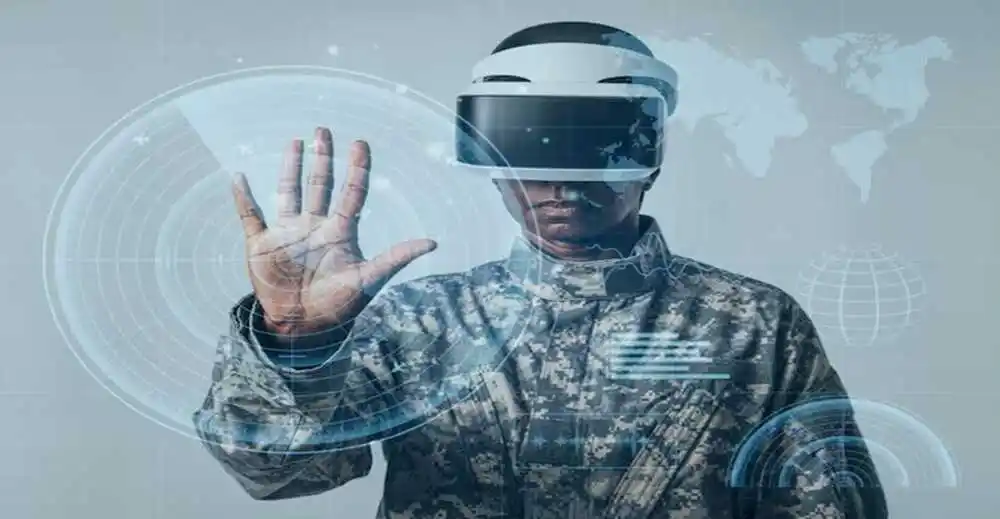
Artificial Intelligence is revolutionizing the way people and businesses work. It is becoming a crucial component in modern technology-driven warfare. The technologies that are being built today for the defense sector are very different from how it was developed earlier. The emerging new AI technologies are playing a crucial role in the development of the defense sector. It is allowing new opportunities for defense technologies to improve its efficiency and productivity. AI-based technology is being extensively used in the defense sector in surveillance, logistics, cybersecurity, training, autonomous combat vehicles, and in many more ways.
Governments around the world are investing in artificial intelligence in the development of defense equipment. In particular developed countries are investing a substantial portion of their investment in the defense sector in research and development in technologies like Artificial Intelligence and its usage in military and defense. The increasing government spending on AI advancements is increasing the adoption of AI-based technologies like surveillance, target identification, semi-autonomous vehicles, cyber security, etc. as nations are prioritizing technologies and military readiness amid the global security challenges. For example, in 2023, the USA has allocated $816 billion for national defense, and according to reports around a value of $4.6 billion is associated with AI-related federal contracts though the overall budget allocation in artificial intelligence is not explicitly mentioned.
Hence, the governments are increasing their investment in AI in the defense sector for a robust military and a more efficient defense system for securing their position in the heightened security challenges is accelerating the growth of AI in the defense market.
-
Segmentation of the AI In Defense Market
The AI in the Défense Market, based on Application, is divided into five types- intelligence and surveillance, cyber security, combat training, reconnaissance, and others.
Artificial intelligence is transforming the way intelligence and surveillance perform in defense and security by analyzing historical data and current trends, and by identifying individuals or objects through facial recognition systems, drone surveillance, and other ways. Artificial intelligence is playing a significant role in cyber security as well by detecting threats, detecting vulnerabilities i.e., software bugs, and performing response actions against cyber threats.
The AI in the Défense Market, by platform, is divided into three types: land, airborne, and space and naval. The defense sector uses artificial intelligence for Land operations such as using AI along with Machine learning for better targeting to combat vehicles, assisting drones to take off without being handled by humans, etc. AI is also transforming Airborne & Space operations by enhancing surveillance, automating response, and helping to assess the situation of space to prevent accidents. AI is also used in Naval operations helping it to have better surveillance, detecting threats, and automating response. One particular application of AI in naval operations is automating ships or vessels like Unmanned Surface Vessels or Unmanned Underwater Vehicles.
The AI in Defense Market, by technology, is divided into four types: machine learning, computer vision, natural language processing, and others. Machine learning helps in analyzing data, predicting the future, and detecting anomalies thus helpful for many real-time applications in defense like detecting threats by analyzing the historical data and understanding the current trends., Computer vision technology is being widely used to detect the object or to detect images enabling defense equipment to understand the threat. For example, Computer vision technology like drones and aircraft help in the automatic detection of objects thus critical for identifying threats.
During the projected timeframe, it is anticipated that the market for Artificial Intelligence in Défense Market will experience remarkable growth within Asia-Pacific. Countries like India, China, and Japan are witnessing the expansion of the AI market. At the same time, these countries are investing heavily in artificial intelligence for application in defense sectors to have an advantageous position in combating national security.
-
Key Players in the AI In Defense Market
The research includes several key players from the AI in defense markets like IBM Corporation, Booz Allen Hamilton Inc., Qualetics Data Machines Inc., Raytheon Technologies Corporation, Boeing, Lockheed Martin Corporation, Thales Grou, BAE Systems Plc, L3Harris Technologies Inc. and Northrop Grumman Corporation.
View a sample of the report or purchase the complete study at: https://www.knowledge-sourcing.com/report/ai-in-defense-market
The Artificial Intelligence in Défense Market is segmented and analyzed as follows:
- By Application
- Intelligence and Surveillance
- Cyber Security
- Combat Training
- Reconnaissance
- Others
- By Platform
- Land
- Airborne and Space
- Naval
- By Technology
- Machine Learning
- Computer Vision
- Natural Language Processing
- Others
- By Geography
- North America
- USA
- Canada
- Mexico
- South America
- Brazil
- Argentina
- Others
- Europe
- Germany
- France
- United Kingdom
- Spain
- Others
- Middle East and Africa
- Saudi Arabia
- UAE
- Israel
- Others
- Asia Pacific
- Japan
- China
- India
- South Korea
- Indonesia
- Taiwan
- Australia
- Others
- North America
- AI Camera Market Size
- Mobile Artificial Intelligence Market Report
- Artificial Intelligence (AI) In Computer Vision Market Research
Have questions?
More Press Releases
Lifestyle-Associated Cancer Epidemiology Market is expected to reach USD 13.12 billion by 2031
The worldwide market for lifestyle-associated cancer epidemiology is expected to expand rapidly, owing to the rising global awareness of modifiable risk factors such as tobacco use, obesity, poor diet, alcohol consumption, and physical inactivity, which together contribute significantly to cancer incidence. Health organizations, along with research institutions, are investing in enhanced surveillance, behavioral risk monitoring, cancer registries, and prevention strategies to address the growing burden of preventable cancers. In recent years, the World Health Organization and several national bodies have emphasized data-driven epidemiology. These initiatives support targeted interventions, policy measures, and screening programs. Additionally, the widespread adoption of digital epidemiology tools, precision prevention approaches, and AI-powered analytics is fueling the demand for robust epidemiology infrastructure worldwide.
Psycho-Oncology Digital Health Market is anticipated to surpass USD 290.01 million in 2031 at a CAGR of 8.5%
The psycho-oncology digital health market is expanding as healthcare providers increasingly integrate digital mental health solutions into cancer care. Growing demand for AI-driven platforms, digital cognitive behavioral therapy, telehealth, and mobile applications is improving access to psychological support. North America leads the market, while Asia Pacific is expected to witness the fastest growth.
Intratumoral Injection Therapy Market is expected to reach USD 630.39 million by 2031
The worldwide market for Intratumoral Injection Therapy is expected to experience substantial growth in the market due to the increasing demand for localized cancer treatments that are essential in enhancing therapeutic efficacy while also minimizing systemic toxicity. Intramural injection therapy is often involved with direct administration of therapeutic agents into tumors, which enables high local drug concentrations and targets immune activation. Growing interest in gene therapies, cancer immunotherapy, and on-politic viruses, including cytokine-based therapies are also accelerating market expansion.