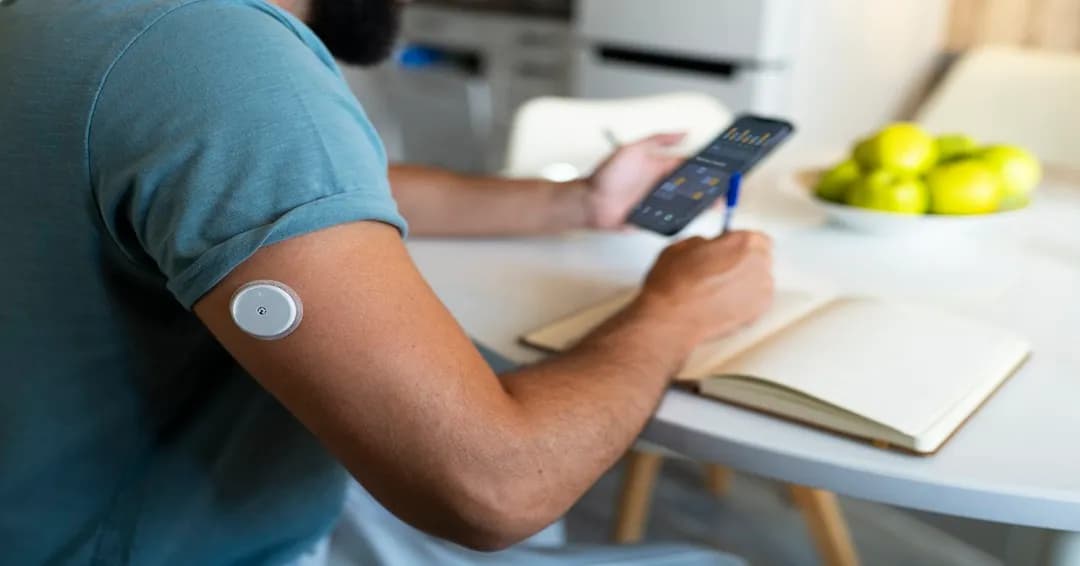
Abbott’s Libre Duo 10 Day Continuous Dual Glucose Ketone Monitoring System represents a significant development in the continuous glucose monitoring (CGM) market by combining glucose and ketone monitoring within a single wearable device. In August 2026, the U.S. Food and Drug Administration (FDA) authorized Libre Duo for people aged 2 years and older living with diabetes, making it the first wearable device in the U.S. to continuously monitor ketone levels and the first globally to continuously monitor both glucose and ketones in one device. The system measures glucose and ketones every minute for up to 10 days and can transmit readings wirelessly to a compatible smartphone.
In August 2026, the FDA authorized Abbott’s Libre Duo 10 Day Continuous Dual Glucose Ketone Monitoring System, introducing a new wearable monitoring approach that combines continuous glucose and ketone measurements in one sensor. The authorization expands the role of wearable biosensing beyond glucose monitoring and adds continuous ketone visibility to diabetes management. The FDA states that Libre Duo is authorized for people aged 2 years and older living with diabetes and was reviewed through the De Novo pathway.
Libre Duo continuously measures glucose and ketones in the fluid beneath the skin every minute, transferring its readings wirelessly to a compatible smartphone. The system can provide alerts when ketone levels reach a concerning threshold, potentially allowing users and caregivers to identify rising ketone levels earlier. The FDA stated that the authorization was based on six clinical studies involving over 600 participants that evaluated the system's accuracy across various glucose and ketone levels.
The system continuously monitors glucose and ketone levels through a single wearable sensor, providing real-time readings, alarms, and trend information. By adding continuous ketone monitoring to established CGM functionality, Libre Duo broadens the role of wearable biosensors in diabetes management. The product could also influence competition as manufacturers explore multi-biomarker sensing, connected insulin delivery, and integrated digital health platforms.
Recent Developments in the Continuous Glucose Monitoring Market
July 2026: Dexcom received Health Canada authorization for G7 15 Day, providing adults living with diabetes with a CGM system offering up to 15.5 days of wear.
June 2026: MiniMed launched its Instinct and Instinct Go CGM sensors in Europe, expanding its next-generation continuous glucose monitoring footprint with advanced design attributes crafted to optimize patient comfort and daily wearability.
June 2026: Dexcom announced developments around its Stelo glucose biosensor, including a redesigned app experience and pediatric clearance, while also highlighting expansion of glucose biosensing into earlier-stage intervention and preventative health applications.
How This Reshapes Continuous Glucose Monitoring Competition
Abbott’s Libre Duo could intensify competition in the CGM market by expanding product differentiation beyond continuous glucose measurement toward multi-biomarker monitoring. Its ability to continuously track both glucose and ketones introduces an additional layer of physiological insight for diabetes management. The development may encourage competitors such as Dexcom and Medtronic to explore broader biomarker monitoring, longer sensor wear, and deeper integration with digital health platforms. Meanwhile, connected applications, real-time alerts, remote data sharing, and integration with insulin-delivery systems are becoming increasingly important competitive factors. As CGM technology evolves, manufacturers may increasingly compete on monitoring capabilities, convenience, personalization, and ecosystem integration.
How Knowledge Sourcing Intelligence's (KSI) Continuous Glucose Monitoring Market Report Can Help
Knowledge Sourcing Intelligence's Continuous Glucose Monitoring Market report provides a structured market perspective, where companies can see how their launches fit into the category-level demand.
The report examines the CGM market across applications including diabetes patients and critical-care patients, as well as end-user segments such as hospitals, diagnostic centers and clinics, and home care. This segmentation can help stakeholders evaluate the potential implications of emerging technologies such as Abbott’s dual glucose-ketone monitoring system and assess opportunities across clinical and home-based monitoring environments.
Request a free sample copy or view the report summary: Continuous Glucose Monitoring (CGM) Market Report
Continuous Glucose Monitoring Market Report Highlights
Wearable sensor technology is enabling continuous, real-time glucose monitoring and increasingly integrating with broader digital health platforms.
Longer sensor wear periods are becoming an important area of product development, as demonstrated by products such as Dexcom G7 15 Day.
Multi-biomarker monitoring represents an emerging development, with Libre Duo combining continuous glucose and ketone sensing in one wearable system.
Integration with insulin delivery, mobile applications, remote monitoring, and personalized health insights is expanding the role of CGM technology beyond standalone glucose measurement.
Continuous Glucose Monitoring Market Growth Drivers and Restraints
Growth Drivers:
Growing Prevalence of Diabetes: The increasing number of people living with diabetes is supporting demand for continuous monitoring technologies. The FDA estimates that approximately 40.1 million Americans are living with diabetes.
Expansion of Wearable Monitoring: Smaller and more convenient wearable sensors are supporting broader adoption of continuous glucose monitoring across home and clinical settings.
Integration with Digital Health Platforms: CGM data can increasingly be connected with smartphone applications, insulin-delivery systems, smart pens, caregivers, and healthcare providers.
Multi-Biomarker Monitoring: Abbott’s Libre Duo demonstrates how CGM technology can evolve toward simultaneous monitoring of glucose and other physiological biomarkers, potentially expanding the functionality of wearable diabetes devices.
Longer Sensor Wear: Products offering extended wear periods can reduce the frequency of sensor replacement and improve convenience for users. Dexcom’s G7 15 Day, for example, offers up to 15.5 days of wear for authorized adult users in Canada.
Restraints:
Accuracy and Clinical Requirements: CGM devices must maintain reliable performance across different glucose and physiological conditions, while expanded monitoring capabilities require additional clinical and regulatory validation.
Cost and Reimbursement: Sensor costs, insurance coverage, and reimbursement policies can influence adoption, particularly among users who require long-term monitoring.
Data Privacy and Security: Continuous monitoring generates substantial health data, increasing the importance of secure data transmission, storage, and responsible use.
User Adherence and Wearability: Skin irritation, sensor placement, replacement requirements, and long-term comfort remain important considerations for wearable CGM adoption.
Regulatory Complexity: Expansion from glucose monitoring into additional biomarkers introduces new performance, labeling, and regulatory considerations, as illustrated by the FDA’s De Novo authorization and special controls established for Libre Duo.
Market Segmentation
Segmentation | Sub-Segments |
|---|---|
Component | Sensors, Transmitters, Receivers, Integrated Insulin Pumps |
Product Type | Wearable, Implantable |
Application | Diabetes Patients, Critical Patients |
End-User Industry | Hospitals, Diagnostic Centers & Clinics, Home Care, Others |
Geography | North America, South America, Europe, Middle East and Africa, Asia Pacific |
Continuous Glucose Monitoring Market Key Players
Abbott Laboratories
DexCom, Inc.
Medtronic Plc
F. Hoffmann-La Roche AG
Senseonics Holdings, Inc.
Have questions?
More Press Releases
ADC Manufacturing & CDMO Market is expected to reach USD 10.49 billion by 2031
The ADC Manufacturing & CDMO market is growing rapidly due to the increasing development and commercialization of antibody-drug conjugates (ADCs) for cancer treatment. The market is expanding due to the increasing number of ADC candidates in clinical trials, rising regulatory approvals, and the growing demand for specialized manufacturing capabilities. Advanced conjugation technologies, high-potency manufacturing facilities and regulatory expertise are driving an increase in pharmaceutical and biotechnology companies outsourcing ADC development and production to specialized CDMOs, in order to cut capital investments.
Lifestyle-Associated Cancer Epidemiology Market is expected to reach USD 13.12 billion by 2031
The worldwide market for lifestyle-associated cancer epidemiology is expected to expand rapidly, owing to the rising global awareness of modifiable risk factors such as tobacco use, obesity, poor diet, alcohol consumption, and physical inactivity, which together contribute significantly to cancer incidence. Health organizations, along with research institutions, are investing in enhanced surveillance, behavioral risk monitoring, cancer registries, and prevention strategies to address the growing burden of preventable cancers. In recent years, the World Health Organization and several national bodies have emphasized data-driven epidemiology. These initiatives support targeted interventions, policy measures, and screening programs. Additionally, the widespread adoption of digital epidemiology tools, precision prevention approaches, and AI-powered analytics is fueling the demand for robust epidemiology infrastructure worldwide.
Psycho-Oncology Digital Health Market is anticipated to surpass USD 290.01 million in 2031 at a CAGR of 8.5%
The psycho-oncology digital health market is expanding as healthcare providers increasingly integrate digital mental health solutions into cancer care. Growing demand for AI-driven platforms, digital cognitive behavioral therapy, telehealth, and mobile applications is improving access to psychological support. North America leads the market, while Asia Pacific is expected to witness the fastest growth.