The market for Personal Emergency Response System (PERS) is rising steadily because of the increasing elderly population, along with the rising incidences of chronic health conditions, and the demand for independent living solutions. Through technologies like AI, IoT, and mobile connectivity, the capabilities of these devices are being significantly improved, thus increasing their reliability and accessibility. In addition to mobile PERS solutions that are broadening market reach, healthcare systems are also utilizing them to cut costs and enhance the quality of patient care.
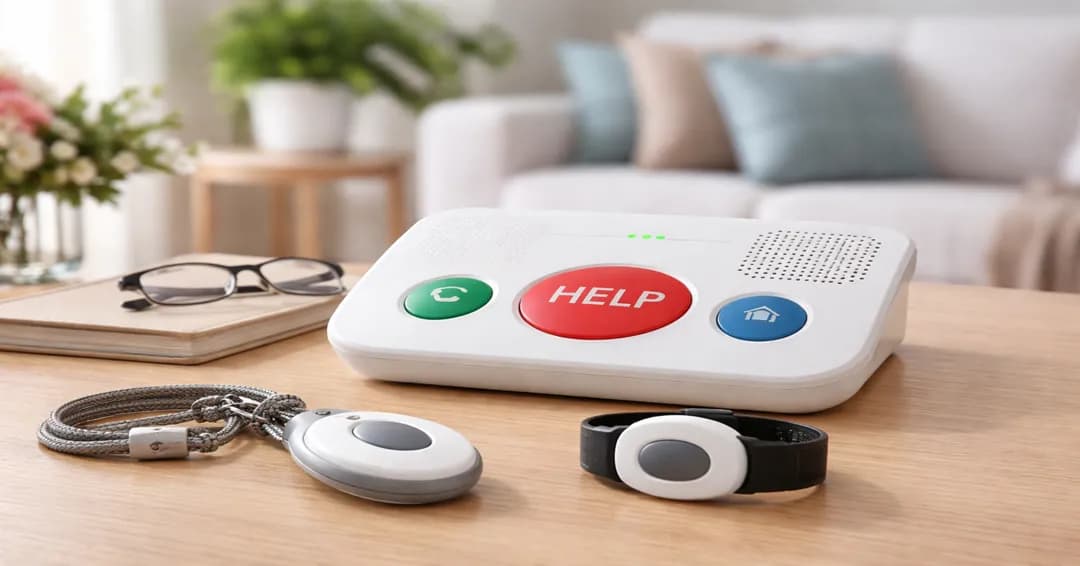
Personal Emergency Response System Market Trends & Forecast
According to a research study published by Knowledge Sourcing Intelligence (KSI), the personal emergency response system market will expand from USD 8.1 billion in 2026 to USD 10.2 billion in 2031 at a CAGR of 4.7% during the forecast period.
The personal emergency response system market has been seeing continuous growth, which is mainly due to the growing elderly population, the rise in chronic diseases, and the increasing preference for independent living. Typically, PERS devices comprise wearable emergency buttons, fall detection sensors, and GPS-enabled mobile units that help users get help quickly during a medical or safety emergency. Due to the incorporation of advanced technologies like artificial intelligence, Internet of Things (IoT), and mobile connectivity, the market has undergone a major transformation, allowing live monitoring, predictive alerts, and more efficient communication with caregivers and emergency services. Greater focus on personal safety, especially among old people living alone, is pushing the usage of such systems in both developed and developing regions.
Request a free sample copy or view the report summary: Personal Emergency Response System Market Report
Personal Emergency Response System Market Report Highlights
The mobile segment is the fastest growing in the PERS market because it has the feature to offer protection not only at home but also outside the home environment. In contrast to the conventional landline systems, mobile PERS devices operate on cellular networks and GPS technology. Therefore, users can remain connected in case of emergency, while traveling, doing exercise, or simply doing outdoor activities. Changing lifestyle preference of the traditional elderly population from dependent and inactive to active and independent is one of the key reasons driving the demand for this segment.
Fall detection has been identified as the fastest-growing segment within the market. This trend is primarily attributed to an increased awareness of the risks of falls among elderly persons and the essential requirement for an immediate response when such incidents happen. These kinds of systems are based on the use of sophisticated sensors, accelerometers, and AI algorithms being capable of detecting a fall and at the same time sending an alarm without the user's intervention. This option is very helpful for people who are unconscious or unable to activate the emergency buttons by themselves.
Among various segments, home care is growing the fastest, as increasingly, patients want to receive treatment in their own homes instead of hospitals or nursing homes. Factors leading to this trend include the growing healthcare costs, hospitals running out of capacity, and the worldwide move towards patient-strategy models of care. PERS part in home care is substantial since they deliver constant surveillance, quick response in emergencies, and are a source of comfort not only for the users but also for their caregivers.
The Personal Emergency Response System (PERS) market in the Asia Pacific region is projected to grow at the fastest pace due to rapid demographic and healthcare changes. The growing population of elderly people, mainly in Japan, China, and India, is leading to a higher requirement for monitoring and emergency response devices. Besides this, increasing consciousness about one's safety and desire for independent living are the major factors that contribute to spreading acceptance of PERS in urban and semi-urban areas.
Report Coverage
Report Metric | Details |
|---|---|
Total Market Size in 2026 | USD 8.1 billion |
Total Market Size in 2031 | USD 10.2 billion |
Growth Rate | 4.7% |
Drivers |
|
Restraints |
|
Segmentation | Type, End User, Geography |
Companies |
|
Personal Emergency Response System Market Growth Drivers and Restraints
Growth Drivers:
Rising Aging Population: The increasing worldwide elderly population, especially those living alone, is a prime factor for PERS growth. Elder people are more prone to health crises, which naturally leads to a higher demand for prompt response mechanisms. Japan's Ministry of Internal Affairs and Communications reported that in 2024, the nation had 36.25 million elderly people aged 65 and above, marking the highest number in history and representing 29.3% of the total population. This percentage is expected to increase to 34.8% by 2040 and 36.3% by 2045.
Increasing Prevalence of Chronic Diseases: The rise in conditions such as cardiovascular diseases, diabetes, and mobility impairments is driving demand for continuous monitoring and emergency assistance systems.
Restraints:
Privacy and Data Security Concerns: Personal Emergency Response System (PERS) devices frequently gather personal and health-related information, such as location and emergency activities, and transmit it to other parties. This raises serious concerns around data privacy, unauthorized access, and potential misuse of information. Due to the rise in cyber-attacks and, in some places, the absence of a law protecting data at a general level, users and attendants might be reluctant to start using these systems, particularly when there is low trust in digital healthcare technologies.
Personal Emergency Response System Market Key Development
Collaboration: In October 2025, Connect America and Health Impact Alliance announced the launch of LifelineConnect, a collaboration aimed at evolving the Lifeline brand into a connected health ecosystem featuring clinical triage and AI analytics.
Collaboration: In August 2025, Medical Guardian collaborated with AmeriHealth Caritas to deliver PERS solutions and support member safety, health, and preventive care services for eligible members.
Personal Emergency Response System Market Segmentation
Knowledge Sourcing Intelligence has segmented the personal emergency response system market based on technology, type, end-user, and region:
Personal Emergency Response System Market, By Type
Landline
Mobile
Standalone
Personal Emergency Response System Market, By Technology
GPS-Based Systems
Cellular-Based Systems
RF-Based Systems
Fall Detection Technology
Others
Personal Emergency Response System Market, By End-User
Hospitals and Clinics
Specialized Services Facilities
Homecare
Personal Emergency Response System Market, By Region
North America
USA
Canada
Mexico
Europe
United Kingdom
Germany
France
Italy
Others
Asia Pacific
China
India
Japan
South Korea
Thailand
Others
South America
Brazil
Argentina
Others
Middle East and Africa (MEA)
Saudi Arabia
UAE
Others
Personal Emergency Response System Market Key Players
Bay Alarm Medical
Medical Guardian LLC
Lifeline
Connect America
Alert One Services, LLC
Guardian Alarm
ADT LLC
MobileHelp
LifeFone Medical Alert Services
LifeStation Inc.
Need specialized data cuts or competitive intelligence?
Our analyst team provides bespoke market sizing, supplier audits, and country-level feasibility reports tailored to your enterprise roadmap.
Speak With an Industry Analyst →Ask an Industry Analyst
Have questions regarding this briefing or market projections? Inquire with our sector lead.
Related Press Releases
View All →
ADC Manufacturing & CDMO Market is expected to reach USD 10.49 billion by 2031
Aug 7, 2026
Lifestyle-Associated Cancer Epidemiology Market is expected to reach USD 13.12 billion by 2031
Aug 5, 2026
Psycho-Oncology Digital Health Market is anticipated to surpass USD 290.01 million in 2031 at a CAGR of 8.5%
Jul 30, 2026
Intratumoral Injection Therapy Market is expected to reach USD 630.39 million by 2031
Jul 24, 2026
Palliative Care in Oncology Market is expected to reach USD 244.1 billion by 2031
Jul 22, 2026More Press Releases
Oncology Drug Resistance Testing Market is projected to reach USD 3.41 billion in 2031 at a CAGR of 6.6 %
The oncology drug resistance testing market is expanding due to rising cancer prevalence, increasing drug resistance, and growing adoption of precision oncology. Advances in NGS-based testing, companion diagnostics, and targeted therapies, alongside FDA approvals and investments in personalized medicine, are accelerating demand for effective resistance monitoring across hospitals and clinical diagnostics worldwide.
TROP-2 Targeted Therapy Market is anticipated to surpass USD 3.29 billion in 2031 at a CAGR of 8.6 %
The TROP-2 Targeted Therapy market is expanding rapidly due to increasing precision oncology adoption, rising cancer prevalence, and growing use of antibody-drug conjugates. North America leads the market, while Asia Pacific shows the fastest growth. Continuous clinical trials, regulatory approvals, and strategic collaborations are accelerating innovation and commercial adoption worldwide.
Second Primary Cancer Prevention Market is expected to reach USD 24.7 billion by 2031
The Second primary cancer prevention refers to strategies aimed at reducing the risk of developing a new, unrelated cancer in individuals with a prior cancer diagnosis. Growing cancer survivorship, advances in treatment, and increasing awareness of long-term health outcomes have heightened the importance of prevention and surveillance programs. Key approaches include routine screening, genetic risk assessment, lifestyle modification, and long-term follow-up care. Government agencies and healthcare organisations increasingly emphasise survivorship care plans and evidence-based screening protocols to detect new malignancies at earlier stages. Continued investments in early detection technologies and personalised risk assessment are expected to support advancements in second primary cancer prevention.