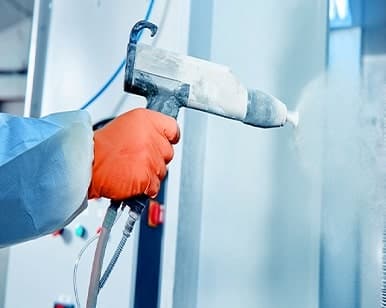
The global antimicrobial coating market is expected to grow at a compound annual growth rate of 12.05% over the analyzed period to reach a market size of US$8.914 billion in 20...
The global antimicrobial coating market is expected to grow at a compound annual growth rate of 12.05% over the analyzed period to reach a market size of US$8.914 billion in 2026. The market stood at US$4.020 billion in 2019.
Antimicrobial coatings comprise an invisible coating that is applied on surfaces to curb the growth of micro-organisms on them. These coatings are widely used in the medical and healthcare sectors, textile industries, food and beverage sector, and HVAC Systems. The increasing awareness among the people to adopt hygiene and cleanliness is expected to drive up the market growth in the coming years. Also, the spread of Healthcare-associated Infections is expected to drive up the market in coming years.
Antimicrobial Coating provides several benefits which include restricting the growth of pathogens and microbes like bacteria, fungi, viruses, etc. Antimicrobial Coatings serve an important role to sanitize places and surfaces like hospitals that witness a threat of microbial breakdown. As long as the transparent coat remains effective, it not just protects the surface from microbes but also increases the life span of the surfaces.
Industrial Application of Antimicrobial Coating
Antimicrobial Coatings are widely used in the Healthcare Industry to control the spread of infection in hospitals and healthcare units. Healthcare-Associated Infections (HAIs) include ventilator-associated pneumonia, bloodstream infections, urinary tract infections, etc. that are associated with the devices used in medical procedures like ventilators or catheters. The infections that spread at surgery sites are known as surgical site infections. HAI Data from the Centers for Disease Control and Prevention reveals that on a given day around 1 in 31 hospital patients suffers from at least 1 Healthcare-Associated Infection. According to European Center for Disease Prevention and Control, more than 4 million people suffer from HAI each year and around 37,000 people die each year after acquiring them. Medical Devices serve as a breeding ground for many bacteria and viruses and their disinfection becomes difficult with time. With the threat of infection, hospitals and other healthcare units apply antimicrobial coatings on their medical instruments to sanitize and prevent the growth of germs and bacteria on them.
Besides that, Antimicrobial coatings are being widely used in paints to restrict the growth of pathogens and associated germs on the facilities. Besides providing the protection they serve as a primer coating to walls thus giving a dual advantage.
Antimicrobial Coatings are also used to sanitize the high touch areas like door handles, counters, HVAC Vents, and high microbe containing objects like gloves, carpets, and masks.
Antimicrobial Coatings are being widely adopted in facilities like schools, public residential buildings, offices, restaurants, etc. to restrict the spread of microbes. In ventilation systems, Air Conditioners, etc. they are used to maintain indoor air quality.
To maintain hygiene in the food and beverage sector, the adoption of antimicrobial coatings has become quite common. In the textile industry, it is widely used to maintain the texture, quality, and hygiene standards of the clothes for the long term.
Warnings Associated With the Antimicrobial Coatings
Although, antimicrobial coatings provide long-term safety to surfaces by restricting the growth of microbes on them its excessive application comes with few warnings as well. The application of antimicrobial coatings on fabrics can increase water contamination while washing which makes it harmful to the environment. The chemicals present in them like silver, copper, zinc, titanium dioxide, etc., when exposed to water bodies, can be consumed by fishes, and have toxic effects on algae, etc. which makes it unsuitable for aquatic life. Also, there’s an increased chance that the active nanoparticles present in them can aid in the formation of some mutated and chemical-resistant microbe.
Regional and Geographical Insights
With the high rate of healthcare investment being done in the state, North America is witnessed to expect a prominent growth in the antimicrobial coating market. The technological advancement and high expenditure by the government on healthcare facilities are expected to boost up the antimicrobial coating market here. The data available from World Bank reveals that in 2018, the healthcare expenditure of the United States stood at 16.89% of G.D.P. which was way higher than the world average of 9.856%. OECD Data represents that 2019 Health Spending in the United States was the highest (10,948 US Dollars/ capita) with the highest share attributed by the government sector.
Also, with the growing rate of infrastructure development in the Asia-Pacific region, the growth of the antimicrobial coating market can be significant in the region. Also, the antimicrobial coating market can take the advantage of the high prevalence of healthcare-associated infections in the region and can expand its market in Asia-Pacific as well.
COVID-19 Impact
The outburst of the covid pandemic witnessed a rise in the adoption of healthy and clean practices to promote hygiene. With this, the adoption of antimicrobial coatings became significant across industries. Healthcare Industry including hospitals, healthcare units, etc. across the economies highly adopted the use of antimicrobial coatings to limit the spread of disease and virus by a certain limit on the surface areas. Apart from the adoption of masks, sanitizers, the use of antimicrobial coating became a sign of a healthy environment and infrastructure.
Antimicrobial Coatings Market Scope:
| Report Metric | Details |
| Market Size Value in 2019 | US$4.020 billion |
| Market Size Value in 2026 | US$8.914 billion |
| Growth Rate | CAGR of 12.05% from 2019 to 2026 |
| Base Year | 2019 |
| Forecast Period | 2021–2026 |
| Forecast Unit (Value) | USD Billion |
| Segments Covered | Type, Application, And Geography |
| Regions Covered | North America, South America, Europe, Middle East and Africa, Asia Pacific |
| Companies Covered | BASF SE, AkzoNobel, DuPont de Nemours, Royal DSM, Specialty Coating Systems, Nippon Paint, PPG Industries, The Sherwin-Williams Company, Axalta Coating Systems, RPM International, Burke Industrial Coatings LLC |
| Customization Scope | Free report customization with purchase |
Have questions?
More Blogs
Clinical Decision Support Diagnostic Systems Market: Why the U.S. Healthcare System Is Quietly Rebuilding Diagnosis Around Algorithms
The U.S. clinical decision support diagnostic systems market is rapidly evolving as hospitals adopt AI-driven tools to manage rising diagnostic complexity, workforce shortages, and operational pressures. Growth is fueled by demand for faster, accurate diagnoses, workflow efficiency, interoperability, and value-based care, while physician trust, cybersecurity, and regulatory compliance increasingly determine long-term market success.
Top U.S. Healthcare Industry Trends to Watch in 2026 for the Global Healthcare Market
The global healthcare industry in 2026 is shifting toward AI-driven efficiency, stronger cybersecurity, outpatient care expansion, and domestic pharmaceutical manufacturing. U.S. healthcare leaders are prioritizing workforce support, operational resilience, value-based care, and integrated digital systems to improve patient outcomes while controlling costs.
How AI Is Reshaping the American Healthcare Industry
The U.S. healthcare industry is rapidly integrating artificial intelligence across clinical, administrative, and pharmaceutical operations. AI is improving diagnostics, automating workflows, reducing clinician burden, accelerating drug discovery, and enhancing personalized care. With strong adoption by hospitals and tech companies, AI is transforming healthcare delivery while driving the U.S. AI healthcare market toward significant growth by 2031.