A wireless local area network WLAN controller is a network equipment for managing several access points under it. It performs this task especially so as to ensure the appropriate configuration as well as running of each of these access points towards an effective...
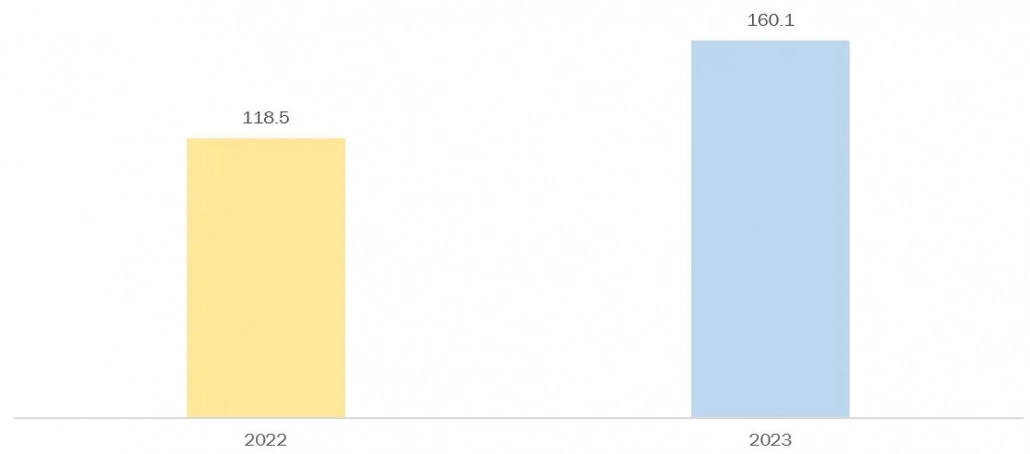 Source: Ericsson
In addition, the rising number of devices linked to business networks has resulted in a significant increase in the demand for high-speed data in recent years. Employees now access company data and apps from a variety of devices, necessitating reliable and fast data transmission capabilities, which enterprise WLAN solutions can provide. Data sharing and transfer between standalone control systems and other devices—such as sensors, thermostats, and smart lighting fixtures—that require wireless LAN controllers for network management are now feasible thanks to the Internet of Things. An Internet-based server network that can handle, store, and process important sources of data regarding industrial performance and operations is what cloud computing is all about. Technological advancements are driving the need for wireless LAN controllers that can process large amounts of data and extract valuable insights.
Furthermore, a significant factor propelling the market's expansion is the growing emphasis placed by organizations on developing a digital and wireless workplace within premise mobility. Additionally, the growing BYOD and digital transformation trends are prompting businesses to think about expanding their enterprise campuses, which will support the market's expansion in the upcoming year.
Key Developments
Source: Ericsson
In addition, the rising number of devices linked to business networks has resulted in a significant increase in the demand for high-speed data in recent years. Employees now access company data and apps from a variety of devices, necessitating reliable and fast data transmission capabilities, which enterprise WLAN solutions can provide. Data sharing and transfer between standalone control systems and other devices—such as sensors, thermostats, and smart lighting fixtures—that require wireless LAN controllers for network management are now feasible thanks to the Internet of Things. An Internet-based server network that can handle, store, and process important sources of data regarding industrial performance and operations is what cloud computing is all about. Technological advancements are driving the need for wireless LAN controllers that can process large amounts of data and extract valuable insights.
Furthermore, a significant factor propelling the market's expansion is the growing emphasis placed by organizations on developing a digital and wireless workplace within premise mobility. Additionally, the growing BYOD and digital transformation trends are prompting businesses to think about expanding their enterprise campuses, which will support the market's expansion in the upcoming year.
Key Developments
- In September 2023, Huawei announced the launch of three Product Portfolios for the Commercial Market to Build High-Quality Connections, including the Huawei Zero-Roaming Distributed Wi-Fi solution, the Huawei High-Quality Simplified Data Center Network Solution, and the High-Quality SME Office, in recognition of the large number of SMEs that contribute to economic development. To assist partners in gaining more clients and prospering in the commercial market, Huawei will create a wider range of products and services that are more marketed. A special experience assurance card is included with the Huawei CloudEngine S8700 to ensure excellent voice and video quality. It preferentially guarantees important voice and video conferences held by small and medium-sized businesses (SMEs) in real time. This guarantees seamless video conferences with a live experience for up to 10,000 users.
- In October 2022, At the India Mobile Congress, IO by HFCL unveiled the two new devices (indoor and outdoor versions) and introduced the Wi-Fi 7 enterprise-grade Wi-Fi access points. The new access points run Qualcomm's Networking Pro platform and are optimized for open-source networking. They are also prepared for OpenWiFi.
| Subscribe Us |
Have questions?
More Blogs
Clinical Decision Support Diagnostic Systems Market: Why the U.S. Healthcare System Is Quietly Rebuilding Diagnosis Around Algorithms
The U.S. clinical decision support diagnostic systems market is rapidly evolving as hospitals adopt AI-driven tools to manage rising diagnostic complexity, workforce shortages, and operational pressures. Growth is fueled by demand for faster, accurate diagnoses, workflow efficiency, interoperability, and value-based care, while physician trust, cybersecurity, and regulatory compliance increasingly determine long-term market success.
Top U.S. Healthcare Industry Trends to Watch in 2026 for the Global Healthcare Market
The global healthcare industry in 2026 is shifting toward AI-driven efficiency, stronger cybersecurity, outpatient care expansion, and domestic pharmaceutical manufacturing. U.S. healthcare leaders are prioritizing workforce support, operational resilience, value-based care, and integrated digital systems to improve patient outcomes while controlling costs.
How AI Is Reshaping the American Healthcare Industry
The U.S. healthcare industry is rapidly integrating artificial intelligence across clinical, administrative, and pharmaceutical operations. AI is improving diagnostics, automating workflows, reducing clinician burden, accelerating drug discovery, and enhancing personalized care. With strong adoption by hospitals and tech companies, AI is transforming healthcare delivery while driving the U.S. AI healthcare market toward significant growth by 2031.