Food Certification Market Size & Growth According to a research study published by Knowledge Sourcing Intelligence (KSI), the food certification m...
Food Certification Market Size & Growth
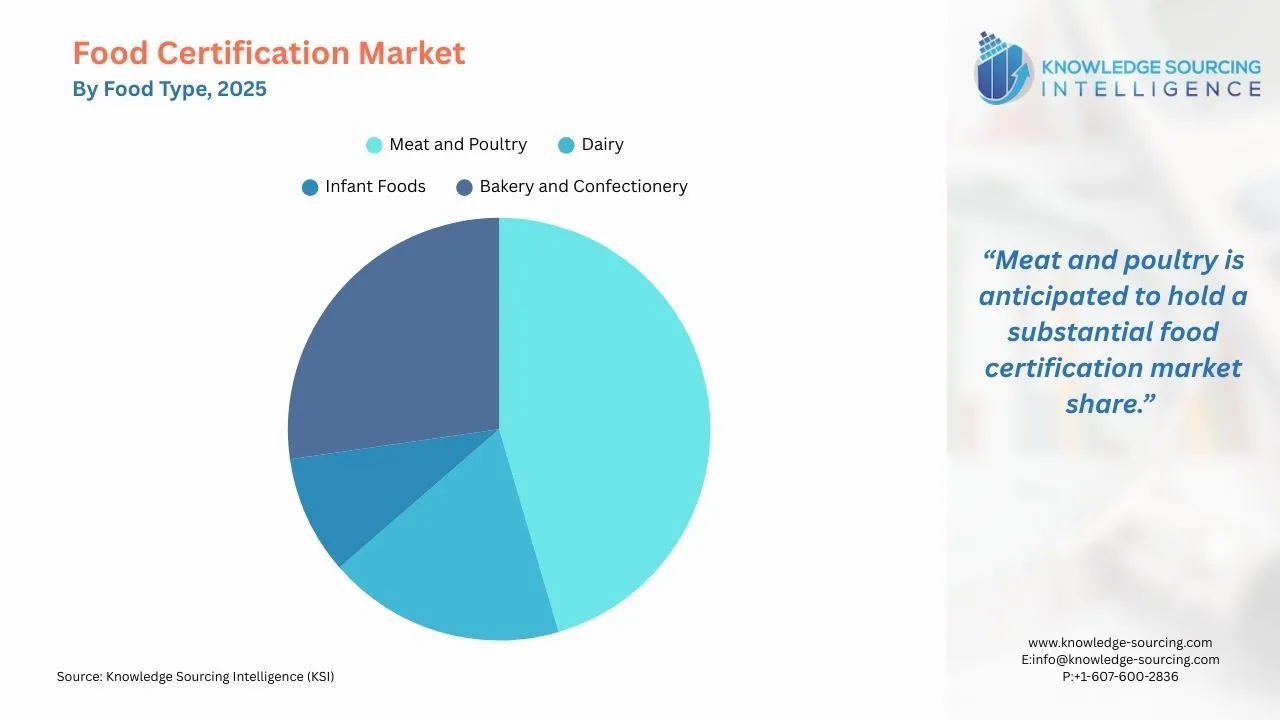
According to a research study published by Knowledge Sourcing Intelligence (KSI), the food certification market will expand from USD 8.284 billion in 2025 to USD 10.616 billion in 2030 at a CAGR of 5.09% during the forecast period.The process of confirming that goods, procedures, or systems in the food supply chain adhere to recognized safety standards based on several food safety standard types is known as food certification. It suggests that following a series of tests, inspections, and audits, the food product is deemed safe for eating and conforms with the relevant food standards. key Growing concerns about food safety among governments and food corporations throughout the world are one of the major causes supporting the expansion of the food certification market. The WHO takes into account the development of good health by producing enough safe and nourishing food for the populace. According to the group, contaminated food that contains dangerous bacteria, viruses, parasites, or chemicals can lead to over 200 ailments. Over the next five years, the food certification market is expected to be positively driven by stringent government rules pertaining to the consumption of nutritious food and the existence of high requirements in the food applications segment. Food manufacturers are under more pressure to make their products safer and cleaner for human consumption as a result of the rising number of foodborne illness incidents. Over the course of the projection year, this is further boosting the business growth prospects of the market participants. Furthermore, eating tainted food causes illness in one out of ten individuals and about 420,000 deaths annually. Thus, food certification is essential for guaranteeing the food's safety and cleanliness, which supports the growth of the food certification market throughout the forecast period. The Food Certification market includes a wide range of types including ISO 22000, BRC, IFS, Halal, Kosher, and others. By Food, the market is segmented into Meat and Poultry, Dairy, Infant Foods, Bakery and Confectionery, and others. ? View a sample of the report or purchase the complete study at: Food Certification Market Report
Food Certification Market Report Highlights
- During the projection period, the halal certification industry is expected to develop significantly by certification type. The growing demand for food with halal certification is another factor driving this market's expansion. Furthermore, stringent approvals pertaining to the import of halal meats, particularly in the Middle East, will bolster industry expansion in the upcoming years.
- Due in large part to the huge rise in meat product consumption, the meat and poultry industry is expected to maintain a high market share over the next five years and is expected to grow significantly over the following few years.
- Asia-Pacific The market for food certification is anticipated to expand significantly in the Asia Pacific area. The food processing industry in India is expected to grow from US$866 billion in 2022 to US$1,274 billion in 2027. The population increase, shifting lifestyles, and changing eating habits brought on by increased urbanization are the main drivers of the expansion.
Report Coverage:
| Report Metric | Details |
| Food Certification Market Size in 2025 | US$8.284 billion |
| Food Certification Market Size in 2030 | US$10.616 billion |
| Growth Rate | CAGR of 5.09% |
| Drivers |
|
| Restraints |
|
| Segmentation |
|
| List of Major Companies in the Food Certification Market |
|
Food Certification Market Growth Drivers vs. Challenges
Drivers:- Technological Developments in Food Certification and Testing: The influence of technologies like blockchain, AI and, IoT is helping food traceability and certification verification. Digital certification platforms are helping small and medium enterprises (SMEs) meet the international food safety standards. Also, new testing technologies, such as rapid tests and automated testing equipment will assist reduce the time and cost of certification and thereby improve the sectors uptake.
- Development of the Processed and Packaged Food Sector: The world is experiencing rapid growth in packaged, ready-to-eat, and processed food due to urbanization and urban lifestyles. These products are at greater risk of contamination because packaged, ready-to-eat, and processed food products can be at higher risk of contamination during handling and shipment, so it is important to get certified to confirm the safety of food products. Major food manufacturers and retailers require certifications for suppliers to help mitigate risks and stand behind those they are selling.
- Absence of Common International Standards: Food certification regulations differ significantly from country-to-country, as well as region-to-region, making it very challenging for enterprises to simultaneously meet multiple requirements in disparate jurisdictions. Without a system that connects all jurisdictions across the globe, people experience systematic auditing, duplicate testing, and excess paperwork, all of which results in inherent operational inefficiencies. Problems are routinely encountered by exporters when a product certified in one country can be sold in another country without additional oversight or certification, are perceived to be less thorough in another jurisdiction, thus limiting the ability to trade across borders.
- Farmers and Small Producers Lack of Awareness: Many small-scale farmers and food producers are unaware of the requirements and advantages of certification, particularly in developing nations. They are unable to meet compliance standards due to limited access to resources, training, and support. This impacts overall market penetration by increasing the disparity between certified large corporations and uncertified local producers.
Food Certification Market Developments
- Company Initiative: In June 2025, SGS launched the PLEDGE on Food Waste Certification, a premier worldwide certification program intended to assist food service providers in lowering food waste, increasing operational effectiveness, and showcasing their dedication to sustainability.
- New Product Launch: In March 2025, According to Form-I, the Vegan Foods Amendment Regulations, which were drafted by the FSSAI, mandate that imports of vegan foods bear a certificate from the recognized authority of the exporting nation.
Food Certification Market Segmentation
Knowledge Sourcing Intelligence has segmented the food certification market based on certification type, food type, and region: Food Certification Market, By Certification Type- ISO 22000
- BRC
- IFS
- Halal
- Kosher
- Others
- Meat and Poultry
- Dairy
- Infant Foods
- Bakery and Confectionery
- Others
- North America
- USA
- Canada
- Mexico
- South America
- Brazil
- Argentina
- Others
- Europe
- United Kingdom
- Germany
- France
- Italy
- Spain
- Others
- Middle East and Africa
- Saudi Arabia
- UAE
- Others
- Asia Pacific
- China
- Japan
- India
- South Korea
- Australia
- Others
Food Certification Market Key Players
- SGS SA
- Intertek Group plc
- Bureau Veritas
- Kiwa NV
- DNV GL
- TÜV SÜD
- Eurofins Scientific
- The British Standards Institution
- TQ Cert Services Pvt. Limited
- NSF International
About Knowledge Sourcing Intelligence (KSI)
Knowledge Sourcing Intelligence (KSI) is a market research and consulting firm headquartered in India. Backed by seasoned industry experts, we offer syndicated reports, customized research, and strategic consulting services. Our proprietary data analytics framework, combined with rigorous primary and secondary research, enables us to deliver high-quality insights that support informed decision-making. Our solutions empower businesses to gain a competitive edge in their markets. With deep expertise across ten key sectors, including ICT, Chemicals, Semiconductors, and Healthcare, we effectively address the diverse needs of our global clientele.Have questions?
More Press Releases
Lifestyle-Associated Cancer Epidemiology Market is expected to reach USD 13.12 billion by 2031
The worldwide market for lifestyle-associated cancer epidemiology is expected to expand rapidly, owing to the rising global awareness of modifiable risk factors such as tobacco use, obesity, poor diet, alcohol consumption, and physical inactivity, which together contribute significantly to cancer incidence. Health organizations, along with research institutions, are investing in enhanced surveillance, behavioral risk monitoring, cancer registries, and prevention strategies to address the growing burden of preventable cancers. In recent years, the World Health Organization and several national bodies have emphasized data-driven epidemiology. These initiatives support targeted interventions, policy measures, and screening programs. Additionally, the widespread adoption of digital epidemiology tools, precision prevention approaches, and AI-powered analytics is fueling the demand for robust epidemiology infrastructure worldwide.
Psycho-Oncology Digital Health Market is anticipated to surpass USD 290.01 million in 2031 at a CAGR of 8.5%
The psycho-oncology digital health market is expanding as healthcare providers increasingly integrate digital mental health solutions into cancer care. Growing demand for AI-driven platforms, digital cognitive behavioral therapy, telehealth, and mobile applications is improving access to psychological support. North America leads the market, while Asia Pacific is expected to witness the fastest growth.
Intratumoral Injection Therapy Market is expected to reach USD 630.39 million by 2031
The worldwide market for Intratumoral Injection Therapy is expected to experience substantial growth in the market due to the increasing demand for localized cancer treatments that are essential in enhancing therapeutic efficacy while also minimizing systemic toxicity. Intramural injection therapy is often involved with direct administration of therapeutic agents into tumors, which enables high local drug concentrations and targets immune activation. Growing interest in gene therapies, cancer immunotherapy, and on-politic viruses, including cytokine-based therapies are also accelerating market expansion.