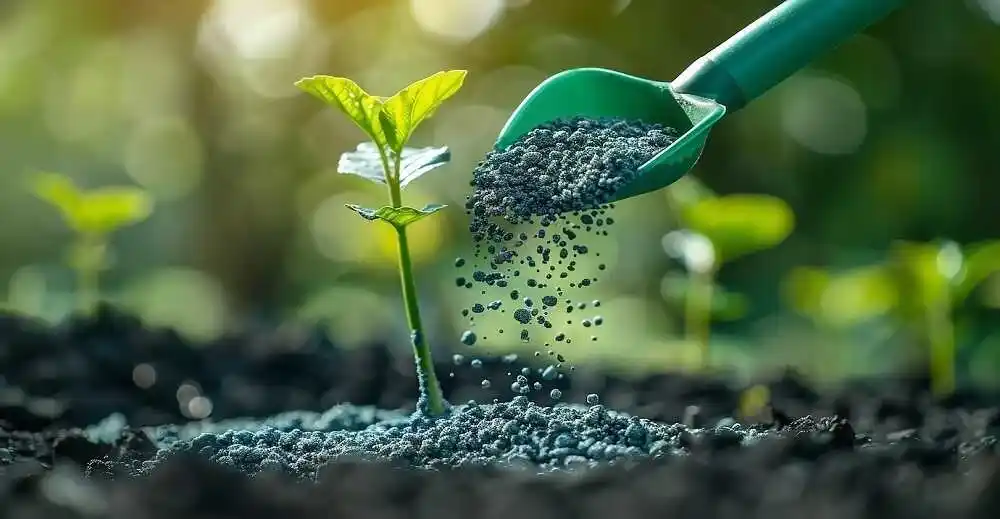
A smart fertilizer can be described as a type of bio-composed nanomaterial, which contains nutrients and has the capability to release those components on demand by the farmers. The smart fertilizers allow a controlled deployment of nutrients and other composites to the soil. Smart fertilizers allow...
 Source: National Integrated Drought Information System
2. Increase in the popularity of sustainable agriculture
Similarly, the growth in sustainable agricultural activities across the globe is also expected to expand the market demand for smart fertilizers in the precision agricultural sector. The use of precision agricultural techniques, allows the farmers to integrate new technologies, and procedures as per the change in the environmental conditions. Precision farming integrated with smart fertilizers, also helps in reducing the cost of agricultural operations, as it reduces the use of components used for farming, like reducing labor costs, and fertilizers costs. It also improves the sustainability of the farmland by reducing the use of water in agricultural areas.
With the decrease in global agricultural land, the demand for more sustainable farming techniques, which can offer an improved yield of the crops, is expected to grow. The United States Department of Agriculture (USDA) in its report stated that the total number of farms and farmlands in the US has witnessed a constant decline, over the past few years, with an increase in the demand for agricultural products. The organization stated that in 2021, the nation had 1,959,550 farms, which reduced to 1,900,650 farms in 2022, and 1,894,950 in 2023. Similarly, the total land in farms also decreased from 888,800 thousand acres in 2021 to 879,660 thousand acres in 2022. In 2023, the total area of farmland in the nation was recorded at 878,560 thousand acres.
Key Developments
Source: National Integrated Drought Information System
2. Increase in the popularity of sustainable agriculture
Similarly, the growth in sustainable agricultural activities across the globe is also expected to expand the market demand for smart fertilizers in the precision agricultural sector. The use of precision agricultural techniques, allows the farmers to integrate new technologies, and procedures as per the change in the environmental conditions. Precision farming integrated with smart fertilizers, also helps in reducing the cost of agricultural operations, as it reduces the use of components used for farming, like reducing labor costs, and fertilizers costs. It also improves the sustainability of the farmland by reducing the use of water in agricultural areas.
With the decrease in global agricultural land, the demand for more sustainable farming techniques, which can offer an improved yield of the crops, is expected to grow. The United States Department of Agriculture (USDA) in its report stated that the total number of farms and farmlands in the US has witnessed a constant decline, over the past few years, with an increase in the demand for agricultural products. The organization stated that in 2021, the nation had 1,959,550 farms, which reduced to 1,900,650 farms in 2022, and 1,894,950 in 2023. Similarly, the total land in farms also decreased from 888,800 thousand acres in 2021 to 879,660 thousand acres in 2022. In 2023, the total area of farmland in the nation was recorded at 878,560 thousand acres.
Key Developments
- In April 2024, Nitricity Inc., a global producer of nitrogen fertilizers, announced the launch of its field trial of its new low-emission, climate-smart nitrogen fertilizer, on the almond trees in California.
Have questions?
More Thought Articles
How EV Charger Manufacturers Can Capitalize on India’s Home Charging Revolution
India’s residential EV charging opportunity is expanding as policy support, EV adoption, and private parking infrastructure develop. Manufacturers can capture value beyond AC chargers through installation, smart charging, load management, solar integration, software, and after-sales services. Housing societies, automakers, and property developers offer scalable routes to residential charging customers.
Second-Life EV Battery Market in India: What Is Driving Demand from Manufacturers?
India’s second-life EV battery market is gaining relevance as electric vehicle adoption expands and batteries retain useful capacity after automotive service. Growing stationary-storage demand, battery data, refurbishment capabilities, EPR obligations, and critical-mineral policies are encouraging manufacturers to extend battery value through reuse before eventual recycling within India’s emerging circular battery ecosystem.
The Rise of Locally Manufactured Battery Separators in India’s EV Ecosystem
India’s battery industry is progressing from pack assembly toward domestic cell and material manufacturing, creating opportunities for lithium-ion battery separators. Policy support, ACC capacity expansion and R&D initiatives are strengthening the ecosystem. However, technical complexity, manufacturing yields, qualification requirements and economics mean localisation will likely advance gradually through coatings, testing and finishing.