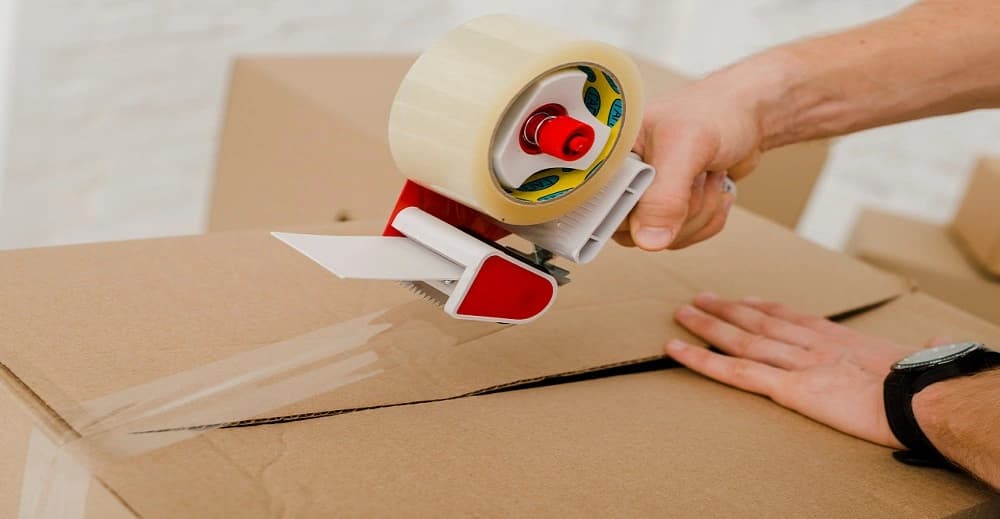
PVC packing straps are a kind of material that can be used to combine, hold, secure, or hold different objects together. These straps are sometimes referred to as strapping in the packing industry. PVC packing strap sales are also expected to rise sharply in the construction, paper, and cotton indus...
 Source: Census. gov
Furthermore, the plastic straps market's main growth drivers have been identified as the expanding packaging, logistics, and construction sectors. The demand for logistics and transport services has risen significantly due to the fast growth of industrialization and commercialization in emerging global areas. Strapping materials are largely used at production sites to hold or secure items when moving them to retail points.
Moreover, Strapping has found its most widespread application in packaging. Both industrial logistics and storage rely heavily on packaging, hence, the increasing demand of plastic straps in these areas. In addition to enhancing environmental stability during outdoor storage, UV-stable grades of plastic straps can be utilized. Therefore, this will help accelerate the growth of the division’s income even more since it surpasses similar items by operating more effectively and being cheaper. For instance, Mosca offers PET PVC straps that are both highly tensile and tear-resistant. Depending on their width, they can support weights ranging from 185 to 580 kg and effectively absorb shocks during transit. PET strapping is available in widths ranging from 9.5 to 15.5 millimeters and is manufactured with tight tolerances. It can be easily recycled after use because it is composed entirely of recyclable plastic bottles. It has excellent load security due to its high stability. Its consistently high quality assures a high machine availability.
Key Developments
Source: Census. gov
Furthermore, the plastic straps market's main growth drivers have been identified as the expanding packaging, logistics, and construction sectors. The demand for logistics and transport services has risen significantly due to the fast growth of industrialization and commercialization in emerging global areas. Strapping materials are largely used at production sites to hold or secure items when moving them to retail points.
Moreover, Strapping has found its most widespread application in packaging. Both industrial logistics and storage rely heavily on packaging, hence, the increasing demand of plastic straps in these areas. In addition to enhancing environmental stability during outdoor storage, UV-stable grades of plastic straps can be utilized. Therefore, this will help accelerate the growth of the division’s income even more since it surpasses similar items by operating more effectively and being cheaper. For instance, Mosca offers PET PVC straps that are both highly tensile and tear-resistant. Depending on their width, they can support weights ranging from 185 to 580 kg and effectively absorb shocks during transit. PET strapping is available in widths ranging from 9.5 to 15.5 millimeters and is manufactured with tight tolerances. It can be easily recycled after use because it is composed entirely of recyclable plastic bottles. It has excellent load security due to its high stability. Its consistently high quality assures a high machine availability.
Key Developments
- In October 2023, Repsol and Signode introduced a ready-to-use lashing for high-tenacity applications that incorporates 30% recycled content. The lashing is made from polypropylene (PP). It falls under the Reciclex umbrella owned by Repsol. The manufacturing calls for domestic plastic waste which has been mechanically recycled following its use, thereby reducing the carbon footprint of the product by 9%. Earlier in 2023, Repsol invested €26 million to install a new Reciclex production line at its Puertollano Industrial Complex in Spain.
- In April 2022, Teufelberger, an Austrian packaging company, announced that it was acquiring Maillis Plastics Solutions, a Polish packaging company, to expand its business operations and, in turn, attract a wider clientele. The acquisition also aims to secure high-performance strapping capabilities and expand the plastics processing division.
| Subscribe Us |
Have questions?
More Thought Articles
How EV Charger Manufacturers Can Capitalize on India’s Home Charging Revolution
India’s residential EV charging opportunity is expanding as policy support, EV adoption, and private parking infrastructure develop. Manufacturers can capture value beyond AC chargers through installation, smart charging, load management, solar integration, software, and after-sales services. Housing societies, automakers, and property developers offer scalable routes to residential charging customers.
Second-Life EV Battery Market in India: What Is Driving Demand from Manufacturers?
India’s second-life EV battery market is gaining relevance as electric vehicle adoption expands and batteries retain useful capacity after automotive service. Growing stationary-storage demand, battery data, refurbishment capabilities, EPR obligations, and critical-mineral policies are encouraging manufacturers to extend battery value through reuse before eventual recycling within India’s emerging circular battery ecosystem.
The Rise of Locally Manufactured Battery Separators in India’s EV Ecosystem
India’s battery industry is progressing from pack assembly toward domestic cell and material manufacturing, creating opportunities for lithium-ion battery separators. Policy support, ACC capacity expansion and R&D initiatives are strengthening the ecosystem. However, technical complexity, manufacturing yields, qualification requirements and economics mean localisation will likely advance gradually through coatings, testing and finishing.