Position Sensor Market Overview A position sensor is a type of electronic sensor that is used to detect the position of any object. The position sensors offer the user a wide range of applications, which include usage i...

Position Sensor Market Overview
A position sensor is a type of electronic sensor that is used to detect the position of any object. The position sensors offer the user a wide range of applications, which include usage in structural testing, automotive testing, throttle sensing, mechanical arm positioning, and factory automation, among many others. The position sensor includes multiple key benefits, as it helps in facilitating contact-free monitoring or measurement of any objects, and it can also provide location and displacement information of an object in linear travel. A position sensor offers multiple key benefits and applications in the global robotics market. A position sensor's key role in the robotics sector is to detect and monitor the position of the arms of the robots, and it is also used to accurately and efficiently perform various types of motions required by the robots. These sensors also help to detect the presence of a target or an object, which the robot can further encode or counteract its functions. There are three different types of position sensors available in the global market which are linear, angular, and rotary position sensors. The linear position sensors are mainly used to measure the position of any object in a linear or straight path. The linear position sensor is commonly used as a proximity sensor, in the robotics industry, to detect the presence of any object in the path of the robots. Similarly, the angular position sensor is used to measure the relative angle of any object, which is commonly used across the automotive industry to measure the position of the throttle, steering wheel, and other systems. In the robotics sector, angular position sensors play a critical role in controlling dampers and valves. A rotary position sensor is a type of position sensor that is used to measure the displacement of any object. In the robotics sector, the angular position sensor is commonly used to monitor the brushless motors of the robots. In the global robotics market, the position sensor is set to play a critical role in its efficient development and deployment. In the robotics sector, position sensors are normally used to measure the position of the joints or other parts of the robots.Explore the Position Sensor Market in Depth
This overview highlights key applications and trends. Dive into our comprehensive report for detailed market size, growth forecasts, and competitive analysis.- ? Detailed Market Size & Growth Projections
- ? Key Player Insights & Market Share
- ? Application & Regional Trends
-
Increasing Installation of Industrial Robots
 Source: International Federation of Robotics
Discover Trends in the Industrial Robotics Market
Position sensors are vital for industrial automation. Get our in-depth report on the Industrial Robotics Market to explore growth drivers, regional insights, and market opportunities.-
Increasing Investments in the Global Robotics Industry
Unlock Insights on the Smart Sensors Market
Position sensors are a subset of smart sensors driving robotics innovation. Access our comprehensive report on the Global Smart Sensors Market for detailed trends and forecasts.Key Developments
- In October 2023, Renesas Electronics Corporation, a global electrical equipment manufacturer, announced the successful development of a cost-effective and highly accurate motor position sensing technology, which can offer applications across multiple industries, like automotive, industrial, robots, and IoT. This new position sensor developed by the company offers an accuracy of up to 14 bits, with a rotational speed of 600krpm (electrical).
Advance Your Strategy with Our Market Research
You've explored the role of position sensors in robotics. Now, access detailed data and strategic analysis to stay ahead in the robotics and automation markets with our related reports. Each report includes comprehensive data, forecasts, and competitive analysis to empower your business decisions.Need specialized data cuts or competitive intelligence?
Our analyst team provides bespoke market sizing, supplier audits, and country-level feasibility reports tailored to your enterprise roadmap.
Speak With an Industry Analyst →Ask an Industry Analyst
Have questions regarding this briefing or market projections? Inquire with our sector lead.
Related Thought Articles
View All →
The Rise of Locally Manufactured Battery Separators in India’s EV Ecosystem
Aug 26, 2026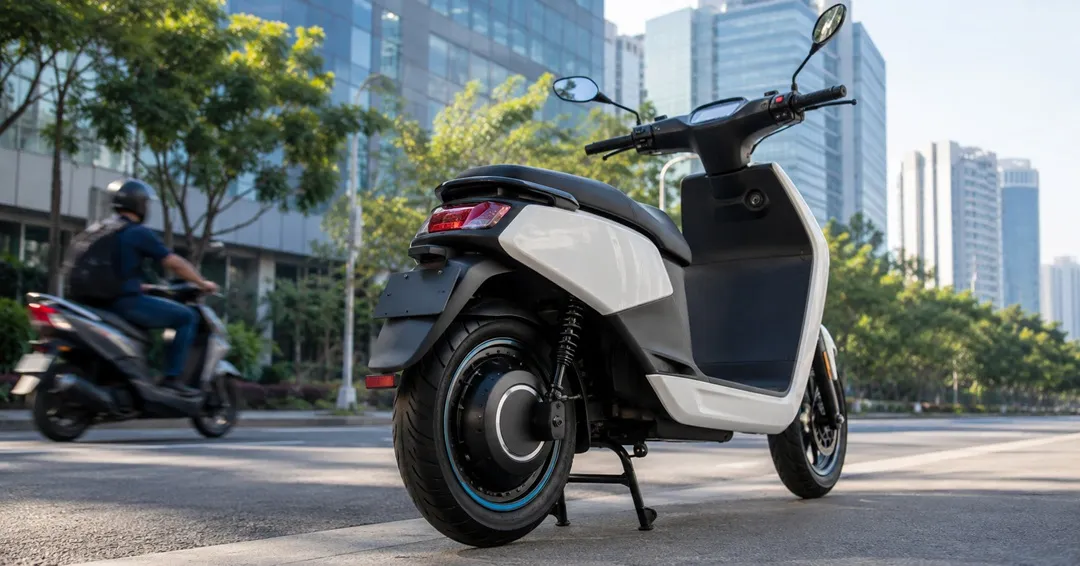
Why Hub Motors Are Becoming a Game Changer for India’s Electric Two-Wheeler Manufacturers
Aug 25, 2026
How Advanced Battery Thermal Management Is Transforming Cold-Weather EV Performance in India
Aug 24, 2026
From Highways to Cities: How Top Companies Are Expanding EV Charging Across India
Aug 20, 2026
How AI Is Revolutionizing EV Range Prediction in India
Aug 19, 2026More Thought Articles
Make in India and the Rise of Local EV Motor Controller Manufacturing
India’s EV industry is entering a deeper localisation phase, with motor controllers emerging as a strategic opportunity for domestic engineering and manufacturing. Rising electric two- and three-wheeler volumes, government incentives, semiconductor initiatives, and local supplier capabilities are supporting controller development. The next priority is shifting from assembly toward hardware, software, integration, and power-electronics localisation.
Why EV Conversion Kits Are Becoming a New Manufacturing Opportunity in India
India’s EV conversion kit market could create a new manufacturing opportunity by electrifying existing vehicles, particularly high-mileage three-wheelers, delivery fleets, and light commercial vehicles. The article examines market economics, standardization, battery systems, power electronics, certification, and lifecycle services, highlighting how India’s expanding EV ecosystem can support selective, scalable retrofit manufacturing.
How Advanced Power Electronics Are Reshaping India’s EV Powertrain Market
India’s EV industry is shifting toward power electronics as a key source of vehicle differentiation. Traction inverters, SiC semiconductors, integrated drive units, software and thermal management can improve efficiency, charging, range and reliability. Cost-sensitive two-wheelers will favour affordable solutions, while premium and commercial EVs accelerate adoption of advanced power electronics.