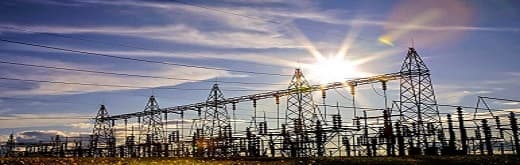
A smart grid is an electronic network that uses a two-way digital communication system to deliver power. During the transmission and distribution process, it allows for the collection of dat...
A smart grid is an electronic network that uses a two-way digital communication system to deliver power. During the transmission and distribution process, it allows for the collection of data on energy demand and supply in real-time. Smart grid primarily use smart sensors and power meters to automate billing data collecting and identify equipment faults, as well as superconducting cables for long-distance power transfer via wireless communication technologies. These networks are designed to self-repair, provide a reliable power supply with no leaks, and encourage customer participation in grid operations, all of which help to improve overall efficiency and lower energy costs.
Rising Global Energy Consumption to Drive the Smart Grid Market
One of the main reasons driving market expansion is rising global energy consumption, which is fueled by increasing urbanization and the emerging trend of digitization. In developing countries, smart grid are being used to upgrade current grid infrastructure and implement the software-based architecture. In addition, the expansion of dispersed energy sources including photovoltaic (PV), geothermal, and hydroelectric power is boosting the market growth. Through microgrids and other linked devices, these sources enable on-site generation and storage of power.
Utilities 2.0 Twaake, the pilot project in Uganda established in June 2021, brings together distributed renewable energy firms to deliver clean electricity to everybody through an integrated energy approach. The Utilities 2.0 Twaake pilot project, led by Uganda's major power company Umeme, supervised by Power for All, and sponsored by The Rockefeller Foundation, takes an integrated energy strategy. It is meant to reduce costs by at least half by utilizing integrated energy. Solar home systems, mini-grids, grid, and smart grid systems are all part of this system, which blends centralized and distributed technologies.
Increasing R&D and Favorable Government Initiative to Provide Opportunities in the Market
Furthermore, the integration of smart grid with cloud technology has made it easier to analyze current energy consumption and monitor patterns to solve environmental and energy conservation problems. Other factors, including favorable government regulations, the growth of smart cities throughout the world, and an increase in research and development (R&D) activities, are expected to fuel the market even more.
The Ohio Public Utility Commission in June 2021 issued an order approving AES Ohio's as-filed stipulation with a virtually unanimous vote. The decision authorizes AES Ohio to go forward with its plans to invest $249 million in capital projects over the next four years, offering immediate consumer benefits through a modern, resilient, and efficient electric system. This is the first stage in AES Ohio's digital transformation, which aims to improve dependability and provide customized, creative, and seamless energy services to its consumers. The ruling authorizes the implementation of Phase 1 of the AES Ohio Smart Grid Plan, with a deadline of three years to file Phase 2.
Favorable Functional Benefits Provide by Smart Grid to Increase Adoption and Demand
The expansion of the smart grid business is fueled by a growing reliance on electronic gadgets and a continual need for power in both the residential and commercial sectors. Because it provides power to customers when they need it and meets their needs. Households, factories, towns, and businesses require a dependable and efficient power supply that can minimize the frequency and length of power outages or eliminate them. As a result, the smart grid industry offers technologies that enhance problem detection and allow network self-healing.
Furthermore, the smart grid provides real-time support to energy management systems by constantly detecting problems, thus increasing the distribution system's situational awareness. Additionally, the smart grid will make use of sensors and other technology, which is expected to reduce the amount of power consumed while the system is not in use. For example, sensors will recognize inhabited spaces and will only enable fans to cool that specific area.
Rising Infrastructure Investments by the Government to Augment Market Growth
Smart grid technology is increasingly being viewed as a strategic infrastructure investment by governments in both emerging and developing countries that will help them accomplish their long-term economic development and carbon emission reduction goals. As a result, firms participating in the smart grid network industry are likely to have plenty of opportunities in the near future.
The EU only compels member nations to switch to digital meters if it would save them money. As a result, Germany's deployment has chosen a different route, with research indicating that smart meters would cost the country more than they would benefit it. By 2040, the EU estimates that 77 percent of customers in its member countries would have a smart meter. Six nations have already completed their deployments. Italy has begun preparing a second deployment to replace 30 million first-generation devices that are nearing the end of their useful lives. These devices would be among the first of the second generation, with improved access and more regular data updates.
However, the lack of access to energy in impoverished countries throughout the world, as well as weak government regulations and attempts to expand and upgrade grid infrastructure, are likely to constrain market growth.
North America Is Predicted to Dominate the Smart Grid Market
North America is expected to have the highest market share and dominate the industry. This is because of major advancements in technology advancements like as smart grid distribution management, distribution automation, and enhanced metering infrastructure. The smart grid market in the area is being driven by increased investment in smart grid and smart city initiatives, as well as a growing need for improved smart grid mechanisms. In addition, the government has legislated numerous measures, including the rise of electric cars, which is propelling the smart grid industry forward. Due to the adoption of renewable energy in the regions, particularly in distant and rural populations, Asia Pacific is expected to expand at the fastest rate throughout the predicted period.
Have questions?
More Thought Articles
How EV Charger Manufacturers Can Capitalize on India’s Home Charging Revolution
India’s residential EV charging opportunity is expanding as policy support, EV adoption, and private parking infrastructure develop. Manufacturers can capture value beyond AC chargers through installation, smart charging, load management, solar integration, software, and after-sales services. Housing societies, automakers, and property developers offer scalable routes to residential charging customers.
Second-Life EV Battery Market in India: What Is Driving Demand from Manufacturers?
India’s second-life EV battery market is gaining relevance as electric vehicle adoption expands and batteries retain useful capacity after automotive service. Growing stationary-storage demand, battery data, refurbishment capabilities, EPR obligations, and critical-mineral policies are encouraging manufacturers to extend battery value through reuse before eventual recycling within India’s emerging circular battery ecosystem.
The Rise of Locally Manufactured Battery Separators in India’s EV Ecosystem
India’s battery industry is progressing from pack assembly toward domestic cell and material manufacturing, creating opportunities for lithium-ion battery separators. Policy support, ACC capacity expansion and R&D initiatives are strengthening the ecosystem. However, technical complexity, manufacturing yields, qualification requirements and economics mean localisation will likely advance gradually through coatings, testing and finishing.