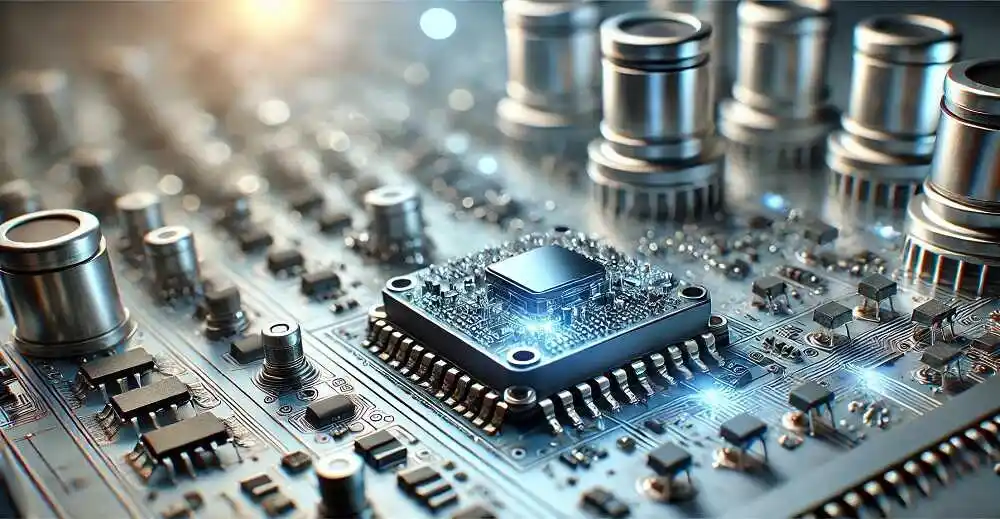
RF power semiconductors an electronic components that are designed for transmitting the purpose of radio signals after sufficiently amplifying them. These devices work over high frequencies which are typically in the megahertz (MHz) and the gigahertz (GHz) ranges and are therefore very important to...
 Source: Ericsson
Role of RF Power Semiconductors in 5G Networks
5G networks require higher data rates, lower latencies and a higher number of simultaneous connections than the previous generations of wireless technology. These advancements mean that a complete overhaul of existing network infrastructures is required, in particular, the power and efficiency of RF signal transmission will be greatly affected.- High Frequency Transmission: 5G networks employ a range of frequency bands among them being the sub-6 GHz and the millimeter wave (24 GHz and above). The upper-frequency bands also present challenges as there is a more sophisticated RF power semiconductor that is required because of the efficiency in signal and amplification that is needed for transmission.
- Massive MIMO Technology: A key element of 5G networks, Massive Multiple Input Multiple Output (MIMO) technology enables very many signals to be sent and received at a go. This technology enhances the capacity and coverage of a network, however, it makes the management of RF signals more difficult, thereby requiring very high power and efficient RF semiconductors.
- Beamforming: Beamforming technology helps improve the efficiency and range of the 5G networks, as it involves directing the transmission of signals through a given angle. Beamforming technology, in principle, is made achievable by the use of RF power semiconductor which assist in focusing energy in specific beams thereby increasing the quality of the transmitted signal and reducing interference.
- Base Station Upgrades: To implement 5G, there would be a need to install more base stations with new RF power amplifiers and transceivers. These base stations will require operation on higher frequencies which increases the burden on the RF semiconductors in the signal amplification chains of the stations.
Applications of RF Power Semiconductors
The telecommunications industry has historically dominated the market of RF power semiconductor, but other industries are beginning to adopt the technology because of the advancements in 5G mobile communication systems.- Aerospace and Defense: Radar, satellite communication, and electronic warfare always relied heavily on radio frequency technology. There is growing deployment of RF power semiconductors in advanced radar, military drones, military communications and other technologies as 5G and above frequency bands are fast being adopted.
- Healthcare: In the medical and health sectors, RF power semiconductors are not left behind. Wearable devices and telehealth are anticipated to use RF semiconductors more shortly as 5G networks are expected to support better and faster data flow.
- Industrial IoT: RF power semiconductors are equally important for the Internet of Things (IoT) and more so for its industrial component. The growth in the demand for IoT RF semiconductors is also supported by the increased need for proper and seamless communication in factories and manufacturing plants that are fully automated and networked.
Technological Trends in RF Power Semiconductors
The rising need for RF power semiconductors has accelerated innovation in technology relating to the manufacture of semiconductors. There are the following principal tendencies concerning the development of RF semiconductors in the future:- Technologies of Silicon Carbide (SiC) and Gallium Nitride (GaN): Since GaN and SiC are capable of operating at much higher frequencies and power levels than conventional competitive silicon semiconductors, they are considered more effective for RF power semiconductor materials. In particular, GaN high-performance RF components have become the focus of attention in high-frequency and high-power applications, especially in 5G base stations.
- Miniaturization and Integration: RF power semiconductors are also shrinking due to the demand for less power-consuming devices. More and more integrated solutions are coming up populated with more than one function such as signal processing power amplification and switching all in one chip. This integration results in RF systems that are lighter, smaller, and consume less power making them ideal for mobile gadgets and the Internet of Things.
- Energy Efficiency: With the advent of 5G, energy utilization is turning out to be of great concern. In a bid to reduce the energy costs incurred with 5G base stations and other networks, RF power semiconductors are innovating to curb the power decay that occurs when signals are transmitted.
Have questions?
More Blogs
Clinical Decision Support Diagnostic Systems Market: Why the U.S. Healthcare System Is Quietly Rebuilding Diagnosis Around Algorithms
The U.S. clinical decision support diagnostic systems market is rapidly evolving as hospitals adopt AI-driven tools to manage rising diagnostic complexity, workforce shortages, and operational pressures. Growth is fueled by demand for faster, accurate diagnoses, workflow efficiency, interoperability, and value-based care, while physician trust, cybersecurity, and regulatory compliance increasingly determine long-term market success.
Top U.S. Healthcare Industry Trends to Watch in 2026 for the Global Healthcare Market
The global healthcare industry in 2026 is shifting toward AI-driven efficiency, stronger cybersecurity, outpatient care expansion, and domestic pharmaceutical manufacturing. U.S. healthcare leaders are prioritizing workforce support, operational resilience, value-based care, and integrated digital systems to improve patient outcomes while controlling costs.
How AI Is Reshaping the American Healthcare Industry
The U.S. healthcare industry is rapidly integrating artificial intelligence across clinical, administrative, and pharmaceutical operations. AI is improving diagnostics, automating workflows, reducing clinician burden, accelerating drug discovery, and enhancing personalized care. With strong adoption by hospitals and tech companies, AI is transforming healthcare delivery while driving the U.S. AI healthcare market toward significant growth by 2031.