Biohazard Bags Market Trends & Forecast According to a research study published by Knowledge Sourcing Intelligence (KSI), the biohazard bags market will expand from...

Biohazard Bags Market Trends & Forecast
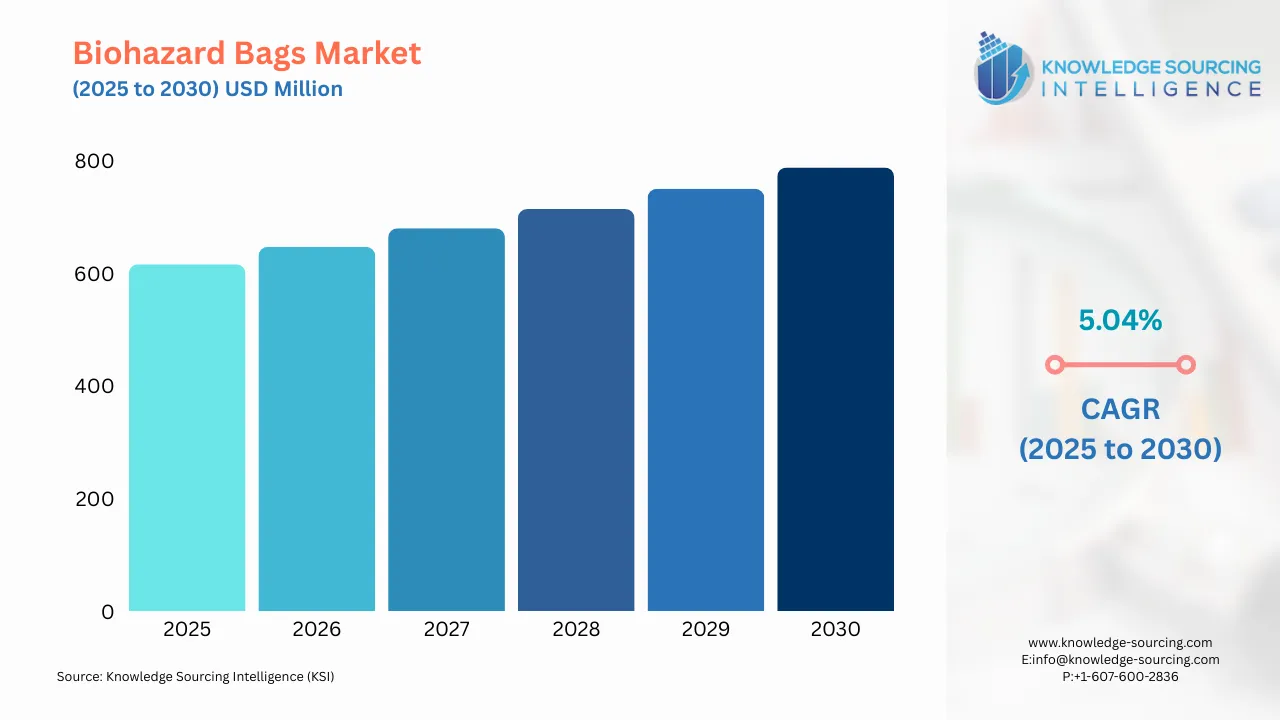
According to a research study published by Knowledge Sourcing Intelligence (KSI), the biohazard bags market will expand from USD 616.256 million in 2025 to USD 787.964 million in 2030 at a CAGR of 5.04% during the forecast period.The biohazard bags market is expected to grow in the forecast period with the rising global patient population and several diseases, including cardiac, infectious, and many more. The market is driven by a growing number of hospital beds with an improved healthcare facility, increasing global elderly population and health expenditure and growing awareness regarding medical waste management. The market is witnessing growing interest in eco-friendly and innovative packaging, with demand rising for biodegradable and compostable biohazard bags, as well as smart-enabled solutions such as RFID-tracked bags that enhance waste monitoring and compliance. Beyond biodegradable, manufacturers are looking into plant-based polymers and recyclable plastics. Automation-friendly designs, color-coded bags and integration of microbial coatings are other major trends.
Get In-Depth Analysis of the Biohazard Bags Market
This article covers the fundamentals. Our full market report provides the granular data, competitive landscape, and strategic insights you need to navigate the global biohazard bags industry.- ? Detailed Market Size & Growth Forecasts
- ? Key Player Analysis & Market Share
- ? Application Breakdowns & Regional Trends
Biohazard Bags Market Report Highlights
- The market is driven by demand for effective waste management in healthcare settings, whose demand is rising due to growing patient volume, need for efficient management and growing regulations.
- Effective measures for ensuring safe and eco-friendly management of medical wastes will prevent untoward health and environmental impacts from such contaminated wastes, including the harmful release of chemicals or biological hazards, and are one of the key and major drivers for the market growth.
- The market is trending towards eco-friendly and innovative packaging, smart-enabled solutions, plant-based polymers and recyclable plastics, automation-friendly designs, color-coded bags and integration of microbial coatings.
- The market is prospecting for significant investment in efficient waste management in a healthcare setting.
- The North American region is estimated to hold a significant market share with advanced medical facilities, a high rate of coronavirus infection cases, and a high prevalence of chronic diseases requiring hospitalization.
- The Asia Pacific region is projected to show high growth prospects due to the high prevalence of the geriatric population, requiring better healthcare facilities to treat their age-associated diseases.
Report Coverage:
| Report Metric | Details |
| Biohazard Bags Market Size in 2025 | US$616.256 million |
| Biohazard Bags Market Size in 2030 | US$787.964 million |
| Growth Rate | CAGR of 5.04% |
| Drivers |
|
| Restraints |
|
| Segmentation |
|
| List of Major Companies in the Biohazard Bags Market |
|
Biohazard Bags Market Drivers and Restraints
Growth Drivers:- Rising healthcare demand & Waste: The increasing patient population, with the rise in chronic diseases such as cancer and heart diseases, along with the rise in geriatric population's health needs is driving the healthcare waste. Increased infectious diseases, patient volumes, and waste from hospitals and labs necessitate the need for secure disposal solutions.
- Demand for healthcare waste management: There has been a rise in awareness about the benefits of proper waste management in recent years. This is particularly noticeable in hospitals' pharmaceutical industries, clinical trial organizations, and diagnostic centers. This drives the demand for biohazard bags for the disposal of sharps, surgical tools, and other contaminated metal items.
Analyze the Sharps Container Market
Sharps disposal is a key application for biohazard solutions. Dive into our Sharps Container Market report for insights on demand drivers, innovations, and market forecasts.- High Disposal Cost: One of the key restraints faced by the market is the high treatment cost of biohazard bags. This discourages its adoption, particularly by the smaller clinics, labs and others, due to affordability issues as well as regulations documentation.
Biohazard Bags Market Segmentation
Knowledge Sourcing Intelligence has segmented the Biohazard Bags Market based on biohazardous waste type, end-use application, and region: Biohazard Bags Market, By Biohazardous Waste Type- Solid Biohazardous Waste
- Liquid Biohazardous Waste
- Sharp Biohazardous Waste
- Pathological Biohazardous Waste
- Hospitals
- Clinics
- Diagnostic Centers
- Pharma/Medical Research Laboratories
- North America
- USA
- Canada
- Mexico
- Europe
- UK
- Germany
- France
- Italy
- Spain
- Others
- Asia Pacific
- China
- India
- Japan
- South Korea
- Taiwan
- Thailand
- Indonesia
- Others
- South America
- Brazil
- Argentina
- Others
- Middle East and Africa (MEA)
- Saudi Arabia
- UAE
- Others
Biohazard Bags Market Key Players
- Thermo Fisher Scientific
- Bel-Art Products
- International Plastics Inc.
- Cole-Parmer Instrument Company, LLC.
- Medegen Medical Products
- Tufpak, Inc.
- Capitol Scientific, Inc.
- Abdos Life Science
- Tilak Polypack
- Desco Medical
Go from Insight to Action with Our Market Research
You've seen the overview. Now, get the detailed data and strategic analysis you need to stay ahead in the waste management and healthcare sectors. Explore our related, in-depth reports. Each report includes comprehensive data, forecasts, and competitive analysis to empower your business decisions.Need specialized data cuts or competitive intelligence?
Our analyst team provides bespoke market sizing, supplier audits, and country-level feasibility reports tailored to your enterprise roadmap.
Speak With an Industry Analyst →Ask an Industry Analyst
Have questions regarding this briefing or market projections? Inquire with our sector lead.
Related Press Releases
View All →
ADC Manufacturing & CDMO Market is expected to reach USD 10.49 billion by 2031
Aug 7, 2026
Lifestyle-Associated Cancer Epidemiology Market is expected to reach USD 13.12 billion by 2031
Aug 5, 2026
Psycho-Oncology Digital Health Market is anticipated to surpass USD 290.01 million in 2031 at a CAGR of 8.5%
Jul 30, 2026
Intratumoral Injection Therapy Market is expected to reach USD 630.39 million by 2031
Jul 24, 2026
Palliative Care in Oncology Market is expected to reach USD 244.1 billion by 2031
Jul 22, 2026More Press Releases
Oncology Drug Resistance Testing Market is projected to reach USD 3.41 billion in 2031 at a CAGR of 6.6 %
The oncology drug resistance testing market is expanding due to rising cancer prevalence, increasing drug resistance, and growing adoption of precision oncology. Advances in NGS-based testing, companion diagnostics, and targeted therapies, alongside FDA approvals and investments in personalized medicine, are accelerating demand for effective resistance monitoring across hospitals and clinical diagnostics worldwide.
TROP-2 Targeted Therapy Market is anticipated to surpass USD 3.29 billion in 2031 at a CAGR of 8.6 %
The TROP-2 Targeted Therapy market is expanding rapidly due to increasing precision oncology adoption, rising cancer prevalence, and growing use of antibody-drug conjugates. North America leads the market, while Asia Pacific shows the fastest growth. Continuous clinical trials, regulatory approvals, and strategic collaborations are accelerating innovation and commercial adoption worldwide.
Second Primary Cancer Prevention Market is expected to reach USD 24.7 billion by 2031
The Second primary cancer prevention refers to strategies aimed at reducing the risk of developing a new, unrelated cancer in individuals with a prior cancer diagnosis. Growing cancer survivorship, advances in treatment, and increasing awareness of long-term health outcomes have heightened the importance of prevention and surveillance programs. Key approaches include routine screening, genetic risk assessment, lifestyle modification, and long-term follow-up care. Government agencies and healthcare organisations increasingly emphasise survivorship care plans and evidence-based screening protocols to detect new malignancies at earlier stages. Continued investments in early detection technologies and personalised risk assessment are expected to support advancements in second primary cancer prevention.