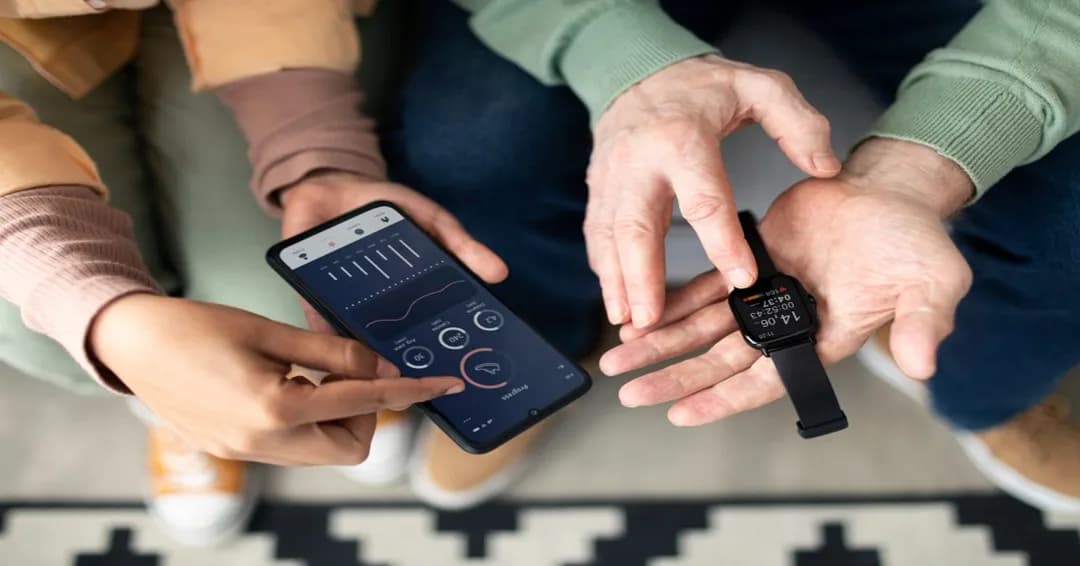
At Meta Connect 2026, scheduled for September 23–24, Meta is expected to unveil its first commercial smartwatch, reportedly codenamed Project Malibu 2, with health-tracking capabilities and a built-in Meta AI assistant. The expected launch follows Meta's revival of a smartwatch project that was shelved in 2022 amid cost reductions across its Reality Labs hardware division, with the new device reportedly designed to complement Meta's AI glasses ecosystem. The move reinforces the shift toward AI-enabled, ecosystem-connected wearables described in a new report by Knowledge Sourcing Intelligence, which values the global wearable computing market at USD 71.0 billion in 2026, growing to USD 148.5 billion by 2031.
Meta is scheduled to hold Meta Connect 2026 on September 23-24 in Menlo Park, California, and the company's first commercial smartwatch is among the products expected to debut there. The device, reported under the codename Project Malibu 2, revives a smartwatch project Meta shelved in 2022 during cost cuts across its Reality Labs hardware division. The device is expected to compete in the smartwatch category while also serving as a wrist-based companion to Meta's AI glasses ecosystem, combining health tracking, an integrated Meta AI assistant, and reportedly gesture-control capabilities.
New Wearable Technology Expected at Meta Connect 2026
Project Malibu 2 smartwatch: Meta's first reported commercial smartwatch, expected to combine health and fitness tracking with a built-in Meta AI assistant and reportedly support gesture-based control.
Gesture control for AI glasses: The watch is reportedly expected to incorporate gesture-control capabilities related to Meta's Neural Band technology, potentially extending wrist-based interaction to the company's AI glasses.
Companion positioning to Ray-Ban glasses: Alongside its potential competition with established smartwatch platforms, the device is expected to deepen Meta's wrist-to-face hardware ecosystem alongside its AI glasses.
Recent Developments in the Wearable Computing Market
August 2026: Garmin introduced the fenix 9 and fenix 9 Pro, with the Pro models adding built-in satellite and LTE connectivity for voice, text, and SOS communication from the wrist.
July 2026: Samsung introduced the Galaxy Watch9 and Galaxy Watch Ultra2, combining continuous health monitoring, AI-driven health intelligence, and personalized guidance through Samsung Health.
June 2026: Meta announced a partnership with EssilorLuxottica to introduce Meta Glasses, featuring Meta AI from launch and compatibility with prescription lenses.
How This Reshapes Wearable Computing Competition
Meta's reported smartwatch strategy reflects a broader industry emphasis on multi-device integration and AI-connected wearable ecosystems. By potentially pairing a smartwatch with its AI glasses, Meta could expand the role of wearables across multiple points of daily interaction.
By potentially pairing a smartwatch with its established Ray-Ban AI glasses line, Meta could extend its wearable ecosystem across both wrist- and face-based devices rather than competing solely through smartwatch functionality. Unlike Apple, Samsung, and Google, Meta does not operate its own mainstream smartphone platform, making cross-device integration with its AI glasses and other connected products an important element of its wearable strategy.
How Knowledge Sourcing Intelligence's (KSI) Wearable Computing Market Report Helps
Knowledge Sourcing Intelligence's Global Wearable Computing Market report offers a structured view of the industry, segmented by Type, Component, Application, End User, and Geography, helping stakeholders see how announcements like Meta's smartwatch fit into broader category-level demand. The By Type segmentation separates Smartwatches from Smart Glasses and Augmented Reality (AR) Devices, providing a framework to assess Malibu 2 as a reported smartwatch entry alongside the AI-enabled eyewear that forms part of Meta's broader wearable ecosystem.
The By Component segmentation, covering Hardware, Sensors, Processors and Memory, Displays and User Interfaces, Connectivity Modules, Batteries and Power Systems, Software, and Services, is equally relevant, since a device built around an integrated AI assistant and reportedly supporting gesture recognition relies on software, sensors, processors, connectivity, and other components alongside the physical wearable. Together, these segment views allow suppliers, investors, and technology strategists to compare Meta's emerging multi-device wearable ecosystem with more established smartphone-anchored ecosystems.
Request a free sample copy or view the report summary: Wearable Computing Market Report
Wearable Computing Market Report Highlights
By Type, Smartwatches represent an important wearable-computing form factor, and Meta's expected entry would add another major technology company to the competitive landscape alongside Apple, Samsung, Garmin, and Google.
By Application, Health, Wellness, and Fitness continues to anchor demand, with Meta reportedly incorporating health-tracking capabilities into its upcoming smartwatch alongside an integrated AI assistant.
By Component, Software and AI-interpretation capabilities are becoming increasingly important to wearable computing, reflected in Meta's reported plan to integrate a Meta AI assistant into its upcoming smartwatch.
Miniaturization and new form factors, including smart glasses, are expanding wearable computing beyond conventional wrist-worn products, a trend Meta's paired watch-and-glasses strategy directly reflects.
Wearable Computing Market Growth Drivers and Restraints
Growth Drivers:
Artificial Intelligence Integration: AI is increasingly being incorporated into wearable platforms to interpret biometric and behavioral data and provide personalized recommendations, a shift reflected in the reported AI-assistant capabilities of Meta's upcoming smartwatch.
Expansion of Connected Wearable Ecosystems: Integration with smartphones, cloud platforms, and companion devices increases the utility of wearables, encouraging multi-device strategies such as Meta's pairing of a smartwatch with its Ray-Ban AI glasses.
Restraints:
Data Privacy and Cybersecurity Risks: Wearables collect continuous health, movement, and behavioral data, requiring manufacturers to develop strong privacy controls as devices like Meta's AI-integrated watch expand data collection.
Battery Life and Device Comfort: Continuous sensing, AI processing, and gesture-recognition features increase power requirements, requiring manufacturers to balance device size, processing performance, and battery life.
Wearable Computing Market Segmentation
Segment | Sub-Segments |
|---|---|
Type | Smartwatches, Fitness Trackers, Smart Glasses and Augmented Reality (AR) Devices, Virtual Reality (VR) Headsets, Smart Clothing and E-Textiles, Hearables, Others |
Component | Hardware, Sensors, Processors and Memory, Displays and User Interfaces, Connectivity Modules, Batteries and Power Systems, Software, Services |
Application | Health, Wellness, and Fitness, Entertainment and Gaming, Communication and Navigation, Industrial and Enterprise, Safety and Workforce Monitoring, Lifestyle and Personal Productivity, Others |
End User | Consumers, Healthcare, Sports and Fitness, Military and Defense, Manufacturing and Logistics, Retail and Fashion, Enterprise, Others |
Geography | North America, South America, Europe, Middle East and Africa, Asia Pacific |
Wearable Computing Market Key Players
Apple Inc.
Samsung Electronics Co., Ltd.
Google LLC (Fitbit)
Garmin Ltd.
Huawei Technologies Co., Ltd.
Xiaomi Corporation
Oura Health Oy
Sony Group Corporation
Polar Electro Oy
Withings SA
Whoop, Inc.
Carré Technologies Inc. (Hexoskin)
Bose Corporation
Meta Platforms, Inc.
Snap Inc.
Explore More Reports:
Have questions?
More Press Releases
How LG's Next Evolution of AI Home at IFA 2026 Will Impact the Smart Homes Market, Expected to Reach USD 376.8 Billion by 2031
At IFA 2026, LG Electronics announced the next generation of its AI Home, ThinQ Claw, a text-chat AI agent that can comprehend user intent and context to orchestrate appliances and connected services, among other enhancements for its Homey-powered ecosystem and the launch of ThinQ Pro in Europe. The announcement comes as a reinforcement of the trend towards the agentic AI in residential ecosystems outlined in a new report by Knowledge Sourcing Intelligence, which forecasts the global smart home market size at USD 167.5 billion by 2026, rising to USD 376.8 billion by 2031.
Latest Tractor Developments from Fendt, CLAAS, and IIT Kanpur are positively impacting the Agricultural Tractor Market, anticipated to garner USD 33,919.25 million by 2031
Fendt, CLAAS, and IIT Kanpur are advancing agricultural tractors through high-horsepower precision platforms, intelligent automation, connected operations, and electric compact models. Recent launches highlight stronger power management, digital guidance, telemetry, automated functions, and localized electric technology, reflecting the tractor industry's shift toward smarter, more productive, and sustainable farming solutions and practices.
How Apple's iPhone 18 Launch Will Impact the Smartphone Display Market, Expected to Reach USD 76.32 Billion by 2031
Apple's September 9, 2026 “Surprise and Shine” event will introduce the iPhone 18 Pro, iPhone 18 Pro Max, and the company's first foldable iPhone, each carrying an LTPO+ OLED display upgrade and, in the case of the foldable model, a crease-resistant flexible panel. The launch reinforces demand for premium OLED and flexible display technologies within the global smartphone display market, as outlined in a new report by Knowledge Sourcing Intelligence (KSI), which values the market at USD 58.69 billion in 2026, growing to USD 76.32 billion by 2031.