
Polyethylene terephthalate, or bio-PET, is a polyester film that serves as PET's alternative. It can be used in quite a few settings, along with automotive interiors, packaging, wrapping films, and electrical insulation. When compared to traditional...
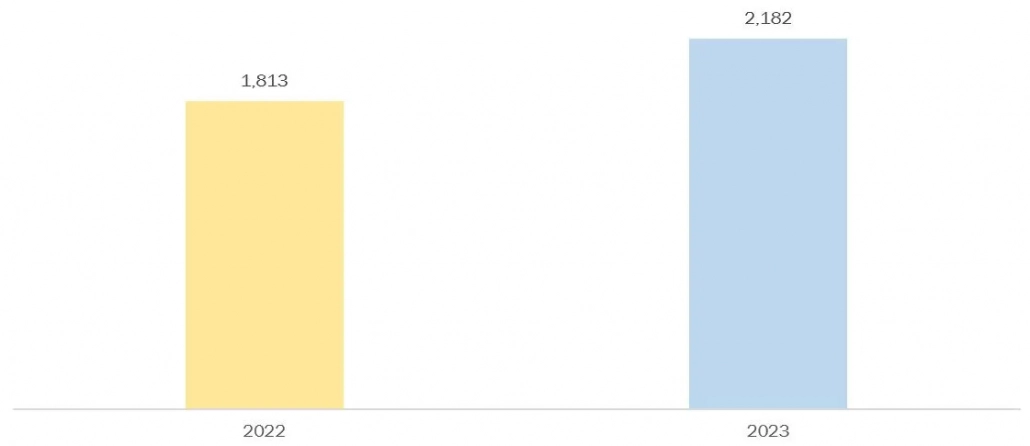 Source: European Bioplastics
Japan’s government is also encouraging the use of bio-degradable plastics derived from plants as a measure to curb ocean pollution by plastics. Policies are developed by using the Japan Clean Ocean Material Alliance, or CLOMA, to promote using recycled or biodegradable plastics. Consequently, there may be a growing marketplace for bio-PET products, that is using up using bio-primarily based PET with the aid of a variety of give-up users and improving the outlook for the bio-PET movie industry.
The use of Bio-PET is common in bottling companies because many organizations are no longer comfortable using products made from non-renewable resources; hence, the increased adoption of Bio-PET packaging. Additionally, there’s an increased interest from buyers regarding biobased goods.
Bio-PET packaging is responsible for the access to clean drinking water by billions of people as well as for the development of the beverage industry. It is possible to recycle it into different kinds of products that are flexible, provisional, secure as well as light. It furthermore exerts good mechanical and barrier properties.
Key Developments
Source: European Bioplastics
Japan’s government is also encouraging the use of bio-degradable plastics derived from plants as a measure to curb ocean pollution by plastics. Policies are developed by using the Japan Clean Ocean Material Alliance, or CLOMA, to promote using recycled or biodegradable plastics. Consequently, there may be a growing marketplace for bio-PET products, that is using up using bio-primarily based PET with the aid of a variety of give-up users and improving the outlook for the bio-PET movie industry.
The use of Bio-PET is common in bottling companies because many organizations are no longer comfortable using products made from non-renewable resources; hence, the increased adoption of Bio-PET packaging. Additionally, there’s an increased interest from buyers regarding biobased goods.
Bio-PET packaging is responsible for the access to clean drinking water by billions of people as well as for the development of the beverage industry. It is possible to recycle it into different kinds of products that are flexible, provisional, secure as well as light. It furthermore exerts good mechanical and barrier properties.
Key Developments
- In September 2023, LOTTE Chemical came up with ‘ECOSEED’ line comprised largely of new environmentally friendly raw materials. ECOSEED contains physically and chemically recycled materials such as post-consumer use recycled materials and bioplastics like Bio-PET. It is expected that through this strategy the company will be able to achieve the 2030 goal of supplying up to one million tons of ‘ECOSEED’ product which is a resource circulation substance.
- In June 2023, A non-binding Memorandum of Understanding (MOU) was signed to establish a joint venture between Carbios, a biotech company focused on developing biological solutions for plastic and textile recycling, and Indorama Ventures Public Company Limited, a leading global producer of sustainable chemicals. The establishment of the first PET recycling facility in the world is the goal of this collaboration in France.
- In May 2023, Indorama Ventures Public Company Limited, a top manufacturer of virgin and recycled PET resins, and Origin Materials, Inc., a company that specializes in carbon-negative materials, joined forces strategically to accelerate the large-scale production of bio-based materials. Films, textiles, automotive parts, packaging, and other industries could all benefit from the use of these materials. The collaboration aims to create co-polyesters, bio-PTA, bio-based chemical furan-dicarboxylic acid and advanced bio-based PET plastics that have advantages over traditional PET plastics.
Have questions?
More Thought Articles
How EV Charger Manufacturers Can Capitalize on India’s Home Charging Revolution
India’s residential EV charging opportunity is expanding as policy support, EV adoption, and private parking infrastructure develop. Manufacturers can capture value beyond AC chargers through installation, smart charging, load management, solar integration, software, and after-sales services. Housing societies, automakers, and property developers offer scalable routes to residential charging customers.
Second-Life EV Battery Market in India: What Is Driving Demand from Manufacturers?
India’s second-life EV battery market is gaining relevance as electric vehicle adoption expands and batteries retain useful capacity after automotive service. Growing stationary-storage demand, battery data, refurbishment capabilities, EPR obligations, and critical-mineral policies are encouraging manufacturers to extend battery value through reuse before eventual recycling within India’s emerging circular battery ecosystem.
The Rise of Locally Manufactured Battery Separators in India’s EV Ecosystem
India’s battery industry is progressing from pack assembly toward domestic cell and material manufacturing, creating opportunities for lithium-ion battery separators. Policy support, ACC capacity expansion and R&D initiatives are strengthening the ecosystem. However, technical complexity, manufacturing yields, qualification requirements and economics mean localisation will likely advance gradually through coatings, testing and finishing.