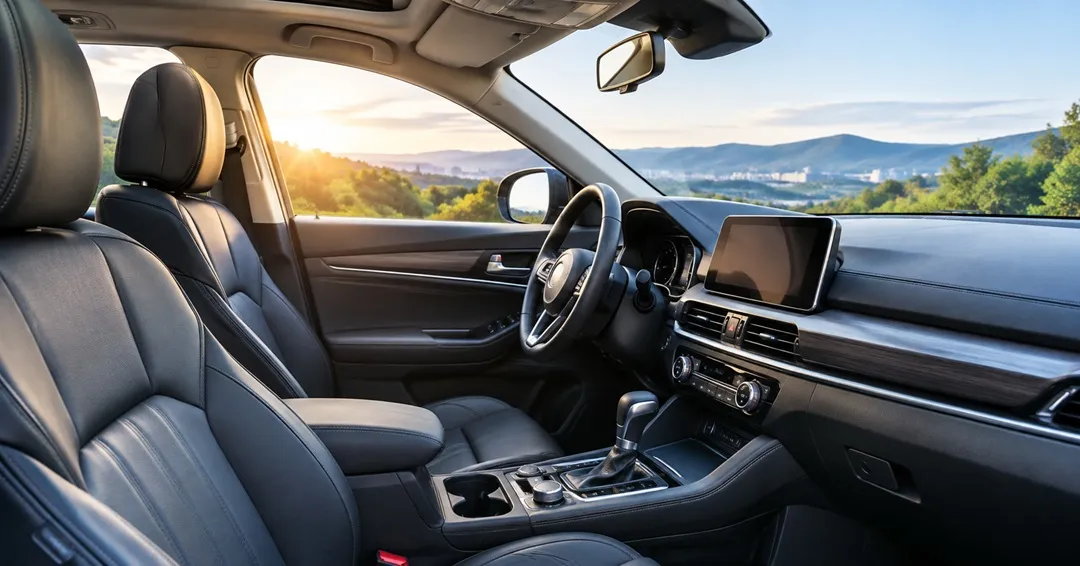
The global automotive cabin comfort market is evolving as automakers adopt intelligent climate control, advanced seating, occupant sensing, and personalized cabin technologies. Growing demand for energy-efficient thermal management and software-defined interiors is creating opportunities for suppliers to enhance passenger experiences across electric, hybrid, and conventional vehicles while strengthening technological differentiation.
Knowledge Sourcing Intelligence forecasts the global automotive cabin comfort market to grow from USD 18.9 billion in 2026 to USD 33.0 billion by 2031, registering a compound annual growth rate (CAGR) of 11.8%. Demand for intelligent climate control, advanced seating, occupant sensing, and integrated cabin technologies is reshaping automotive interiors. Manufacturers are prioritizing personalized comfort to differentiate electric, hybrid, and conventional vehicles.
The market is shifting from standalone features toward connected, adaptive cabin environments. Advances in thermal management, seating ergonomics, acoustic refinement, and software-controlled personalization are helping manufacturers improve passenger experiences while addressing energy efficiency and system integration requirements.
Request a free sample copy or view the report summary: Automotive Cabin Comfort Market Report
Key Growth Drivers
AI-Powered Climate Control and Personalized Thermal Comfort
Automakers are developing intelligent climate systems that combine occupant sensing, environmental data, and software algorithms to regulate temperature and airflow. Gentherm's ClimateSense technology integrates localized heating and cooling with conventional HVAC systems to deliver individualized thermal comfort. Such solutions can reduce unnecessary whole-cabin conditioning, particularly in electric vehicles where auxiliary energy consumption affects driving range.
Growing Adoption of Intelligent Seating Systems
Advanced seating systems increasingly incorporate heating, ventilation, massage, lumbar support, and electronically controlled adjustments. Sensor-enabled technologies support personalized configurations and improved comfort during extended journeys. Wider adoption will depend on affordability, durability, and integration costs as manufacturers extend advanced seating features beyond premium vehicles.
Energy-Efficient Cabin Comfort in Electric Vehicles
Electric vehicle manufacturers are prioritizing efficient cabin thermal management to reduce auxiliary power consumption without compromising comfort. Heated surfaces, ventilated seats, and localized climate control can reduce reliance on whole-cabin conditioning under suitable conditions. Integrating these technologies with vehicle thermal management systems creates opportunities for suppliers offering efficient, scalable comfort solutions.
Software-Defined and Integrated Cabin Experiences
Software-defined vehicle architectures enable coordinated control of seating, lighting, climate, audio, and occupant monitoring. Personalized profiles and automated comfort modes can simplify adjustments and create consistent passenger experiences. Commercial expansion will depend on reliable sensing, cybersecurity, data privacy, system interoperability, and cost-effective integration with vehicle electronics.
Latest Industry Developments
October 2026 - Honda Elevate Cabin Upgrades: Honda unveiled a refreshed Elevate with ventilated front and rear seats, ambient lighting, leather upholstery, a quieter cabin, and improved air-quality monitoring.
September 2026 - Hyundai Lounge Edition: Hyundai introduced Lounge Edition across three models, adding rear-seat entertainment, premium seating, ambient lighting, and lounge-inspired interior styling for passengers.
July 2026 - Citroën Basalt X Comfort Edition: Citroën launched Basalt X Comfort Edition featuring leatherette seats, customizable comfort packs, upgraded audio, wireless charging, and convenience technologies nationwide.
Market Segmentation and Regional Outlook
The market is segmented by comfort system, comfort function, integration architecture, vehicle class, propulsion, and geography. Categories include seating, thermal management, acoustics, lighting, air quality, and comfort electronics. According to KSI, integrated multi-modal comfort architectures account for approximately 56% of 2026 market value.
Asia Pacific represents approximately 43% of global market value in 2026, supported by China's automotive manufacturing and smart-cabin development. Japan and South Korea contribute established expertise in seating, electronics, and thermal management.
Europe benefits from premium automotive manufacturing and established suppliers developing intelligent seating and energy-efficient climate technologies.
North America offers opportunities through advanced seating, connected interiors, and personalized comfort. Adoption across both regions will depend on affordability and integration costs.
Competitive Landscape
Major participants include Gentherm Incorporated, Lear Corporation, FORVIA, Yanfeng, Toyota Boshoku Corporation, and HARMAN. Gentherm specializes in thermal comfort, while Lear and FORVIA provide advanced seating technologies. Yanfeng and Toyota Boshoku develop integrated interiors, while HARMAN contributes connected cabin and occupant-sensing technologies. Competition increasingly emphasizes personalization, energy efficiency, and scalable system integration.
Analyst Perspective
“The automotive cabin comfort market is shifting toward intelligent, personalized environments that combine passenger well-being with vehicle efficiency. AI-enabled climate control, adaptive seating, and integrated technologies offer differentiation opportunities. Long-term adoption will depend on validated performance, affordability, and successful integration across vehicle platforms.”
What The Study Covers
The report provides market forecasts through 2031, growth drivers and restraints, segmentation analysis, regional assessments, competitive intelligence, company profiles, and developments in intelligent seating, personalized climate control, and software-defined cabin technologies.
Have questions?
More Press Releases
Autonomous Vehicle Interior Market to Reach USD 26.53 Billion by 2031, Driven by AI-Powered Smart Cockpits and Human-Machine Interfaces
The global autonomous vehicle interior market is expanding as AI-powered smart cockpits, advanced human-machine interfaces, and occupant monitoring technologies transform in-vehicle experiences. Growing adoption of software-defined vehicle architectures, connected infotainment, and personalized cabin systems is creating opportunities for automotive suppliers as higher-level vehicle automation advances across global markets.
Data Center Silicon Photonics Market to Reach USD 23.1 Billion by 2032, Driven by AI Infrastructure and Co-Packaged Optics Adoption
The global data center silicon photonics market is expanding as AI infrastructure, hyperscale computing, and high-bandwidth networking increase demand for advanced optical connectivity. Innovations in co-packaged optics, photonic integrated circuits, and energy-efficient interconnects are creating growth opportunities, while manufacturing scalability, thermal management, and integration costs remain important industry considerations.
Global Automotive Thermal Comfort Systems Market to Reach USD 22.5 Billion by 2031, Driven by Heat Pump Adoption in Electric Vehicles
The global automotive thermal comfort systems market is projected to reach USD 22.5 billion by 2031, driven by electric vehicle adoption, heat pump integration, and energy-efficient cabin heating. Advances in integrated thermal management, localized heating, and intelligent climate control are creating opportunities for automotive suppliers worldwide.