The EV motor market is expected to grow at a CAGR of 14.88% during the forecast period (2024-2029). An electric vehicle (EV) motor turns electrical energy into mechanical energy giving tor...
The EV motor market is expected to grow at a CAGR of 14.88% during the forecast period (2024-2029).
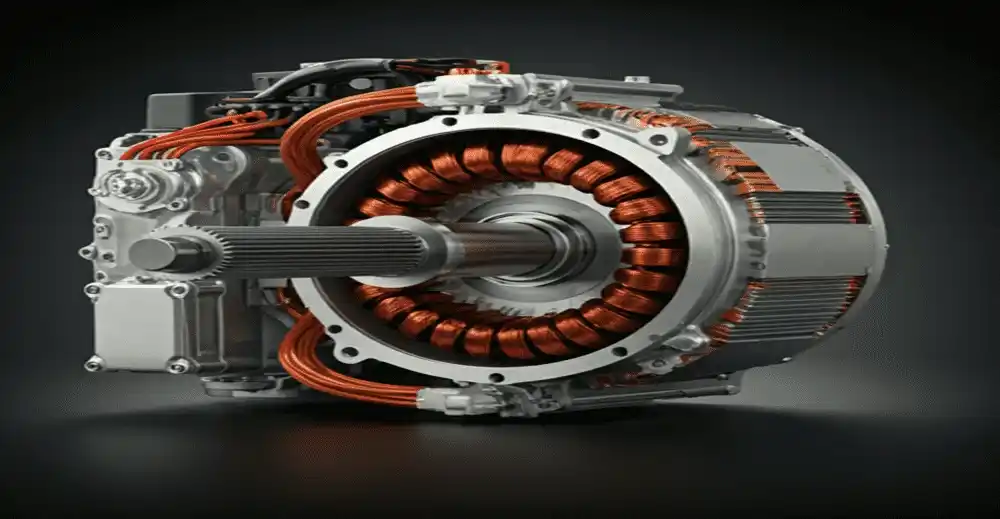
An electric vehicle (EV) motor turns electrical energy into mechanical energy giving torque and power to move a vehicle forward. It gets electricity from the vehicle's battery, makes a magnetic field, and creates mechanical energy by spinning. This mechanical energy goes to the wheels through the vehicle's drivetrain. EVs utilize three primary types of motors that are induction motors, permanent magnet synchronous motors and switched reluctance motors. These motors are used for diverse purposes to increase the productivity and effectiveness of the EV by producing efficient power.
The market for EV motors is witnessing strong expansion due to supportive government initiatives and policies, a rise in self-driving vehicles, the development of charging facilities, and the incorporation of EVs into smart grids. The environmental concern posed by the enhancement of vehicle technology has increased the adoption of EVs. Lower costs have made EVs cheaper so more people can afford them. Gas prices are rising quickly making regular cars pricier to run, which makes EVs a smarter choice in perspective of cost. Moreover, the buyer's preferences are changing with more individuals wanting electric cars, which drives up the need for EV motors.
The market is witnessing diverse collaborations and innovative technological advancements, for instance, the E-Axle produced by Nidec corporation in October 2022 is a second-generation Electric Vehicle drive motor system that provides a 135kW output, weighs around 57kg weight, and 2,400Nm power.
Based on the vehicle type, the EV motor market is divided into two-wheelers, passenger vehicles, three-wheelers, and commercial vehicles. Passenger vehicles will have a significant role in the growth of the EV motor market in the years ahead. This is because more people are becoming mindful of the advantages of EVs. Also, battery charging stations and motor design technology are getting better. On top of that, governments are offering tax cuts, funds, and free charging spots. All of this makes EVs more useful and attractive to an increasing number of buyers.
Based on the components, the EV motor market is classified into rotor, shaft, motor stator, and bearing, permanent magnet, casing, and wiring & connectors. Permanent magnets will have a significant share in the growth of the EV motor market during the forecasted period due to their properties and they store more power in a smaller space. Moreover, with advancements in these components, they are increasing in demand. They turn more electricity into motion, which means EVs can go farther on a single charge and use less energy overall.
Based on the power rating, the EV motor market is categorized into up to 20KW, 100KW to 250KW, 20KW to 100KW, and above 250KW. The market segment for EV motors with power ratings above 250KW is set to expand due to heavy-duty uses like commercial trucks, buses, and construction equipment. As governments and companies switch to EVs, they need more high-power EV motors. New technology in motor design, power electronics, and batteries allows manufacturers to build stronger and more efficient EV motors for these applications.
Based on geography, the EV motor market is extending majorly in the Asia Pacific region due to various variables. The region of Asia Pacific is witnessing the growth of EV motors because of its growing economy, the presence of large EV manufacturers in countries like China, Japan, and India, and its proximity to cheap labor and production. However, the rise in population moving to cities, and new tech developments, will contribute to more EV adoption, leading to regional market growth.
As a part of the report, the major players operating in the EV motor market that have been covered are Aisin Seiki Co. Ltd, Toyota Motor Corporation, Hitachi Automotive Systems, DENSO Corporation, Honda Motor Company Ltd, Mitsubishi Electric Corp., Magna International, Robert Bosch GmbH, BMW AG, Nissan Motor Co. Ltd, Tesla Inc., Toshiba Corporation, and BYD Co. Ltd.
View a sample of the report or purchase the complete study at https://www.knowledge-sourcing.com/report/ev-motor-market
This analytics report segments the EV motor market on the following basis:
- By Vehicle Type
- Two-Wheeler
- Three-Wheeler
- Passenger Vehicle
- Commercial Vehicle
- By Component
- Motor Stator
- Rotor, Shaft and Bearing
- Permanent Magnet
- Casing
- Wiring & Connectors
- By Power Rating
- Up to 20KW
- 20KW to 100KW
- 100KW to 250KW
- Above 250KW
- By Geography
- North America
- USA
- Canada
- Mexico
- South America
- Brazil
- Argentina
- Others
- Europe
- United Kingdom
- Germany
- France
- Italy
- Spain
- Rest of Europe
- Middle East and Africa
- Saudi Arabia
- Saudi Arabia
- United Arab Emirates
- Rest of Middle East and Africa
- Asia-Pacific
- China
- India
- Japan
- South Korea
- Taiwan
- Thailand
- Indonesia
- Rest of Asia-Pacific
- North America
- EV Charging Connectors Market Report
- EV Battery Cooling Market Report
- Pressure Sensor Market Share
Have questions?
More Press Releases
Lifestyle-Associated Cancer Epidemiology Market is expected to reach USD 13.12 billion by 2031
The worldwide market for lifestyle-associated cancer epidemiology is expected to expand rapidly, owing to the rising global awareness of modifiable risk factors such as tobacco use, obesity, poor diet, alcohol consumption, and physical inactivity, which together contribute significantly to cancer incidence. Health organizations, along with research institutions, are investing in enhanced surveillance, behavioral risk monitoring, cancer registries, and prevention strategies to address the growing burden of preventable cancers. In recent years, the World Health Organization and several national bodies have emphasized data-driven epidemiology. These initiatives support targeted interventions, policy measures, and screening programs. Additionally, the widespread adoption of digital epidemiology tools, precision prevention approaches, and AI-powered analytics is fueling the demand for robust epidemiology infrastructure worldwide.
Psycho-Oncology Digital Health Market is anticipated to surpass USD 290.01 million in 2031 at a CAGR of 8.5%
The psycho-oncology digital health market is expanding as healthcare providers increasingly integrate digital mental health solutions into cancer care. Growing demand for AI-driven platforms, digital cognitive behavioral therapy, telehealth, and mobile applications is improving access to psychological support. North America leads the market, while Asia Pacific is expected to witness the fastest growth.
Intratumoral Injection Therapy Market is expected to reach USD 630.39 million by 2031
The worldwide market for Intratumoral Injection Therapy is expected to experience substantial growth in the market due to the increasing demand for localized cancer treatments that are essential in enhancing therapeutic efficacy while also minimizing systemic toxicity. Intramural injection therapy is often involved with direct administration of therapeutic agents into tumors, which enables high local drug concentrations and targets immune activation. Growing interest in gene therapies, cancer immunotherapy, and on-politic viruses, including cytokine-based therapies are also accelerating market expansion.