In the global defense sector, artificial intelligence or AI offers key applications. The AI-based tools in the defense landscape can be integrated into multiple types of equipment to enhance their capabilities, like in surveillance systems. The AI-based tools and platform can also be integrated into...
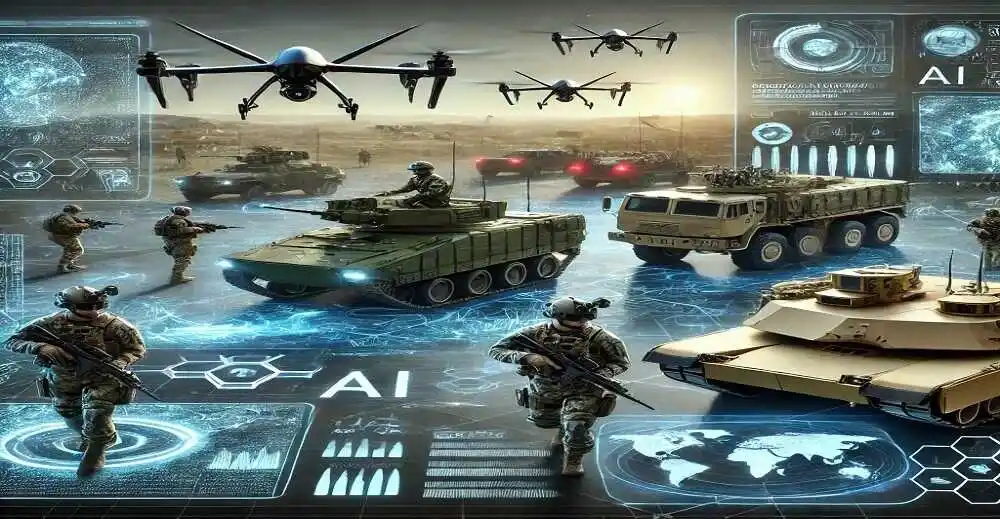
- Cybersecurity- In the cybersecurity sector of the defense industry, artificial intelligence offers a critical role in monitoring, analyzing, and detecting any fraudulent activities, and helps in keeping the cloud network secure. Artificial intelligence also helps to automatically detect multiple threats simultaneously and helps in identifying unknown attack vectors.
- Surveillance- Artificial intelligence also helps enhance border surveillance in the defense sector. The artificial intelligence-based tools and platforms can be integrated into cameras, sensors, and radars to detect any threats. In the border surveillance category, artificial intelligence helps in detecting border intrusions in different weather conditions. It can also help in enhancing the accuracy of the defense operations.
- Equipment Manufacturing and Training- In the training and manufacturing of the defense sector, AI-based technology helps boost the manufacturing and training process of military equipment.
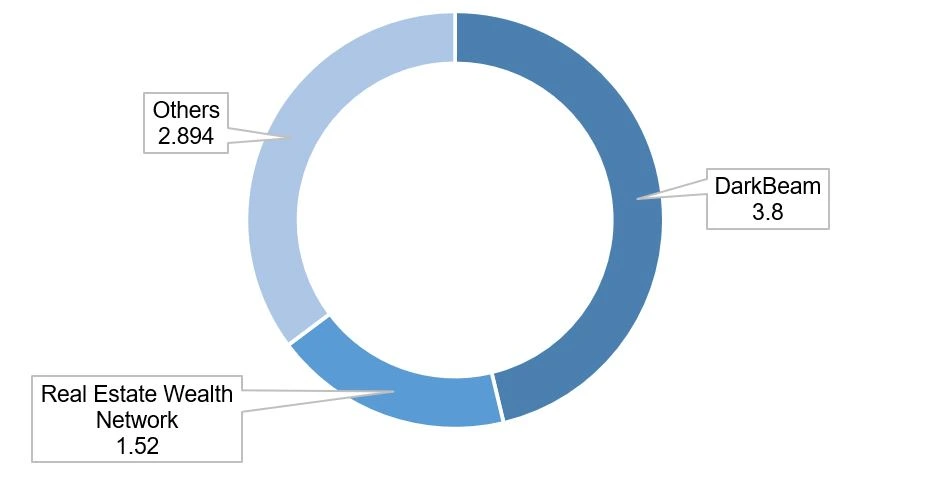 Source: IT Governance, UK
2. Growing global defense expenditure
The growth in military expenditures across the globe is also expected to propel the demand for AI in the defense sector. With the growth in the global expenditure of the defense sector, the integration and research & development in the technological sector is expected to grow significantly. The Stockholm International Peace Research Institute, an international institute, in its report stated that in 2023, global military expenditure witnessed a growth of 6.8% from 2022, with total military expenditure recorded at US$2,443 billion. In the global military expenditure, the USA accounted for a total military expenditure of about US$916 billion, followed by US$296 billion of military expenditure of China, and US$109 billion of Russia. The military expenditure of China grew by 6% in 2023 over the past year, whereas the expenditure of Saudi Arabia and India, grew by 4.3% and 4.3% respectively.
The US Army, in its April 2024 press release stated that the US Army invested about US$50 million for the development of artificial intelligence and machine learning solution, which is under its AI/ML open-topic solicitation. Similarly, the Ministry of Defense of the UK stated that in its overall military expenditure, the Defence and Security Accelerator of the nation allocated about GBP 49 million, for about 249 projects.
3. Increasing investments in the AI sector
The growing investments in AI-based technological development by governmental organizations are also expected to boost the utilization of artificial intelligence in the global market. Various nations across the globe, like India, the USA, China, Japan, and Canada have introduced key policies and investment schemes, to propel the development of artificial intelligence. The policies are aimed to boost the research and development of the technology, and integration of AI-based tools and platforms across multiple industries, including defense.
For instance, the Ministry of Electronics and Information Technology of India, or MeitY introduced the IndiaAI 2023 policy, which is aimed to boost the development of artificial intelligence in the nation. The department further stated that the policy also aims to develop Responsible AI and Ethical AI for the nation. Similarly, in 2023, the US Government announced foreign assistance funding of about US$15 million, to develop artificial intelligence across the globe.
Key Developments
Source: IT Governance, UK
2. Growing global defense expenditure
The growth in military expenditures across the globe is also expected to propel the demand for AI in the defense sector. With the growth in the global expenditure of the defense sector, the integration and research & development in the technological sector is expected to grow significantly. The Stockholm International Peace Research Institute, an international institute, in its report stated that in 2023, global military expenditure witnessed a growth of 6.8% from 2022, with total military expenditure recorded at US$2,443 billion. In the global military expenditure, the USA accounted for a total military expenditure of about US$916 billion, followed by US$296 billion of military expenditure of China, and US$109 billion of Russia. The military expenditure of China grew by 6% in 2023 over the past year, whereas the expenditure of Saudi Arabia and India, grew by 4.3% and 4.3% respectively.
The US Army, in its April 2024 press release stated that the US Army invested about US$50 million for the development of artificial intelligence and machine learning solution, which is under its AI/ML open-topic solicitation. Similarly, the Ministry of Defense of the UK stated that in its overall military expenditure, the Defence and Security Accelerator of the nation allocated about GBP 49 million, for about 249 projects.
3. Increasing investments in the AI sector
The growing investments in AI-based technological development by governmental organizations are also expected to boost the utilization of artificial intelligence in the global market. Various nations across the globe, like India, the USA, China, Japan, and Canada have introduced key policies and investment schemes, to propel the development of artificial intelligence. The policies are aimed to boost the research and development of the technology, and integration of AI-based tools and platforms across multiple industries, including defense.
For instance, the Ministry of Electronics and Information Technology of India, or MeitY introduced the IndiaAI 2023 policy, which is aimed to boost the development of artificial intelligence in the nation. The department further stated that the policy also aims to develop Responsible AI and Ethical AI for the nation. Similarly, in 2023, the US Government announced foreign assistance funding of about US$15 million, to develop artificial intelligence across the globe.
Key Developments
- In November 2024, Operant AI, Inc., a global leader in the defense platform, announced the launch of its 3D Runtime Defense, designed for live cloud and AI workloads. The runtime platform has the capability to detect vulnerabilities in AI systems and offers live workload mapping. The platform also offers real-time monitoring of various ghost applications and helps in tracking the flow of shadow data.
- In November 2024, the Defence Research and Development Organisation (DRDO) in its press release stated that the Indian Armed Forces, Defence Research and Development Organisation (DRDO), and Department of Defence Production (DDP) launched the e-Tarang platform, which enabled with AI. The platform aims to enhance the spectrum management of the defense sector. The agency stated that the platform was developed by a partnership between Bhaskaracharya National Institute for Space Applications and Geo-informatics.
Need specialized data cuts or competitive intelligence?
Our analyst team provides bespoke market sizing, supplier audits, and country-level feasibility reports tailored to your enterprise roadmap.
Speak With an Industry Analyst →Ask an Industry Analyst
Have questions regarding this briefing or market projections? Inquire with our sector lead.
Related Thought Articles
View All →
From Highways to Cities: How Top Companies Are Expanding EV Charging Across India
Aug 20, 2026
How AI Is Revolutionizing EV Range Prediction in India
Aug 19, 2026
Make in India and the Rise of Local EV Motor Controller Manufacturing
Aug 18, 2026
Why EV Conversion Kits Are Becoming a New Manufacturing Opportunity in India
Aug 17, 2026
How Advanced Power Electronics Are Reshaping India’s EV Powertrain Market
Aug 14, 2026More Thought Articles
Why Electric Recreational Vehicles Could Become India’s Next Mobility Opportunity
India’s electric recreational vehicle opportunity is likely to emerge through commercial tourism applications rather than mass private ownership. Growing domestic tourism, caravan policies, expanding EV supply chains, destination charging, and modular campervan designs could enable rental fleets, resorts, eco-tourism operators, and travel companies to test high-utilisation models before consumer adoption.
Can Battery Recycling Make India’s EV Growth More Sustainable?
India’s EV battery recycling ecosystem is moving from waste management toward critical-mineral security. Battery Waste Management Rules, EPR obligations, recycled-content requirements, recycling incentives and EU-India cooperation are strengthening the framework. However, limited near-term feedstock, fragmented collection, underused capacity, chemistry differences and domestic refining gaps remain key challenges to scale sustainably.
EV Tires Are Changing Fast: What India’s Electric Mobility Boom Means for Tire Makers
India’s electric mobility growth is reshaping tire engineering, with EVs creating new requirements for rolling resistance, durability, noise, torque handling, load capacity and efficiency. Electric two-wheelers and three-wheelers offer major volume opportunities, while passenger EVs drive premium innovation. Tire makers are increasingly focusing on localized testing, OE partnerships and application-specific technologies.