Biotech is a subset of technology that produces products for the food, pharmaceutical, and energy sectors using biological and cellular processes. With advancements in science and technology, the biotech industry has emerged as one of the most inventive sectors. Recent advancements in biotechnology...
- Artificial Intelligence (AI)
- Big Data
- Biomanufacturing
- Precision Medicine
- Tissue Engineering
 Source: CMS.wellcome.org
2. Big Data
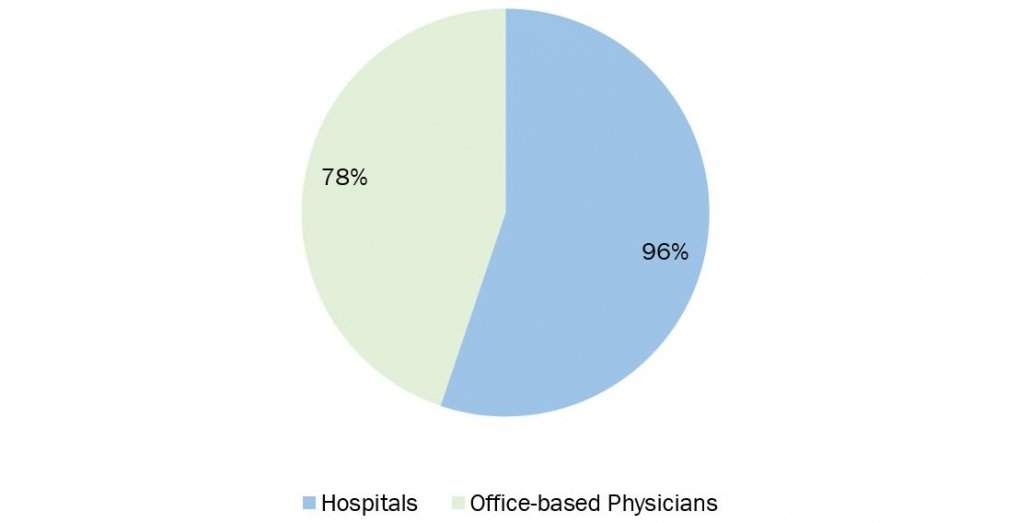
Biotech analysts have never had access to so much data. Biotech scientists now have unprecedented access to data thanks to the integration of sensors and the Internet of Things. Big data and the healthcare sector are now tackling the issue of managing and preserving EHRs. $19 billion was invested by the US government to hasten the adoption of electronic medical records. The medical community has access to a wealth of data to enhance diagnosis and treatment due to the directory-based storage of medical records. Moreover, nearly all non-federal acute care hospitals (96%) and nearly 4 out of 5 office-based physicians (78%) had implemented certified electronic health records by 2021. Since 2011, when 28% of hospitals and 34% of physicians had adopted an EHR, there has been a significant 10-year progress.
Figure 2: National Trends in Hospital and Physician Adoption of Electronic Health Records, 2021
Source: CMS.wellcome.org
2. Big Data
Biotech analysts have never had access to so much data. Biotech scientists now have unprecedented access to data thanks to the integration of sensors and the Internet of Things. Big data and the healthcare sector are now tackling the issue of managing and preserving EHRs. $19 billion was invested by the US government to hasten the adoption of electronic medical records. The medical community has access to a wealth of data to enhance diagnosis and treatment due to the directory-based storage of medical records. Moreover, nearly all non-federal acute care hospitals (96%) and nearly 4 out of 5 office-based physicians (78%) had implemented certified electronic health records by 2021. Since 2011, when 28% of hospitals and 34% of physicians had adopted an EHR, there has been a significant 10-year progress.
Figure 2: National Trends in Hospital and Physician Adoption of Electronic Health Records, 2021
 Source: HealthIT.gov
Big data is becoming more and more important in biotechnology as new experimental techniques like sequencing and high-throughput technologies continue to advance, making it necessary to use it for the development, testing, and marketing of new and improved goods and services. The Center for the Fourth Industrial Revolution in Serbia (C4IR Serbia) was inaugurated at the Biotech Future Forum, which brought government agencies, progressive companies, and academic institutions together to discuss and advance the growth and application of biotechnology, particularly in the fields of medicine and healthcare. Moreover, encouraging significant domestic investment in science and technology infrastructure, talent, and transformation can attract foreign investment and attention. This year, the nation's ICT sector has grown from €3.7 million in earnings to €2.5 billion due to a focused strategy to drive digital transformation.
3. Biomanufacturing
Biomanufacturing is the use of biological systems to produce food and drink, speciality chemicals, biomaterials, and medical products and therapies. To make biomanufacturing more affordable and scalable, startups are developing various technologies related to cell culture, fermentation, and recombinant production.
In comparison to other manufacturing paradigms, it is also relatively more sustainable due to the utilization of biological raw materials. Automation and machine learning are also being incorporated into the industry's production models. Biotechnology startups provide bioprocessing 4.0 to optimize every stage of the production process by incorporating Industry 4.0 models. For instance, an insect-based production platform is being developed by US-based startup Proteinea for next-generation biomanufacturing. To produce recombinants, the startup InsectaPro technology uses insect larvae that are mass-produced as miniature bioreactors. It cultivates them in vertical farms powered by data, which makes the process predictable and ecologically friendly. The method makes it possible to replace traditional bioreactors with one that is more reliable and scalable.
Further, the U.S. Department of Agriculture (USDA) plays a pivotal role in propelling the economy by offering guidance and conducting scientific research to support American farmers and foresters in maintaining their competitiveness in the global market and enabling American companies to generate inventive goods. The three themes that make up USDA's ambitious vision for bioeconomy research and development (R&D) are enhancing agricultural productivity and sustainability while conserving resources; enhancing food quality, nutrition, and consumer choice; and safeguarding plants and animals from environmental stressors.
4. Precision Medicine
Precision medicine, another name for personalized medicine, is completely changing the way to think about healthcare. Personalized medicine has the potential to improve patient outcomes and lower healthcare costs by adjusting treatments and preventive strategies to each individual's unique characteristics, including their genes, environment, and lifestyle.
Personalized medicine is being explored by a wide range of businesses, including academic institutions, biotech startups, and major pharmaceutical companies. A few biotech businesses are becoming well-known in this particular field: for instance, the biotech business Agilent Technologies offers a variety of tools and services for research, such as DNA sequencing and analysis. They are working with the Mayo Clinic to develop a liquid biopsy test for early cancer detection, one of their many personalized medicine initiatives. Moreover, in March 2023, Agilent Technologies Inc. and Proscia®, a pioneer in digital pathology, signed a multi-year distribution deal that will enable Agilent to provide a full digital diagnostic pathology system. By integrating Proscia's Concentriq® Dx enterprise pathology platform with Agilent's reliable pathology staining solutions, pathology labs will be able to improve patient outcomes by transforming diagnostic quality and efficiency. A new wave of adoption is occurring in digital pathology as labs try to meet the increasing demands of precision medicine in the face of an increasingly severe pathologist shortage and an increase in the volume of biopsies.
5. Tissue Engineering
The number of tissue engineering startups has increased significantly in recent years, largely due to advancements in microfluidics and bioprinting. It makes it possible to create autologous tissue grafts for regenerative medicine, organ transplantation, and burn treatment.
Tissue engineering has historically concentrated on biomedical applications, but it is currently investigating sustainable substitutes for animal products like meat and leather. Nonetheless, it's imperative to reach a scale where food products are equally expensive as those derived from animals. Treating heart disease may also benefit from cardiac tissue engineering, which addresses the drawbacks of conventional transplant procedures. For instance, an Israeli startup company called Aleph Farms makes cultured meat. The company grows healthy cow cells that have been isolated to create a sustainable and moral meat substitute. It creates perfectly authentic beef steaks without requiring the killing of animals or emitting carbon dioxide. The method developed by the startup provides a means of growing food in space missions in a sustainable manner.
Moreover, a US-based startup called LyGenesis is creating a technological platform for organ regeneration. Converting lymph nodes into functional ectopic organs makes it possible to treat numerous patients with a single donor organ. The startup uses outpatient endoscopic ultrasound to transplant its cell therapy, obviating the need for surgery.
Source: HealthIT.gov
Big data is becoming more and more important in biotechnology as new experimental techniques like sequencing and high-throughput technologies continue to advance, making it necessary to use it for the development, testing, and marketing of new and improved goods and services. The Center for the Fourth Industrial Revolution in Serbia (C4IR Serbia) was inaugurated at the Biotech Future Forum, which brought government agencies, progressive companies, and academic institutions together to discuss and advance the growth and application of biotechnology, particularly in the fields of medicine and healthcare. Moreover, encouraging significant domestic investment in science and technology infrastructure, talent, and transformation can attract foreign investment and attention. This year, the nation's ICT sector has grown from €3.7 million in earnings to €2.5 billion due to a focused strategy to drive digital transformation.
3. Biomanufacturing
Biomanufacturing is the use of biological systems to produce food and drink, speciality chemicals, biomaterials, and medical products and therapies. To make biomanufacturing more affordable and scalable, startups are developing various technologies related to cell culture, fermentation, and recombinant production.
In comparison to other manufacturing paradigms, it is also relatively more sustainable due to the utilization of biological raw materials. Automation and machine learning are also being incorporated into the industry's production models. Biotechnology startups provide bioprocessing 4.0 to optimize every stage of the production process by incorporating Industry 4.0 models. For instance, an insect-based production platform is being developed by US-based startup Proteinea for next-generation biomanufacturing. To produce recombinants, the startup InsectaPro technology uses insect larvae that are mass-produced as miniature bioreactors. It cultivates them in vertical farms powered by data, which makes the process predictable and ecologically friendly. The method makes it possible to replace traditional bioreactors with one that is more reliable and scalable.
Further, the U.S. Department of Agriculture (USDA) plays a pivotal role in propelling the economy by offering guidance and conducting scientific research to support American farmers and foresters in maintaining their competitiveness in the global market and enabling American companies to generate inventive goods. The three themes that make up USDA's ambitious vision for bioeconomy research and development (R&D) are enhancing agricultural productivity and sustainability while conserving resources; enhancing food quality, nutrition, and consumer choice; and safeguarding plants and animals from environmental stressors.
4. Precision Medicine
Precision medicine, another name for personalized medicine, is completely changing the way to think about healthcare. Personalized medicine has the potential to improve patient outcomes and lower healthcare costs by adjusting treatments and preventive strategies to each individual's unique characteristics, including their genes, environment, and lifestyle.
Personalized medicine is being explored by a wide range of businesses, including academic institutions, biotech startups, and major pharmaceutical companies. A few biotech businesses are becoming well-known in this particular field: for instance, the biotech business Agilent Technologies offers a variety of tools and services for research, such as DNA sequencing and analysis. They are working with the Mayo Clinic to develop a liquid biopsy test for early cancer detection, one of their many personalized medicine initiatives. Moreover, in March 2023, Agilent Technologies Inc. and Proscia®, a pioneer in digital pathology, signed a multi-year distribution deal that will enable Agilent to provide a full digital diagnostic pathology system. By integrating Proscia's Concentriq® Dx enterprise pathology platform with Agilent's reliable pathology staining solutions, pathology labs will be able to improve patient outcomes by transforming diagnostic quality and efficiency. A new wave of adoption is occurring in digital pathology as labs try to meet the increasing demands of precision medicine in the face of an increasingly severe pathologist shortage and an increase in the volume of biopsies.
5. Tissue Engineering
The number of tissue engineering startups has increased significantly in recent years, largely due to advancements in microfluidics and bioprinting. It makes it possible to create autologous tissue grafts for regenerative medicine, organ transplantation, and burn treatment.
Tissue engineering has historically concentrated on biomedical applications, but it is currently investigating sustainable substitutes for animal products like meat and leather. Nonetheless, it's imperative to reach a scale where food products are equally expensive as those derived from animals. Treating heart disease may also benefit from cardiac tissue engineering, which addresses the drawbacks of conventional transplant procedures. For instance, an Israeli startup company called Aleph Farms makes cultured meat. The company grows healthy cow cells that have been isolated to create a sustainable and moral meat substitute. It creates perfectly authentic beef steaks without requiring the killing of animals or emitting carbon dioxide. The method developed by the startup provides a means of growing food in space missions in a sustainable manner.
Moreover, a US-based startup called LyGenesis is creating a technological platform for organ regeneration. Converting lymph nodes into functional ectopic organs makes it possible to treat numerous patients with a single donor organ. The startup uses outpatient endoscopic ultrasound to transplant its cell therapy, obviating the need for surgery.Have questions?
More Thought Articles
How EV Charger Manufacturers Can Capitalize on India’s Home Charging Revolution
India’s residential EV charging opportunity is expanding as policy support, EV adoption, and private parking infrastructure develop. Manufacturers can capture value beyond AC chargers through installation, smart charging, load management, solar integration, software, and after-sales services. Housing societies, automakers, and property developers offer scalable routes to residential charging customers.
Second-Life EV Battery Market in India: What Is Driving Demand from Manufacturers?
India’s second-life EV battery market is gaining relevance as electric vehicle adoption expands and batteries retain useful capacity after automotive service. Growing stationary-storage demand, battery data, refurbishment capabilities, EPR obligations, and critical-mineral policies are encouraging manufacturers to extend battery value through reuse before eventual recycling within India’s emerging circular battery ecosystem.
The Rise of Locally Manufactured Battery Separators in India’s EV Ecosystem
India’s battery industry is progressing from pack assembly toward domestic cell and material manufacturing, creating opportunities for lithium-ion battery separators. Policy support, ACC capacity expansion and R&D initiatives are strengthening the ecosystem. However, technical complexity, manufacturing yields, qualification requirements and economics mean localisation will likely advance gradually through coatings, testing and finishing.