
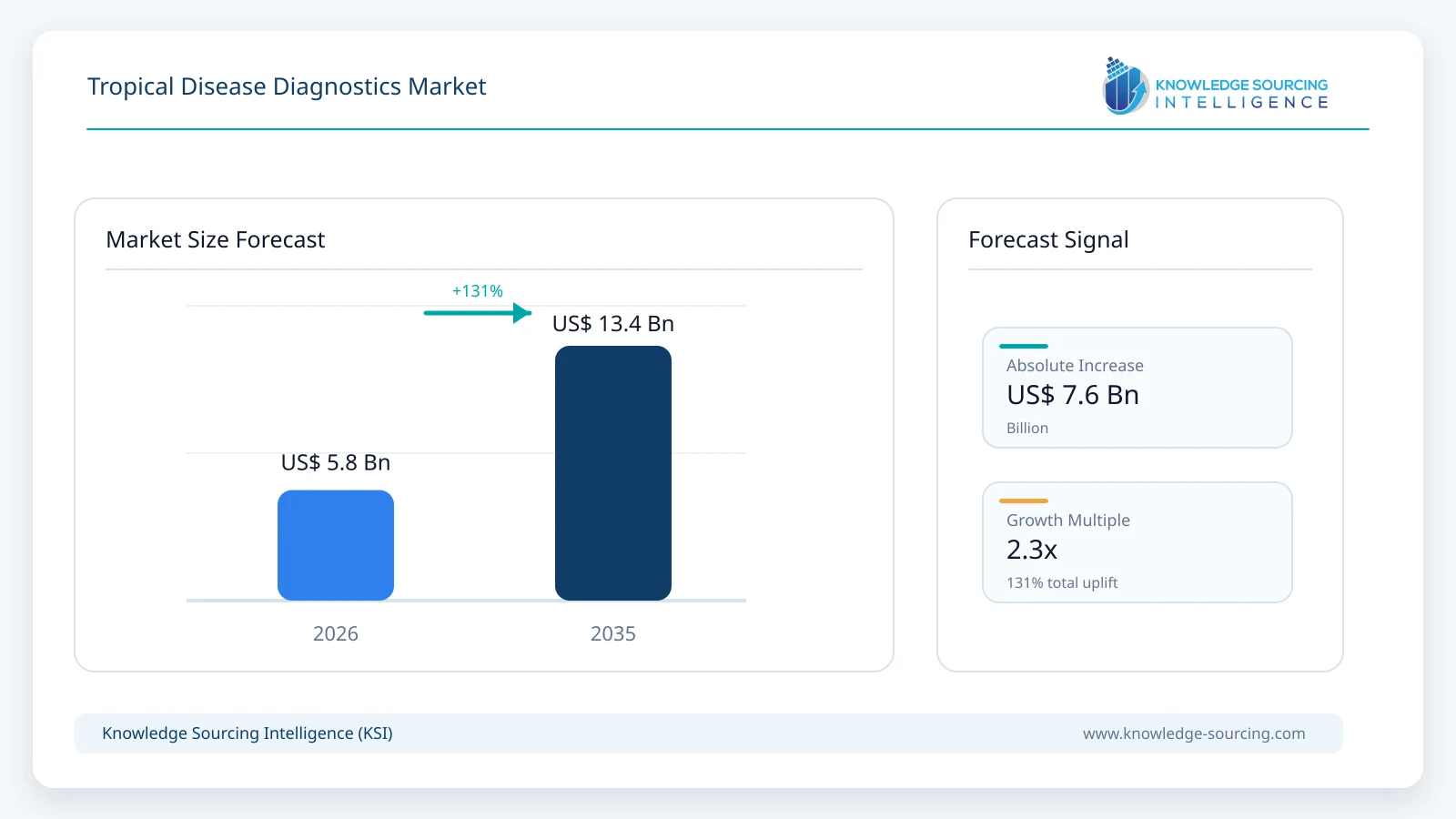
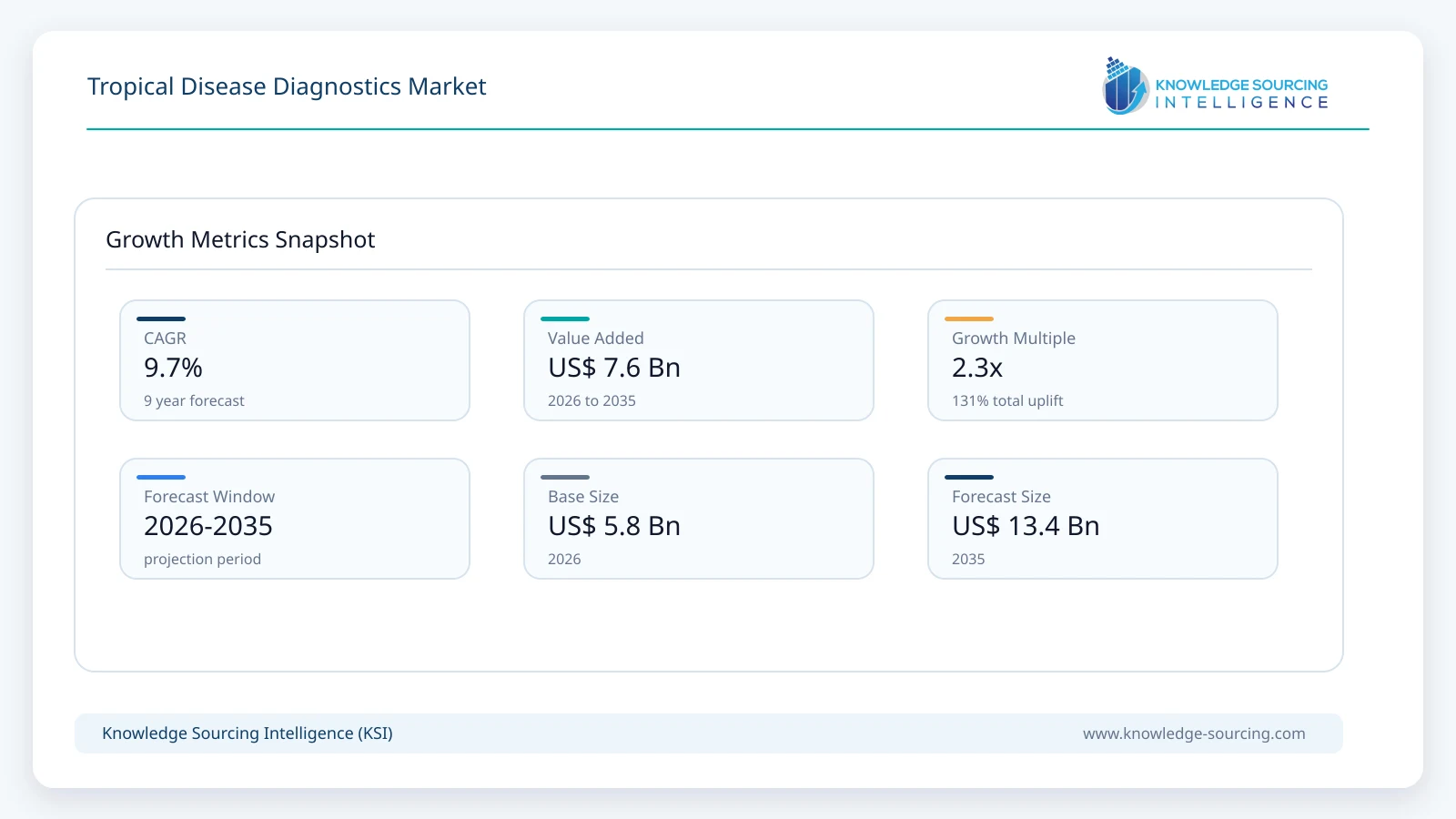
The Tropical Disease Diagnostics Market is anticipated to grow at a CAGR of 9.7% from USD 5.83 billion in 2026 to USD 13.44 billion in 2035.
Highlights:
- 1Rising tropical disease surveillance programs are increasing diagnostic demand because governments seek earlier outbreak detection.
- 2Expanding disease transmission zones are accelerating testing volumes because new populations require screening and monitoring.
- 3Point-of-care diagnostic adoption is increasing because healthcare providers require accessible testing in remote regions.
- 4Molecular diagnostic utilization is growing because healthcare systems seek improved pathogen identification accuracy.
Tropical disease diagnosis remains essential because delayed identification increases disease transmission and treatment complexity. Diagnostic demand is increasing as public health agencies strengthen disease monitoring programs. This requirement is becoming more significant because several tropical diseases are expanding beyond traditional endemic boundaries.
The market depends on accessible and accurate diagnostics because resource-constrained healthcare systems require cost-effective disease management strategies. Healthcare providers are expanding use of rapid diagnostic tests and molecular assays because conventional laboratory workflows may delay intervention. Diagnostic services are becoming more decentralized as disease control initiatives seek broader population coverage.
Regulatory agencies and international health organizations continue emphasizing quality standards and diagnostic reliability. These requirements support adoption of validated testing platforms and strengthen confidence in disease surveillance programs. The strategic importance of tropical disease diagnostics is increasing because early detection remains central to disease elimination and outbreak prevention efforts.
Market Dynamics
Market Drivers
Expansion of Disease Surveillance Programs: Disease control efforts depend on accurate diagnostic information because surveillance guides public health interventions. Governments are expanding testing initiatives as tropical disease monitoring becomes a strategic priority. Limited disease visibility constrains outbreak prevention efforts. Public health agencies are investing in diagnostic infrastructure and laboratory networks. Enhanced surveillance strengthens market demand.
Rising Burden of Endemic and Emerging Tropical Diseases: Tropical diseases continue affecting millions of individuals across endemic regions. Diagnostic demand is increasing as urbanization and environmental changes influence disease transmission patterns. Healthcare systems face pressure when infections spread beyond traditional risk zones. Providers are expanding diagnostic capacity to improve disease management. Growing disease burden supports market expansion.
Adoption of Rapid Diagnostic Testing: Timely diagnosis influences treatment outcomes because many tropical diseases progress quickly without intervention. Rapid diagnostic tests are gaining adoption as healthcare systems seek broader testing accessibility. Conventional laboratory dependence limits diagnostic reach in underserved areas. Healthcare programs are deploying portable testing solutions. Increased accessibility supports market growth.
Increasing Molecular Diagnostic Integration: Precise pathogen identification remains essential because clinical symptoms frequently overlap across tropical diseases. Laboratories are adopting molecular diagnostics as diagnostic accuracy becomes increasingly important. Traditional methods may create uncertainty during early disease stages. Healthcare institutions are investing in advanced molecular platforms. This trend strengthens demand for sophisticated testing solutions.
Market Restraints
Limited laboratory infrastructure in endemic regions restricts access to advanced diagnostics.
Funding constraints affect implementation of high-cost molecular diagnostic technologies.
Diagnostic variability across tropical diseases increases testing complexity and interpretation challenges.
Market Opportunities
Multiplex Tropical Disease Testing: Clinical symptom overlap creates diagnostic uncertainty across multiple tropical diseases. Multiplex testing solutions are gaining attention because healthcare providers require simultaneous pathogen identification. Sequential testing increases costs and delays treatment decisions. Manufacturers are expanding multiplex assay development. Comprehensive diagnostics create significant growth opportunities.
Digital Surveillance Integration: Disease control increasingly depends on real-time reporting and outbreak monitoring. Diagnostic platforms are integrating with digital surveillance systems as public health agencies seek faster response capabilities. Fragmented reporting limits visibility into disease trends. Technology providers are developing connected diagnostic ecosystems. Digital integration expands market potential.
Emerging Healthcare Infrastructure Investments: Healthcare investment continues increasing across tropical disease-endemic regions. Diagnostic capacity is expanding because governments prioritize infectious disease preparedness. Conventional testing limitations create demand for modern diagnostic technologies. Industry participants are strengthening regional operations. Infrastructure development supports long-term market growth.
Supply Chain Analysis
The tropical disease diagnostics supply chain begins with suppliers of biological reagents, antibodies, antigens, enzymes, primers, probes, plastics, and electronic components. Diagnostic manufacturers transform these materials into rapid tests, molecular assays, instruments, and software solutions. Distribution networks then deliver products to hospitals, laboratories, public health agencies, and disease control programs.
Demand increasingly favors portable and reagent-intensive testing models because disease surveillance programs require broader testing coverage. Manufacturers therefore focus on integrated diagnostic platforms that support both centralized laboratory testing and field-based deployment. Regulatory requirements and procurement standards continue shaping market participation across the value chain.
Government Regulations
Region | Regulatory Authority | Key Requirement |
United States | FDA | Regulation of infectious disease diagnostic devices |
European Union | European Commission / IVDR | Compliance with In Vitro Diagnostic Regulation |
Japan | PMDA | Diagnostic approval and post-market surveillance |
China | NMPA | Registration and quality compliance requirements |
Market Segmentation
By Product Type
Rapid diagnostic tests represent a major demand segment because they provide accessible testing in resource-constrained settings. Testing utilization is increasing as public health programs seek broader population coverage. Reagents and kits continue experiencing strong demand because molecular diagnostics adoption is expanding. Instruments remain essential for centralized laboratory operations, while software and services are becoming increasingly important because disease surveillance programs require integrated data management. Demand therefore increasingly favors solutions that balance accessibility with analytical performance.
By Disease Type
Malaria remains the largest diagnostic category because endemic regions require continuous screening and surveillance. Dengue fever testing demand is increasing as outbreaks affect larger populations across tropical and subtropical geographies. Chikungunya and Zika diagnostics continue gaining importance because symptom overlap creates diagnostic uncertainty. Neglected tropical diseases such as leishmaniasis, Chagas disease, African trypanosomiasis, and schistosomiasis continue requiring targeted diagnostic support. Demand therefore reflects both endemic disease burden and public health elimination initiatives.
By Diagnostic Method
Rapid diagnostic testing remains widely utilized because it supports decentralized disease management. Molecular diagnostics adoption is increasing because healthcare providers require greater sensitivity and specificity. Serological testing continues supporting surveillance and epidemiological investigations. Microscopy-based testing remains important due to established use in malaria diagnosis. NGS technologies are emerging for advanced pathogen characterization and surveillance applications. The diagnostic landscape therefore reflects growing demand for speed, accessibility, and precision.
Regional Analysis
North America
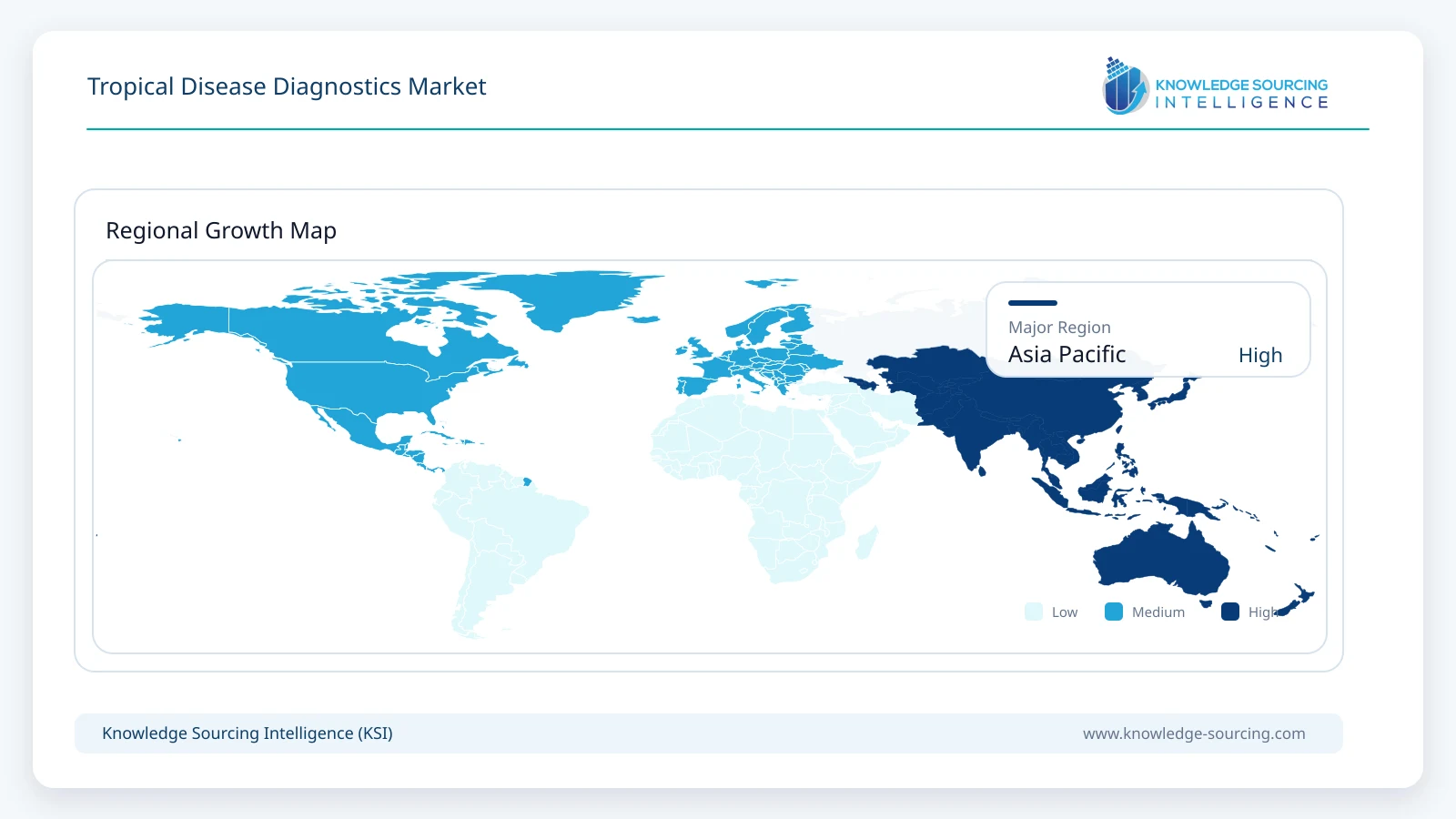
North America maintains diagnostic demand because imported tropical disease cases require effective detection and surveillance. Public health agencies are strengthening preparedness programs as global travel increases disease exposure risks. Molecular diagnostic adoption continues expanding because healthcare providers require accurate differentiation among infectious diseases. Research funding and advanced laboratory infrastructure support ongoing diagnostic innovation. These factors sustain market activity.
Europe
European healthcare systems continue expanding tropical disease surveillance because climate and travel patterns influence disease exposure risks. Diagnostic demand is increasing as authorities strengthen outbreak preparedness strategies. Laboratories continue investing in molecular testing technologies because accurate pathogen identification remains essential. Public health initiatives and regulatory support encourage adoption of advanced diagnostics. These dynamics support regional market growth.
Asia Pacific
Asia Pacific represents a major demand center because malaria, dengue, and other tropical diseases continue affecting large populations. Governments are increasing surveillance investments because disease control remains a public health priority. Diagnostic infrastructure expansion is improving access to modern testing technologies. Healthcare systems are adopting rapid and molecular diagnostics to improve disease management. These trends support strong market growth potential.
Rest of the World
Latin America, Africa, and parts of the Middle East continue carrying a significant tropical disease burden. Diagnostic demand is increasing because governments and international organizations are strengthening disease elimination initiatives. Resource limitations remain a challenge, yet investment in rapid testing and surveillance infrastructure continues improving access. International partnerships support diagnostic capacity development. These factors create substantial growth opportunities.
Regulatory Landscape
Regulatory oversight remains important because tropical disease diagnostics directly influence treatment decisions and public health interventions. Authorities emphasize analytical performance, quality assurance, and product reliability. These requirements encourage manufacturers to invest in validated testing technologies.
The regulatory environment is evolving as molecular diagnostics and portable testing solutions gain broader adoption. Developers are adapting product strategies to satisfy changing approval requirements. These standards increase development complexity, yet they strengthen confidence in commercial diagnostic products.
Pipeline Analysis
The tropical disease diagnostics pipeline remains active because healthcare providers require faster and more accessible testing solutions. Development programs increasingly focus on multiplex diagnostics capable of identifying multiple pathogens from a single sample. These efforts seek to improve efficiency while reducing diagnostic uncertainty.
Manufacturers are also advancing portable molecular platforms and enhanced rapid diagnostic tests. Development activity increasingly incorporates digital connectivity because surveillance programs require real-time reporting capabilities. These innovations reflect growing demand for integrated diagnostic ecosystems supporting both clinical management and disease surveillance.
Competitive Landscape
Abbott Laboratories
Abbott remains strategically distinct because it combines rapid diagnostics expertise with extensive global healthcare reach. The company supports infectious disease testing through portable and laboratory-based diagnostic solutions. Its focus on accessibility strengthens participation in tropical disease detection programs.
F. Hoffmann-La Roche Ltd.
Roche leverages molecular diagnostics leadership to support infectious disease surveillance and pathogen identification. The company focuses on automation, scalability, and analytical performance. Strong molecular testing capabilities reinforce competitive positioning.
Danaher Corporation
Danaher participates through multiple diagnostic businesses supporting infectious disease management. Technological diversity and continuous innovation strengthen market relevance. Its broad diagnostics portfolio supports long-term competitiveness.
bioMérieux SA
bioMérieux maintains a strong position in infectious disease diagnostics through microbiology and molecular testing expertise. The company supports laboratory workflows and disease surveillance activities. Integrated solutions reinforce market presence.
QIAGEN N.V.
QIAGEN differentiates itself through molecular testing and sample preparation technologies. The company continues expanding infectious disease assay offerings. Its focus on diagnostic precision supports adoption across healthcare settings.
Thermo Fisher Scientific Inc.
Thermo Fisher benefits from extensive laboratory and molecular diagnostics capabilities. The company supports disease surveillance and pathogen detection through broad technology offerings. Global reach strengthens commercial presence.
Bio-Rad Laboratories, Inc.
Bio-Rad provides molecular diagnostic technologies supporting infectious disease testing. The company emphasizes analytical reliability and workflow efficiency. Its expertise supports participation in tropical disease diagnostics.
Siemens Healthineers AG
Siemens Healthineers leverages healthcare technology expertise and extensive laboratory diagnostics infrastructure. The company supports testing workflows through integrated diagnostic solutions. Strong healthcare relationships reinforce market relevance.
Key Market Highlights
In June 2026, Altona Diagnostics announced the launch of the RealStar® Bundibugyo Virus RT-PCR Kit 1.0 (RUO), a dedicated real-time RT-PCR assay for specific detection of Bundibugyo virus RNA to support filovirus research and outbreak-related investigation workflows.
Future Market Outlook
Demand increasingly favors diagnostic platforms capable of supporting both disease surveillance and clinical decision-making because tropical disease management depends on early detection. Healthcare systems continue prioritizing testing solutions that improve accessibility while maintaining diagnostic accuracy. This environment supports sustained investment in rapid and molecular diagnostics.
Purchasing decisions increasingly reflect portability, surveillance integration, and ease of deployment rather than analytical performance alone. Manufacturers are responding through ecosystem-based strategies that combine diagnostics, connectivity, and data management capabilities. This transition supports broader adoption across endemic regions.
The tropical disease diagnostics market remains positioned for continued innovation because governments and healthcare organizations seek stronger disease control capabilities. As climate change, urbanization, and population mobility continue influencing disease transmission patterns, demand increasingly concentrates on comprehensive diagnostic solutions capable of supporting detection, surveillance, and public health response.
Tropical Disease Diagnostics Market Scope:
| Report Metric | Details |
|---|---|
| Total Market Size in 2026 | USD 5.83 billion |
| Total Market Size in 2035 | USD 13.44 billion |
| Forecast Unit | Billion |
| Growth Rate | 9.7% |
| Study Period | 2021 to 2035 |
| Historical Data | 2021 to 2024 |
| Base Year | 2025 |
| Forecast Period | 2026 – 2035 |
| Segmentation | Product Type, Disease Type, Diagnostic Method, End User, Geography |
| Companies |
|
Market Segmentation
Product Type
Disease Type
End User
Geography
- North America
- South America
- Europe
- Middle East and Africa
- Asia Pacific
Table of Contents
1. EXECUTIVE SUMMARY
1.1 Market Snapshot
1.2 Key Findings
1.3 Analyst Insights
1.4 Strategic Recommendations
2. RESEARCH METHODOLOGY
2.1 Research Design
2.2 Data Collection Methodology
2.3 Market Size Estimation
2.4 Forecasting Model
2.5 Assumptions & Limitations
3. TROPICAL DISEASE DIAGNOSTICS MARKET OVERVIEW, SIZE & FORECAST
3.1 Market Definition & Scope
3.2 Overview of Tropical Diseases
3.3 Industry Evolution
3.4 Key Market Trends
3.5 Disease Burden & Unmet Diagnostic Needs
3.6 Epidemiology and Prevalence Analysis
3.7 Diagnosed Patient Population Analysis
3.8 Testing Volume Analysis
3.9 Disease Surveillance and Screening Analysis
3.10 Patient Journey and Diagnostic Pathway Assessment
3.11 Historical Market Size Analysis (2021-2025)
3.12 Market Forecast Analysis (2026-2035)
4. MARKET DYNAMICS
4.1 Market Drivers
4.2 Market Restraints
4.3 Market Opportunities
4.4 Market Challenges
5. INDUSTRY LANDSCAPE
5.1 Industry Value Chain Analysis
5.2 Pricing Analysis
5.3 Reimbursement Landscape
6. INNOVATION LANDSCAPE
6.1 Emerging Diagnostic Technologies
6.2 Product Innovation Analysis
6.3 Clinical Trial Analysis
6.4 Pipeline Analysis
6.5 Technology Roadmap
6.6 AI Integration in Tropical Disease Diagnostics
6.7 Point-of-Care Diagnostic Innovation Analysis
6.8 Digital Health and Disease Surveillance Integration
7. REGULATORY LANDSCAPE
7.1 Regulatory Framework
7.2 Approval Pathways
7.3 Compliance Requirements
8. TROPICAL DISEASE DIAGNOSTICS MARKET LANDSCAPE ANALYSIS
8.1 Analysis by Technology Platform
8.2 Analysis by Biomarker Type
8.3 Analysis by Sample Type
8.4 Analysis by Disease Application
8.5 Analysis by Testing Methodology
9. TROPICAL DISEASE DIAGNOSTICS MARKET SEGMENT ANALYSIS (2021-2035)
9.1 By Product Type
9.1.1 Instruments
9.1.2 Reagents & Kits
9.1.3 Rapid Diagnostic Tests (RDTs)
9.1.4 Software & Services
9.2 By Disease Type
9.2.1 Malaria
9.2.2 Dengue Fever
9.2.3 Chikungunya
9.2.4 Zika Virus Disease
9.2.5 Leishmaniasis
9.2.6 Chagas Disease
9.2.7 African Trypanosomiasis
9.2.8 Schistosomiasis
9.2.9 Other Tropical Diseases
9.3 By Diagnostic Method
9.3.1 Molecular Diagnostics
9.3.2 Serological Testing
9.3.3 Rapid Diagnostic Testing
9.3.4 Microscopy-Based Testing
9.3.5 Next-Generation Sequencing (NGS)
9.4 By End User
9.4.1 Hospitals
9.4.2 Clinical Laboratories
9.4.3 Public Health Laboratories
9.4.4 Academic & Research Institutes
9.4.5 Other End Users
10. TROPICAL DISEASE DIAGNOSTICS MARKET GEOGRAPHICAL ANALYSIS (2021-2035)
10.1 North America
10.2 Europe
10.3 Asia-Pacific
10.4 South America
10.5 Middle East & Africa
11. TROPICAL DISEASE DIAGNOSTICS MARKET COUNTRY ANALYSIS (2021-2035)
11.1 United States
11.2 Canada
11.3 Germany
11.4 United Kingdom
11.5 France
11.6 India
11.7 China
11.8 Thailand
11.9 Indonesia
11.10 Philippines
11.11 Brazil
11.12 Mexico
11.13 Colombia
11.14 Nigeria
11.15 South Africa
12. COMPETITIVE LANDSCAPE
12.1 Market Share Analysis
12.2 Strategic Developments
12.3 Mergers & Acquisitions, Partnerships & Collaborations
12.4 Product Launches
13. COMPANY PROFILES
13.1 Abbott Laboratories
13.2 F. Hoffmann-La Roche Ltd.
13.3 Danaher Corporation
13.4 bioMérieux SA
13.5 QIAGEN N.V.
13.6 Thermo Fisher Scientific Inc.
13.7 Bio-Rad Laboratories, Inc.
13.8 Siemens Healthineers AG
13.9 Sysmex Corporation
13.10 SD Biosensor, Inc.
13.11 Revvity, Inc.
13.12 OraSure Technologies, Inc.
13.13 Chembio Diagnostics, Inc.
13.14 Hologic, Inc.
13.15 Genetic Signatures Limited
14. TROPICAL DISEASE DIAGNOSTICS MARKET COMMERCIAL FORECAST ANALYSIS
14.1 Malaria Diagnostics
14.2 Dengue Diagnostics
14.3 Chikungunya Diagnostics
14.4 Zika Diagnostics
14.5 Neglected Tropical Disease Diagnostics
14.6 Multiplex Tropical Disease Diagnostic Panels
15. INVESTMENT & FUNDING ANALYSIS
15.1 Venture Capital Trends
15.2 Government Funding
15.3 R&D Investments
16. FUTURE OUTLOOK
16.1 Key Growth Opportunities
16.2 Future Industry Trends
Navigate
Trusted by the world's leading organizations











