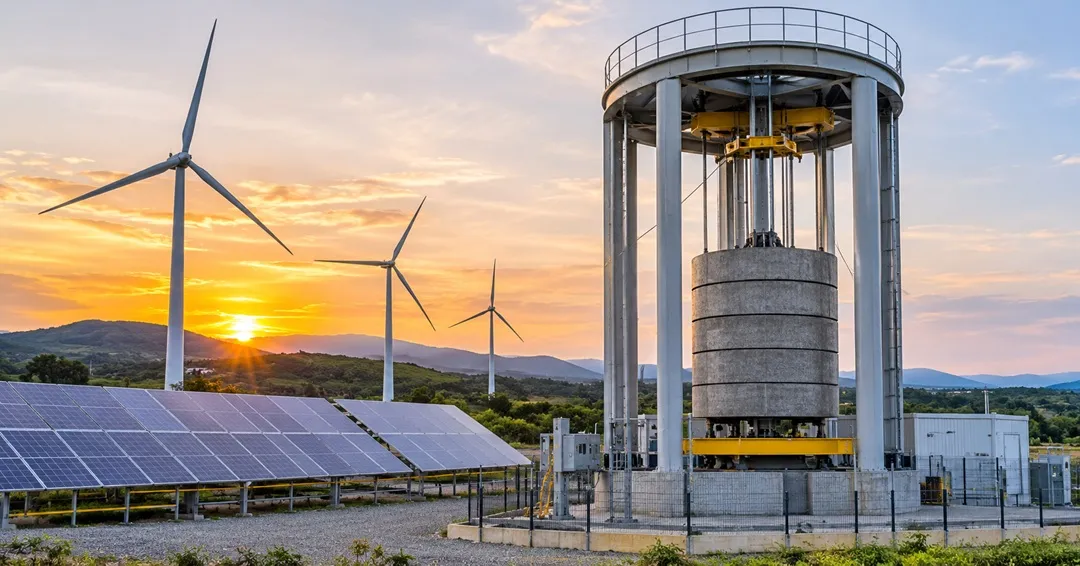
The global gravity energy storage market is gaining momentum as renewable energy expansion increases demand for long-duration storage and grid reliability. Advancements in solid-mass systems, mine-shaft installations, and high-density hydraulic technologies are creating new opportunities for utilities and energy developers, supporting the commercialization of alternative energy storage solutions worldwide.
Knowledge Sourcing Intelligence (KSI) projects the global gravity energy storage market to grow at a CAGR of 40.3%, reaching USD 3.20 billion by 2032 from USD 0.42 billion in 2026. Increasing renewable energy generation, rising demand for long-duration energy storage, and the need for improved grid reliability are creating opportunities for gravity-based storage technologies. Utilities and energy developers are increasingly evaluating alternative storage solutions capable of balancing variable electricity generation and supporting the integration of renewable energy into power networks.
As renewable energy capacity expands, gravity energy storage is progressing through technology demonstrations, pilot installations, and early commercial development. These systems store electricity as gravitational potential energy by raising heavy solid masses or pumping fluids to higher elevations. The stored energy is subsequently released through mechanical or generating equipment when electricity is required. Their potential for extended operational lifetimes, infrastructure reuse, and reduced dependence on critical battery materials is attracting industry interest. However, commercial adoption will depend on project economics, conversion efficiency, geographical suitability, construction requirements, and demonstrated operational performance.
Request a free sample copy or view the report summary: Gravity Energy Storage Market Report
Key Growth Drivers
Rising Demand for Long-Duration Energy Storage
Increasing renewable electricity generation is creating demand for energy storage technologies capable of shifting electricity across periods of variable supply. Solar and wind installations produce electricity according to weather conditions and generation patterns, which do not always correspond with consumption requirements. Gravity energy storage can address this challenge by storing surplus electricity and releasing it during periods of higher demand.
Depending on the system architecture, gravity storage can support multi-hour and potentially longer-duration discharge applications. Its mechanical operating principles and potential for extended asset lifetimes make it relevant to long-term energy infrastructure investments. Utilities are evaluating these technologies alongside battery storage and pumped hydro to diversify their storage portfolios and improve electricity supply flexibility. However, the commercial attractiveness of gravity systems depends on achieving competitive capital costs, round-trip efficiency, and reliable operating performance.
Renewable Energy Integration and Grid Reliability
The growing deployment of wind and solar power is increasing the importance of flexible electricity networks. Variations in renewable generation can create imbalances between electricity supply and demand, particularly during periods of low solar output or changing wind conditions. Gravity storage systems can absorb surplus electricity when generation exceeds immediate demand and return stored energy when renewable production declines.
Depending on their configuration and grid connection, these systems can also support frequency response, voltage management, and other ancillary services. Their potential contribution to grid flexibility is encouraging utilities and energy developers to examine gravity-based storage as part of broader renewable integration strategies. The technology could become increasingly relevant in electricity markets where renewable penetration and demand for dependable power supply continue to increase.
Repurposing Retired Mines and Industrial Infrastructure
The availability of decommissioned mines, underground shafts, and retired industrial facilities presents opportunities for developing gravity energy storage projects. Mine-shaft systems can use existing vertical infrastructure to move heavy weights and generate electricity when required. Reusing suitable mining assets may reduce certain construction requirements while creating alternative economic opportunities for mining regions.
Australia and India are among the countries attracting interest in mine-based gravity storage development because of their established mining infrastructure. Green Gravity's collaboration with IIT (ISM) Dhanbad's TEXMiN, announced in October 2025, illustrates the potential for assessing disused Indian coal mine shafts for gravitational energy storage applications.
Nevertheless, repurposing underground infrastructure requires detailed assessments of shaft integrity, geological conditions, groundwater, gas safety, grid connectivity, and rehabilitation costs. The availability of suitable sites and the economics of retrofitting existing assets will remain important determinants of project feasibility.
Long Asset Life and Storage Technology Diversification
Gravity energy storage uses mechanical or hydraulic systems rather than electrochemical storage media. These configurations can reduce dependence on critical battery materials and may offer extended operational lifetimes, depending on system architecture, component durability, and maintenance requirements.
The technology also provides opportunities to diversify electricity storage infrastructure beyond conventional lithium-ion batteries. Solid-mass systems, mine-shaft installations, and hydraulic configurations offer different engineering approaches to storing gravitational potential energy. However, mechanical wear, conversion efficiency, site suitability, and high upfront construction costs remain important considerations for developers and utilities. Demonstrating competitive lifecycle costs and consistent operational performance will be essential for broader commercialization.
Latest Industry Developments
October 2026 – International Electrotechnical Commission (IEC): Published IEC TR 62786-101:2026, providing technical guidance for connecting solid gravity energy storage systems to electricity distribution networks, including grid connection, operation, and testing requirements.
May 2026 – Energy Vault and Eskom: Announced a strategic development agreement for a proposed 25 MW/100 MWh gravity energy storage installation at South Africa's Hendrina Power Station. The partnership also establishes a framework to explore up to 4 GWh of storage deployments across the Southern African Development Community (SADC).
February 2026 – Green Gravity: Successfully concluded its New South Wales Government Net Zero Manufacturing project, supporting the development of regional manufacturing capabilities and the advancement of its mine-based gravitational energy storage technology.
January 2026 – RheEnergise: Announced that its first High-Density Hydro demonstration project in Devon, United Kingdom, achieved its predicted full-power output consistently, demonstrating progress in its dense-fluid pumped-hydro storage technology.
These developments demonstrate progress across different gravity storage architectures, including solid-mass systems, mine-based installations, and high-density hydraulic storage. The publication of dedicated IEC technical guidance also represents an important step towards establishing clearer grid-integration requirements. However, proposed commercial projects and demonstration milestones should be distinguished from fully operational utility-scale installations.
Market Segmentation and Regional Outlook
The global gravity energy storage market is segmented by technology architecture, storage duration, application, project scale, site type, and geography. Major technology configurations include above-ground lifted-mass systems, mine-shaft suspended-mass systems, modular underground gravity systems, and other gravity-based configurations. Hydraulic and pumped-hydro approaches represent related gravitational potential energy storage technologies.
By application, the market includes renewable energy shifting, grid reliability, ancillary services, and industrial energy storage. Storage duration is another important consideration, as project requirements vary according to electricity demand patterns, renewable generation profiles, and grid-support requirements. Project economics are influenced by installation capacity, geographical elevation differences, infrastructure availability, and the cost of mechanical and electrical equipment.
Asia Pacific represents an important market for gravity energy storage development, supported by China's deployment activities and the region's expanding renewable energy infrastructure. Energy Vault's Rudong gravity energy storage project in China, which achieved commissioning milestones in 2023–2024, provides an important reference for utility-scale lifted-mass technology. Australia is also advancing mine-based gravity storage development through Green Gravity's technology demonstration and manufacturing initiatives.
India presents potential opportunities through the repurposing of underground mining infrastructure. Green Gravity and IIT (ISM) Dhanbad's TEXMiN signed an MoU in October 2025 to assess the suitability of disused underground coal mine shafts in West Bengal for gravity storage applications. These assessments are expected to examine shaft integrity, hydrology, safety, and grid connectivity.
Europe is progressing through alternative gravity-based storage configurations, including mine-shaft and high-density hydraulic technologies. RheEnergise's Devon demonstration project illustrates the development of pumped-hydro storage using a denser-than-water working fluid, while the publication of IEC TR 62786-101:2026 provides additional technical guidance for solid gravity energy storage grid connections.
North America offers opportunities as utilities and energy developers evaluate long-duration storage solutions to strengthen grid flexibility and accommodate increasing renewable electricity generation. Middle East and Africa is also attracting development interest, particularly following the Energy Vault–Eskom agreement in South Africa. The proposed Hendrina installation and broader SADC development framework highlight the potential for gravity storage to support electricity infrastructure modernization and the repurposing of existing industrial facilities.
Competitive Landscape
The global gravity energy storage market includes technology developers and companies pursuing different approaches to gravitational potential energy storage. Key participants and technology developers include Energy Vault, Green Gravity, and RheEnergise.
Energy Vault develops solid-mass gravity energy storage systems through its EVx technology platform, which uses raised composite blocks to store and release gravitational potential energy. Its proposed partnership with Eskom in South Africa demonstrates the company's efforts to advance utility-scale gravity storage development.
Green Gravity focuses on mine-shaft-based energy storage systems that raise and lower heavy weights within existing underground mining infrastructure. Its approach emphasizes the potential reuse of disused mines and the application of established mechanical equipment for long-duration electricity storage.
RheEnergise develops High-Density Hydro technology, which uses a specially formulated, denser-than-water fluid in a pumped-hydro configuration. Its demonstration project in Devon represents a different approach to gravitational energy storage by enabling hydraulic storage applications in locations with relatively modest elevation differences.
Competition in this market centers on project economics, engineering reliability, storage duration, conversion efficiency, site suitability, and commercial partnerships. The ability to demonstrate repeatable performance, secure financing, and establish competitive lifecycle costs will be essential for technology developers seeking to expand their presence in utility-scale energy storage.
Analyst Perspective
The gravity energy storage market is gaining attention as electricity networks require flexible and dependable solutions to support increasing renewable energy generation. Progress in solid-mass systems, mine-based installations, and hydraulic storage technologies is expanding the range of potential applications. However, translating demonstration projects into commercially competitive installations will depend on engineering reliability, suitable infrastructure, financing, and measurable value for electricity networks.
What The Study Covers
The report provides a comprehensive assessment of the global gravity energy storage market, including market estimates and forecasts through 2032, key growth drivers, restraints, opportunities, technology segmentation, storage duration analysis, application assessments, project-scale analysis, regional outlooks, competitive intelligence, company profiles, and relevant industry developments. It examines the evolving deployment of gravity-based storage technologies and evaluates the factors influencing their commercialization and adoption across global electricity networks.
Have questions?
More Press Releases
Semiconductor Process Cooling Market to Reach USD 5.65 Billion by 2032, Driven by Demand for Precision Temperature Control in Advanced Chip Manufacturing
The semiconductor process cooling market is expanding as advanced chip manufacturing increases demand for precision temperature control, energy efficiency, and specialized cooling systems. Growth in advanced logic, high-bandwidth memory, and semiconductor fabrication capacity is creating opportunities for ultra-low-temperature chillers, multi-channel systems, and sustainable cooling technologies across major manufacturing regions.
AI Data Center Microgrids Market Projected to Reach USD 3.38 Billion by 2032 Amid Grid Constraints and Rising On-Site Power Demand
The AI data center microgrids market is expanding as grid constraints, interconnection delays, and rising AI computing power requirements increase demand for reliable on-site electricity. Hybrid generation, battery storage, advanced energy management, and islandable power systems are creating opportunities for suppliers supporting resilient, flexible, and efficient data center energy infrastructure.
Automotive Smart Seating Market to Reach USD 16.40 Billion by 2031 as AI-Enabled Comfort and Personalization Gain Traction
The global automotive smart seating market is expanding as automakers integrate AI-enabled personalization, occupant sensing, connected controls, and intelligent comfort technologies. Rising demand for premium cabin experiences and software-defined vehicles is creating opportunities for advanced seating systems, while affordability, software reliability, data protection, and vehicle safety integration remain key considerations.