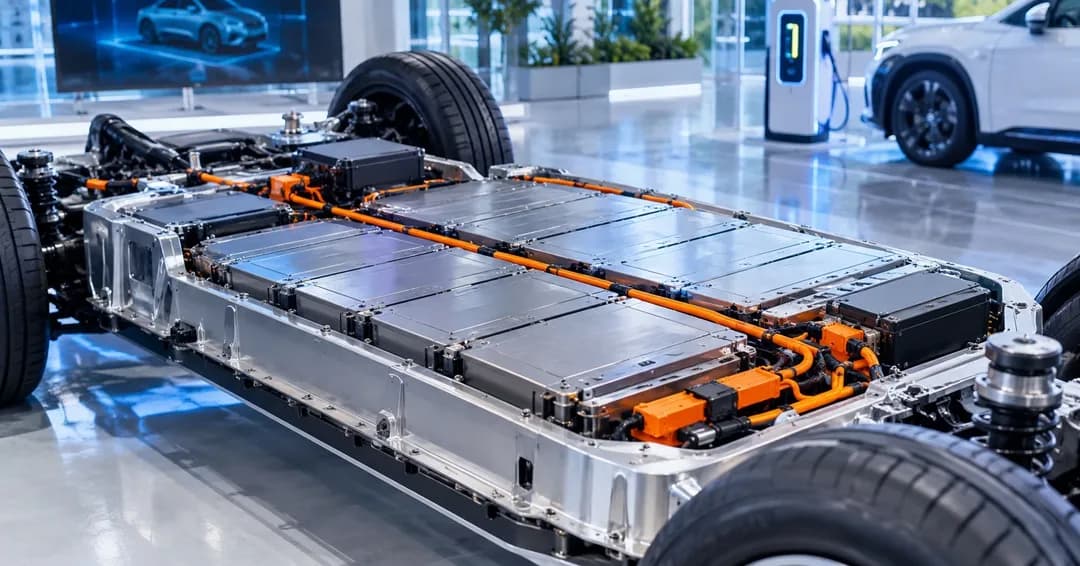
The global next-generation advanced EV batteries market is expanding as demand grows for higher energy density, faster charging, improved safety, and enhanced durability. Advances in solid-state, silicon-anode, sodium-ion, and lithium-metal technologies, alongside manufacturing expansion and research investments, are supporting innovation and accelerating the development of next-generation electric vehicle battery solutions.
Knowledge Sourcing Intelligence published its latest analysis of the Global Next-Generation Advanced EV Batteries Market, projecting growth from USD 2.10 billion in 2026 to USD 17.50 billion by 2031, at a CAGR of 52.8% during the forecast period, covering market estimates and forecasts through 2031. The study examines advances in battery chemistry, energy density, charging performance, manufacturing capacity, and technology development shaping the next phase of electric vehicle (EV) battery adoption.
Market Overview
The Global Next-Generation Advanced EV Batteries Market is expanding as automakers and battery manufacturers seek higher energy density, faster charging, improved durability, enhanced safety, and greater vehicle efficiency. Battery performance has become a key consideration in EV development as manufacturers seek to extend driving range while managing battery weight, charging time, and overall vehicle cost.
Technology development is extending beyond conventional lithium-ion platforms. Companies are investing in silicon-based anodes, advanced cathode materials, solid-state batteries, lithium-metal technologies, sodium-ion batteries, and new cell and pack architectures. These developments are creating opportunities across battery materials, cell manufacturing, battery systems, and vehicle integration.
Request a free sample copy or view the report summary: Next-Generation Advanced EV Batteries Market Report
Key Growth Drivers
Rising Demand for Higher Energy Density
Higher energy density is a central development priority for EV manufacturers seeking longer driving ranges without proportionally increasing battery size or vehicle weight. Advances in electrode materials, cell chemistry, and pack integration are enabling manufacturers to increase usable energy within existing vehicle platforms. Continued improvements in battery energy density can also support greater vehicle efficiency and different applications across EV segments.
Faster-Charging Battery Technologies
Charging performance is becoming increasingly important as EV adoption expands. Battery manufacturers are developing higher charging rates, improved thermal-management systems, and cell architectures designed to support rapid charging while maintaining battery life and safety. The introduction of superfast-charging battery platforms reflects continued industry investment to reduce charging time and improve the overall EV ownership experience.
Expanding Battery Manufacturing Capacity
Investment in battery production and research infrastructure is strengthening the global advanced battery ecosystem. In August 2026, LG Energy Solution announced the commencement of production at its Lansing, Michigan facility, targeting more than 35 GWh of annual battery production capacity at full scale.
In September 2026, Panasonic Energy launched Energy Innovation Square in Osaka, Japan, a global R&D facility focused on battery materials, cell design, prototyping, and next-generation production technologies.
Diversification of Battery Chemistries
Battery manufacturers are developing multiple chemistry platforms to address different vehicle applications, cost requirements, performance targets, and supply-chain considerations. Sodium-ion batteries are progressing toward broader commercialization, while solid-state, silicon-anode, lithium-metal, and other advanced technologies continue to receive research and development investment.
Latest Industry Developments
September 2026 - Panasonic Energy: Panasonic Energy launched Energy Innovation Square in Osaka, Japan, to support battery material development, cell design, prototyping, and next-generation battery production technologies.
August 2026 - LG Energy Solution: LG Energy Solution began production at its Lansing, Michigan facility, expanding its North American battery manufacturing footprint and targeting more than 35 GWh of annual production capacity at full scale.
April 2026 - CATL: CATL unveiled its third-generation Qilin Battery and third-generation Shenxing superfast-charging battery, alongside its Naxtra sodium-ion battery platform, expanding its portfolio of high-energy-density and fast-charging technologies.
Market Segmentation
Segmentation | Sub-Segments |
|---|---|
Technology | Silicon-Dominant Lithium-Ion Batteries, Semi-Solid / Quasi-Solid Batteries, All-Solid-State / Lithium-Metal Batteries, Sodium-Ion EV Batteries, Lithium-Sulfur Batteries, Other Advanced Battery Technologies |
Vehicle Platform | Passenger Battery Electric Vehicles, Plug-In Hybrid and Range-Extended Electric Vehicles, Electric Commercial Vehicles, Performance and Luxury Electric Vehicles, Other Electric Mobility Platforms |
Geography | North America, Europe, Asia Pacific, South America, Middle East and Africa |
Regional Outlook
Asia-Pacific is a key market driven by its established battery manufacturing ecosystem, high EV production, technology development capabilities, and continued investment in battery capacity. China remains a key player in battery technology commercialization, while North America is expanding domestic battery manufacturing through new production facilities, supply-chain localization, and technology investments.
Competitive Landscape
The competitive landscape includes CATL, BYD, LG Energy Solution, Samsung SDI, SK On, Panasonic Energy, Toyota, QuantumScape, Solid Power, and ProLogium, among others.
Companies are focusing on advanced battery chemistry, higher energy density, faster charging, manufacturing expansion, strategic partnerships, R&D investment, and battery-system integration to strengthen their positions across the evolving market.
Analyst Perspective
“The next-generation EV battery market is moving from technology development toward broader commercialization, with higher energy density and faster charging becoming important areas of competition. Continued investment in battery chemistry, cell architecture, and manufacturing capacity is expected to create opportunities across established and emerging technology platforms.”
What The Report Covers
The Global Next-Generation Advanced EV Batteries Market Report provides market size and forecast analysis through 2031, technology and chemistry assessment, segment and regional analysis, emerging technology trends, competitive intelligence, company profiles, product launches, strategic developments, and battery manufacturing investment activity.
Garuav Singh
ContributorHave questions?
More Press Releases
How JenaValve’s Trilogy THV System FDA Approval Could Impact the Global Heart Valve Replacement Procedures Market
JenaValve Technology received FDA approval for its Trilogy Transcatheter Heart Valve System to treat symptomatic severe native aortic regurgitation in high-risk surgical patients. The technology uses leaflet-based locator technology for anchoring, expanding transcatheter treatment options beyond aortic stenosis and influencing competition across the heart valve replacement procedures market.
How Meta's Expected Smartwatch Reveal at Connect 2026 Could Impact the Wearable Computing Market, Expected to Reach USD 148.5 Billion by 2031
At Meta Connect 2026, scheduled for September 23–24, Meta is expected to unveil its first commercial smartwatch, reportedly codenamed Project Malibu 2, with health-tracking capabilities and a built-in Meta AI assistant. The expected launch follows Meta's revival of a smartwatch project that was shelved in 2022 amid cost reductions across its Reality Labs hardware division, with the new device reportedly designed to complement Meta's AI glasses ecosystem. The move reinforces the shift toward AI-enabled, ecosystem-connected wearables described in a new report by Knowledge Sourcing Intelligence, which values the global wearable computing market at USD 71.0 billion in 2026, growing to USD 148.5 billion by 2031.
How Potensic's Atom 3 Launch Could Impact the Consumer Drones Market, Expected to Reach USD 21.4 Billion by 2031
Potensic brought its ATOM 3 camera drone to IFA 2026 in Berlin, returning to the show for a third consecutive year to showcase the sub-249-gram drone under the theme “SEE BEYOND.” The ATOM 3 combines a 1/1.3-inch sensor and 48mm dual-focal camera with 4K/60fps HDR video, AI Follow 2.0 subject tracking, and up to 16km of video transmission, positioning it within the lightweight consumer camera-drone segment alongside competing entry-level models. According to Knowledge Sourcing Intelligence (KSI), the global consumer drones market is expected to reach USD 12.0 billion by 2026 and is forecast to reach USD 21.4 billion by 2031.