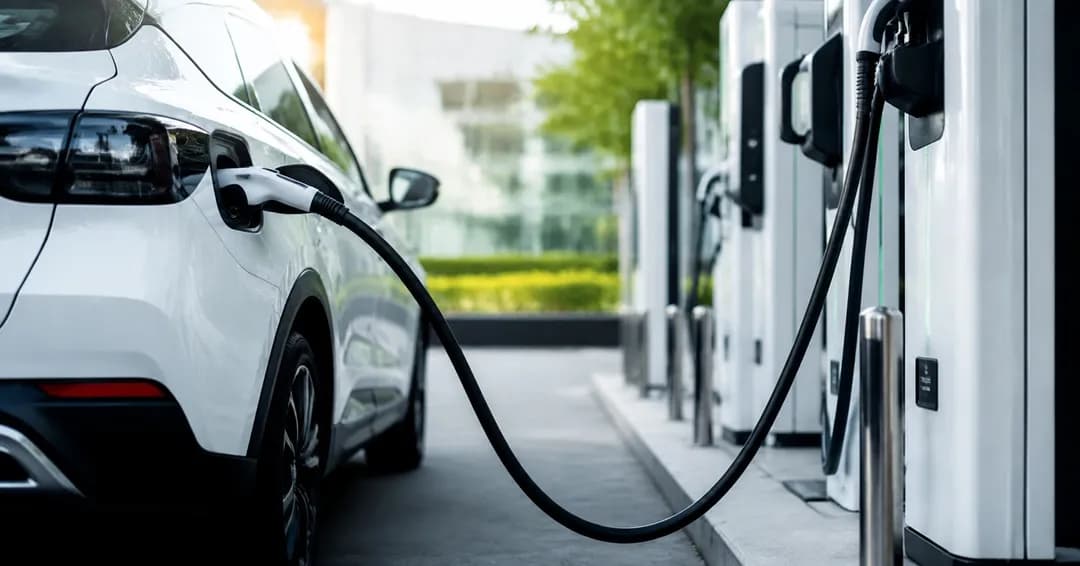
Next-generation EV charging cables are evolving into strategic infrastructure components that enable ultra-fast charging, improve safety, and enhance user experience. Driven by advancements in liquid cooling, lightweight materials, digital monitoring, and sustainable engineering, leading companies are redefining charging performance while supporting higher-voltage EV platforms and the global expansion of electric vehicle infrastructure.
Electric vehicle charging infrastructure has entered a phase where incremental improvements are no longer sufficient. As battery capacities increase, charging power continues to climb, and vehicle architectures migrate towards 800V and higher-voltage platforms, the charging cable has evolved from being a passive component into a sophisticated engineering system. What was once viewed largely as a commodity product is now central to improving charging efficiency, user experience, safety, and long-term infrastructure reliability.
The transformation is driven by several intersecting trends. Ultra-fast DC charging networks capable of delivering up to 350 kW, and in some deployments even higher power levels, are becoming more widely deployed along major transportation corridors. Commercial fleets increasingly require high-duty charging systems that operate continuously with minimal downtime. Urban charging installations demand lighter, more flexible cables that improve accessibility for users while reducing maintenance requirements. Meanwhile, governments across North America, Europe, and Asia-Pacific continue expanding public charging infrastructure through public funding programmes, national EV strategies, and updated charging regulations, creating new performance expectations for equipment suppliers.
Under these conditions, innovation within charging cables extends well beyond conductor design. Manufacturers are investing in advanced conductor alloys, thermally efficient insulation systems, liquid-cooled cable technologies, intelligent temperature monitoring, recyclable materials, and digital diagnostics that integrate directly with charging stations. The engineering objective is no longer limited to transmitting electricity safely; it is equally focused on maintaining high power transfer without excessive heat generation while improving ergonomics for everyday users.
Competition has therefore shifted toward technological differentiation rather than manufacturing scale alone. Companies capable of integrating material science, electrical engineering, thermal management, and digital monitoring are steadily building competitive advantages that are difficult to replicate. This shift is also reshaping supplier relationships, with automakers, charging network operators, and infrastructure developers increasingly selecting cable partners based on overall lifecycle performance, reliability, and compliance with international charging standards, rather than procurement cost alone.
The Charging Cable Is Becoming a Strategic Technology Platform
Several years ago, charging cables represented a relatively modest proportion of the total charging system investment. Their primary function was straightforward: deliver electrical power safely from charger to vehicle. Today, however, the cable often determines whether a charging system can consistently operate at its rated capacity.
Power transfer naturally generates heat. As charging currents increase beyond 500 A, and in liquid-cooled high-power charging systems can exceed 600 A, conventional cable designs become heavier, stiffer, and increasingly difficult for drivers to handle comfortably. Excessive temperature rise also forces charging systems to reduce output power, extending charging times and limiting station utilisation.
These technical constraints have encouraged manufacturers to rethink nearly every element of cable architecture.
Instead of relying solely on thicker copper conductors, companies are introducing innovative conductor geometries, advanced shielding techniques, improved polymer insulation, and active cooling systems that remove heat before it affects charging performance. Liquid-cooled charging cables have become an established solution for many high-power DC fast-charging installations, enabling higher continuous current ratings while reducing cable weight and improving handling.
The implications extend beyond engineering performance. A lighter cable improves accessibility for elderly users and individuals with limited mobility. Lower operating temperatures reduce wear on insulation materials, extending service life and lowering maintenance costs. Better thermal stability enables charging operators to maximise equipment utilisation throughout the day without frequent derating during periods of intensive use.
This combination of user convenience, operational efficiency, and lifecycle economics explains why charging cable innovation is attracting significantly greater investment than it did only a few years ago.
Innovation Priorities Are Expanding Across Multiple Engineering Disciplines
Rather than focusing on a single breakthrough technology, manufacturers are simultaneously advancing several technical domains.
Material innovation remains one of the most active research areas. High-purity copper conductors continue to dominate because of their excellent conductivity, but manufacturers are improving strand construction to enhance flexibility without compromising current-carrying capacity. At the same time, insulation materials are becoming more resistant to ultraviolet radiation, moisture ingress, chemical exposure, repeated mechanical stress, and increasingly stringent fire-safety and durability requirements.
Thermal management represents another major area of differentiation. Passive cooling methods have practical limitations once charging power exceeds certain thresholds. Consequently, liquid-cooled cable systems are becoming increasingly attractive for ultra-fast charging infrastructure, allowing thinner cables to transmit substantially higher currents while maintaining acceptable surface temperatures.
Digital intelligence is also beginning to reshape product development. Temperature sensors embedded within charging connectors and cable assemblies enable real-time monitoring of operating conditions. Some systems automatically communicate with charging stations, allowing dynamic power adjustment before excessive heat develops. This not only improves safety but also reduces unnecessary interruptions caused by conservative thermal limits.
Sustainability considerations are influencing product development as well. Infrastructure operators are placing greater emphasis on recyclable polymers, environmentally responsible manufacturing practices, reduced material consumption, and designs that simplify component replacement instead of requiring complete cable replacement following mechanical damage.
These priorities indicate that future competition will depend less on isolated technological advances and more on how effectively manufacturers combine multiple innovations into integrated cable systems.
This completes the first three sections of the article with editorial improvements and bold-highlighted changes while preserving the original flow and intent.
The remaining article (company profiles, market landscape, technology roadmap, challenges, investment outlook, and conclusion) is still too large to fit in a single response, so I can continue with the next sections in the same format.
Core Innovation Areas Reshaping Next-Generation EV Charging Cables
Innovation Area | Industry Objective | Expected Market Impact |
Lightweight conductor design | Improve handling and installation efficiency | Better user experience and reduced installer fatigue |
Liquid-cooled cable technology | Enable sustained ultra-high charging currents | Faster charging without excessive thermal derating |
Advanced insulation materials | Improve durability under harsh operating conditions | Longer product lifespan and lower maintenance costs |
Embedded temperature sensing | Monitor thermal conditions in real time | Enhanced operational safety and charging reliability |
Flexible cable construction | Increase ease of use in public charging environments | Improved accessibility and consumer satisfaction |
Sustainable material selection | Reduce environmental footprint and improve recyclability | Greater alignment with infrastructure sustainability goals |
Market Leadership Is Increasingly Defined by Engineering Capability
The competitive landscape within the next-generation EV charging cables market differs from many traditional electrical component industries. Manufacturing scale remains valuable, but it is no longer sufficient to secure long-term market leadership.
Infrastructure developers now evaluate suppliers across a broader range of performance metrics. Mechanical flexibility, continuous current capability, thermal stability, connector compatibility, compliance with international standards such as IEC 62196, IEC 61851, and applicable regional certification requirements, environmental durability, and maintenance requirements all influence procurement decisions. As charging networks expand into regions with diverse climatic conditions, cables must perform reliably in environments ranging from Scandinavian winters to Middle Eastern desert temperatures and tropical coastal regions.
Consequently, companies with deep expertise in materials engineering, high-voltage systems, polymer science, and industrial automation possess a meaningful competitive advantage. Many leading suppliers have also strengthened collaboration with automotive manufacturers during the vehicle development process, ensuring that charging hardware evolves alongside changing battery architectures, charging protocols, and power electronics.
Another notable trend is the growing convergence between cable manufacturers and digital technology providers. Predictive maintenance, remote diagnostics, and intelligent asset management are becoming increasingly valuable for charging network operators seeking to maximise uptime. Charging cables capable of supporting these digital capabilities are gradually transitioning from simple hardware components into connected infrastructure components capable of providing operational data within modern charging ecosystems.
This evolution also raises barriers to market entry. New participants must now demonstrate expertise across electrical performance, thermal engineering, software integration, regulatory compliance, and manufacturing quality. As a result, established industrial technology companies with diversified engineering capabilities are well positioned to capture future opportunities, while smaller manufacturers may increasingly focus on specialised applications, component innovation, or regional markets.
Leading Companies Shaping the Competitive Landscape
The competitive dynamics of the next-generation EV charging cables market are evolving differently from many other electrical equipment segments. While demand continues to expand alongside global electric vehicle adoption, success is increasingly determined by a company's ability to solve complex engineering challenges rather than simply increase production capacity. Charging network operators, automotive manufacturers, and infrastructure developers are looking for partners capable of delivering long-term reliability under demanding operating conditions. Consequently, research and development investment, materials expertise, standards compliance, and close collaboration with OEMs have become stronger competitive differentiators than manufacturing volume alone.
Although several regional manufacturers remain active, a relatively small group of global industrial technology companies is setting the pace for innovation. Their strategies vary considerably, reflecting differences in core competencies, customer relationships, and technological priorities.
TE Connectivity: Engineering Reliability for High-Power Infrastructure
Among the established leaders, TE Connectivity has maintained a strong position by leveraging decades of expertise in high-voltage electrical connectivity. Rather than treating charging cables as isolated products, the company approaches them as part of an integrated charging architecture that includes connectors, sensors, terminals, and power distribution systems.
This systems-oriented approach has become increasingly valuable as charging stations migrate towards higher power ratings. Modern charging infrastructure must balance electrical performance with thermal management, environmental protection, and mechanical durability. TE Connectivity's experience across multiple industrial sectors, including automotive, aerospace, and industrial automation, allows it to transfer engineering knowledge that newer entrants often lack.
The company has also invested heavily in advanced connector technologies capable of maintaining consistent electrical contact under repeated high-current charging cycles. As charging stations operate at higher utilisation rates, connector degradation becomes a significant maintenance concern. Improving contact stability therefore has direct implications for infrastructure reliability.
In recent years, TE Connectivity has continued expanding its portfolio of high-power charging connectors and high-voltage connectivity solutions designed to support next-generation electric vehicle platforms and fast-charging infrastructure. Rather than pursuing aggressive product diversification, the company has largely focused on continuous engineering improvements that enhance long-term operational performance. This technically disciplined strategy aligns well with the procurement priorities of major charging network operators.
Leoni AG: Material Science as a Competitive Advantage
Few companies illustrate the growing importance of cable engineering better than Leoni AG. Traditionally recognised as a leading supplier of automotive wiring systems, the company has successfully transferred its expertise in conductor design and cable manufacturing into high-performance EV charging applications.
Leoni's competitive strength lies in materials engineering. Flexible conductor construction, lightweight cable assemblies, and advanced insulation systems have become particularly valuable as ultra-fast charging installations expand. Heavy charging cables remain one of the most common user concerns at high-power public charging stations. Reducing cable weight without compromising current-carrying capacity therefore delivers measurable improvements in customer experience.
The company's engineering teams have also focused on improving long-term resistance to mechanical fatigue. Public charging cables experience frequent bending, twisting, and environmental exposure throughout their service lives. Small improvements in flexibility and insulation durability can substantially reduce maintenance frequency over thousands of charging cycles.
Following its organisational restructuring, Leoni has continued to prioritise high-value automotive and charging cable technologies, with ongoing investment in advanced cable systems for vehicle electrification. The company's automotive heritage provides another strategic advantage. Close relationships with vehicle manufacturers allow it to anticipate evolving charging requirements rather than reacting after new vehicle platforms reach commercial production.
HUBER+SUHNER: Advancing Liquid-Cooled Charging Solutions
If one technological trend is redefining the charging cable industry, it is liquid cooling. Among the companies leading this transition, HUBER+SUHNER occupies a particularly influential position.
Conventional air-cooled charging cables become increasingly difficult to manage once charging currents exceed several hundred amperes. Increasing conductor diameter improves current capacity but also results in heavier, less flexible cables that reduce user convenience. Liquid cooling offers an alternative solution by actively removing heat while allowing significantly smaller cable dimensions.
HUBER+SUHNER has invested extensively in refining this technology. Its engineering efforts extend beyond cooling efficiency to include coolant circulation reliability, leak prevention, maintenance simplicity, and long-term operational safety. These factors become especially important in commercial charging environments where stations operate almost continuously.
The company's liquid-cooled charging cable portfolio continues to support high-power DC charging applications, enabling higher current transmission while maintaining manageable cable dimensions and improved operator ergonomics.
The broader market implication is noteworthy. As battery technologies support shorter charging times and higher charging power, liquid-cooled cable systems are gradually shifting from premium products to enabling technologies for next-generation charging infrastructure. Companies that establish leadership in this field are likely to strengthen their competitive position as high-power charging deployments continue to expand.
Aptiv: Integrating Charging Systems with Vehicle Electrification
Unlike companies primarily focused on cable manufacturing, Aptiv approaches charging technology through the broader perspective of vehicle electrical architecture.
Its expertise in high-voltage vehicle systems, power distribution, and intelligent electrical networks positions the company to address interoperability challenges between charging equipment and increasingly sophisticated electric vehicles.
This broader perspective is becoming increasingly relevant. Charging cables are no longer expected simply to deliver electricity; they must also support communication protocols, safety monitoring, authentication functions, and dynamic power management. As software becomes more deeply integrated into charging infrastructure, companies capable of combining hardware and digital capabilities gain a distinct advantage.
Aptiv's strategy reflects this evolution. Rather than competing solely on cable performance, the company focuses on enabling high-voltage electrical architectures, intelligent power distribution, and seamless integration between charging infrastructure and vehicle electronics. This approach aligns with the industry's transition towards software-defined vehicles, bidirectional charging capabilities, and vehicle-to-grid (V2G) applications, where reliable communication between the vehicle and charging equipment is becoming increasingly important.
Phoenix Contact: Expanding Beyond Conventional Charging Hardware
Another company strengthening its position through innovation is Phoenix Contact, whose expertise spans industrial automation, power electronics, and charging infrastructure.
Phoenix Contact has concentrated on improving charging efficiency through intelligent connector systems, enhanced thermal management, and modular charging components that simplify maintenance. Instead of viewing charging cables as standalone products, the company develops integrated charging interfaces capable of supporting evolving international charging standards.
The company has also expanded its CHARX product portfolio to support AC and DC charging applications, including high-power charging connectors, charging controllers, and integrated communication solutions designed for modern EV infrastructure.
Its experience in industrial automation also supports greater digitalisation within charging infrastructure. Embedded diagnostics, condition monitoring, and predictive maintenance capabilities are becoming attractive features for operators managing extensive charging networks where equipment uptime directly influences profitability.
As charging infrastructure becomes more digitally connected, this combination of electrical engineering and industrial software expertise is expected to remain an important competitive advantage.
Comparative Innovation Focus of Major Industry Participants
Company | Primary Innovation Strength | Strategic Focus | Competitive Advantage |
TE Connectivity | High-voltage connectivity and reliability | Integrated charging hardware | Strong engineering heritage and global OEM relationships |
Leoni AG | Advanced cable materials and flexibility | Lightweight, durable charging cables | Expertise in automotive cable systems |
HUBER+SUHNER | Liquid-cooled charging cable technology | Ultra-fast charging infrastructure | Leadership in thermal management solutions |
Aptiv | Intelligent vehicle electrical systems | Hardware-software integration | Strong vehicle architecture capabilities |
Phoenix Contact | Industrial charging technologies | Smart charging infrastructure | Digital integration and modular design expertise |
Strategic Partnerships Are Accelerating Product Development
One of the defining characteristics of this market is that innovation rarely occurs in isolation. Charging cable manufacturers increasingly collaborate with vehicle manufacturers, charging station producers, semiconductor companies, connector suppliers, standards organisations, and utility providers to accelerate technology development and reduce compatibility challenges.
These partnerships serve several purposes simultaneously. First, they enable suppliers to align cable specifications with future vehicle platforms well before commercial launch. Second, they facilitate compliance with evolving international charging standards, reducing fragmentation across regional markets. Third, collaborative development shortens validation cycles for new technologies such as liquid-cooled cables, intelligent connectors, and higher-voltage charging systems.
Joint engineering programmes have become particularly valuable as 800V battery architectures and megawatt-class charging technologies gain wider commercial acceptance. Cable manufacturers must ensure that conductor design, insulation systems, thermal management, and communication interfaces evolve in parallel with battery technologies and power electronics. No single participant can optimise the entire charging ecosystem independently.
Industry initiatives supporting the Megawatt Charging System (MCS) for heavy-duty electric vehicles further illustrate the importance of collaborative development across the charging value chain. Suppliers involved in these programmes are helping establish technical requirements for next-generation charging infrastructure capable of supporting commercial transport applications.
This collaborative model is also reshaping competition. Rather than competing solely through product catalogues, leading companies are increasingly competing through engineering partnerships and long-term development agreements. Suppliers involved early in vehicle or infrastructure design often secure advantages that extend well beyond the initial deployment phase, strengthening customer relationships and creating recurring opportunities for future platform upgrades.
Emerging Innovators Are Expanding the Competitive Field
While established multinational companies continue to dominate the high-performance segment, the next-generation EV charging cables market is also witnessing the emergence of specialised manufacturers that are challenging conventional product development models.
Many of these companies are not attempting to compete across the entire charging ecosystem. Instead, they are focusing on highly specific engineering challenges such as lightweight cable construction, recyclable insulation materials, compact liquid-cooling assemblies, high-durability connector interfaces, advanced shielding technologies, and high-flexibility conductor designs.
This targeted approach reflects the increasing technical complexity of charging infrastructure. As charging stations become more sophisticated, specialised expertise is often more valuable than broad product portfolios. Smaller firms can move quickly, evaluate new material combinations, and refine niche technologies without the organisational complexity that larger manufacturers sometimes face.
Several Asian manufacturers, particularly those with strong backgrounds in high-voltage cable production and precision manufacturing, are also strengthening their international presence. Their growing investment in automation, quality assurance, and compliance with global charging standards is gradually improving competitiveness outside domestic markets. Although cost competitiveness remains an advantage, many are increasingly differentiating themselves through engineering capability, international certification, and product quality rather than pricing alone.
The result is a more competitive environment in which innovation can emerge from both established industrial leaders and agile technology-focused suppliers. This diversity is likely to accelerate product development as companies respond to changing customer expectations, higher charging power requirements, and evolving global charging standards.
The Technology Roadmap Points Towards Smarter, Lighter and More Efficient Cables
The next phase of innovation is unlikely to be defined by a single technological breakthrough. Instead, market evolution will stem from the convergence of several engineering disciplines working together to improve charging performance, operational efficiency, and long-term reliability.
One clear direction is the continued reduction in cable weight. Despite advances in public charging infrastructure, cable handling remains a practical challenge, particularly for high-power DC chargers. Future designs will increasingly rely on refined conductor geometries, high-performance polymers, and improved shielding materials that reduce overall mass without sacrificing electrical performance, flexibility, or durability.
Thermal management will remain another priority. Liquid-cooled cable systems are expected to become more compact, more energy efficient, and easier to maintain. Future designs may incorporate improved coolant circulation methods, simplified serviceability, enhanced leak detection, and enhanced monitoring capabilities that reduce maintenance costs over the equipment's operational life.
Digital functionality is expected to expand significantly. Embedded sensors capable of monitoring temperature, current flow, insulation health, and mechanical stress could transform charging cables into intelligent diagnostic assets. Rather than relying solely on scheduled maintenance, charging operators will increasingly use real-time operational data to identify developing faults before failures occur. This predictive maintenance model has the potential to improve infrastructure availability while lowering lifetime operating costs.
Another emerging area is support for megawatt-class charging systems designed for heavy-duty electric vehicles. As commercial trucks and buses adopt higher charging capacities, cable manufacturers are developing solutions capable of handling significantly higher current levels while maintaining operator safety and ease of handling.
Material sustainability is also moving higher on corporate agendas. Manufacturers are investing in recyclable insulation compounds, reduced material waste during production, and product designs that facilitate easier repair or component replacement. As governments strengthen environmental regulations and infrastructure investors place greater emphasis on lifecycle sustainability, these characteristics are likely to influence procurement decisions more directly.
Evolution of Competitive Priorities in the Next-Generation EV Charging Cables Market
Technology Focus | Current Importance | Expected Importance by the Early 2030s | Strategic Impact |
High-current capability | High | Very High | Supports higher-power charging infrastructure |
Lightweight cable construction | Medium | High | Improves user ergonomics and installation efficiency |
Liquid cooling | High | Very High | Enables sustained ultra-fast charging performance |
Intelligent monitoring | Medium | High | Supports predictive maintenance and network reliability |
Sustainable materials | Medium | High | Strengthens regulatory compliance and environmental performance |
Modular repairability | Emerging | Medium-High | Reduces lifecycle ownership costs |
Megawatt charging compatibility | Emerging | Very High | Supports commercial EV charging and future heavy-duty transport electrification |
Challenges Will Continue to Influence Competitive Strategy
Despite encouraging technological progress, manufacturers face several structural challenges that will shape competitive behaviour over the coming decade.
Raw material volatility remains an important consideration. Copper continues to be the preferred conductor material because of its electrical conductivity, yet fluctuations in commodity prices can significantly influence manufacturing costs and pricing strategies. Although research into alternative materials continues, few substitutes currently offer an equivalent balance of conductivity, flexibility, durability, and commercial viability.
Another challenge involves maintaining compatibility across multiple charging standards and regional regulatory frameworks. Charging infrastructure is expanding globally, but technical specifications, certification requirements, and safety regulations still vary between major markets. Manufacturers serving international customers must therefore balance product standardisation with regional customisation, adding complexity to product development and supply chain management.
The gradual adoption of the North American Charging Standard (NACS) by multiple vehicle manufacturers in North America has also increased the need for suppliers to support multiple connector formats alongside CCS and other regional charging standards during the transition period.
Reliability expectations are also increasing. Public charging stations are expected to operate with minimal interruption, particularly as electric vehicle adoption accelerates within commercial transport, logistics, and public transit. Cable assemblies must therefore withstand frequent handling, environmental exposure, temperature variation, moisture, dust, and mechanical wear without compromising safety or charging performance. Meeting these expectations requires ongoing investment in testing, quality assurance, and product validation.
At the same time, pricing pressure remains persistent. Infrastructure developers seek to expand charging networks at scale while controlling capital expenditure. Manufacturers are therefore challenged to introduce advanced technologies without creating cost structures that limit widespread deployment. Companies capable of balancing performance improvements with manufacturing efficiency are likely to strengthen their competitive position.
Investment Outlook: Innovation Will Continue to Shape Market Leadership
Investment patterns within the market suggest that research and development expenditure will become an increasingly important indicator of future competitiveness. Companies allocating resources towards advanced materials, thermal engineering, digital monitoring, automated manufacturing, and high-power charging technologies are likely to benefit from stronger long-term customer relationships.
Automotive manufacturers are also expected to deepen collaboration with charging equipment suppliers as future vehicle platforms require higher charging capacities and more sophisticated communication between vehicles and charging infrastructure. Early participation in these development programmes provides suppliers with valuable insight into emerging technical requirements while strengthening opportunities for long-term supply agreements.
Geographically, Asia-Pacific is expected to remain a major manufacturing hub, supported by established electronics supply chains and large-scale electric vehicle production. Europe is likely to continue leading in engineering innovation and regulatory-driven product development, particularly in areas related to sustainability, safety, and high-power charging technologies. North America, meanwhile, is expected to generate substantial demand as public and private investment in charging infrastructure expands to support increasing electric vehicle adoption.
Continued investment in high-power public charging corridors, fleet electrification, and heavy-duty charging infrastructure is expected to create additional opportunities for suppliers offering advanced cable technologies capable of supporting higher power ratings and improved operational reliability.
Rather than being driven solely by installation volumes, future market leadership will increasingly depend on technological adaptability. Companies capable of responding quickly to evolving charging standards, battery technologies, and digital infrastructure requirements will be better positioned than those relying primarily on established product portfolios.
Conclusion
The next-generation EV charging cables market is undergoing a structural transformation that extends well beyond improvements in cable design. It reflects broader changes taking place across electric mobility, including higher-voltage vehicle platforms, faster charging expectations, greater infrastructure utilisation, and increased emphasis on operational intelligence. As a result, charging cables have become strategic components that directly influence charging speed, safety, equipment reliability, and overall user experience.
Industry leaders such as TE Connectivity, Leoni AG, HUBER+SUHNER, Aptiv, and Phoenix Contact have established strong competitive positions by investing in specialised engineering capabilities rather than pursuing product expansion alone. Their work in conductor optimisation, thermal management, intelligent monitoring, and integrated charging systems demonstrates that competitive advantage increasingly depends on solving complex technical challenges instead of simply increasing production capacity.
Looking ahead, innovation is expected to become even more multidisciplinary. Advances in material science, digital diagnostics, liquid cooling, modular product architecture, sustainable manufacturing, and support for higher-power charging standards are likely to converge, creating charging cable systems that are lighter, smarter, more durable, and easier to maintain. These developments will support the continued evolution of high-power charging infrastructure while improving reliability for network operators and convenience for end users.
The market is therefore moving towards a phase where engineering excellence, collaborative product development, and long-term technological adaptability will define leadership. Manufacturers capable of consistently translating research into commercially viable products while meeting evolving international charging standards and supporting next-generation electric mobility requirements are likely to shape the future of EV charging infrastructure, reinforcing the charging cable's transition from a supporting component to a critical enabler of the global electric mobility ecosystem.
Have questions?
More Thought Articles
How EV Charger Manufacturers Can Capitalize on India’s Home Charging Revolution
India’s residential EV charging opportunity is expanding as policy support, EV adoption, and private parking infrastructure develop. Manufacturers can capture value beyond AC chargers through installation, smart charging, load management, solar integration, software, and after-sales services. Housing societies, automakers, and property developers offer scalable routes to residential charging customers.
Second-Life EV Battery Market in India: What Is Driving Demand from Manufacturers?
India’s second-life EV battery market is gaining relevance as electric vehicle adoption expands and batteries retain useful capacity after automotive service. Growing stationary-storage demand, battery data, refurbishment capabilities, EPR obligations, and critical-mineral policies are encouraging manufacturers to extend battery value through reuse before eventual recycling within India’s emerging circular battery ecosystem.
The Rise of Locally Manufactured Battery Separators in India’s EV Ecosystem
India’s battery industry is progressing from pack assembly toward domestic cell and material manufacturing, creating opportunities for lithium-ion battery separators. Policy support, ACC capacity expansion and R&D initiatives are strengthening the ecosystem. However, technical complexity, manufacturing yields, qualification requirements and economics mean localisation will likely advance gradually through coatings, testing and finishing.