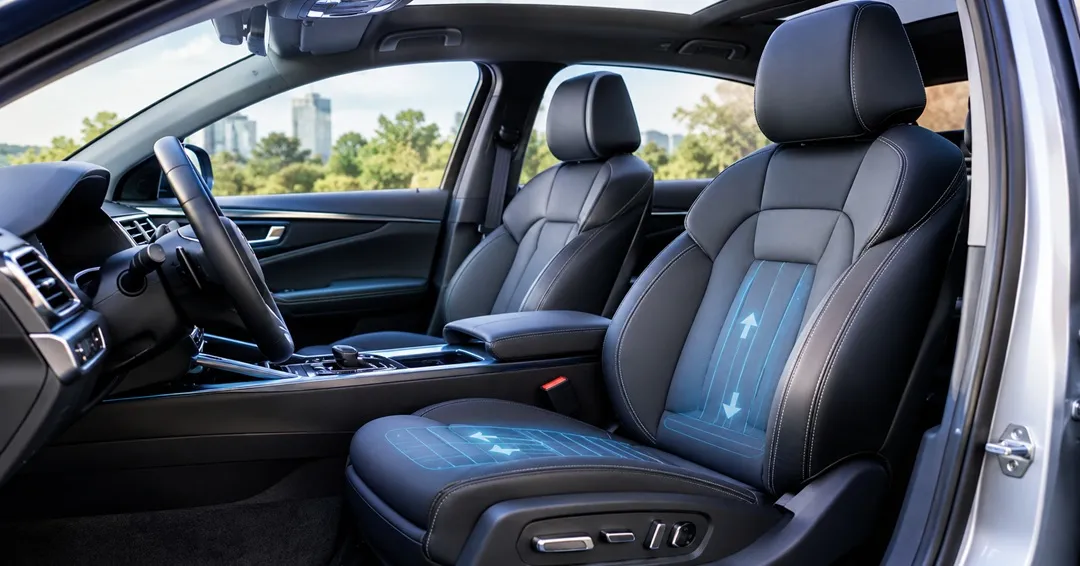
The global automotive adaptive seat market is evolving as automakers prioritize personalized comfort, ergonomic support, and intelligent seating technologies. Advancements in sensors, actuators, and electronic controls are enabling adaptive adjustment, massage, and thermal comfort features, creating growth opportunities across premium vehicles, electric cars, and next-generation automotive interiors.
Knowledge Sourcing Intelligence has published its latest analysis of the global automotive adaptive seat market, projected to grow from USD 4.48 billion in 2026 to USD 8.21 billion by 2031 at a CAGR of 12.9%. Rising demand for personalized seating, ergonomic support, and intelligent comfort features is creating opportunities for suppliers as automakers invest in advanced vehicle interiors.
Automotive adaptive seats extend beyond conventional powered seating through electronic controls that adjust seat position, lumbar support, bolsters, firmness, and temperature. Sensors, actuators, and control software enable seating configurations tailored to occupant preferences and driving conditions.
Premium passenger cars and electric vehicles offer opportunities for adoption as manufacturers emphasize cabin comfort and interior differentiation. Features such as programmable seat memory, adaptive lumbar support, and configurable massage functions allow occupants to personalize their seating experience.
Suppliers are developing integrated seating architectures that coordinate multiple comfort functions. However, wider adoption will depend on component affordability, durability, safety compliance, and integration with vehicle electronics. Manufacturers must also balance additional functionality against weight, packaging constraints, and production costs.
Request a free sample copy or view the report summary: Automotive Adaptive Seat Market Report
Key Growth Drivers
Growing Demand for Personalized In-Vehicle Comfort
Automakers are developing seats that accommodate different body types, posture preferences, and driving requirements. Adaptive bolsters, adjustable lumbar support, and programmable positions enable individualized comfort while creating opportunities for suppliers of electronic seating components.
Advancements in Intelligent Seating Technologies
Improvements in sensors, actuators, and control software enable coordinated adjustments across multiple seating functions. Adoption will depend on reliable sensing, electronic compatibility, and durable components capable of meeting automotive operating requirements.
Increasing Focus on Ergonomics and Occupant Wellness
Extended driving periods are encouraging interest in dynamic posture support, pressure management, and configurable massage functions. These technologies offer potential applications in passenger and commercial vehicles, where sustained comfort is an important consideration.
Expansion of Premium and Electric Vehicle Interiors
Premium vehicles and higher-content electric vehicles provide opportunities for electronic adjustment, individualized thermal comfort, and configurable seating arrangements. Expansion into mass-market models will depend on affordable components, efficient packaging, and scalable manufacturing.
Latest Industry Developments
June 2026 – Yanfeng: Yanfeng unveiled XiM27, a production-ready smart-cabin concept featuring AI-adaptive seating that adjusts position, firmness, and temperature to preferences.
April 2026 – Adient ProForce Massage Flow: Adient commercialized an advanced massage solution featuring moving modules, expanded lower-back coverage, and customizable massage techniques for enhanced seating comfort.
April 2026 – Toyota Boshoku T-CORE: Toyota Boshoku showcased adaptive Comfort, Relax, and Sport seating concepts at Milan Design Week, varying internal structures to accommodate different lifestyles.
Market Segmentation and Regional Outlook
The market is segmented by adaptation function, actuation technology, seat position, vehicle type, propulsion, and geography. Functions include posture adjustment, pressure management, thermal comfort, massage, and safety-related reconfiguration. Actuation categories include electromechanical, pneumatic, thermal and fluidic, and hybrid systems.
Front-row applications account for approximately 76% of global market value in 2026, reflecting demand for powered adjustments and personalized comfort. Passenger cars remain the primary vehicle category, while commercial vehicles offer opportunities in ergonomic support and driver comfort.
Asia Pacific represents approximately 46% of global market value in 2026. China's automotive manufacturing capacity and smart-cabin development support regional demand, while Japan and South Korea contribute established seating-engineering capabilities.
North America and Europe offer opportunities through premium vehicle development and advanced seating technologies. Adoption will depend on reliability, automaker qualification, and commercially viable integration.
Competitive Landscape
Key participants include Lear Corporation, FORVIA, Adient, Magna International, Yanfeng, Toyota Boshoku, and Hyundai Transys. Their capabilities span seat engineering, electronic adjustment systems, integrated comfort technologies, and configurable seating architectures.
Competition increasingly centers on actuator performance, sensor integration, ergonomic functionality, software controls, and manufacturing scalability. Suppliers that combine multiple comfort functions with automotive safety and durability requirements may strengthen their positioning. Partnerships and production contracts will remain important in bringing adaptive seating technologies into commercial vehicle programs.
Analyst Perspective
“The automotive adaptive seat market reflects a broader shift toward personalized, technology-enabled vehicle interiors. Intelligent adjustment and ergonomic support are creating opportunities for seating suppliers, while sustained growth will depend on balancing advanced functionality with affordability, durability, and reliable vehicle integration.”
What The Study Covers
The report examines market forecasts through 2031, growth drivers and restraints, segmentation, regional opportunities, competitive dynamics, company profiles, and technology developments across adaptation functions, actuation technologies, seat positions, vehicle types, propulsion categories, and geographic markets.
Have questions?
More Press Releases
Liquid Air Energy Storage Market to Reach USD 2.25 Billion by 2032 as Commercial-Scale Projects Gain Momentum
The global liquid air energy storage market is gaining momentum as renewable energy integration and long-duration electricity storage requirements drive investment. Commercial-scale project development, cryogenic technology advancements, thermal integration, and grid-stability applications are creating new opportunities, while project financing, capital costs, and operational efficiency remain important considerations for market expansion.
Semiconductor Process Cooling Market to Reach USD 5.65 Billion by 2032, Driven by Demand for Precision Temperature Control in Advanced Chip Manufacturing
The semiconductor process cooling market is expanding as advanced chip manufacturing increases demand for precision temperature control, energy efficiency, and specialized cooling systems. Growth in advanced logic, high-bandwidth memory, and semiconductor fabrication capacity is creating opportunities for ultra-low-temperature chillers, multi-channel systems, and sustainable cooling technologies across major manufacturing regions.
AI Data Center Microgrids Market Projected to Reach USD 3.38 Billion by 2032 Amid Grid Constraints and Rising On-Site Power Demand
The AI data center microgrids market is expanding as grid constraints, interconnection delays, and rising AI computing power requirements increase demand for reliable on-site electricity. Hybrid generation, battery storage, advanced energy management, and islandable power systems are creating opportunities for suppliers supporting resilient, flexible, and efficient data center energy infrastructure.