
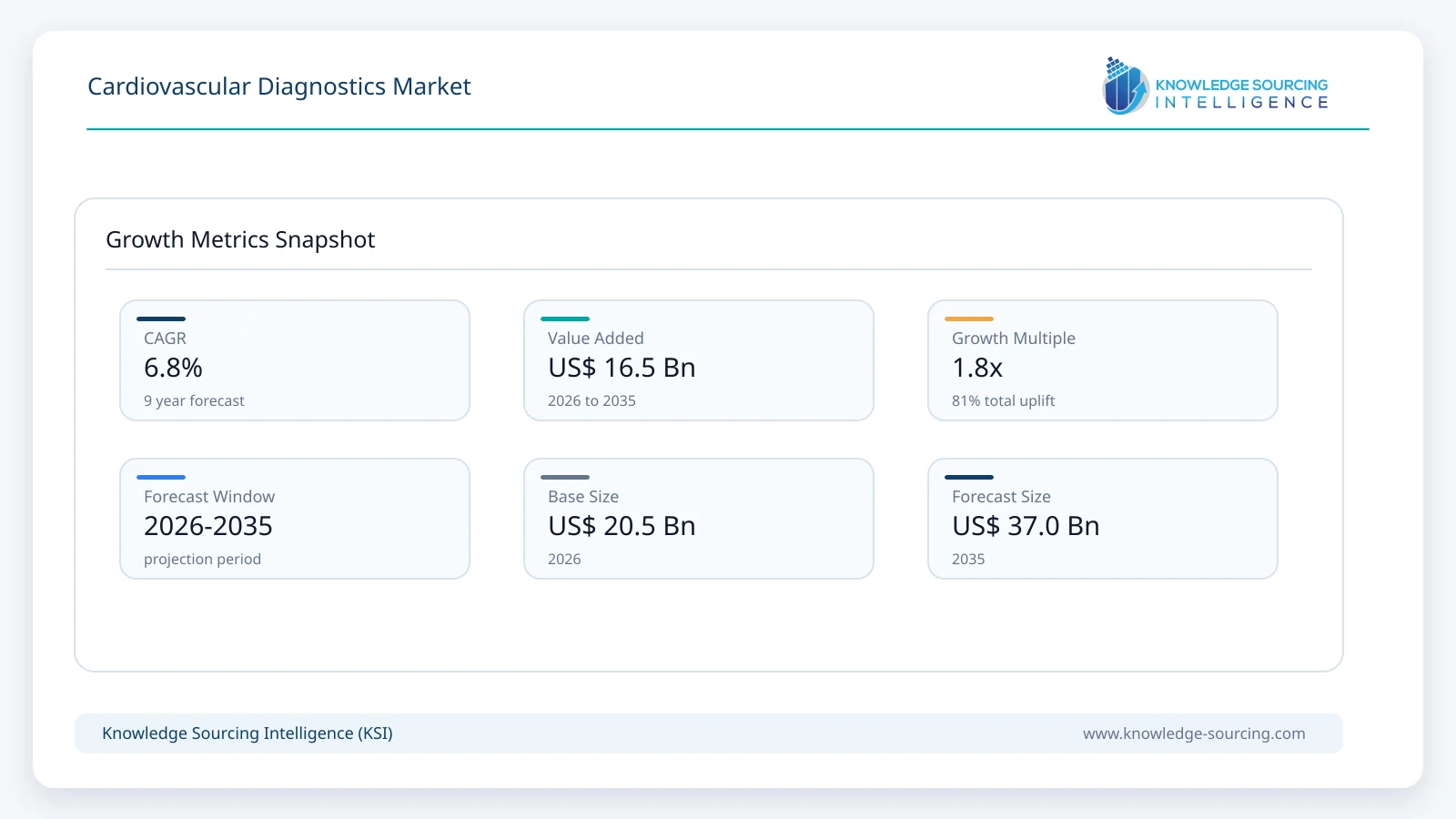
The Cardiovascular Diagnostics Market is forecast to grow at a CAGR of 6.8%, reaching USD 36.95 billion in 2035 from USD 20.47 billion in 2026.
Highlights:
- 1Rising cardiovascular disease prevalence increases demand for earlier diagnosis, accelerating adoption of advanced imaging systems, molecular diagnostics, and digital cardiac assessment technologies.
- 2Artificial intelligence integration improves diagnostic consistency and workflow efficiency, encouraging healthcare providers to invest in software-enabled cardiovascular diagnostic platforms.
- 3Expansion of remote patient monitoring and wearable electrocardiography is increasing demand for continuous cardiac assessment outside conventional hospital settings.
- 4Regulatory emphasis on clinical validation and software governance is strengthening evidence requirements, prompting manufacturers to expand prospective clinical trials and post-market studies.
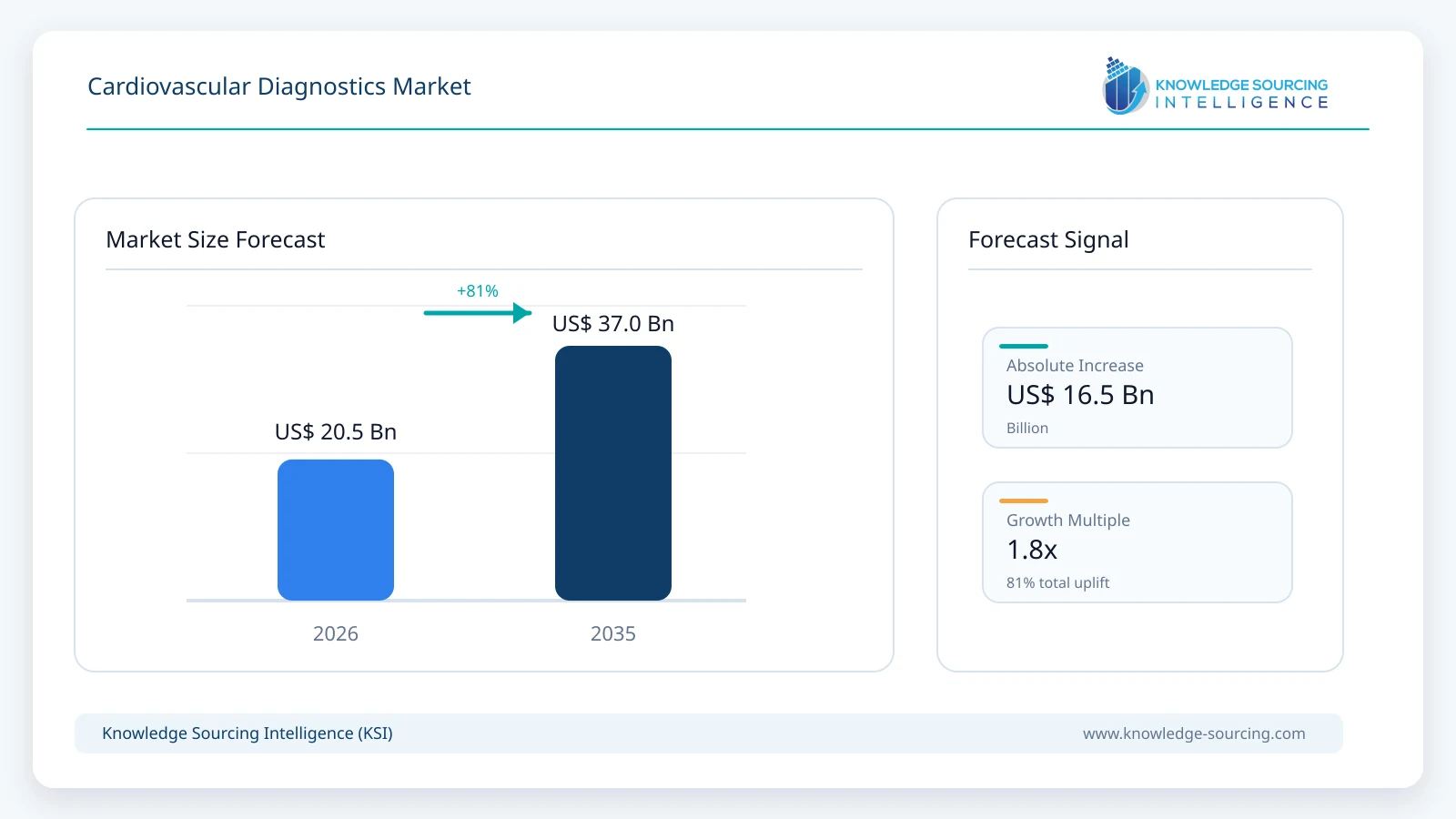
Cardiovascular diagnostics provide the clinical foundation for identifying structural, electrical, functional, and molecular abnormalities associated with cardiovascular diseases. Diagnostic technologies include electrocardiography, echocardiography, cardiac computed tomography, cardiac magnetic resonance imaging, nuclear cardiology, cardiac ultrasound, molecular diagnostics, and biomarker-based laboratory testing that collectively support diagnosis, risk stratification, therapeutic planning, and disease monitoring.
Demand is increasing because healthcare systems are emphasizing earlier intervention for coronary artery disease, heart failure, cardiac arrhythmias, and other chronic cardiovascular conditions that account for a substantial proportion of global morbidity and mortality. Earlier diagnosis reduces downstream treatment complexity while supporting personalized therapeutic decisions, thereby increasing the clinical value of advanced diagnostic technologies across the patient care pathway.
Artificial intelligence is transforming cardiovascular diagnostics by improving image interpretation, automating quantitative measurements, identifying subtle pathological patterns, and supporting clinical decision-making. Cloud-based data integration, remote monitoring platforms, and wearable diagnostic technologies are expanding diagnostic access beyond traditional hospital environments while enabling longitudinal cardiovascular assessment for higher-risk populations.
Regulatory agencies continue to strengthen oversight for software as a medical device, artificial intelligence-enabled diagnostic platforms, cybersecurity, clinical validation, and real-world evidence generation. These evolving regulatory frameworks encourage manufacturers to invest in robust clinical studies, algorithm transparency, and continuous software lifecycle management, thereby increasing confidence among clinicians, healthcare providers, and reimbursement authorities.
The cardiovascular diagnostics market remains strategically important because diagnostic accuracy directly influences therapeutic outcomes, healthcare resource utilization, and long-term disease management. Continued innovation across imaging technologies, digital health platforms, molecular diagnostics, and artificial intelligence is supporting the transition toward precision cardiovascular medicine while improving healthcare system efficiency.
Market Dynamics
Market Drivers
Increasing Burden of Cardiovascular Diseases Is Expanding Diagnostic Demand: Cardiovascular disease remains the leading cause of mortality worldwide and establishes continuous demand for timely diagnostic evaluation across every stage of patient management. Healthcare systems are increasingly implementing preventive screening programs because earlier disease detection reduces complications and improves long-term clinical outcomes. This rising diagnostic volume places pressure on providers to improve workflow efficiency without compromising diagnostic accuracy. Manufacturers are responding by expanding portfolios that combine advanced imaging, biomarker testing, and digital monitoring into integrated diagnostic pathways. The resulting shift strengthens long-term investment in cardiovascular diagnostic infrastructure across hospitals and outpatient settings.
Artificial Intelligence Integration Is Improving Diagnostic Precision: Cardiovascular diagnostics depend on rapid interpretation of increasingly complex clinical data and imaging studies. Healthcare providers are adopting artificial intelligence-enabled diagnostic platforms because they improve measurement consistency, reduce interpretation variability, and support faster clinical decisions. Greater dependence on software-based analysis also increases regulatory expectations for algorithm validation and clinical evidence. Diagnostic developers are expanding multicenter validation studies while continuously refining AI algorithms using real-world datasets. This evolution accelerates adoption of intelligent cardiovascular imaging and electrocardiography platforms throughout r
Expansion of Remote Cardiac Monitoring Is Driving Point-of-Care Diagnostics: Healthcare providers increasingly require continuous cardiovascular assessment beyond conventional hospital environments. Patients are utilizing wearable electrocardiography devices and connected monitoring systems because long-term rhythm surveillance improves detection of intermittent cardiac abnormalities. Conventional diagnostic workflows therefore require greater interoperability between hospital information systems and home-based monitoring platforms. Technology developers are integrating cloud connectivity, mobile applications, and automated clinical alerts into cardiovascular diagnostic ecosystems. The expanding remote monitoring model increases demand for portable, connected, and software-enabled diagnostic technologies across both acute and ambulatory care settings.
Precision Medicine Is Increasing Utilization of Biomarker and Molecular Diagnostics: Treatment selection increasingly depends on comprehensive characterization of cardiovascular disease rather than symptom assessment alone. Clinicians are incorporating cardiac biomarkers, molecular diagnostics, and risk stratification tools because individualized disease profiling improves therapeutic decision-making. Traditional diagnostic pathways therefore continue integrating laboratory diagnostics with imaging-based assessments. Diagnostic companies are developing multi-modal platforms that combine biochemical, imaging, and artificial intelligence-derived clinical information into unified reports. This integration supports precision cardiovascular care while improving diagnostic confidence across complex patient populations.
Market Restraints
High acquisition and maintenance costs of advanced cardiovascular imaging systems limit adoption among smaller hospitals and healthcare facilities with constrained capital budgets.
Variability in reimbursement policies for advanced imaging procedures, molecular diagnostics, and digital cardiac monitoring reduces purchasing confidence across several healthcare systems.
Stringent regulatory requirements for artificial intelligence-enabled diagnostics, cybersecurity compliance, and clinical validation extend product development timelines and increase commercialization costs.
Market Opportunities
Artificial Intelligence-Based Clinical Decision Support Creates New Growth Potential: Healthcare providers increasingly require diagnostic platforms that improve efficiency without increasing specialist workload. Artificial intelligence is supporting automated image interpretation, risk prediction, and workflow prioritization because clinicians are managing larger cardiovascular patient populations. Growing dependence on evidence-supported automation encourages manufacturers to expand AI-enabled diagnostic portfolios across imaging, electrocardiography, and ultrasound applications. This transition creates opportunities for software developers, imaging manufacturers, and digital health companies to establish differentiated cardiovascular diagnostic ecosystems.
Portable Point-of-Care Diagnostics Are Expanding Community-Based Cardiac Care: Healthcare delivery increasingly extends beyond tertiary hospitals into primary care clinics and community health networks. Demand is growing for compact cardiovascular diagnostic systems because earlier diagnosis in decentralized settings improves referral efficiency and patient access. Conventional stationary diagnostic equipment therefore continues losing share in selected clinical applications. Manufacturers are introducing portable ultrasound systems, handheld electrocardiography devices, and cloud-connected diagnostic platforms that support rapid cardiovascular assessment outside traditional hospital environments. This trend expands commercial opportunities across emerging healthcare markets.
Digital Health Integration Is Strengthening Longitudinal Disease Management: Cardiovascular disease requires continuous assessment throughout the patient care pathway rather than isolated diagnostic encounters. Healthcare organizations are integrating diagnostic platforms with electronic health records and remote monitoring systems because longitudinal clinical data improve disease management decisions. Fragmented diagnostic workflows therefore are evolving toward interoperable digital ecosystems. Technology companies are expanding cloud-based cardiovascular data management solutions that combine imaging, physiological monitoring, and laboratory diagnostics into unified clinical platforms. This integration increases recurring software revenue opportunities while strengthening long-term customer relationships.
Clinical Validation of Novel Biomarkers Supports Precision Cardiovascular Medicine: Research continues identifying emerging biomarkers associated with heart failure, coronary artery disease, myocardial injury, and inflammatory cardiovascular disorders. Healthcare providers are evaluating biomarker-guided clinical pathways because individualized risk assessment supports earlier therapeutic intervention. Regulatory agencies are increasingly requiring robust clinical evidence before widespread adoption of novel diagnostic assays. Diagnostic developers are expanding prospective multicenter clinical studies to demonstrate analytical validity and clinical utility across diverse patient populations.
Disease & Epidemiology Analysis
Cardiovascular diseases constitute the largest contributor to global mortality and continue to reshape diagnostic demand across developed and emerging healthcare systems. Coronary artery disease, heart failure, cardiac arrhythmias, valvular heart disease, congenital heart disease, and acute myocardial infarction collectively account for a substantial proportion of cardiovascular-related hospital admissions. The growing prevalence of hypertension, diabetes, obesity, chronic kidney disease, tobacco use, and sedentary lifestyles increases the population requiring routine cardiovascular risk assessment and periodic diagnostic monitoring. Healthcare providers are expanding preventive screening programs because earlier diagnosis enables timely intervention and reduces long-term treatment costs.
Coronary artery disease remains the most common indication for cardiovascular diagnostic procedures because disease progression often remains asymptomatic until advanced stages. Healthcare systems are increasingly utilizing electrocardiography, cardiac computed tomography, echocardiography, stress testing, cardiac magnetic resonance imaging, and circulating biomarkers to identify ischemic disease before major cardiovascular events occur. Greater emphasis on early risk stratification is increasing demand for multimodal diagnostic pathways that combine anatomical, functional, and biochemical assessments.
Treatment Guidelines Landscape
Organization | Disease Area | Current Guideline Focus | Diagnostic Recommendations |
European Society of Cardiology (ESC) | Chronic Coronary Syndromes | Early diagnosis and risk stratification | ECG, stress imaging, coronary CT angiography, cardiac biomarkers, functional assessment |
American College of Cardiology (ACC) / American Heart Association (AHA) | Heart Failure | Phenotype-based diagnosis and disease staging | Echocardiography, BNP/NT-proBNP testing, cardiac MRI where appropriate, serial functional evaluation |
European Society of Cardiology (ESC) | Atrial Fibrillation | Early rhythm detection and stroke prevention | Standard ECG, ambulatory ECG monitoring, wearable rhythm monitoring, echocardiography |
American College of Cardiology (ACC) / American Heart Association (AHA) | Acute Coronary Syndromes | Rapid diagnosis and treatment selection | High-sensitivity cardiac troponin testing, ECG, coronary angiography, cardiac imaging |
Market Segmentation
By Product Type
Electrocardiogram (ECG) systems represent a foundational segment of the cardiovascular diagnostics market because they provide rapid, non-invasive assessment of cardiac electrical activity across virtually every healthcare setting. Demand is increasing as healthcare providers expand early arrhythmia detection, cardiovascular screening, and outpatient cardiac monitoring programs. Conventional hospital-based ECG testing alone does not adequately capture intermittent cardiac abnormalities, creating greater dependence on portable and wearable ECG technologies. Manufacturers are integrating artificial intelligence, cloud connectivity, and automated ECG interpretation into next-generation systems to improve diagnostic efficiency and clinical decision-making. These advancements position ECG systems as an essential component of preventive cardiology, acute cardiac care, and long-term disease monitoring.
By Technology
Imaging diagnostics account for a significant share of cardiovascular diagnostic procedures because structural and functional visualization directly influences diagnosis and treatment planning. Healthcare providers are increasingly utilizing echocardiography, cardiac computed tomography, cardiac magnetic resonance imaging, and cardiac ultrasound to improve disease characterization across coronary artery disease, heart failure, and valvular disorders. Rising demand for higher diagnostic accuracy places pressure on imaging departments to increase throughput while maintaining image quality. Manufacturers are incorporating artificial intelligence-assisted image acquisition, automated quantification, and advanced reconstruction technologies that improve workflow efficiency and diagnostic consistency. These innovations continue strengthening imaging diagnostics as the cornerstone of comprehensive cardiovascular evaluation.
By Indication
Coronary artery disease remains the largest clinical indication for cardiovascular diagnostics because early identification significantly reduces the risk of myocardial infarction and long-term cardiovascular complications. Demand is increasing as aging populations and the prevalence of metabolic disorders continue expanding high-risk patient groups requiring routine cardiovascular assessment. Traditional symptom-based diagnosis often delays intervention, increasing reliance on multimodal diagnostic pathways that combine imaging, electrocardiography, and biomarker analysis. Healthcare providers are adopting advanced diagnostic algorithms supported by artificial intelligence and quantitative imaging to improve clinical confidence while reducing unnecessary invasive procedures. This transition continues driving sustained investment in comprehensive coronary artery disease diagnostic technologies.
Regional Analysis
North America Market Analysis
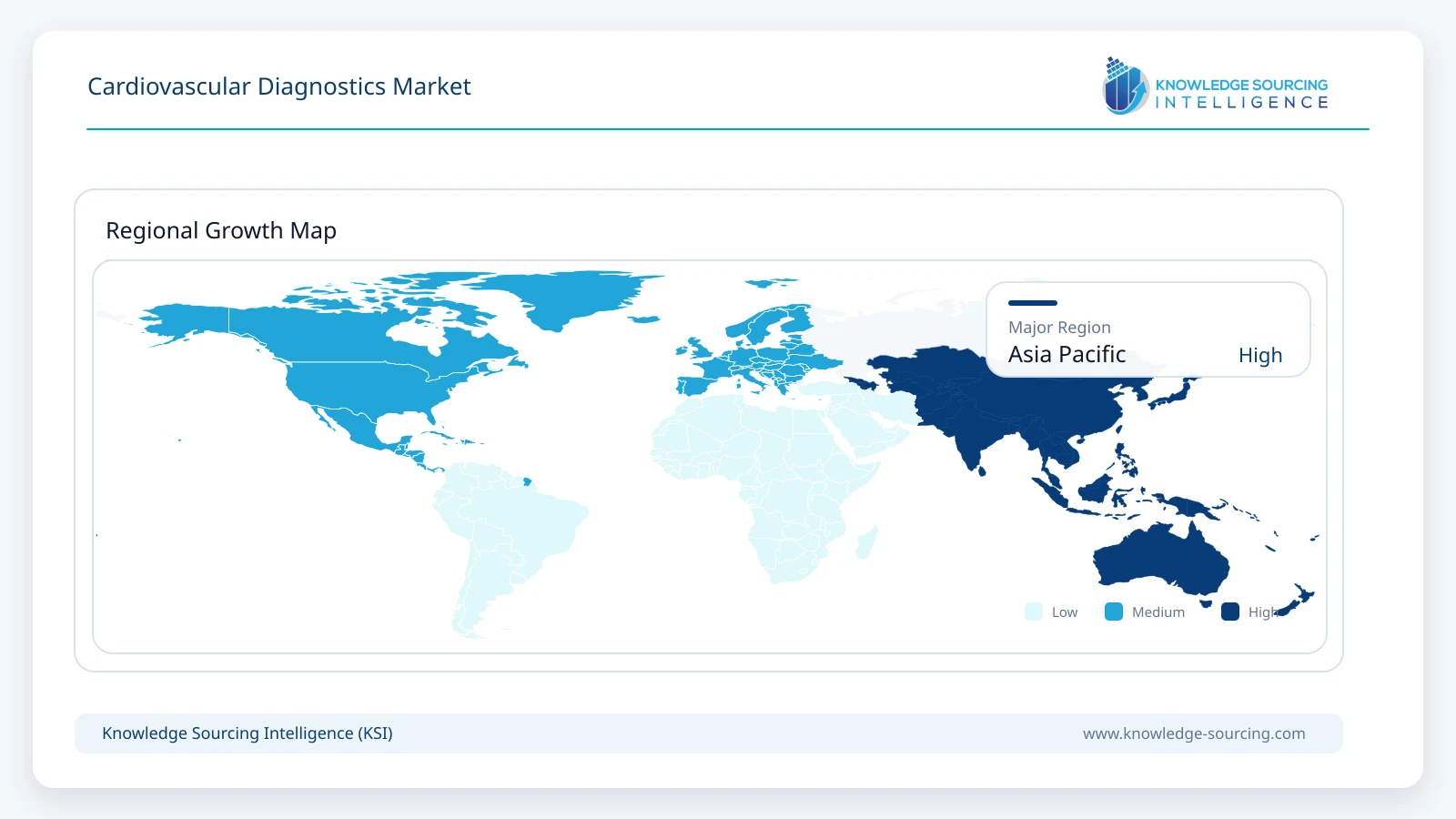
North America represents the most technologically advanced cardiovascular diagnostics market because healthcare providers rapidly adopt innovative diagnostic platforms supported by well-established reimbursement systems and advanced clinical infrastructure. The region continues investing in artificial intelligence-enabled imaging, molecular diagnostics, digital electrocardiography, and cloud-connected cardiac monitoring because cardiovascular disease remains a leading contributor to healthcare expenditure. Increasing prevalence of obesity, diabetes, hypertension, and aging populations is expanding demand for preventive cardiovascular screening across hospitals and outpatient care settings. Regulatory oversight by the U.S. Food and Drug Administration encourages manufacturers to generate robust clinical evidence while accelerating development of software-enabled diagnostic technologies. Healthcare systems are strengthening digital integration between imaging platforms, wearable monitoring devices, and electronic health records to improve longitudinal disease management. Continued investment in precision medicine, academic cardiovascular research, and advanced imaging infrastructure positions North America as the leading innovation hub for cardiovascular diagnostics through the forecast period.
Europe Market Analysis
Europe maintains a strong cardiovascular diagnostics market because structured clinical guidelines encourage standardized diagnostic pathways across cardiovascular disease management. Demand is increasing as aging populations continue expanding the prevalence of coronary artery disease, heart failure, atrial fibrillation, and structural heart disorders throughout the region. National healthcare systems emphasize early diagnosis to reduce long-term treatment costs, encouraging broader adoption of echocardiography, cardiac CT, cardiac MRI, and biomarker-based diagnostics. Regulatory implementation under the European Union Medical Device Regulation (MDR) and In Vitro Diagnostic Regulation (IVDR) is strengthening evidence requirements for diagnostic technologies while increasing focus on post-market surveillance and clinical performance evaluation. Manufacturers are responding by expanding regulatory investment, strengthening clinical partnerships, and enhancing software validation for artificial intelligence-enabled diagnostics. The region continues supporting innovation through collaborative cardiovascular research initiatives and widespread adoption of value-based healthcare strategies.
Asia Pacific Market Analysis
Asia Pacific is experiencing the fastest expansion in cardiovascular diagnostic demand because rapid urbanization, demographic aging, and increasing lifestyle-related cardiovascular risk factors continue enlarging the patient population. Healthcare infrastructure investment is improving access to advanced imaging technologies while governments strengthen cardiovascular disease prevention programs across both developed and emerging economies. Rising healthcare expenditure encourages hospitals to modernize diagnostic capabilities through digital imaging systems, portable ultrasound, and artificial intelligence-supported diagnostic platforms. Large underserved populations continue creating demand for affordable point-of-care cardiovascular diagnostics that improve accessibility outside major metropolitan hospitals. Domestic manufacturers are increasing investment in cost-effective imaging and electrocardiography technologies while multinational companies expand regional manufacturing and research collaborations. These developments continue strengthening Asia Pacific as one of the most attractive long-term growth regions for cardiovascular diagnostics.
Rest of the World
The Rest of the World region is witnessing gradual expansion in cardiovascular diagnostics as healthcare systems improve diagnostic infrastructure across Latin America, the Middle East, and Africa. Cardiovascular disease prevalence continues increasing because demographic transitions and lifestyle changes are elevating the burden of chronic cardiovascular disorders. Limited access to advanced imaging equipment remains a challenge across several lower-resource healthcare systems, encouraging demand for portable and cost-efficient diagnostic technologies. Governments and international healthcare organizations are supporting cardiovascular screening initiatives that improve early disease detection while strengthening diagnostic capacity within public healthcare institutions. Manufacturers are expanding regional distribution networks and introducing scalable diagnostic solutions suited for diverse healthcare environments. Continued healthcare modernization and growing awareness of preventive cardiovascular care are expected to support sustained demand throughout these regions during the forecast period.
Regulatory Landscape
Regulatory oversight continues shaping the cardiovascular diagnostics market because increasing software integration, artificial intelligence, and connected medical devices require stronger evidence of clinical performance, cybersecurity, and long-term reliability. Regulatory agencies are expanding requirements for analytical validation, clinical validation, post-market surveillance, and lifecycle management as cardiovascular diagnostics increasingly influence treatment decisions. Manufacturers are strengthening prospective clinical studies and real-world evidence programs because robust clinical datasets facilitate regulatory review while improving physician confidence in adopting emerging diagnostic technologies. These evolving expectations are encouraging developers to integrate quality management, algorithm monitoring, and cybersecurity controls early in product development, thereby reducing regulatory risk throughout commercialization.
The U.S. Food and Drug Administration (FDA) continues regulating cardiovascular diagnostic devices through the 510(k), De Novo, and Premarket Approval (PMA) pathways depending on device risk classification. Artificial intelligence-enabled cardiovascular software increasingly falls under Software as a Medical Device (SaMD) guidance, requiring comprehensive evidence supporting algorithm performance, clinical utility, software updates, and cybersecurity. The FDA also emphasizes Good Machine Learning Practice (GMLP) principles for adaptive artificial intelligence technologies, encouraging manufacturers to establish transparent lifecycle management strategies while maintaining safety and effectiveness throughout software evolution.
Within Europe, the Medical Device Regulation (EU MDR 2017/745) and In Vitro Diagnostic Regulation (IVDR 2017/746) continue strengthening clinical evidence requirements for cardiovascular diagnostic equipment and laboratory-based diagnostic assays. Manufacturers are expanding post-market clinical follow-up studies, performance evaluations, and quality management systems because notified bodies require more comprehensive documentation before granting conformity assessments. Similar regulatory modernization is occurring across Japan, China, Australia, Canada, and other major healthcare markets, where authorities are introducing harmonized standards that increasingly align with guidance from the International Medical Device Regulators Forum (IMDRF). These regulatory developments continue increasing development costs but simultaneously strengthen long-term confidence in cardiovascular diagnostic technologies.
Pipeline Analysis
Innovation within the cardiovascular diagnostics market increasingly centers on artificial intelligence-assisted imaging, digital electrocardiography, molecular diagnostics, and cloud-based clinical decision support rather than traditional pharmaceutical pipelines. Developers are expanding multicenter validation studies because healthcare providers require strong evidence demonstrating improved diagnostic accuracy, workflow efficiency, and clinical utility before routine adoption. The resulting pipeline is emphasizing software-enabled diagnostics that integrate seamlessly with existing cardiovascular imaging and monitoring infrastructure.
Artificial intelligence-enabled echocardiography remains one of the fastest-developing pipeline areas. Ultromics continues advancing EchoGo® cardiovascular software through prospective validation studies designed to improve identification of coronary artery disease and heart failure using echocardiographic imaging. The platform utilizes deep-learning algorithms that analyze standard echocardiographic examinations to identify subtle functional abnormalities that conventional assessment may overlook. Ongoing clinical collaborations are supporting broader regulatory expansion while generating real-world evidence across multiple healthcare systems.
Digital electrocardiography is also progressing rapidly through continuous algorithm refinement and expanded clinical validation. AliveCor continues developing artificial intelligence-based ECG interpretation software capable of identifying atrial fibrillation and additional rhythm abnormalities using portable mobile electrocardiography devices. Clinical investigations are expanding evaluation across broader patient populations while supporting additional regulatory submissions. Eko Health is similarly strengthening its AI-enabled digital stethoscope platform through ongoing validation studies targeting earlier detection of structural heart disease, including reduced ejection fraction and valvular abnormalities.
Reimbursement Landscape
Reimbursement policies substantially influence adoption of cardiovascular diagnostic technologies because hospitals evaluate capital investments according to long-term reimbursement sustainability. Established reimbursement pathways support routine electrocardiography, echocardiography, cardiac computed tomography, cardiac magnetic resonance imaging, and cardiac biomarker testing across most developed healthcare systems. Demand is increasing for advanced artificial intelligence-enabled diagnostics, although reimbursement frameworks continue evolving as payers evaluate additional clinical evidence demonstrating improved patient outcomes and healthcare efficiency.
Healthcare payers increasingly emphasize value-based care, encouraging diagnostic technologies that reduce unnecessary procedures, shorten diagnostic timelines, and improve risk stratification. Manufacturers are expanding health economic studies alongside clinical validation programs because reimbursement authorities increasingly require evidence demonstrating both clinical effectiveness and cost-effectiveness before supporting broader coverage decisions. These trends continue encouraging development of integrated diagnostic solutions capable of delivering measurable improvements in healthcare quality while reducing overall cardiovascular treatment costs.
Competitive Landscape
Baxter International
Baxter International differentiates itself through its extensive presence in critical care, hospital infrastructure, and connected healthcare solutions that complement cardiovascular patient management. Although cardiovascular diagnostics are not the company's primary business segment, its hospital technologies, patient monitoring capabilities, and integrated care solutions support cardiovascular clinical workflows across acute care environments.
Nihon Kohden Corporation
Nihon Kohden maintains a strong competitive position through its specialization in physiological monitoring, electrocardiography, and diagnostic cardiology technologies. The company's strategic strength lies in combining high-quality ECG systems, patient monitoring platforms, and hospital connectivity solutions into integrated cardiovascular care environments.
AliveCor Inc.
AliveCor distinguishes itself through artificial intelligence-powered mobile electrocardiography and digital cardiac monitoring technologies designed for decentralized cardiovascular care. The company focuses on portable ECG devices supported by cloud-based analytical software that enables rapid identification of cardiac rhythm abnormalities outside conventional healthcare settings.
GE HealthCare Technologies Inc.
GE HealthCare represents one of the industry's most comprehensive cardiovascular imaging providers through its extensive portfolio of cardiac ultrasound, computed tomography, magnetic resonance imaging, molecular imaging, and artificial intelligence-enabled software solutions. The company differentiates itself by integrating advanced imaging hardware with workflow automation and quantitative image analysis that improve diagnostic efficiency across complex cardiovascular examinations.
Koninklijke Philips N.V.
Koninklijke Philips N.V. maintains a highly diversified cardiovascular diagnostics portfolio spanning diagnostic imaging, echocardiography, image-guided therapy, patient monitoring, and healthcare informatics. The company's competitive strategy emphasizes integrated cardiovascular care pathways that combine imaging technologies with advanced software, clinical analytics, and digital workflow management.
Boston Scientific
Boston Scientific differentiates itself through its strong presence in interventional cardiology, cardiac rhythm management, electrophysiology, and structural heart technologies that closely integrate with cardiovascular diagnostics. The company continues expanding diagnostic capabilities supporting electrophysiology procedures because precise pre-procedural assessment improves therapeutic outcomes.
Eko Health
Eko Health has established a differentiated position by combining digital stethoscope technology with artificial intelligence-enabled cardiac assessment software that supports earlier identification of structural heart disease. The company's strategy focuses on expanding cardiovascular screening beyond specialist settings by enabling primary care physicians and community healthcare providers to perform advanced cardiac assessments.
Key Developments
March 2026: Philips launched IntraSight Plus as an integrated platform to simplify coronary interventions and support precision care. The system combines intravascular imaging, physiology, and angiography tools in one workflow to improve decision-making during PCI procedures.
January 2026: Cardio Diagnostics announced a strategic agreement with Aimil and Dr. Lal PathLabs to launch its PrecisionCHD test in India. The partnership marks the company’s first international expansion and aims to bring epigenetics- and AI-driven coronary heart disease detection to the Indian market.
August 2025: GE HealthCare unveiled Vivid Pioneer, its most advanced AI-powered cardiovascular ultrasound system. The system is designed to improve image quality, speed up workflow, and enhance diagnostic confidence through automation and AI-assisted measurements.
Strategic Insights and Future Market Outlook
The cardiovascular diagnostics market is evolving toward integrated diagnostic ecosystems that combine imaging, physiological monitoring, molecular diagnostics, and artificial intelligence into unified clinical workflows. Healthcare providers increasingly require comprehensive diagnostic platforms because cardiovascular diseases are becoming more complex, requiring continuous assessment rather than isolated diagnostic procedures. Conventional hardware differentiation therefore is becoming less sustainable as software functionality, interoperability, and clinical decision support increasingly influence purchasing decisions.
Artificial intelligence is becoming the primary differentiator across cardiovascular diagnostics because healthcare systems continue addressing workforce shortages and rising diagnostic volumes. Imaging vendors are integrating automated quantification, workflow optimization, and predictive analytics into cardiovascular imaging platforms, while digital health companies are expanding wearable diagnostics and remote monitoring solutions that extend cardiovascular assessment beyond hospitals. Regulatory agencies are simultaneously strengthening clinical evidence expectations for software-enabled diagnostics, encouraging manufacturers to generate prospective validation data and real-world clinical evidence before broad commercialization.
Growing emphasis on preventive cardiology and precision medicine continues expanding opportunities for multimodal diagnostic approaches that integrate anatomical imaging, physiological monitoring, laboratory biomarkers, and artificial intelligence-driven risk prediction. Healthcare providers increasingly recognize that comprehensive diagnostic evaluation improves patient stratification, therapeutic planning, and long-term disease management while reducing unnecessary invasive procedures.
The cardiovascular diagnostics market remains strategically positioned for sustained technological advancement because healthcare systems continue prioritizing earlier disease detection, workflow efficiency, and evidence-based clinical decision-making. Continued innovation across artificial intelligence, advanced imaging, molecular diagnostics, and connected health technologies will reinforce diagnostics as a central component of cardiovascular disease prevention and management. Manufacturers that successfully align technological innovation with regulatory compliance, reimbursement expectations, and clinical validation will remain best positioned to capture future market opportunities while supporting the global transition toward precision cardiovascular medicine.
Cardiovascular Diagnostics Market Scope:
| Report Metric | Details |
|---|---|
| Total Market Size in 2026 | USD 20.47 billion |
| Total Market Size in 2035 | USD 36.95 billion |
| Forecast Unit | Billion |
| Growth Rate | 6.8% |
| Study Period | 2021 to 2035 |
| Historical Data | 2021 to 2024 |
| Base Year | 2025 |
| Forecast Period | 2026 – 2035 |
| Segmentation | Product Type, Technology, Indication, End User, Geography |
| Companies |
|
Market Segmentation
Product Type
Technology
End User
Geography
- North America
- South America
- Europe
- Middle East and Africa
- Asia Pacific
Table of Contents
1. EXECUTIVE SUMMARY
1.1 Market Snapshot
1.2 Key Findings
1.3 Analyst Insights
1.4 Strategic Recommendations
2. RESEARCH METHODOLOGY
2.1 Research Design
2.2 Data Collection Methodology
2.3 Market Size Estimation
2.4 Forecasting Model
2.5 Assumptions & Limitations
3. GLOBAL CARDIOVASCULAR DIAGNOSTICS MARKET OVERVIEW, SIZE & FORECAST
3.1 Market Definition & Scope
3.2 Cardiovascular Disease Overview
3.3 Evolution of Cardiovascular Diagnostics
3.4 Clinical Workflow for Cardiovascular Diagnosis
3.5 Disease Burden & Unmet Clinical Needs
3.6 Epidemiology and Prevalence Analysis
3.6.1 Cardiovascular Disease Prevalence
3.6.2 Diagnosed Patient Population
3.7 Current Diagnostic Pathway
3.8 Key Market Trends
3.9 Historical Market Size Analysis (2021–2025)
3.10 Market Forecast (2026–2035)
4. MARKET DYNAMICS
4.1 Market Drivers
4.2 Market Restraints
4.3 Market Opportunities
4.4 Market Challenges
5. INDUSTRY LANDSCAPE
5.1 Industry Value Chain Analysis
5.2 Pricing Analysis
5.3 Reimbursement Landscape
6. INNOVATION LANDSCAPE
6.1 Emerging Technologies in Cardiovascular Diagnostics
6.2 Product Innovation
6.3 Clinical Trial Analysis
6.4 Pipeline Analysis
6.5 Artificial Intelligence Integration
6.6 Digital Health Integration
7. REGULATORY LANDSCAPE
7.1 Regulatory Framework
7.2 Approval Pathways
7.3 Compliance Requirements
8. GLOBAL CARDIOVASCULAR DIAGNOSTICS MARKET LANDSCAPE ANALYSIS
8.1 Analysis by Product Type
8.2 Analysis by Technology Platform
8.3 Analysis by Application
8.4 Analysis by End User
9. GLOBAL CARDIOVASCULAR DIAGNOSTICS MARKET SEGMENT ANALYSIS (2021–2035)
9.1 By Product Type
9.1.1 Electrocardiogram (ECG) Systems
9.1.2 Echocardiography Systems
9.1.3 Cardiac Computed Tomography (Cardiac CT)
9.1.4 Cardiac Magnetic Resonance Imaging (Cardiac MRI)
9.1.5 Nuclear Cardiology Systems
9.1.6 Cardiac Ultrasound Systems
9.1.7 Other Cardiovascular Diagnostic Products
9.2 By Technology
9.2.1 Imaging Diagnostics
9.2.2 In-vitro Diagnostics
9.2.3 Molecular Diagnostics
9.2.4 Others
9.3 By Indication
9.3.1 Coronary Artery Disease
9.3.2 Heart Failure
9.3.3 Cardiac Arrhythmias
9.3.4 Acute Myocardial Infarction
9.3.5 Valvular Heart Disease
9.3.6 Congenital Heart Disease
9.3.7 Other Cardiovascular Disorders
9.4 By End User
9.4.1 Hospitals
9.4.2 Specialty Cardiology Clinics
9.4.3 Diagnostic Laboratories
9.4.4 Others
10. GLOBAL CARDIOVASCULAR DIAGNOSTICS MARKET GEOGRAPHICAL ANALYSIS (2021–2035)
10.1 North America
10.2 Europe
10.3 Asia-Pacific
10.4 South America
10.5 Middle East & Africa
11. GLOBAL CARDIOVASCULAR DIAGNOSTICS MARKET COUNTRY ANALYSIS (2021–2035)
11.1 United States
11.2 Canada
11.3 Germany
11.4 United Kingdom
11.5 France
11.6 Italy
11.7 Spain
11.8 Japan
11.9 China
11.10 India
11.11 South Korea
11.12 Australia
11.13 Brazil
11.14 Mexico
11.15 Saudi Arabia
12. COMPETITIVE LANDSCAPE
12.1 Market Share Analysis
12.2 Strategic Developments
12.3 Mergers & Acquisitions, Partnerships & Collaborations
12.4 Product Launches
13. COMPANY PROFILES
13.1 Baxter International
13.2 Nihon Kohden Corporation
13.3 AliveCor Inc.
13.4 GE HealthCare Technologies Inc.
13.5 Koninklijke Philips N.V.
13.6 Boston Scientific
13.7 Eko Health
13.8 Ultromics
13.9 Cardio Diagnostics
13.10 HeartFlow Inc.
14. GLOBAL CARDIOVASCULAR DIAGNOSTICS MARKET COMMERCIAL FORECAST ANALYSIS
14.1 Forecast by Diagnostic Imaging Systems
14.2 Forecast by Cardiac Biomarker Testing
14.3 Forecast by Ambulatory Cardiac Monitoring
14.4 Forecast by Point-of-Care Cardiovascular Diagnostics
14.5 Forecast by AI-enabled Cardiovascular Diagnostic Solutions
15. INVESTMENT & FUNDING ANALYSIS
15.1 Venture Capital Trends
15.2 Government Funding
15.3 R&D Investments
16. FUTURE OUTLOOK
16.1 Key Growth Opportunities
16.2 Future Industry Trends
Navigate
Trusted by the world's leading organizations











