
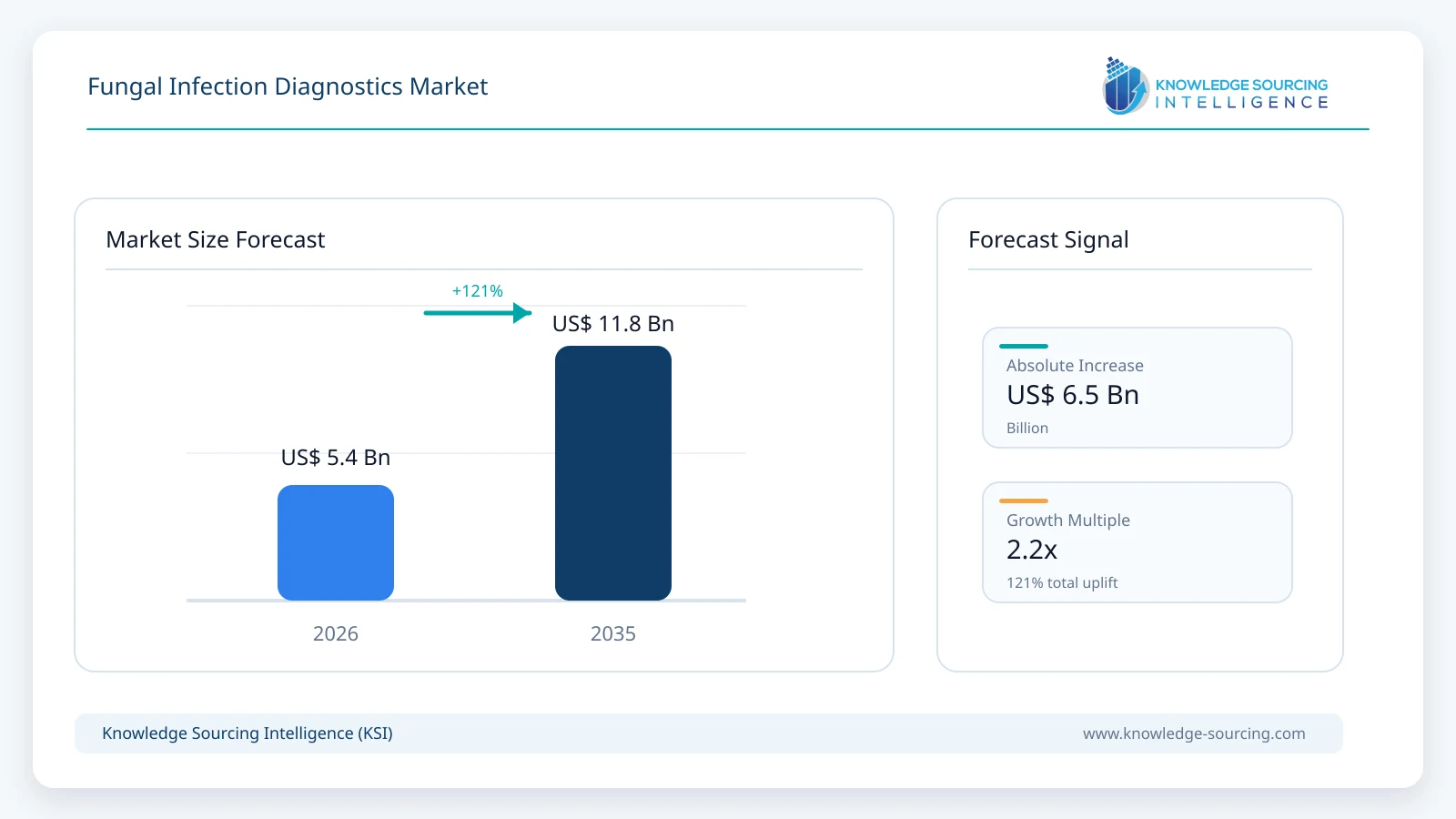
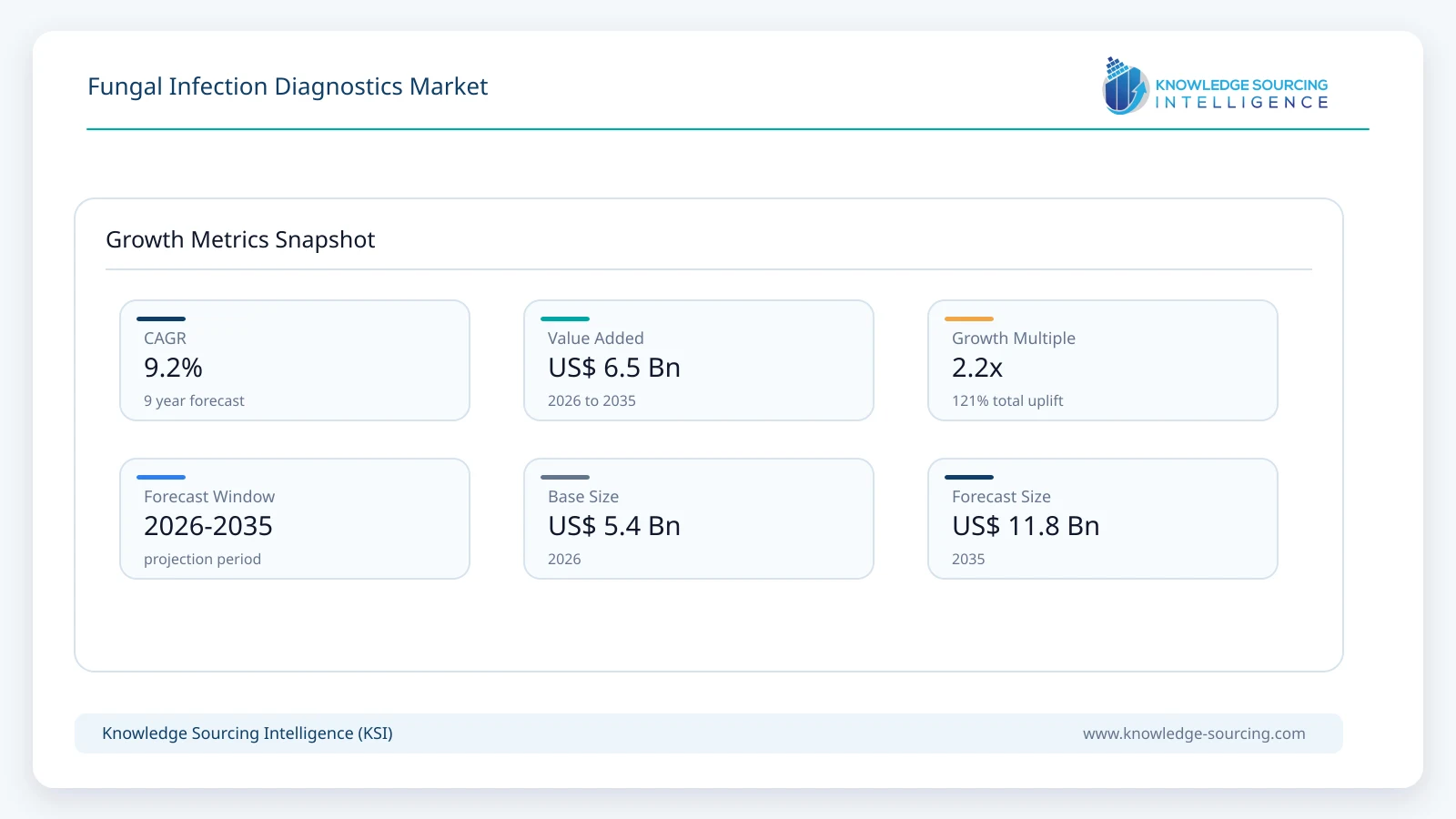
The Fungal Infection Diagnostics Market is anticipated to grow at a CAGR of 9.2% from USD 5.36 billion in 2026 to USD 11.82 billion in 2035.
Highlights:
- 1Rising immunocompromised patient populations are increasing demand for rapid fungal identification because delayed diagnosis elevates treatment complexity.
- 2Expansion of molecular diagnostic capabilities is accelerating adoption of PCR-based testing because laboratories require shorter turnaround times.
- 3Healthcare providers are prioritizing early detection strategies because invasive fungal infections carry substantial clinical and economic burdens.
- 4Automated laboratory workflows are gaining traction because workforce constraints are increasing pressure on diagnostic efficiency.
Fungal infection diagnosis remains dependent on laboratory confirmation because clinical symptoms frequently overlap with bacterial, viral, and inflammatory conditions. Growing awareness of invasive fungal diseases is increasing diagnostic demand across hospitals and specialized laboratories. This demand is becoming more pronounced as healthcare systems expand surveillance programs for high-risk patient populations.
The market depends on continuous improvements in sensitivity, specificity, and turnaround time. Molecular platforms are reducing dependence on lengthy culture procedures, which creates demand for advanced reagents, assay kits, and automated instruments. Diagnostic accuracy remains a key purchasing criterion because delayed identification often leads to inappropriate treatment and prolonged hospitalization.
Regulatory agencies continue to emphasize quality standards for in vitro diagnostics, which supports investment in validated testing platforms. The strategic importance of fungal diagnostics is increasing because antimicrobial stewardship programs require precise pathogen identification before therapeutic decisions are made.
Market Dynamics
Market Drivers
Rising Burden of Immunocompromised Patients: The market relies heavily on patients with elevated susceptibility to opportunistic fungal infections. Cancer treatment, organ transplantation, and immunosuppressive therapies are expanding globally, which is increasing diagnostic demand. Diagnostic laboratories are adopting advanced fungal testing methods because clinicians require earlier identification of life-threatening infections. Faster diagnosis supports timely treatment and improves patient management outcomes.
Increasing Adoption of Molecular Diagnostics: Molecular testing provides greater sensitivity for several fungal pathogens than conventional approaches. Laboratories are investing in PCR and sequencing capabilities because clinicians require rapid results. Testing workflows are becoming more automated as healthcare facilities pursue efficiency gains. This transition supports sustained demand for reagents, instruments, and software solutions.
Growth in Hospital Infection Surveillance: Healthcare systems emphasize infection surveillance to reduce complications and healthcare-associated infections. Screening programs are expanding across tertiary care settings, which is increasing testing frequency. Diagnostic platforms are evolving to accommodate higher throughput requirements. Broader surveillance activity strengthens demand across multiple diagnostic modalities.
Expansion of Advanced Laboratory Infrastructure: Healthcare investment supports modernization of laboratory capabilities. Diagnostic centers are implementing integrated testing environments because complex infectious disease management requires multidisciplinary support. Automation is reducing workflow bottlenecks while improving reproducibility. These developments support long-term market growth.
Market Restraints
High capital costs associated with advanced molecular diagnostic instruments limit adoption among smaller laboratories.
Diagnostic variability across fungal species reduces standardization and complicates result interpretation.
Limited laboratory expertise in specialized fungal testing constrains utilization in resource-constrained settings.
Market Opportunities
Multiplex Diagnostic Development: Healthcare providers increasingly seek comprehensive infectious disease panels. Multiplex platforms are incorporating fungal targets because clinicians require broader pathogen coverage. Diagnostic manufacturers are expanding assay portfolios to address this need. Wider test consolidation improves laboratory efficiency.
Integration of Next-Generation Sequencing: Sequencing technologies support detailed pathogen characterization. Clinical laboratories are evaluating sequencing-based workflows because complex infections require deeper analytical insights. Technology providers are refining workflows to improve accessibility. This creates opportunities for premium diagnostic solutions.
Emerging Market Laboratory Expansion: Healthcare infrastructure development is increasing across Asia-Pacific, Latin America, and parts of the Middle East. Laboratory capacity is expanding as governments strengthen infectious disease management programs. Diagnostic suppliers are broadening regional presence to capture new demand. Market penetration opportunities continue to increase.
AI-Enabled Diagnostic Interpretation: Diagnostic complexity is increasing as test volumes grow. Artificial intelligence tools are supporting laboratory decision-making through automated interpretation and workflow optimization. Healthcare institutions are evaluating digital solutions to address staffing challenges. This trend creates opportunities for software-driven innovation.
Supply Chain Analysis
The fungal infection diagnostics supply chain begins with raw material suppliers providing enzymes, antibodies, nucleic acid components, culture media ingredients, plastics, and specialty chemicals. Diagnostic manufacturers convert these materials into instruments, assay kits, reagents, consumables, and software solutions. Distribution partners deliver products to hospitals, reference laboratories, research institutes, and diagnostic centers.
Demand is increasingly shifting toward reagent-intensive testing platforms because molecular and antigen-based diagnostics require recurring consumable purchases. Instrument manufacturers therefore maintain strong commercial emphasis on reagent ecosystems. Regulatory compliance requirements create barriers to entry, which favors established diagnostic companies with validated manufacturing systems and global distribution capabilities.
Government Regulations
Region | Regulatory Authority | Key Requirement |
United States | FDA | Regulation of in vitro diagnostic devices |
European Union | European Commission / IVDR | Compliance with In Vitro Diagnostic Regulation |
Japan | PMDA | Approval and post-market monitoring requirements |
China | NMPA | Registration and quality compliance for diagnostics |
Market Segmentation
By Product Type
Reagents and kits constitute a major demand center because recurring testing activity requires continuous replenishment of consumables. Molecular workflows are increasing reagent consumption as laboratories perform higher testing volumes. Instruments remain essential for workflow execution, yet purchasing cycles occur less frequently than reagent purchases. Software and services are gaining importance because laboratories require connectivity, automation, and data management capabilities. Demand therefore increasingly concentrates on integrated ecosystems rather than standalone products.
By Diagnostic Method
Molecular diagnostics are capturing increasing attention because laboratories seek improved sensitivity and faster turnaround times. Culture-based testing remains important for confirmation and susceptibility assessment, although lengthy processing times create operational limitations. Serological testing supports rapid screening in specific clinical scenarios, while histopathology and microscopy continue serving complementary roles. Next-generation sequencing is emerging for complex cases where traditional approaches provide limited resolution. The resulting demand pattern favors technologies that balance speed, accuracy, and scalability.
By Infection Type
Candidiasis represents a significant testing category because Candida species remain common causes of invasive fungal disease. Aspergillosis testing demand is increasing as immunocompromised patient populations expand. Cryptococcosis continues requiring specialized diagnostics in vulnerable populations. Pneumocystis pneumonia testing remains important within high-risk clinical settings. Dermatophytosis contributes substantial routine testing volume because of its prevalence across outpatient environments. Diverse infection profiles therefore sustain demand across multiple diagnostic methodologies.
Regional Analysis
North America
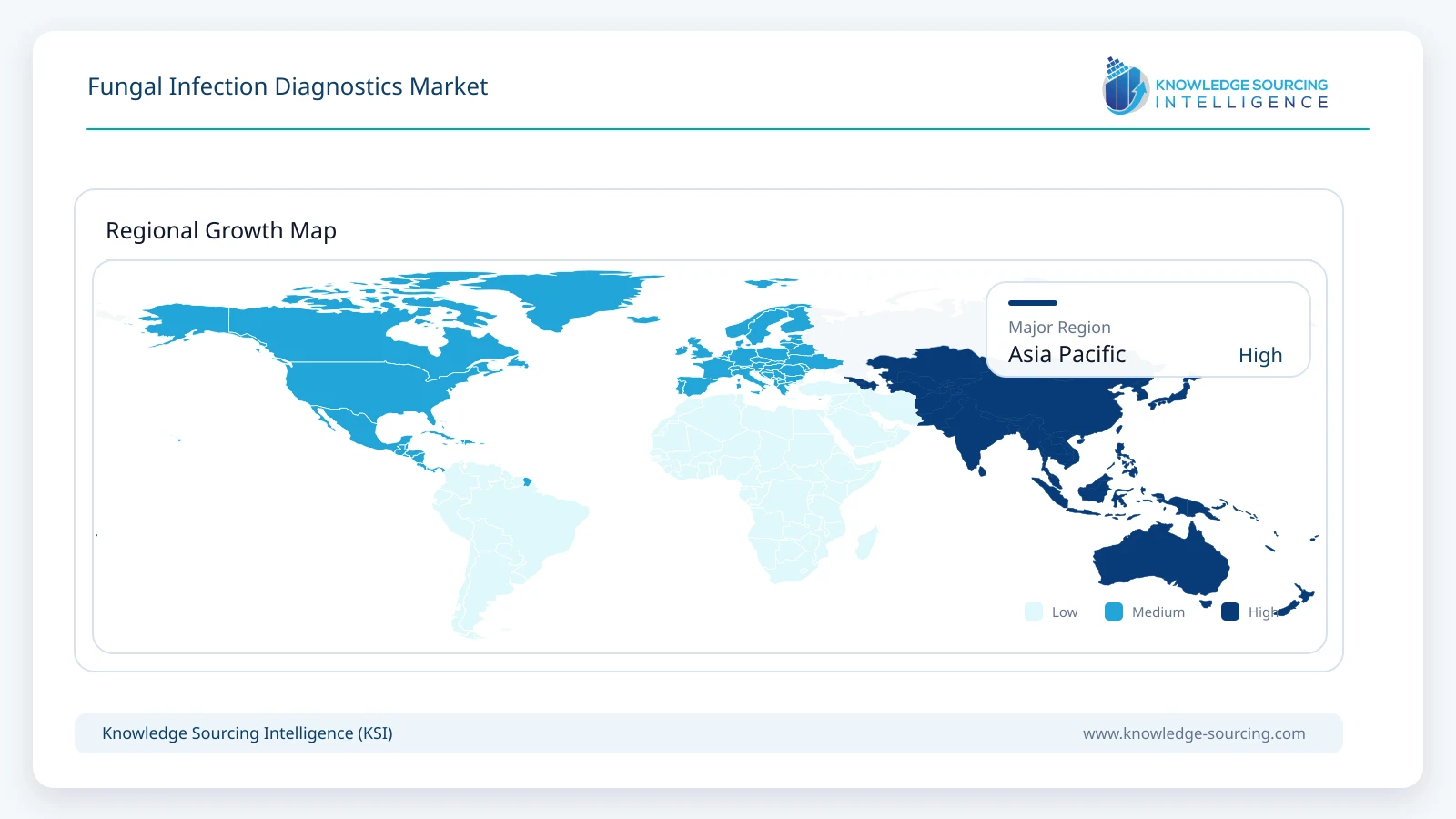
North America represents a major market because advanced healthcare infrastructure supports widespread diagnostic adoption. Hospitals increasingly prioritize rapid fungal detection because high-risk patient populations continue expanding. Molecular diagnostics are gaining share as clinicians seek earlier intervention opportunities. Reimbursement mechanisms support utilization of advanced testing in many clinical settings. Laboratory consolidation is increasing operational scale, which encourages investment in automated diagnostic platforms. Strong regulatory oversight supports confidence in validated technologies. Research activity remains robust, which sustains innovation and product development. These conditions position North America as a leading adopter of next-generation fungal diagnostics.
Europe
Europe maintains strong demand because healthcare systems emphasize infectious disease management and patient safety. Implementation of the In Vitro Diagnostic Regulation is increasing focus on compliance and quality assurance. Laboratories are investing in advanced testing platforms because diagnostic accuracy remains a critical clinical requirement. Academic research institutions contribute significantly to fungal disease awareness and diagnostic advancement. Molecular testing adoption continues increasing across major healthcare markets. Integrated laboratory networks support broader access to specialized fungal diagnostics. These factors strengthen long-term demand for innovative diagnostic technologies.
Asia Pacific
Asia Pacific exhibits substantial growth potential because healthcare infrastructure expansion continues across multiple countries. Diagnostic access is improving as governments increase healthcare investment. Hospital networks are strengthening infectious disease management capabilities, which is increasing testing demand. Molecular diagnostics are becoming more accessible as laboratory modernization progresses. Large patient populations create significant demand for scalable testing solutions. Local manufacturing activity is also increasing, which supports broader technology availability. These developments contribute to a progressively expanding diagnostic landscape.
Rest of the World
Healthcare systems across Latin America, the Middle East, and Africa are strengthening infectious disease surveillance capabilities. Diagnostic capacity expansion is increasing access to fungal testing in previously underserved regions. International healthcare initiatives support laboratory development, which encourages technology adoption. Resource limitations remain a constraint in some markets, yet demand continues increasing because awareness of invasive fungal infections is improving. Strategic partnerships and government investment support gradual market development. These trends create opportunities for diagnostic suppliers seeking geographic expansion.
Regulatory Landscape
Regulatory oversight remains central to the fungal infection diagnostics market because diagnostic accuracy directly influences clinical decision-making. Authorities increasingly emphasize evidence generation, analytical validation, and quality management requirements. These expectations encourage manufacturers to invest in robust development and compliance processes.
The global regulatory environment is becoming more structured as healthcare systems seek greater transparency and reliability. Diagnostic developers are adapting product strategies to satisfy evolving approval standards. Compliance requirements influence product development timelines, yet they also strengthen confidence among healthcare providers.
Increasing scrutiny of diagnostic performance is supporting broader adoption of validated technologies. Market participants therefore continue prioritizing regulatory readiness as a core competitive capability
Pipeline Analysis
The diagnostic pipeline remains active because healthcare providers require faster and more accurate fungal identification methods. Development efforts increasingly focus on multiplex molecular assays capable of detecting multiple fungal pathogens simultaneously. Diagnostic manufacturers are also exploring automation-enhanced workflows to improve throughput and consistency.
Sequencing technologies are gaining attention within development pipelines because complex fungal infections often require deeper analytical resolution. Developers are evaluating approaches that combine genomic analysis with traditional laboratory methodologies. These initiatives seek to improve pathogen identification while supporting personalized treatment strategies.
Artificial intelligence applications are also entering diagnostic development programs. Software-driven interpretation tools are assisting laboratories in managing increasing data complexity. The resulting pipeline activity reflects growing emphasis on speed, precision, and operational efficiency.
Competitive Landscape
F. Hoffmann-La Roche Ltd.
Roche remains strategically distinct because it combines extensive molecular diagnostics expertise with a globally established healthcare presence. The company supports infectious disease testing through integrated platforms that emphasize automation, scalability, and clinical utility. Its diagnostic ecosystem enables laboratories to manage diverse testing requirements within unified workflows. Continued investment in molecular technologies strengthens Roche’s position within infectious disease diagnostics.
Thermo Fisher Scientific Inc.
Thermo Fisher Scientific leverages broad laboratory infrastructure capabilities to support diagnostic workflows. The company benefits from a diversified portfolio spanning instruments, reagents, consumables, and analytical technologies. Strong research engagement and global distribution capabilities reinforce its competitive position.
Bio-Rad Laboratories, Inc.
Bio-Rad maintains strategic relevance through molecular biology expertise and diagnostic testing solutions. The company supports laboratories seeking reliable infectious disease testing platforms. Its focus on analytical performance strengthens customer adoption across clinical settings.
QIAGEN N.V.
QIAGEN differentiates itself through molecular sample preparation and diagnostic testing capabilities. The company continues expanding assay portfolios supporting infectious disease applications. Its integrated workflow approach enhances laboratory efficiency and diagnostic confidence.
Danaher Corporation
Danaher participates through multiple life science and diagnostics businesses that support infectious disease testing. Operational scale and technological diversity provide broad market reach. Continuous innovation activity supports long-term competitiveness.
Abbott Laboratories
Abbott maintains a strong diagnostics presence through established laboratory testing platforms. The company benefits from global healthcare relationships and extensive diagnostic expertise. Ongoing product development strengthens its position in infectious disease management.
Becton, Dickinson and Company
BD supports clinical microbiology and diagnostic workflows through instruments and laboratory solutions. The company emphasizes workflow efficiency and diagnostic reliability. Broad healthcare integration enhances market relevance.
bioMérieux SA
bioMérieux holds a significant position in microbiology and infectious disease diagnostics. The company focuses on rapid pathogen identification and laboratory efficiency. Its microbiology expertise supports strong participation in fungal diagnostic applications.
Strategic Insights and Future Market Outlook
The market increasingly rewards diagnostic platforms capable of combining speed, accuracy, automation, and workflow integration. Healthcare systems continue emphasizing earlier intervention because delayed fungal infection diagnosis creates substantial clinical and economic consequences. This environment supports sustained investment in molecular diagnostics, multiplex testing, and digital laboratory solutions.
Diagnostic demand is continuing to shift toward technologies that reduce turnaround time while maintaining high analytical performance. Manufacturers are responding through automation, software integration, and advanced molecular testing capabilities. Laboratory modernization remains a defining structural trend because healthcare providers require scalable solutions capable of managing growing testing complexity.
Fungal infection diagnostics occupies a strategically important position within infectious disease management because treatment effectiveness depends heavily on timely pathogen identification. Ongoing innovation, regulatory support for validated diagnostics, and expanding awareness of fungal disease burden position the market for continued technological advancement through the forecast period.
The market remains defined by the intersection of rising clinical complexity and increasing diagnostic sophistication. As healthcare systems seek earlier detection and more precise treatment decisions, demand increasingly favors integrated diagnostic ecosystems that combine advanced testing methodologies with efficient laboratory operations.
Fungal Infection Diagnostics Market Scope:
| Report Metric | Details |
|---|---|
| Total Market Size in 2026 | USD 5.36 billion |
| Total Market Size in 2035 | USD 11.82 billion |
| Forecast Unit | Billion |
| Growth Rate | 9.2% |
| Study Period | 2021 to 2035 |
| Historical Data | 2021 to 2024 |
| Base Year | 2025 |
| Forecast Period | 2026 – 2035 |
| Segmentation | Product Type, Diagnostic Method, Infection Type, Sample Type, End User, Geography |
| Companies |
|
Market Segmentation
Product Type
Diagnostic Method
End User
Geography
- North America
- South America
- Europe
- Middle East and Africa
- Asia Pacific
Table of Contents
1. EXECUTIVE SUMMARY
1.1 Market Snapshot
1.2 Key Findings
1.3 Analyst Insights
1.4 Strategic Recommendations
2. RESEARCH METHODOLOGY
2.1 Research Design
2.2 Data Collection Methodology
2.3 Market Size Estimation
2.4 Forecasting Model
2.5 Assumptions & Limitations
3. FUNGAL INFECTION DIAGNOSTICS MARKET OVERVIEW, SIZE & FORECAST
3.1 Market Definition & Scope
3.2 Overview of Fungal Infections and Diagnostic Practices
3.3 Industry Evolution
3.4 Key Market Trends
3.5 Disease Burden and Unmet Diagnostic Needs
3.6 Epidemiology and Prevalence Analysis of Major Fungal Infections
3.7 Diagnosed Patient Population Analysis
3.8 Testing Volume Analysis
3.9 Diagnostic Pathway Analysis
3.10 Historical Market Size Analysis (2021-2025)
3.11 Market Forecast Analysis (2026-2035)
4. MARKET DYNAMICS
4.1 Market Drivers
4.2 Market Restraints
4.3 Market Opportunities
4.4 Market Challenges
5. INDUSTRY LANDSCAPE
5.1 Industry Value Chain Analysis
5.2 Pricing Analysis
5.3 Reimbursement Landscape
6. INNOVATION LANDSCAPE
6.1 Emerging Diagnostic Technologies
6.2 Product Innovation Analysis
6.3 Clinical Trial Analysis
6.4 Pipeline Analysis
6.5 Technology Roadmap
6.6 AI Integration in Fungal Diagnostics
6.7 Digital Health Integration and Laboratory Informatics
7. REGULATORY LANDSCAPE
7.1 Regulatory Framework
7.2 Approval Pathways
7.3 Compliance Requirements
8. FUNGAL INFECTION DIAGNOSTICS MARKET LANDSCAPE ANALYSIS
8.1 Analysis by Technology Platform
8.2 Analysis by Biomarker
8.3 Analysis by Sample Type
8.4 Analysis by Clinical Application
8.5 Analysis by Testing Methodology
9. FUNGAL INFECTION DIAGNOSTICS MARKET SEGMENT ANALYSIS (2021-2035)
9.1 By Product Type
9.1.1 Instruments
9.1.2 Reagents & Kits
9.1.3 Consumables
9.1.4 Software & Services
9.2 By Diagnostic Method
9.2.1 Microscopy
9.2.2 Culture-Based Testing
9.2.3 Histopathology
9.2.4 Serological Testing
9.2.5 Molecular Diagnostics
9.2.6 Next-Generation Sequencing (NGS)
9.3 By Infection Type
9.3.1 Candidiasis
9.3.2 Aspergillosis
9.3.3 Cryptococcosis
9.3.4 Pneumocystis Pneumonia (PCP)
9.3.5 Dermatophytosis
9.3.6 Other Fungal Infections
9.4 By Sample Type
9.4.1 Blood
9.4.2 Bronchoalveolar Lavage (BAL) Fluid
9.4.3 Tissue Biopsy
9.4.4 Cerebrospinal Fluid (CSF)
9.4.5 Urine
9.4.6 Other Sample Types
9.5 By End User
9.5.1 Hospitals
9.5.2 Clinical Laboratories
9.5.3 Reference Laboratories
9.5.4 Academic & Research Institutes
9.5.5 Other End Users
10. FUNGAL INFECTION DIAGNOSTICS MARKET GEOGRAPHICAL ANALYSIS (2021-2035)
10.1 North America
10.2 Europe
10.3 Asia-Pacific
10.4 South America
10.5 Middle East & Africa
11. FUNGAL INFECTION DIAGNOSTICS MARKET COUNTRY ANALYSIS (2021-2035)
11.1 United States
11.2 Canada
11.3 Germany
11.4 United Kingdom
11.5 France
11.6 Italy
11.7 Spain
11.8 Japan
11.9 China
11.10 India
11.11 Australia
11.12 Brazil
11.13 Saudi Arabia
11.14 South Africa
12. COMPETITIVE LANDSCAPE
12.1 Market Share Analysis
12.2 Strategic Developments
12.3 Mergers & Acquisitions, Partnerships & Collaborations
12.4 Product Launches
13. COMPANY PROFILES
13.1 F. Hoffmann-La Roche Ltd.
13.2 Thermo Fisher Scientific Inc.
13.3 Bio-Rad Laboratories, Inc.
13.4 QIAGEN N.V.
13.5 Danaher Corporation
13.6 Abbott Laboratories
13.7 Becton, Dickinson and Company
13.8 bioMérieux SA
13.9 Bruker Corporation
13.10 Sysmex Corporation
13.11 Meridian Bioscience, Inc.
13.12 Trinity Biotech plc
13.13 Gold Standard Diagnostics Corporation
13.14 EUROIMMUN Medizinische Labordiagnostika AG
13.15 Genetic Signatures Limited
14. FUNGAL INFECTION DIAGNOSTICS MARKET COMMERCIAL FORECAST ANALYSIS
14.1 Culture-Based Diagnostic Tests
14.2 Antigen Detection Tests
14.3 Antibody Detection Tests
14.4 PCR-Based Molecular Diagnostic Tests
14.5 Next-Generation Sequencing-Based Diagnostics
14.6 Histopathology and Microscopy-Based Diagnostics
15. INVESTMENT & FUNDING ANALYSIS
15.1 Venture Capital Trends
15.2 Government Funding
15.3 R&D Investments
16. FUTURE OUTLOOK
16.1 Key Growth Opportunities
16.2 Future Industry Trends
Navigate
Trusted by the world's leading organizations











