
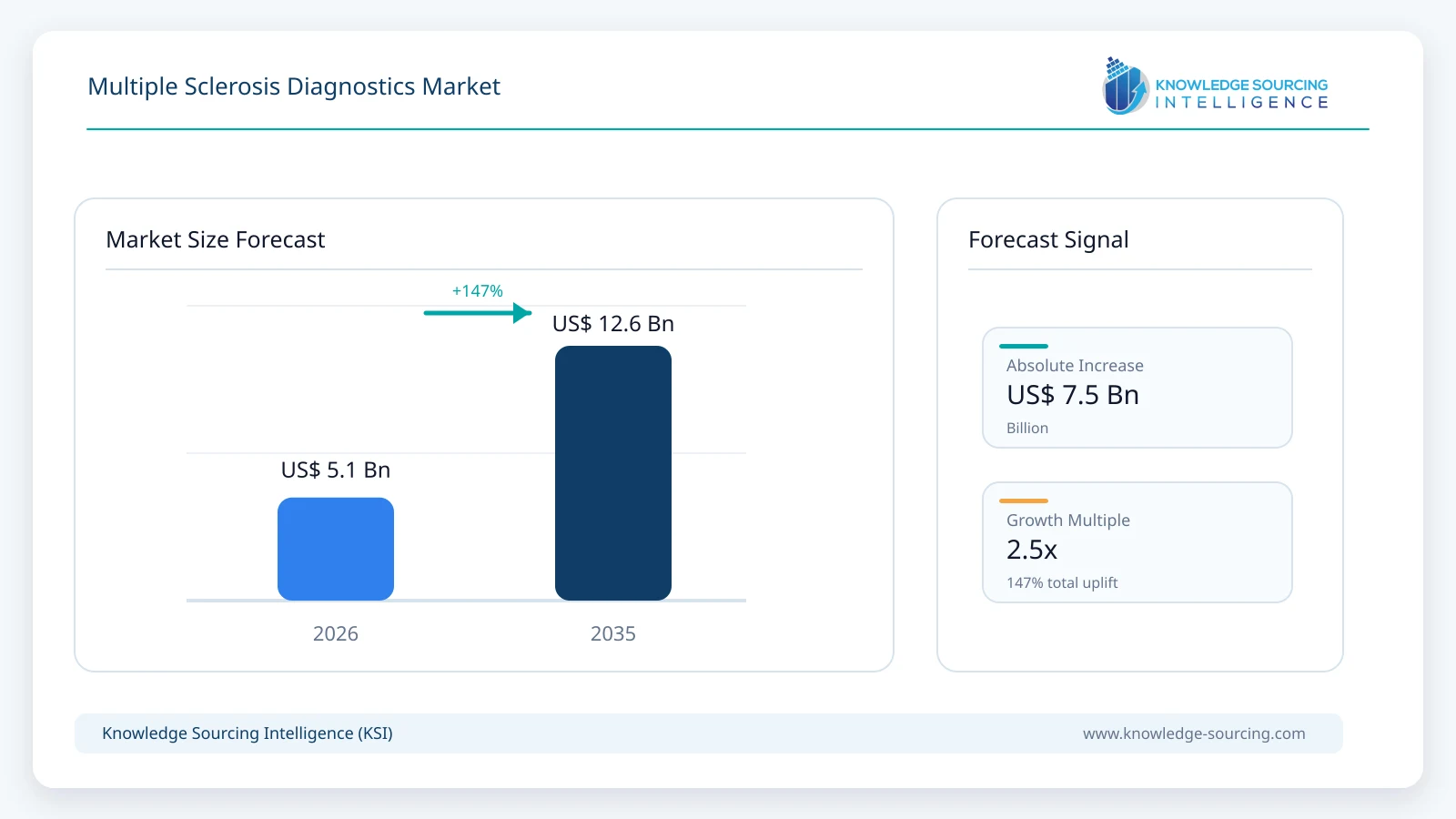
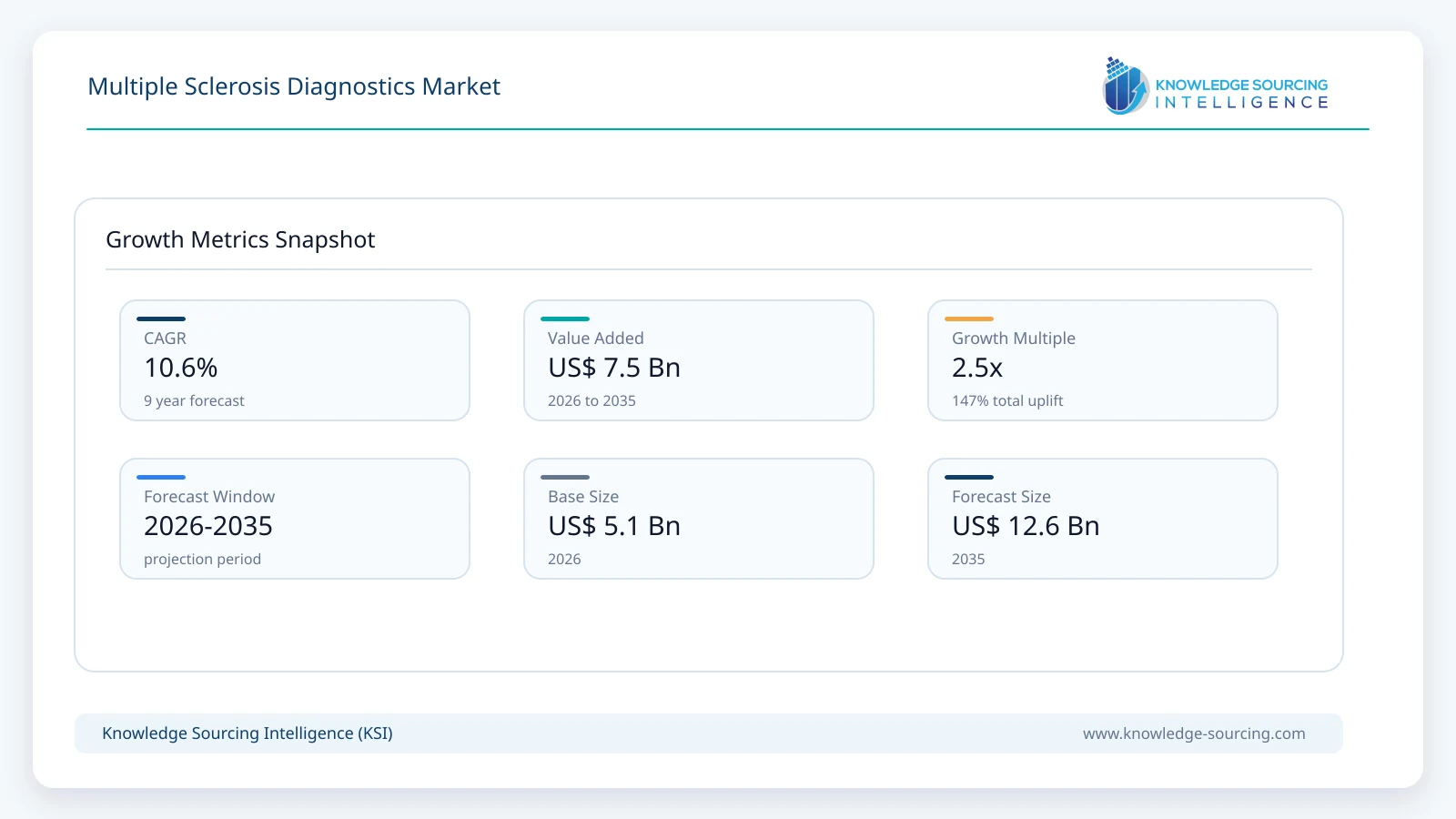
The Multiple Sclerosis Diagnostics Market is anticipated to grow at a CAGR of 10.6% from USD 5.09 billion in 2026 to USD 12.58 billion in 2035.
Highlights:
- 1Increasing adoption of high-resolution magnetic resonance imaging is improving lesion detection and strengthening early diagnostic accuracy for multiple sclerosis.
- 2Growing validation of blood-based biomarkers is reducing dependence on invasive diagnostic procedures while supporting earlier disease identification.
- 3Artificial intelligence-assisted neuroimaging is improving diagnostic workflow efficiency by enhancing lesion segmentation and standardized image interpretation.
- 4Rising implementation of precision neurology programs is increasing demand for integrated imaging, laboratory, and biomarker-based diagnostic pathways.
The multiple sclerosis diagnostics market encompasses imaging systems, laboratory assays, molecular diagnostics, biomarker testing, and neurological assessment technologies used to diagnose and monitor patients with suspected or confirmed multiple sclerosis. Diagnostic accuracy depends upon the integration of clinical findings, magnetic resonance imaging, cerebrospinal fluid analysis, evoked potential testing, and emerging blood-based biomarkers because no single standalone diagnostic test definitively confirms the disease. Demand is increasing as healthcare providers are emphasizing earlier diagnosis to initiate disease-modifying therapies before irreversible neurological damage occurs. Regulatory agencies and neurological societies are continuously updating diagnostic recommendations to incorporate advances in imaging technology, biomarker validation, and artificial intelligence-assisted interpretation that improve clinical decision-making. Strategic investment in precision neurology, digital diagnostics, and minimally invasive biomarker development is strengthening the long-term importance of advanced diagnostic technologies within the global multiple sclerosis care pathway.
Market Dynamics
Market Drivers
Increasing Prevalence of Multiple Sclerosis: The growing prevalence of multiple sclerosis is increasing demand for accurate and timely diagnostic solutions because earlier disease identification enables prompt initiation of disease-modifying therapies. Delayed diagnosis contributes to irreversible neurological disability as inflammatory disease activity continues before treatment begins. Healthcare providers are expanding utilization of advanced MRI systems, cerebrospinal fluid analysis, and multimodal neurological assessments to improve diagnostic confidence. These developments are strengthening demand for comprehensive diagnostic technologies that support long-term disease management.
Growing Adoption of Advanced MRI Technologies: Magnetic resonance imaging remains the cornerstone of multiple sclerosis diagnosis because it enables visualization of demyelinating lesions within the brain and spinal cord. Demand is shifting toward high-field MRI systems and advanced imaging protocols as neurologists require greater sensitivity for detecting early inflammatory changes. Conventional imaging approaches often provide limited lesion characterization in complex cases, encouraging healthcare providers to adopt higher-resolution imaging platforms. Continuous technological innovation is improving diagnostic precision while supporting more standardized neurological assessments.
Rising Demand for Early and Accurate Diagnosis: Earlier diagnosis is becoming increasingly important because disease-modifying therapies provide greater clinical benefit when initiated during the earliest stages of multiple sclerosis. Clinical symptoms frequently overlap with other neurological disorders, creating diagnostic uncertainty that delays treatment decisions. Healthcare organizations are strengthening multidisciplinary diagnostic pathways by integrating imaging findings, laboratory biomarkers, and neurological examinations into comprehensive evaluation protocols. This transition is improving diagnostic confidence while supporting personalized patient management.
Increasing Development of Blood-Based Biomarkers: Research into blood-based biomarkers is expanding because clinicians require minimally invasive diagnostic tools capable of complementing imaging and cerebrospinal fluid analysis. Conventional lumbar puncture procedures remain invasive and may reduce patient acceptance during diagnostic evaluation. Diagnostic companies and academic research institutions are developing neurofilament light chain (NfL) assays and additional biomarker technologies that improve disease monitoring and clinical assessment. Continued biomarker validation is strengthening the future role of precision laboratory diagnostics in multiple sclerosis management.
Market Restraints
High cost of advanced MRI systems, specialized laboratory testing, and biomarker-based diagnostics limits widespread adoption across resource-constrained healthcare systems.
Absence of a definitive standalone diagnostic test requires integration of multiple clinical and laboratory assessments, increasing diagnostic complexity.
Limited availability of specialized neurology centers and trained neuroradiology professionals delays timely diagnosis in several developing healthcare markets.
Market Opportunities
Expansion of AI-Assisted Neuroimaging: Artificial intelligence is becoming increasingly integrated into neurological imaging because radiologists require faster and more standardized lesion identification across growing imaging volumes. Manual interpretation introduces variability when lesion burden is subtle or disease progression requires longitudinal comparison. Technology providers are developing AI-assisted image analysis platforms that improve lesion segmentation, volumetric assessment, and diagnostic consistency. These innovations are expanding commercial opportunities across advanced neuroimaging solutions.
Development of Minimally Invasive Biomarker Tests: Healthcare providers are seeking diagnostic methods that reduce dependence on invasive lumbar puncture procedures while maintaining high clinical accuracy. Blood-based biomarkers are emerging as promising complementary diagnostic tools because they simplify patient evaluation and facilitate repeated disease monitoring. Diagnostic manufacturers are investing in highly sensitive immunoassays and molecular technologies that improve biomarker detection. Growing clinical validation is creating significant opportunities for next-generation laboratory diagnostics.
Growth in Precision Neurology: Precision neurology is expanding because clinicians increasingly require individualized disease characterization to optimize therapeutic decisions. Standardized diagnostic pathways often fail to capture disease heterogeneity across patient populations. Healthcare systems are integrating advanced imaging, molecular diagnostics, and digital clinical data into comprehensive neurological evaluation frameworks. This evolution is increasing demand for sophisticated diagnostic technologies capable of supporting personalized disease management.
Increasing Healthcare Investments in Emerging Markets: Emerging healthcare systems are strengthening neurological care infrastructure because awareness of chronic neurological disorders continues increasing. Limited diagnostic capacity historically restricted access to advanced imaging and laboratory services across many developing regions. Governments and healthcare organizations are investing in MRI infrastructure, specialized neurology centers, and diagnostic laboratory modernization to improve access to neurological care. These investments are creating new growth opportunities for multiple sclerosis diagnostic technologies.
Supply Chain Analysis
The multiple sclerosis diagnostics supply chain begins with manufacturers of MRI components, superconducting magnets, radiofrequency coils, imaging software, immunoassay reagents, molecular biology consumables, antibodies, laboratory chemicals, biomarker assay kits, and diagnostic informatics platforms. These components enable medical technology companies and diagnostic manufacturers to develop magnetic resonance imaging systems, cerebrospinal fluid testing kits, blood biomarker assays, evoked potential equipment, optical coherence tomography (OCT) devices, and artificial intelligence-assisted diagnostic software. Finished diagnostic products are distributed through direct sales channels, regional distributors, and healthcare solution providers before reaching hospitals, neurology clinics, diagnostic laboratories, academic medical centers, and research institutions.
Demand is shifting toward integrated neurological diagnostic workflows because clinicians increasingly require multiple complementary diagnostic modalities to improve diagnostic certainty for multiple sclerosis. Standalone diagnostic approaches frequently prolong diagnosis because early neurological symptoms overlap with several inflammatory and neurodegenerative disorders. Diagnostic manufacturers are expanding comprehensive portfolios that integrate advanced imaging, laboratory diagnostics, biomarker testing, and clinical decision-support software into unified diagnostic ecosystems. These integrated workflows are improving operational efficiency while enabling more consistent neurological assessment across specialized healthcare facilities.
Healthcare providers are increasingly investing in digital imaging infrastructure and laboratory automation because diagnostic volumes are expanding alongside rising awareness of neurological disorders. Manual interpretation of imaging studies and laboratory findings creates variability when longitudinal disease monitoring requires consistent evaluation over time. Technology developers are introducing artificial intelligence-enabled imaging analysis, cloud-based diagnostic platforms, laboratory automation systems, and digital neurological workflow solutions that improve diagnostic accuracy while reducing reporting time. These technological advancements continue strengthening supply chains capable of supporting the growing global demand for advanced multiple sclerosis diagnostics.
Government Regulations
Region | Regulatory Authority | Key Requirement |
United States | U.S. Food and Drug Administration (FDA) | Regulation of in vitro diagnostic devices, medical imaging systems, software as a medical device (SaMD), analytical validation, and Quality System Regulation (QSR) compliance |
European Union | European Commission / In Vitro Diagnostic Regulation (IVDR) and Medical Device Regulation (MDR) | Compliance with IVDR and MDR requirements covering clinical evidence, conformity assessment, CE marking, and post-market surveillance |
Japan | Pharmaceuticals and Medical Devices Agency (PMDA) | Clinical validation, manufacturing quality requirements, and regulatory approval for diagnostic imaging systems and in vitro diagnostics |
China | National Medical Products Administration (NMPA) | Product registration, clinical evaluation, quality management systems, and post-market regulatory compliance |
Market Segmentation
By Diagnostic Modality
Magnetic resonance imaging (MRI) represents the largest diagnostic modality because it remains the primary tool for detecting demyelinating lesions and monitoring disease progression in patients with multiple sclerosis. Cerebrospinal fluid analysis continues supporting diagnosis when imaging findings require additional clinical confirmation, while blood biomarker tests are gaining increasing attention because they offer minimally invasive disease assessment. Evoked potential tests and optical coherence tomography complement neurological evaluation by detecting functional and structural changes associated with disease progression. Continued integration of multiple diagnostic modalities is strengthening diagnostic accuracy across diverse patient populations.
By Technology
High-field MRI continues gaining clinical preference because improved image resolution enhances lesion visualization and supports earlier diagnosis of multiple sclerosis. Conventional MRI remains widely utilized across routine neurological practice due to broad availability, while artificial intelligence-assisted imaging is improving lesion detection and standardized image interpretation. Immunoassays and molecular diagnostics are becoming increasingly important because biomarker validation continues expanding precision neurology capabilities. The combined adoption of advanced imaging and laboratory technologies is strengthening comprehensive neurological diagnostic pathways.
By End User
Hospitals account for the largest share of diagnostic demand because comprehensive neurological evaluation frequently requires advanced imaging infrastructure, multidisciplinary expertise, and specialized laboratory services. Diagnostic laboratories continue expanding biomarker testing capabilities as precision neurology gains clinical importance. Neurology clinics are increasingly adopting advanced imaging referral pathways and digital diagnostic solutions that improve patient management, while academic and research institutes continue driving biomarker discovery and clinical validation studies supporting future innovation in multiple sclerosis diagnostics.
Regional Analysis
North America
North America represents the largest market for multiple sclerosis diagnostics because the region combines advanced neuroimaging infrastructure, specialized neurology centers, favorable reimbursement for diagnostic procedures, and extensive neurological research capabilities. Demand is increasing as neurologists are emphasizing earlier diagnosis to initiate disease-modifying therapies before irreversible neurological damage develops. Conventional clinical evaluation alone often delays diagnosis because multiple sclerosis shares symptoms with several autoimmune and neurodegenerative disorders. Healthcare providers are expanding adoption of high-field magnetic resonance imaging, cerebrospinal fluid analysis, blood biomarker testing, and artificial intelligence-assisted image interpretation to improve diagnostic confidence. Academic medical centers are strengthening collaborations with diagnostic manufacturers and biotechnology companies to validate emerging biomarkers and precision neurology technologies. Continuous investment in digital radiology, advanced laboratory diagnostics, and neurological imaging infrastructure strengthens the regional diagnostic ecosystem. These structural advantages position North America as the leading market for multiple sclerosis diagnostic technologies.
Europe
Europe maintains a strong position within the multiple sclerosis diagnostics market because healthcare systems continue prioritizing standardized neurological care, early disease detection, and precision medicine initiatives. Demand is shifting toward integrated diagnostic pathways as clinicians increasingly combine advanced magnetic resonance imaging with laboratory biomarkers to improve diagnostic certainty. Variability in reimbursement policies and healthcare funding continues influencing adoption because access to advanced diagnostic technologies differs across European countries. Hospitals and specialized neurology centers are expanding utilization of artificial intelligence-assisted neuroimaging, molecular diagnostics, and digital clinical decision-support systems that improve diagnostic efficiency. Implementation of the Medical Device Regulation (MDR) and In Vitro Diagnostic Regulation (IVDR) is strengthening clinical evidence requirements while increasing confidence in advanced diagnostic technologies. Research organizations continue expanding multinational collaborations focused on biomarker discovery, neuroimaging innovation, and disease monitoring. These developments continue supporting sustained demand for advanced multiple sclerosis diagnostics throughout Europe.
Asia Pacific
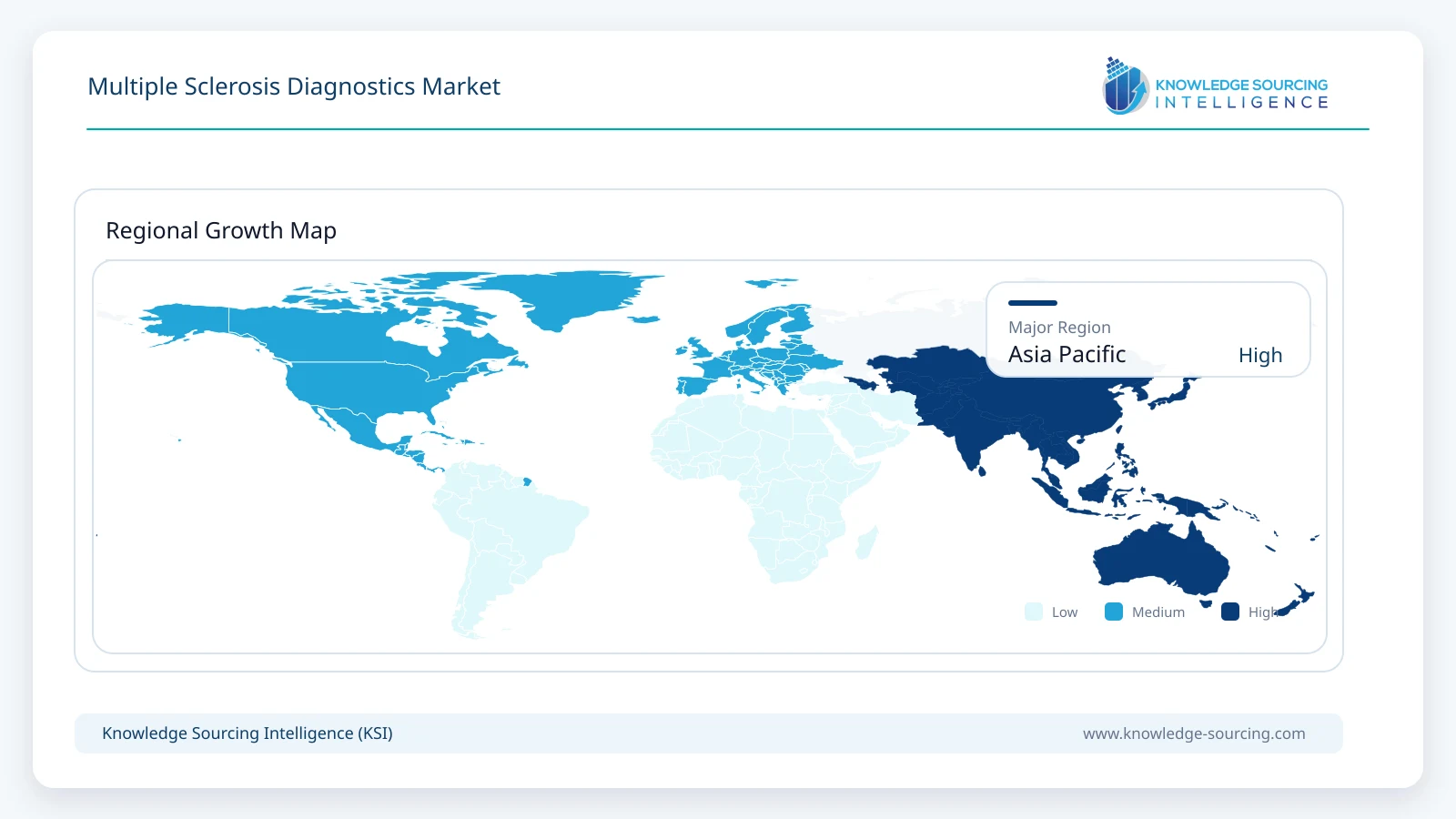
Asia Pacific demonstrates the fastest growth potential because governments are strengthening neurological healthcare infrastructure while investments in advanced diagnostic technologies continue increasing across major economies. Demand is rising as awareness of multiple sclerosis improves and healthcare providers expand access to specialized neurological evaluation. Diagnostic availability remains uneven because access to high-field MRI systems, neurological specialists, and advanced laboratory testing differs substantially across countries. Hospitals and diagnostic centers are increasing investment in modern imaging equipment, digital radiology platforms, and biomarker research that strengthen diagnostic capabilities. International diagnostic manufacturers are expanding regional partnerships because healthcare modernization is creating sustained demand for precision neurology solutions. Domestic healthcare organizations are also investing in molecular diagnostics, artificial intelligence, and digital imaging technologies that improve accessibility to neurological care. Countries including Japan, China, South Korea, Australia, and India continue strengthening neurological diagnostic infrastructure, positioning Asia Pacific as a rapidly expanding regional market.
Rest of the World
The Rest of the World, comprising Latin America, the Middle East, and Africa, represents an emerging market because neurological healthcare systems are gradually improving diagnostic capabilities for chronic neurological diseases. Demand is increasing as healthcare providers recognize the clinical importance of early multiple sclerosis diagnosis for improving long-term patient outcomes. Many healthcare facilities continue relying on centralized referral hospitals because advanced imaging systems and specialized neurology expertise remain concentrated in major urban centers. Governments and international healthcare organizations are supporting investments in diagnostic infrastructure, physician education, and neurological disease awareness that improve access to specialized care. Diagnostic manufacturers are expanding collaborations with regional healthcare providers to strengthen availability of magnetic resonance imaging, laboratory diagnostics, and digital neurological assessment technologies. Continued investment in hospital modernization, diagnostic laboratories, and medical imaging infrastructure is improving regional access to advanced neurological diagnostics. These structural improvements are creating long-term growth opportunities for multiple sclerosis diagnostic technologies across developing healthcare markets.
Regulatory Landscape
The regulatory environment plays a fundamental role in the multiple sclerosis diagnostics market because diagnostic accuracy directly influences treatment initiation, disease monitoring, and long-term neurological outcomes. Medical imaging systems, laboratory assays, biomarker tests, and artificial intelligence-enabled diagnostic software require rigorous analytical validation, clinical performance evaluation, and quality management compliance before clinical adoption. Demand is shifting toward integrated diagnostic solutions because neurologists increasingly require multimodal evidence from imaging, laboratory biomarkers, and clinical assessment to establish an early and reliable diagnosis. Diagnostic manufacturers are strengthening clinical validation studies while generating robust evidence supporting emerging biomarkers and digital diagnostic technologies. These regulatory requirements continue improving confidence in advanced multiple sclerosis diagnostics while supporting wider clinical adoption.
The regulatory framework is evolving because artificial intelligence-assisted imaging, software as a medical device (SaMD), molecular diagnostics, and blood-based biomarker technologies are becoming increasingly integrated into neurological practice. Regulatory agencies are expanding guidance covering digital health technologies, clinical decision-support software, and in vitro diagnostic devices that improve diagnostic consistency across healthcare systems. Healthcare providers are adapting laboratory quality systems and imaging workflows while manufacturers are increasing post-market surveillance activities to maintain compliance with changing regulatory standards. This transition is strengthening standardization throughout neurological diagnostics while improving reproducibility of clinical assessments across diverse patient populations.
Global regulatory harmonization remains limited because approval pathways, reimbursement policies, and medical device regulations continue varying across different healthcare jurisdictions. Diagnostic companies are developing globally compliant imaging platforms, laboratory assays, and artificial intelligence solutions while healthcare organizations increasingly require standardized diagnostic workflows capable of supporting multinational clinical research and routine neurological practice. These developments continue reinforcing demand for validated diagnostic technologies that strengthen regulatory compliance while accelerating adoption of precision neurology worldwide.
Pipeline Analysis
The multiple sclerosis diagnostics pipeline is expanding because healthcare providers increasingly require earlier disease identification and more accurate differentiation from other neurological disorders. Diagnostic developers are investing in high-field magnetic resonance imaging, artificial intelligence-assisted neuroimaging, blood-based biomarkers, molecular diagnostics, and digital neurological assessment platforms that improve diagnostic precision. Conventional diagnostic pathways often require repeated clinical assessments because early neurological symptoms overlap with several inflammatory and neurodegenerative conditions. Technology providers are developing integrated diagnostic solutions that combine advanced imaging, laboratory biomarkers, and clinical analytics to improve diagnostic confidence while reducing delays in treatment initiation. These innovations continue strengthening demand for next-generation neurological diagnostics.
Research activity is increasingly focusing on minimally invasive biomarker technologies because repeated lumbar puncture procedures remain clinically invasive and reduce patient acceptance during long-term disease monitoring. Academic institutions, biotechnology companies, and diagnostic manufacturers are validating neurofilament light chain (NfL), glial fibrillary acidic protein (GFAP), cytokine profiling, proteomics, metabolomics, and additional molecular biomarkers capable of improving disease detection and progression assessment. Collaborative research programs are expanding clinical validation across diverse patient populations while strengthening evidence supporting precision neurology applications. These developments continue accelerating adoption of laboratory-based diagnostic technologies that complement conventional magnetic resonance imaging.
Artificial intelligence and cloud-based neurological imaging platforms are becoming increasingly integrated into future diagnostic pipelines because healthcare systems require standardized interpretation of growing imaging volumes. Diagnostic manufacturers are incorporating machine learning algorithms into lesion segmentation, volumetric brain analysis, longitudinal disease monitoring, and clinical reporting workflows that improve diagnostic consistency while reducing interpretation variability. Precision neurology programs are simultaneously integrating imaging, laboratory biomarkers, genomic information, and electronic health records into unified clinical decision-support platforms. Continued advances in neuroimaging, molecular diagnostics, artificial intelligence, and digital healthcare are expected to strengthen early diagnosis, personalized disease management, and long-term growth across the multiple sclerosis diagnostics market.
Competitive Landscape
Siemens Healthineers AG
Siemens Healthineers AG differentiates itself through its leadership in diagnostic imaging, digital healthcare, and artificial intelligence-enabled clinical workflow solutions. The company maintains one of the world's most comprehensive medical imaging portfolios spanning magnetic resonance imaging, computed tomography, molecular imaging, laboratory diagnostics, and healthcare informatics. Strong expertise in high-performance MRI systems, digital image processing, and hospital workflow integration enables Siemens Healthineers to support advanced neurological diagnostics across hospitals, research institutions, and specialized imaging centers. Continuous investment in artificial intelligence, automation, and precision imaging strengthens its competitive position within neurological diagnostics.
Within the multiple sclerosis diagnostics market, Siemens Healthineers continues expanding advanced MRI technologies because neurologists increasingly require higher-resolution imaging for early lesion detection and longitudinal disease monitoring. The company is strengthening artificial intelligence-assisted image reconstruction, automated lesion analysis, and workflow optimization that improve diagnostic consistency while reducing interpretation time. Strategic collaborations with healthcare providers and research institutions continue supporting innovation in neuroimaging technologies and precision neurology applications. Continued advancement in digital imaging platforms and clinical decision-support technologies positions Siemens Healthineers among the leading providers supporting multiple sclerosis diagnosis.
GE HealthCare Technologies Inc.
GE HealthCare Technologies Inc. maintains a strong competitive position through its broad portfolio of diagnostic imaging systems, digital healthcare solutions, artificial intelligence technologies, and enterprise imaging platforms. The company serves hospitals, diagnostic imaging centers, academic medical institutions, and healthcare networks with advanced MRI technologies designed to improve neurological diagnosis and clinical workflow efficiency. Continuous investment in imaging innovation, software integration, and cloud-enabled healthcare platforms strengthens GE HealthCare's position within precision neurology.
Within the multiple sclerosis diagnostics market, GE HealthCare continues strengthening magnetic resonance imaging capabilities because accurate visualization of demyelinating lesions remains essential for early disease diagnosis and monitoring. The company is expanding artificial intelligence-assisted image analysis, advanced MRI applications, and quantitative imaging tools that improve lesion characterization while supporting standardized neurological assessment. Collaboration with healthcare providers and academic institutions continues accelerating innovation in neurological imaging and digital diagnostics. Ongoing investment in advanced imaging technologies and integrated healthcare software reinforces GE HealthCare's long-term competitive advantage.
Koninklijke Philips N.V.
Koninklijke Philips N.V. is strategically recognized for integrating advanced diagnostic imaging, digital health technologies, clinical informatics, and connected healthcare solutions into comprehensive neurological care pathways. The company delivers magnetic resonance imaging systems, clinical visualization software, artificial intelligence-enabled diagnostic platforms, and healthcare workflow solutions that support hospitals and specialized neurology centers worldwide. Strong emphasis on digital transformation and precision diagnostics enables Philips to address the growing demand for efficient neurological evaluation and disease monitoring.
Within the multiple sclerosis diagnostics market, Philips continues advancing MRI technologies and intelligent imaging software because clinicians increasingly require reproducible neurological imaging across repeated patient assessments. The company is integrating artificial intelligence into lesion detection, image acquisition, and clinical workflow management to improve diagnostic efficiency and reporting consistency. Strategic partnerships with healthcare organizations and research institutions continue supporting development of advanced neuroimaging applications. Continued investment in digital radiology, cloud-based analytics, and connected care solutions strengthens Philips' competitive position within neurological diagnostics.
Canon Medical Systems Corporation
Canon Medical Systems Corporation differentiates itself through advanced diagnostic imaging technologies supported by expertise in magnetic resonance imaging, computed tomography, ultrasound, and healthcare information systems. The company focuses on high-quality imaging performance, patient-centered workflow design, and clinical innovation that improve diagnostic confidence across neurological disorders. Continuous investment in MRI hardware, image reconstruction software, and artificial intelligence-assisted technologies enables Canon Medical to strengthen its position within neuroimaging markets.
Within the multiple sclerosis diagnostics market, Canon Medical continues expanding MRI capabilities because improved visualization of white matter lesions is becoming increasingly important for early diagnosis and disease monitoring. The company is enhancing advanced imaging sequences, intelligent workflow automation, and image processing technologies that improve lesion detection while reducing scan variability. Collaboration with neurological research institutions continues supporting development of innovative neuroimaging techniques that strengthen precision neurology. Continued technological advancement in magnetic resonance imaging positions Canon Medical as an important contributor to modern multiple sclerosis diagnostics.
F. Hoffmann-La Roche Ltd.
F. Hoffmann-La Roche Ltd. distinguishes itself through its integrated pharmaceuticals and diagnostics business model, enabling simultaneous advancement of neurological therapeutics and biomarker-based diagnostics. The company possesses extensive expertise in molecular diagnostics, immunodiagnostics, laboratory automation, and precision medicine supported by a broad global healthcare presence. Continuous investment in neurological biomarker research, digital diagnostics, and laboratory innovation strengthens Roche's strategic position within precision neurology.
Within the multiple sclerosis diagnostics market, Roche continues expanding laboratory diagnostic capabilities because healthcare providers increasingly require minimally invasive biomarkers that complement magnetic resonance imaging and cerebrospinal fluid analysis. The company is strengthening research involving neurofilament light chain and additional neurological biomarkers that support earlier disease detection and long-term monitoring. Strategic collaboration with research organizations, healthcare institutions, and biotechnology companies continues accelerating biomarker validation and precision neurology initiatives. Continued investment in molecular diagnostics and laboratory technologies positions Roche among the leading innovators supporting future multiple sclerosis diagnostics.
Quest Diagnostics Incorporated
Quest Diagnostics Incorporated is strategically distinguished through one of the largest clinical laboratory networks globally, supported by extensive expertise in molecular diagnostics, immunoassays, pathology services, and precision laboratory medicine. The company serves hospitals, physician practices, academic institutions, pharmaceutical organizations, and healthcare systems through an integrated diagnostic infrastructure capable of supporting high-volume neurological testing. Continuous investment in laboratory automation, digital pathology, and advanced molecular diagnostics enables Quest Diagnostics to strengthen its position within precision medicine and neurological disease management.
Within the multiple sclerosis diagnostics market, Quest Diagnostics continues expanding advanced neurological testing capabilities because clinicians increasingly require laboratory biomarkers that complement imaging-based diagnosis. The company is strengthening biomarker analysis, immunological testing, and molecular diagnostic services that improve diagnostic confidence while supporting disease monitoring. Strategic collaborations with healthcare providers and research organizations continue accelerating validation of emerging neurological biomarkers and precision diagnostics. Continued investment in digital laboratory technologies and clinical informatics reinforces Quest Diagnostics' competitive position within the evolving multiple sclerosis diagnostics market.
Thermo Fisher Scientific Inc.
Thermo Fisher Scientific Inc. differentiates itself through one of the industry's broadest portfolios spanning molecular biology, analytical instruments, specialty diagnostics, genomic technologies, laboratory automation, and bioinformatics solutions. The company supports pharmaceutical manufacturers, biotechnology companies, research institutions, and clinical laboratories through integrated technologies that accelerate precision medicine and neurological research. Its global manufacturing capabilities, extensive commercial network, and continuous investment in innovation strengthen its leadership across advanced diagnostics.
Within the multiple sclerosis diagnostics market, Thermo Fisher continues expanding molecular diagnostic technologies because biomarker-based neurological assessment is becoming increasingly important for earlier disease detection and monitoring. The company is strengthening immunoassays, molecular analysis platforms, laboratory automation, and biomarker research workflows that improve analytical accuracy while supporting precision neurology. Strategic collaborations with academic institutions and biotechnology companies continue accelerating neurological biomarker discovery and translational research. Continued investment in genomics, laboratory technologies, and digital diagnostics reinforces Thermo Fisher's long-term competitive advantage.
Abbott Laboratories
Abbott Laboratories maintains a strong competitive position through its diversified portfolio of diagnostic instruments, immunoassays, point-of-care testing solutions, and laboratory automation systems. The company serves hospitals, clinical laboratories, healthcare providers, and research organizations with diagnostic technologies that improve disease detection across multiple therapeutic areas. Strong expertise in immunodiagnostics, biomarker development, and automated laboratory systems supports Abbott's strategic role within neurological diagnostics and precision healthcare.
Within the multiple sclerosis diagnostics market, Abbott continues strengthening laboratory diagnostic capabilities because demand for minimally invasive biomarker testing is increasing alongside precision neurology initiatives. The company is expanding immunoassay technologies and laboratory platforms that enable sensitive detection of neurological biomarkers supporting disease assessment and monitoring. Collaboration with healthcare organizations and scientific researchers continues advancing clinical validation of emerging biomarker technologies. Continued innovation in laboratory diagnostics and automated testing systems positions Abbott to benefit from expanding adoption of advanced neurological diagnostics.
Bio-Rad Laboratories, Inc.
Bio-Rad Laboratories, Inc. is recognized globally for its expertise in molecular biology, life science research, quality control systems, digital PCR, immunoassays, and laboratory diagnostics. The company provides advanced analytical technologies supporting hospitals, diagnostic laboratories, biotechnology companies, and academic institutions engaged in neurological disease research. Continuous investment in molecular innovation and laboratory automation strengthens Bio-Rad's competitive position across precision diagnostics.
Within the multiple sclerosis diagnostics market, Bio-Rad continues expanding molecular diagnostic capabilities because highly sensitive biomarker detection is becoming increasingly important for neurological disease characterization. The company is strengthening digital PCR technologies, immunological assays, and laboratory quality management solutions that improve reproducibility and analytical performance during biomarker evaluation. Strategic collaboration with research institutions continues supporting neurological biomarker validation and translational medicine initiatives. Continued advancement in molecular diagnostics positions Bio-Rad as an important contributor to future precision neurology applications.
QIAGEN N.V.
QIAGEN N.V. differentiates itself through extensive expertise in molecular diagnostics, sample preparation technologies, bioinformatics, companion diagnostics, and genomic analysis. The company delivers integrated laboratory workflows combining automated instruments, molecular assays, sequencing technologies, and digital interpretation platforms that support clinical laboratories and research organizations worldwide. Continuous investment in molecular innovation and precision medicine has established QIAGEN as a significant participant across neurological diagnostics and biomarker discovery.
Within the multiple sclerosis diagnostics market, QIAGEN continues strengthening molecular diagnostic solutions because healthcare providers increasingly require standardized biomarker workflows that complement conventional neuroimaging. The company is expanding automation technologies, molecular assays, and bioinformatics platforms that improve diagnostic efficiency while supporting clinical interpretation of neurological biomarkers. Strategic partnerships with academic institutions, biotechnology companies, and healthcare providers continue accelerating translational neuroscience research and biomarker validation. Continued investment in molecular biology and digital laboratory technologies positions QIAGEN for sustained growth within the multiple sclerosis diagnostics market.
Future Market Outlook
The multiple sclerosis diagnostics market is expected to evolve toward integrated precision neurology because clinicians increasingly require earlier diagnosis, continuous disease monitoring, and individualized treatment planning. Demand is shifting toward multimodal diagnostic pathways that combine high-field magnetic resonance imaging, blood-based biomarkers, cerebrospinal fluid analysis, molecular diagnostics, and artificial intelligence-assisted interpretation into unified clinical workflows. Conventional diagnostic approaches frequently delay therapeutic intervention because they depend on multiple sequential assessments before confirming disease activity. Diagnostic manufacturers are expanding investments in digital imaging, minimally invasive biomarkers, cloud-based analytics, and automated laboratory technologies that improve diagnostic confidence while reducing clinical variability. These structural changes are strengthening the long-term adoption of comprehensive neurological diagnostic ecosystems.
Artificial intelligence and biomarker-driven diagnostics are becoming central to future market expansion because healthcare providers increasingly require standardized interpretation of complex neurological data. Research organizations are validating emerging biomarkers including neurofilament light chain, glial fibrillary acidic protein, and additional molecular indicators that support earlier diagnosis and longitudinal disease monitoring. Healthcare systems are simultaneously expanding digital healthcare infrastructure, specialized neurology centers, and precision medicine initiatives that improve patient access to advanced diagnostic technologies. Companies capable of integrating imaging systems, laboratory diagnostics, molecular technologies, artificial intelligence, and clinical decision-support platforms into comprehensive precision neurology solutions are expected to strengthen their competitive positions over the forecast period.
The market continues moving toward earlier intervention and precision diagnostics because improving diagnostic certainty directly influences long-term neurological outcomes, therapeutic effectiveness, and healthcare resource utilization. Ongoing technological innovation, regulatory support, biomarker validation, and expanding global neurological care infrastructure are expected to establish advanced multiple sclerosis diagnostics as an essential component of future neurological disease management.
Market Segmentation
Diagnostic Modality
Technology
End User
Geography
- North America
- Latin America
- Europe
- Middle East and Africa
- Asia Pacific
Table of Contents
1. EXECUTIVE SUMMARY
1.1 Market Overview
1.2 Market Snapshot
1.3 Key Findings
1.4 Analyst Insights
1.5 Strategic Recommendations
2. RESEARCH METHODOLOGY
2.1 Research Objectives
2.2 Market Definition
2.3 Research Design
2.4 Data Collection Methodology
2.5 Forecasting Model
2.6 Assumptions and Limitations
3. MARKET OVERVIEW
3.1 Introduction to Multiple Sclerosis Diagnostics
3.2 Evolution of Diagnostic Technologies
3.3 Clinical Diagnosis Workflow
3.4 Diagnostic Ecosystem
3.5 Market Size and Forecast (2026–2035)
3.6 Key Stakeholders
4. MARKET DYNAMICS
4.1 Market Drivers
4.2 Market Restraints
4.3 Market Opportunities
5. INDUSTRY LANDSCAPE
5.1 Supply Chain Analysis
5.2 Industry Value Chain Analysis
5.3 Pricing Analysis
5.4 Technology Landscape
5.5 Ecosystem Analysis
5.6 Porter’s Five Forces Analysis
6. INNOVATION LANDSCAPE
6.1 Artificial Intelligence in MRI Interpretation
6.2 Neurofilament Light Chain (NfL) Biomarker Development
6.3 Digital Neurology Platforms
6.4 Cloud-Based Image Analysis
6.5 Machine Learning in Lesion Detection
6.6 Future Diagnostic Technologies
7. REGULATORY LANDSCAPE
7.1 United States
7.2 Europe (IVDR)
7.3 Japan
7.4 China
7.5 Australia
7.6 Regulatory Comparison Analysis
8. MARKET LANDSCAPE ANALYSIS
8.1 Competitive Benchmarking
8.2 Company Market Positioning
8.3 Strategic Developments
8.4 Mergers & Acquisitions
8.5 Partnerships & Collaborations
8.6 New Product Launches
9. MARKET SEGMENTATION
9.1 By Diagnostic Modality
9.1.1 Magnetic Resonance Imaging (MRI)
9.1.2 Cerebrospinal Fluid (CSF) Analysis (Lumbar Puncture)
9.1.3 Blood Biomarker Tests
9.1.4 Evoked Potential Tests
9.1.5 Optical Coherence Tomography (OCT)
9.1.6 Others
9.2 By Technology
9.2.1 Conventional MRI
9.2.2 High-field MRI (3T & Above)
9.2.3 AI-Assisted Imaging
9.2.4 Immunoassays
9.2.5 Molecular Diagnostics
9.2.6 Others
9.3 By End User
9.3.1 Hospitals
9.3.2 Diagnostic Laboratories
9.3.3 Neurology Clinics
9.3.4 Academic & Research Institutes
10. GEOGRAPHIC ANALYSIS
10.1 North America
10.1.1 United States
10.1.2 Canada
10.1.3 Mexico
10.2 Europe
10.2.1 Germany
10.2.2 United Kingdom
10.2.3 France
10.2.4 Italy
10.2.5 Spain
10.2.6 Rest of Europe
10.3 Asia Pacific
10.3.1 China
10.3.2 Japan
10.3.3 India
10.3.4 South Korea
10.3.5 Australia
10.3.6 Rest of Asia Pacific
10.4 Latin America
10.4.1 Brazil
10.4.2 Argentina
10.4.3 Rest of Latin America
10.5 Middle East & Africa
10.5.1 GCC
10.5.2 South Africa
10.5.3 Rest of Middle East & Africa
11. COUNTRY-LEVEL ANALYSIS
11.1 United States
11.2 Germany
11.3 United Kingdom
11.4 France
11.5 China
11.6 Japan
11.7 India
11.8 Brazil
12. COMPETITIVE LANDSCAPE
12.1 Market Share Analysis
12.2 Competitive Dashboard
12.3 Strategic Positioning Matrix
12.4 Product Portfolio Analysis
12.5 SWOT Analysis
13. COMPANY PROFILES
13.1 Siemens Healthineers AG
13.2 GE HealthCare Technologies Inc.
13.3 Koninklijke Philips N.V.
13.4 Canon Medical Systems Corporation
13.5 F. Hoffmann-La Roche Ltd.
13.6 Quest Diagnostics Incorporated
13.7 Thermo Fisher Scientific Inc.
13.8 Abbott Laboratories
13.9 Bio-Rad Laboratories, Inc.
13.10 QIAGEN N.V.
13.11 Danaher Corporation
13.12 Sysmex Corporation
13.13 Fujifilm Holdings Corporation
13.14 Illumina, Inc.
13.15 Revvity, Inc.
14. MARKET FORECAST
14.1 Market Revenue Forecast (2026–2031)
14.2 Forecast by Diagnostic Modality
14.3 Forecast by Technology
14.4 Forecast by End User
14.5 Forecast by Region
15. INVESTMENT & GROWTH OPPORTUNITIES
15.1 Emerging Investment Areas
15.2 AI-Based Diagnostic Solutions
15.3 Biomarker Innovation Opportunities
15.4 Strategic Partnership Opportunities
15.5 Emerging Market Expansion
16. FUTURE MARKET OUTLOOK
16.1 Future Trends in MS Diagnostics
16.2 Next-Generation Biomarker Development
16.3 AI-Driven Clinical Decision Support
16.4 Precision Neurology Outlook
16.5 Long-Term Market Opportunities
Navigate
Trusted by the world's leading organizations











