
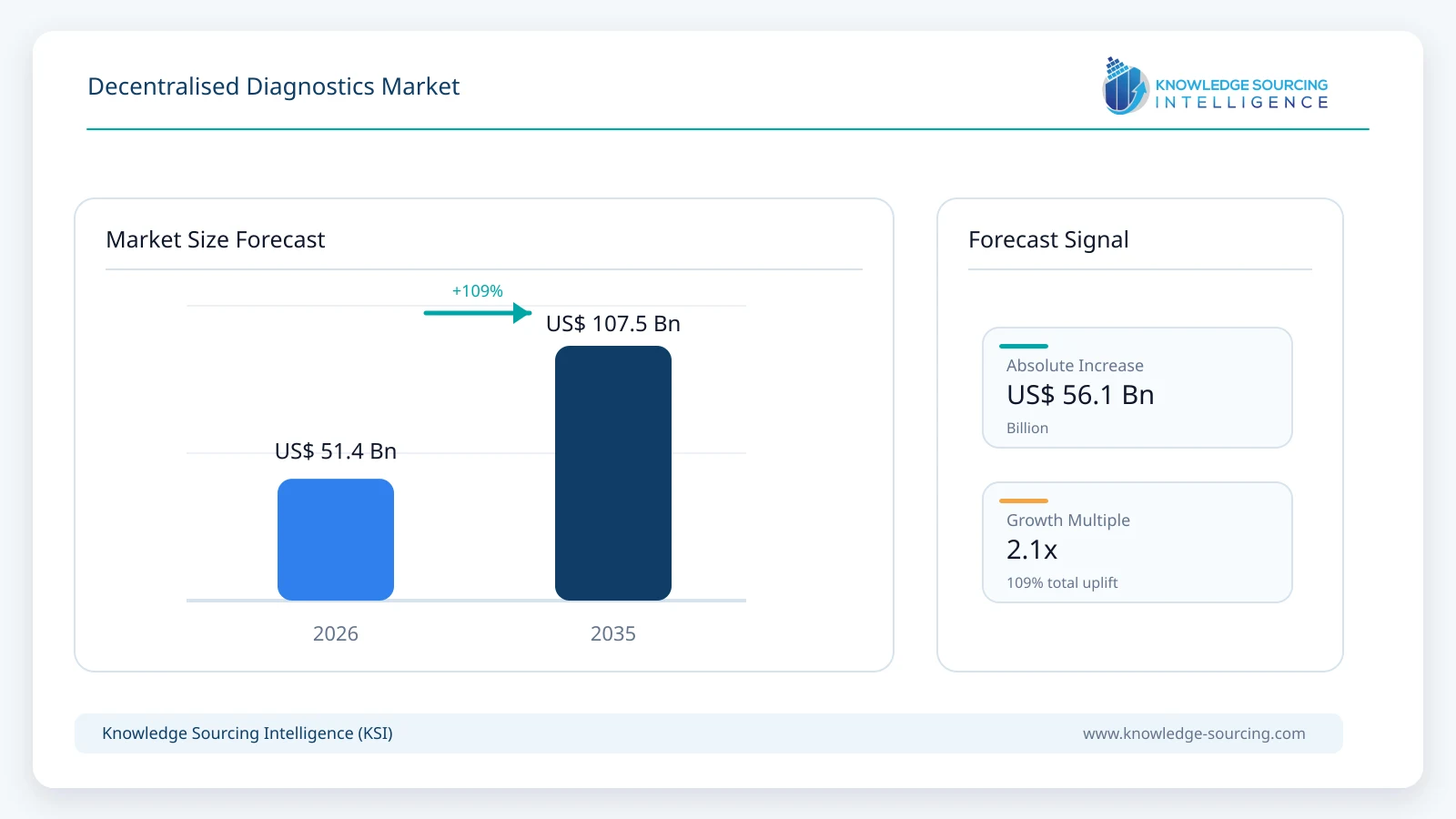
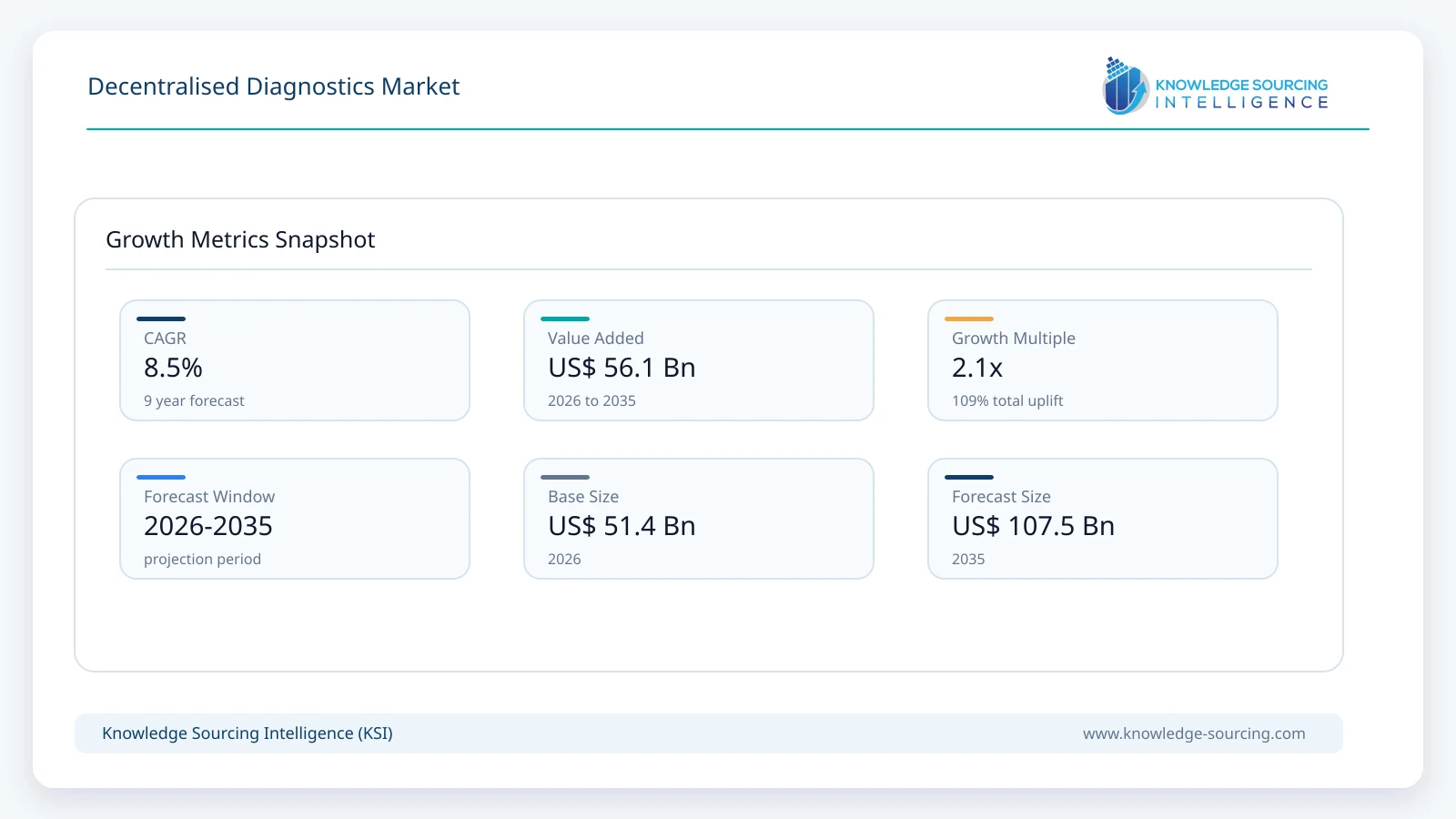
The Decentralised Diagnostics Market is set to reach USD 107.5 billion in 2035, growing at a CAGR of 8.5% from USD 51.4 billion in 2026.
Highlights:
- 1Decentralized diagnostics are transforming healthcare delivery by enabling rapid testing across hospitals, clinics, pharmacies, community healthcare centers, and home settings.
- 2Advances in molecular diagnostics, biosensors, artificial intelligence, and cloud-connected diagnostic platforms are improving testing accuracy and workflow efficiency.
- 3Infectious disease testing remains the largest application segment, while oncology and chronic disease diagnostics are witnessing rapid adoption.
- 4North America dominates the global market, whereas Asia-Pacific is expected to record the fastest growth due to expanding healthcare infrastructure and increasing healthcare investments.
Growing demand for rapid diagnosis, increasing prevalence of infectious and chronic diseases, expanding adoption of telehealth, and advancements in molecular diagnostics, biosensors, artificial intelligence, and digital health technologies are driving market growth. Healthcare systems worldwide are increasingly shifting toward decentralized care models that improve patient access, reduce diagnostic turnaround time, and support early disease detection. Continuous innovation in connected diagnostic platforms and portable testing technologies is expected to further accelerate market expansion through 2035.
Market Dynamics
Market Drivers
Rising prevalence of infectious diseases and chronic health conditions.
Growing demand for rapid point-of-care and near-patient testing.
Increasing adoption of telemedicine and remote patient monitoring.
Technological advancements in molecular diagnostics and digital healthcare.
Expansion of healthcare infrastructure in emerging economies.
Government initiatives supporting decentralized healthcare delivery.
Market Restraints
Stringent regulatory approval requirements for diagnostic products.
Limited reimbursement for certain decentralized diagnostic technologies.
High costs associated with advanced molecular diagnostic platforms.
Variability in diagnostic accuracy depending on testing environment.
Data privacy and cybersecurity concerns for connected diagnostic systems.
Market Opportunities
Expansion of multiplex molecular diagnostic platforms.
Growing adoption of artificial intelligence-enabled diagnostics.
Increasing use of wearable biosensors and digital biomarkers.
Rising demand for decentralized oncology diagnostics.
Expansion of home-based diagnostic testing.
Growth opportunities across emerging healthcare markets.
Disease & Epidemiology Analysis
The increasing global burden of infectious diseases, diabetes, cardiovascular disorders, cancer, and respiratory illnesses continues to drive demand for decentralized diagnostic solutions. Early disease detection has become a major healthcare priority as healthcare providers seek to improve clinical outcomes while reducing hospitalization rates and healthcare costs. Growing prevalence of chronic diseases requiring continuous monitoring, combined with expanding infectious disease surveillance programs, is significantly increasing adoption of decentralized testing platforms across developed and emerging healthcare systems.
Market Segmentation
By Product
Test kits and consumables account for the largest market share due to their recurring use across infectious disease diagnosis, chronic disease monitoring, and point-of-care testing. Instruments and analyzers continue experiencing strong demand as healthcare providers adopt compact, portable, and automated diagnostic systems capable of delivering laboratory-quality results. Software represents the fastest-growing segment owing to increasing integration of cloud connectivity, artificial intelligence, electronic health records, and digital clinical decision support.
By Technology
Molecular diagnostics is the fastest-growing technology segment due to increasing demand for highly sensitive nucleic acid testing capable of delivering rapid clinical results. Immunoassays continue to maintain significant market share across infectious diseases, cardiac biomarkers, and hormone testing. Lateral flow assays remain widely adopted because of their affordability and ease of use, while biosensors and microfluidic technologies are expanding through continuous technological innovation and miniaturization.
By Application
Infectious diseases dominate the decentralized diagnostics market because of the widespread need for rapid diagnosis of respiratory infections, sexually transmitted diseases, and other communicable illnesses. Diabetes continues generating substantial demand through glucose monitoring technologies, while cardiovascular disease diagnostics, oncology testing, women's health applications, and other decentralized diagnostic services continue expanding as healthcare systems increasingly prioritize early diagnosis and preventive care.
Regional Analysis
North America
North America leads the decentralized diagnostics market due to advanced healthcare infrastructure, widespread adoption of point-of-care testing, favorable reimbursement frameworks, and the strong presence of major diagnostic manufacturers.
Europe
Europe maintains a significant market share supported by universal healthcare systems, increasing investment in digital health technologies, expanding decentralized healthcare services, and implementation of the In Vitro Diagnostic Regulation (IVDR).
Asia-Pacific
Asia-Pacific is expected to register the fastest growth owing to expanding healthcare infrastructure, increasing healthcare expenditure, rising prevalence of chronic diseases, and growing government support for decentralized healthcare delivery.
South America
South America is experiencing steady growth supported by improving healthcare accessibility, increasing government investments in disease surveillance, and broader adoption of portable diagnostic technologies.
Middle East & Africa
The Middle East & Africa market continues expanding due to healthcare modernization initiatives, growing investment in primary healthcare infrastructure, and increasing demand for rapid diagnostic testing.
Rest of the World
The Rest of the World is witnessing gradual adoption of decentralized diagnostics through improving healthcare infrastructure, expanding disease screening programs, and increased access to innovative diagnostic technologies.
Regulatory Landscape
Decentralized diagnostic products are regulated by major health authorities including the U.S. Food and Drug Administration (FDA), the European Commission under the In Vitro Diagnostic Regulation (IVDR), Japan's Pharmaceuticals and Medical Devices Agency (PMDA), and China's National Medical Products Administration (NMPA). Regulatory agencies require manufacturers to demonstrate analytical accuracy, clinical performance, manufacturing quality, cybersecurity, software validation, and post-market surveillance before commercialization. Increasing regulatory attention is also being directed toward artificial intelligence-enabled diagnostics, connected healthcare devices, cloud-based software platforms, and home diagnostic technologies to ensure patient safety and reliable clinical performance.
Pipeline Analysis
The decentralized diagnostics pipeline is focused on next-generation molecular testing platforms, multiplex assays, artificial intelligence-enabled diagnostic software, wearable biosensors, smartphone-connected diagnostic devices, digital biomarkers, and cloud-integrated healthcare solutions. Manufacturers are developing portable diagnostic systems capable of laboratory-grade performance with rapid turnaround times while supporting remote patient monitoring and telemedicine integration. Significant research is also targeting personalized medicine, oncology diagnostics, antimicrobial resistance detection, and fully automated decentralized testing platforms that improve accessibility and operational efficiency.
Reimbursement Landscape
Reimbursement for decentralized diagnostics is expanding as healthcare systems recognize the clinical and economic benefits of early diagnosis and rapid testing. In North America, Medicare, Medicaid, and private insurers reimburse numerous decentralized diagnostic procedures, including infectious disease testing, glucose monitoring, cardiac biomarker analysis, and selected molecular diagnostics when supported by clinical guidelines. European countries provide reimbursement through national healthcare systems, although reimbursement levels vary according to country-specific health technology assessments. Emerging economies continue expanding reimbursement through government disease control initiatives and public health programs, while advanced molecular decentralized diagnostics are gradually receiving broader reimbursement as clinical evidence continues to strengthen.
Competitive Landscape
Abbott Laboratories
Abbott is a global leader in decentralized diagnostics through its rapid diagnostic tests, blood glucose monitoring systems, molecular diagnostics, and connected healthcare solutions supporting point-of-care testing.
F. Hoffmann-La Roche Ltd.
Roche develops advanced molecular diagnostics, immunodiagnostic platforms, and digital healthcare technologies that strengthen decentralized testing and personalized medicine.
Siemens Healthineers AG
Siemens Healthineers provides portable analyzers, blood gas systems, digital diagnostics, and integrated healthcare solutions that support decentralized clinical decision-making.
Danaher Corporation
Danaher offers innovative molecular diagnostic technologies, laboratory automation, and rapid diagnostic platforms that enhance decentralized healthcare delivery.
Thermo Fisher Scientific Inc.
Thermo Fisher Scientific develops molecular diagnostic systems, infectious disease testing solutions, and portable diagnostic technologies supporting decentralized clinical testing.
QuidelOrtho Corporation
QuidelOrtho specializes in rapid antigen testing, molecular diagnostics, and immunoassay platforms designed for decentralized infectious disease diagnosis.
Becton, Dickinson and Company
BD develops specimen collection systems, diagnostic instruments, molecular testing technologies, and connected healthcare solutions supporting decentralized diagnostics.
bioMérieux
bioMérieux provides infectious disease diagnostics, microbiology solutions, molecular diagnostic technologies, and antimicrobial resistance testing for decentralized healthcare.
Sysmex Corporation
Sysmex develops hematology analyzers, rapid diagnostic systems, and digital laboratory technologies that improve decentralized diagnostic capabilities.
Nova Biomedical Corporation
Nova Biomedical specializes in blood gas analyzers, glucose monitoring systems, and critical care diagnostics designed for point-of-care and decentralized testing.
OraSure Technologies, Inc.
OraSure develops rapid infectious disease diagnostics, oral fluid collection technologies, and decentralized testing solutions with strong emphasis on public health applications.
EKF Diagnostics Holdings plc
EKF Diagnostics develops point-of-care analyzers, diabetes monitoring products, and decentralized diagnostic technologies supporting primary healthcare.
Trinity Biotech plc
Trinity Biotech provides rapid diagnostic products, diabetes monitoring systems, and infectious disease diagnostics designed for decentralized healthcare settings.
SD Biosensor, Inc.
SD Biosensor develops rapid diagnostic tests, molecular diagnostic technologies, and point-of-care solutions supporting decentralized disease diagnosis.
Key Developments
January 2026: Abbott expanded its connected point-of-care diagnostics portfolio with enhanced digital health integration.
November 2025: Roche introduced next-generation molecular decentralized diagnostic solutions for infectious disease testing.
September 2025: Siemens Healthineers launched upgraded portable diagnostic analyzers for decentralized healthcare environments.
August 2025: QuidelOrtho expanded its multiplex rapid diagnostic portfolio for respiratory disease detection.
Strategic Insights and Future Market Outlook
The decentralized diagnostics market is expected to witness strong long-term growth as healthcare systems continue shifting toward rapid, patient-centric, and technology-enabled diagnostic models. Advances in molecular diagnostics, artificial intelligence, biosensors, cloud connectivity, and digital health platforms will significantly improve diagnostic accessibility, speed, and accuracy across diverse healthcare settings. Strategic collaborations between diagnostic manufacturers, healthcare providers, digital health companies, and pharmaceutical organizations will accelerate innovation while expanding access to decentralized testing solutions. As reimbursement policies continue evolving and regulatory frameworks increasingly support digital diagnostics, decentralized diagnostics will become an essential component of preventive healthcare, precision medicine, chronic disease management, infectious disease surveillance, and global healthcare modernization through 2035.
Decentralised Diagnostics Market Scope:
| Report Metric | Details |
|---|---|
| Total Market Size in 2026 | USD 51.4 billion |
| Total Market Size in 2035 | USD 107.5 billion |
| Forecast Unit | USD Billion |
| Growth Rate | 8.5% |
| Study Period | 2021 to 2035 |
| Historical Data | 2021 to 2024 |
| Base Year | 2025 |
| Forecast Period | 2026 – 2035 |
| Segmentation | Product, Technology, End User, Geography |
| Companies |
|
Market Segmentation
Product
Technology
End User
Geography
- North America
- South America
- Europe
- Middle East and Africa
- Asia Pacific
Table of Contents
1. EXECUTIVE SUMMARY
1.1 Market Snapshot
1.2 Key Findings
1.3 Analyst Insights
1.4 Strategic Recommendations
2. RESEARCH METHODOLOGY
2.1 Research Design
2.2 Data Collection Methodology
2.3 Market Size Estimation
2.4 Forecasting Model
2.5 Assumptions & Limitations
3. GLOBAL DECENTRALIZED DIAGNOSTICS MARKET OVERVIEW, SIZE & FORECAST
3.1 Market Definition & Scope
3.2 Industry Overview
3.3 Industry Evolution
3.4 Key Market Trends
3.5 Historical Market Size Analysis (2021–2025)
3.6 Market Forecast (2026–2035)
3.7 Decentralized Testing Volume Analysis
3.8 Adoption Analysis by Care Setting
3.9 Decentralized Diagnostic Workflow Analysis
3.10 Role of Decentralized Diagnostics in Value-Based and Connected Healthcare
4. MARKET DYNAMICS
4.1 Market Drivers
4.2 Market Restraints
4.3 Market Opportunities
4.4 Market Challenges
5. INDUSTRY LANDSCAPE
5.1 Industry Value Chain Analysis
5.2 Pricing Analysis
5.3 Reimbursement Landscape
6. INNOVATION LANDSCAPE
6.1 Emerging Technologies
6.2 Product Innovation
6.3 Portable Molecular Diagnostics
6.4 Artificial Intelligence and Digital Health Integration
6.5 Connected Diagnostic Ecosystems
6.6 Cloud-Based Diagnostic Data Management
6.7 Technology Roadmap
7. REGULATORY LANDSCAPE
7.1 Regulatory Framework
7.2 Approval Pathways
7.3 Compliance Requirements
8. GLOBAL DECENTRALIZED DIAGNOSTICS MARKET LANDSCAPE ANALYSIS
8.1 Analysis by Product
8.1.1 Instruments & Analyzers
8.1.2 Test Kits & Consumables
8.1.3 Software & Connectivity Solutions
8.2 Analysis by Technology
8.2.1 Lateral Flow Assays
8.2.2 Molecular Diagnostics
8.2.3 Immunoassays
8.2.4 Microfluidics
8.2.5 Biosensor-Based Diagnostics
8.3 Analysis by Care Setting
8.3.1 Home Care
8.3.2 Physician Offices
8.3.3 Retail Clinics
8.3.4 Pharmacies
8.3.5 Ambulatory Care Centers
8.3.6 Community Healthcare Centers
8.4 Analysis by Clinical Application
8.4.1 Infectious Diseases
8.4.2 Diabetes Management
8.4.3 Cardiology
8.4.4 Oncology
8.4.5 Women's Health
8.4.6 Other Applications
9. GLOBAL DECENTRALIZED DIAGNOSTICS MARKET SEGMENT ANALYSIS (2021–2035)
9.1 By Product
9.1.1 Instruments & Analyzers
9.1.2 Test Kits & Consumables
9.1.3 Software
9.2 By Technology
9.2.1 Molecular Diagnostics
9.2.2 Immunoassays
9.2.3 Lateral Flow Assays
9.2.4 Microfluidics
9.2.5 Biosensors
9.3 By Application
9.3.1 Infectious Diseases
9.3.2 Diabetes
9.3.3 Cardiovascular Diseases
9.3.4 Oncology
9.3.5 Women's Health
9.3.6 Other Applications
9.4 By End User
9.4.1 Home Healthcare
9.4.2 Hospitals
9.4.3 Diagnostic Laboratories
9.4.4 Physician Offices
9.4.5 Retail Clinics
9.4.6 Pharmacies
10. GLOBAL DECENTRALIZED DIAGNOSTICS MARKET GEOGRAPHICAL ANALYSIS (2021–2035)
10.1 North America
10.2 Europe
10.3 Asia-Pacific
10.4 South America
10.5 Middle East & Africa
11. GLOBAL DECENTRALIZED DIAGNOSTICS MARKET COUNTRY ANALYSIS (2021–2035)
11.1 United States
11.2 Canada
11.3 Germany
11.4 United Kingdom
11.5 France
11.6 Italy
11.7 Spain
11.8 Japan
11.9 China
11.10 India
11.11 South Korea
11.12 Australia
11.13 Brazil
11.14 Mexico
11.15 Saudi Arabia
11.16 South Africa
12. COMPETITIVE LANDSCAPE
12.1 Market Share Analysis
12.2 Strategic Developments
12.3 Mergers & Acquisitions, Partnerships & Collaborations
12.4 Product Launches
13. COMPANY PROFILES
13.1 Abbott Laboratories
13.1.1 Company Overview
13.1.2 Financials
13.1.3 Product Portfolio
13.1.4 Recent Developments
13.2 F. Hoffmann-La Roche Ltd.
13.2.1 Company Overview
13.2.2 Financials
13.2.3 Product Portfolio
13.2.4 Recent Developments
13.3 Siemens Healthineers AG
13.3.1 Company Overview
13.3.2 Financials
13.3.3 Product Portfolio
13.3.4 Recent Developments
13.4 Danaher Corporation
13.4.1 Company Overview
13.4.2 Financials
13.4.3 Product Portfolio
13.4.4 Recent Developments
13.5 Thermo Fisher Scientific Inc.
13.5.1 Company Overview
13.5.2 Financials
13.5.3 Product Portfolio
13.5.4 Recent Developments
13.6 QuidelOrtho Corporation
13.6.1 Company Overview
13.6.2 Financials
13.6.3 Product Portfolio
13.6.4 Recent Developments
13.7 Becton, Dickinson and Company
13.7.1 Company Overview
13.7.2 Financials
13.7.3 Product Portfolio
13.7.4 Recent Developments
13.8 bioMérieux
13.8.1 Company Overview
13.8.2 Financials
13.8.3 Product Portfolio
13.8.4 Recent Developments
13.9 Sysmex Corporation
13.9.1 Company Overview
13.9.2 Financials
13.9.3 Product Portfolio
13.9.4 Recent Developments
13.10 Nova Biomedical Corporation
13.10.1 Company Overview
13.10.2 Financials
13.10.3 Product Portfolio
13.10.4 Recent Developments
13.11 OraSure Technologies, Inc.
13.11.1 Company Overview
13.11.2 Financials
13.11.3 Product Portfolio
13.11.4 Recent Developments
13.12 EKF Diagnostics Holdings plc
13.12.1 Company Overview
13.12.2 Financials
13.12.3 Product Portfolio
13.12.4 Recent Developments
13.13 Trinity Biotech plc
13.13.1 Company Overview
13.13.2 Financials
13.13.3 Product Portfolio
13.13.4 Recent Developments
13.14 SD Biosensor, Inc.
13.14.1 Company Overview
13.14.2 Financials
13.14.3 Product Portfolio
13.14.4 Recent Developments
13.15 Cepheid
13.15.1 Company Overview
13.15.2 Financials
13.15.3 Product Portfolio
13.15.4 Recent Developments
14. GLOBAL DECENTRALIZED DIAGNOSTICS MARKET COMMERCIAL FORECAST ANALYSIS
14.1 Point-of-Care Molecular Diagnostic Platforms
14.2 Rapid Diagnostic Test Kits
14.3 Portable Immunoassay Systems
14.4 Decentralized Blood Glucose Monitoring Systems
14.5 Connected Diagnostic Devices
14.6 Home Diagnostic Testing Solutions
14.7 Decentralized Diagnostic Consumables
15. INVESTMENT & FUNDING ANALYSIS
15.1 Venture Capital Trends
15.2 Government Funding
15.3 R&D Investments
16. FUTURE OUTLOOK
16.1 Key Growth Opportunities
16.2 Future Industry Trends
Navigate
Trusted by the world's leading organizations











